
LEAD ANALYST
Utkarsh Khirodkar is a Lead Market Research Analyst at MetaStat Insight, specializing in market intelligence, technology sector assessments, and competitive strategy.

Global Stainless Steel Sheet and Plate Market Size, Share, By Product Form (Sheet (Below 4.75 mm) and Plate (4.75 mm and Above)), By Grade (200 Series Austenitic, 300 Series Austenitic, 400 Series Ferritic, 400 Series Martensitic, Duplex and Super Duplex, Precipitation-Hardening), By Surface Finish (No. 1 Mill Finish, 2B Mill Finish, 2D Mill Finish, Bright Annealed (BA), Mechanically Polished), By End-Use Industry (Building and Construction, Consumer Goods and Appliances, Industrial Machinery, Automotive and Transportation, Chemicals and Petrochemicals, Food, Beverage and Pharmaceuticals, Energy and Power, Water and Wastewater), Industry Analysis, Growth, Trends, and Forecast, 2026-2033
Report ID
MSI-5611
Published
October, 2026
Pages
288 Pages
Format
Historical
Base year
Forecast
Forecast period
Report Details
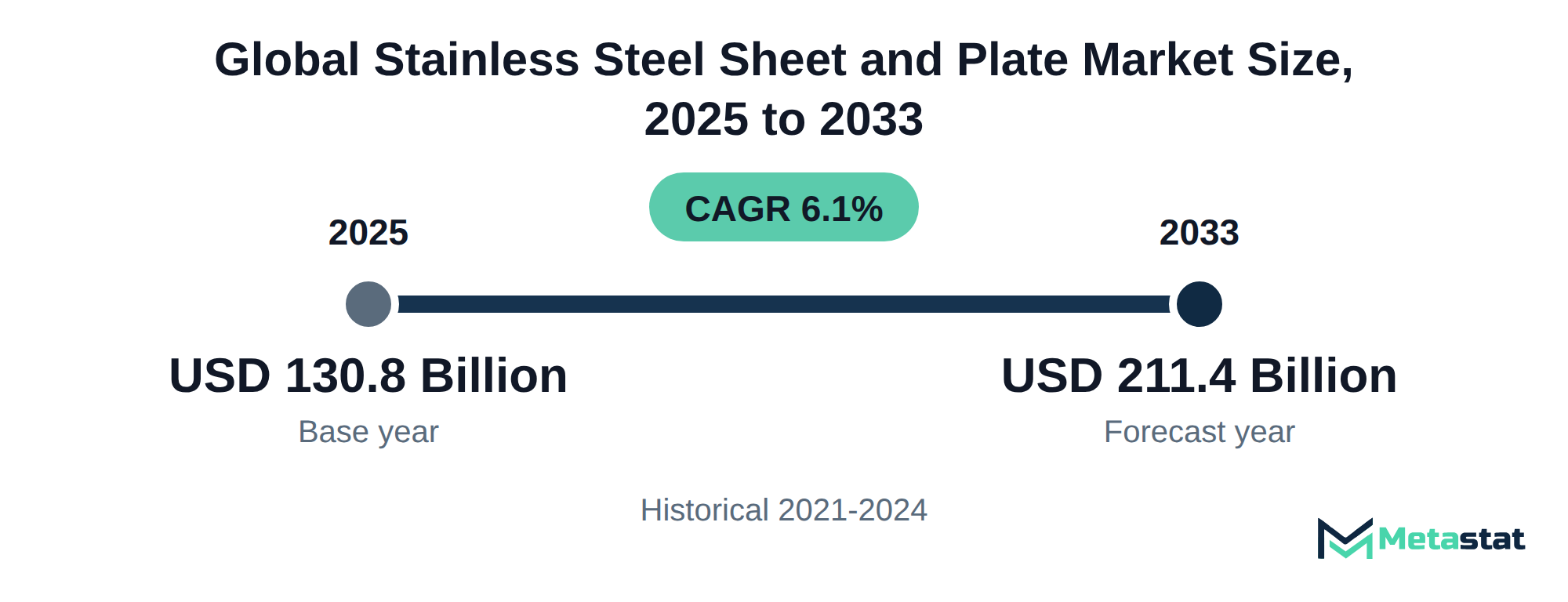
Market Valuation: Valued at $130.8 Billion in 2025, projected to reach $211.4 Billion by 2033 at a 6.1% CAGR.
Dominant Segment: The Sheet (Below 4.75 mm) segment leads the market, driven by its extensive applications in construction and automotive sectors, where lightweight and durable materials are essential.
Geographic Lead: Asia Pacific dominates the market, accounting for 72.6% of the share, primarily due to ongoing construction projects and industrial activities that fuel demand for stainless steel products.
What's Inside: The report provides a comprehensive analysis of market segmentation by product form, grade, surface finish, and end-use industry, along with competitive coverage and growth forecasts through 2033.
Emerging Trends: Technological advancements in production processes are enhancing efficiency and reducing costs, while the growing demand for sustainable materials is shaping market dynamics.
Price Dynamics: Price volatility in raw materials is impacting buyer confidence, leading to cautious purchasing decisions, particularly in the construction and industrial machinery sectors.
Choose Your License
Global Stainless Steel Sheet and Plate Market
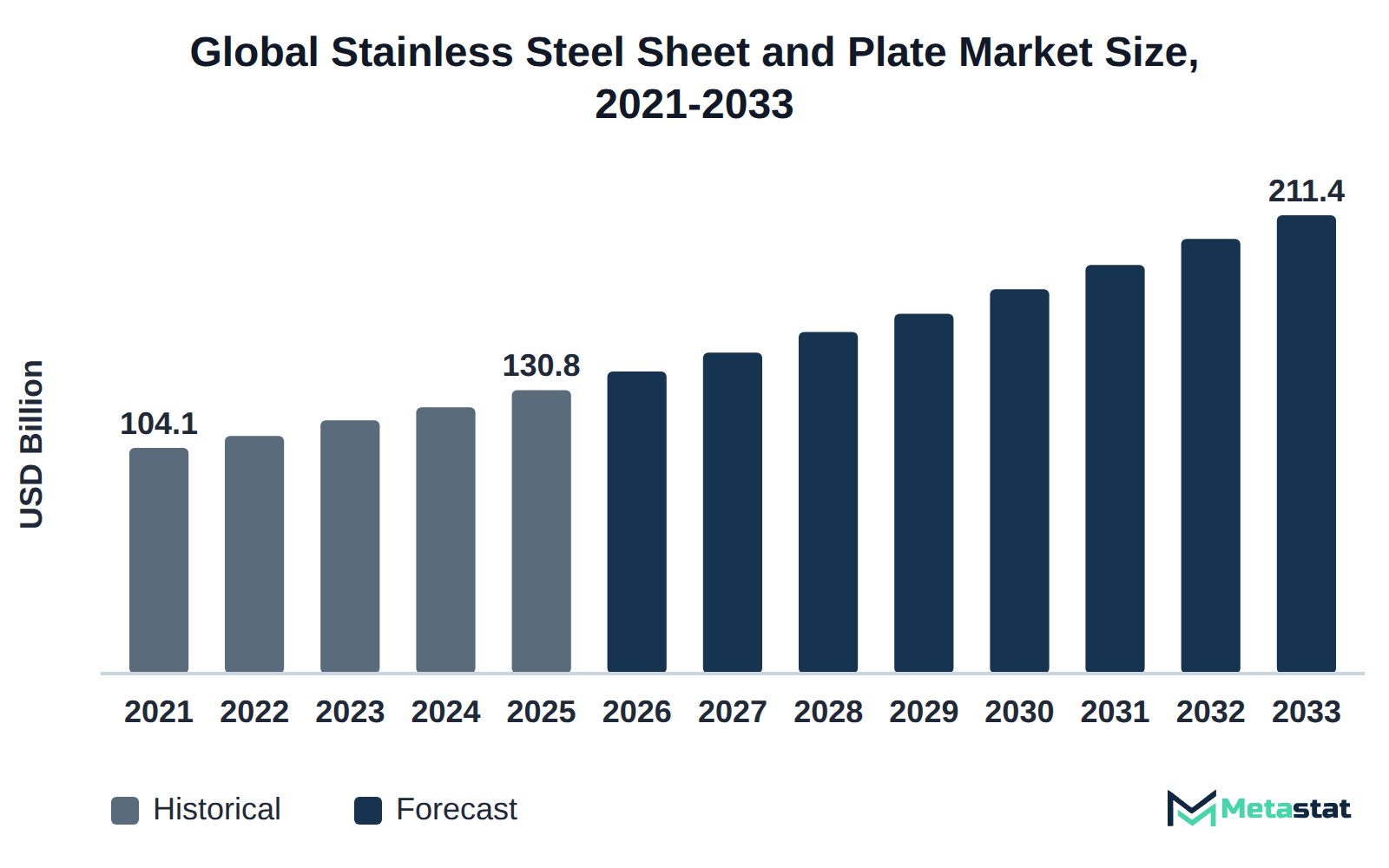
The global Stainless Steel Sheet and Plate market was valued at USD 130.8 billion in 2025 and is projected to reach USD 211.4 billion by 2033, growing at a CAGR of 6.1% over the forecast period.
The Stainless Steel Sheet and Plate market encompasses a wide range of stainless steel products used in various applications, including construction, manufacturing, and automotive sectors. Buyers invest in stainless steel sheets and plates due to their durability, corrosion resistance, and versatility, essential qualities for high-performance applications. The increasing demand for lightweight and high-strength materials further drives spending in this market.
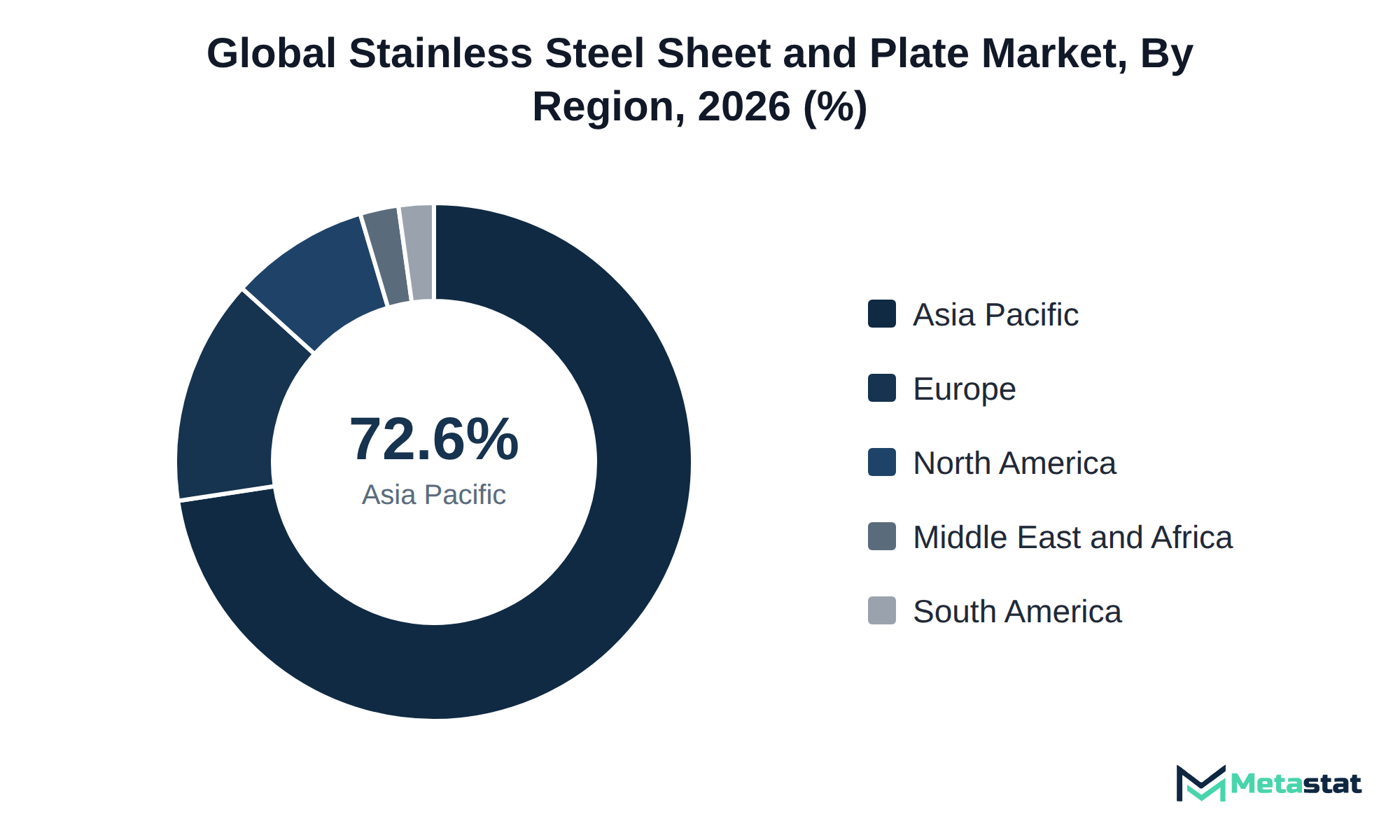
Growth in the market is fueled by several factors, with a significant driver being the expansion of the construction industry, particularly in Asia Pacific. The region commands a share of the market at 72.6%, outpacing other regions, including Europe and North America. In terms of product form, sheets below 4.75 mm represent the largest segment by value, reflecting a strong preference for this material type in diverse applications.
North America holds 8.7% of the market in 2025, with the US leading in 2026. The demand for stainless steel sheets and plates is expected to rise, driven by advancements in manufacturing processes and the push for higher efficiency in various industries. Ongoing innovation and wider adoption across key sectors position the market for steady growth.
The Stainless Steel Sheet and Plate market consists of various grades, forms, and surface finishes across multiple sectors. Industries including construction, automotive, and manufacturing drive significant expenditure in this market, focusing on durability and corrosion resistance. Buyers prioritize these materials for their long-term value and performance in demanding applications, ensuring a steady demand across different regions.
Growth within the market is primarily fueled by increasing infrastructural developments and the rising demand for high-quality stainless steel products. The product segment of Sheet (Below 4.75 mm) represents the highest market value, reflecting its extensive use in numerous applications. Asia Pacific dominates the regional shares, accounting for 72.6% of the total market, significantly outpacing other regions, including Europe at 14.1% and North America at 8.7%. The region's strong demand is supported by ongoing construction projects and industrial activities.
Rising demand for sustainable and durable construction materials shapes market dynamics. Industries transition toward more environmentally friendly practices, and the adoption of stainless steel products gains momentum, which influences growth trajectories. Manufacturers continuously innovate to meet evolving standards, thereby enhancing their competitive position within the market.
Duplex stainless plate exhibits strong corrosion resistance and mechanical strength, making it a preferred choice for applications in desalination, chemical processing, and offshore equipment. This material's unique properties ensure durability and reliability in harsh environments. Demand for duplex plate in the Stainless Steel Sheet and Plate market is projected to rise due to increasing investments in infrastructure and industrial projects.
In chemical processing, duplex stainless plate offers lower maintenance costs and extended service life. This results from its ability to withstand aggressive chemicals without degrading. The 400 Series Ferritic grade, which includes duplex stainless steel, is expected to achieve significant growth, enhancing its appeal in sectors that prioritize safety and efficiency.
With the growing emphasis on sustainability, industries are increasingly adopting duplex stainless plate to reduce environmental impacts. This transition promises substantial commercial benefits, allowing companies to enhance their operational efficiency while addressing environmental concerns. The duplex plate market is anticipated to expand, reflecting broader trends in material innovation and application diversification.
Quality of surface finish significantly impacts procurement decisions in the Stainless Steel Sheet and Plate market, particularly in sectors including appliances and architecture. Surface finishes like No. 1 Mill Finish and Bright Annealed (BA) improve the aesthetic appeal and corrosion resistance of products. The No. 1 Mill Finish segment is projected to grow from USD 41.1 billion in 2026 to USD 62.9 billion by 2033, reflecting a compound annual growth rate (CAGR) of 6.3%. This growth reflects the increasing preference for high-quality finishes that meet specific design and functional requirements.
Buyers engage in long-term contracts to secure favorable pricing and consistent supply, especially for high-demand grades. The 300 Series Austenitic grades, known for their excellent forming and welding characteristics, are expected to reach USD 116.5 billion by 2033. This anticipated surge prompts procurement professionals to consider contract models that tie pricing to raw material costs, ensuring stability amid market fluctuations. Such strategic purchasing decisions enhance operational efficiency and minimize risks associated with price volatility.
Choosing suitable surface finishes and procurement models helps buyers manage complexity, optimize costs, and ensure product quality in their projects.
Asian mills have expanded production capacities significantly, impacting the dynamics within the Stainless Steel Sheet and Plate market. By 2033, Asia Pacific is projected to capture 72.6% of the market share, reflecting a strong inclination towards local sourcing and manufacturing. This expansion allows mills to offer competitive pricing, which is essential for buyers seeking to optimize their procurement strategies. The shift towards Asia Pacific sourcing is driven by regional suppliers' capacity to meet diverse buyer requirements for quality and specifications.
Price premiums remain a critical consideration for buyers focusing on stainless flat products. The increase in production from Asian mills has created a competitive environment where regional price variations become apparent. Buyers in North America and Europe face higher costs due to transportation, tariffs, and local market conditions. In contrast, procurement from Asia Pacific suppliers offers more favorable pricing structures. This discrepancy leads buyers to assess logistical costs against the benefits of lower product prices, influencing sourcing decisions in the market.
Fabricators often face the challenge of selecting the appropriate stainless steel grade for their projects. The choice between 304 stainless steel and options like 316L or Duplex significantly impacts performance and cost. When highly corrosive environments exist, including chemical processing or marine applications, 316L stainless steel presents a better choice. This grade features lower carbon content than 304, which enhances its resistance to pitting in chloride environments, making it suitable for challenging applications.
The Stainless Steel Sheet and Plate market reflects this specialization, with the 300 Series Austenitic grade projected to reach USD 116.5 billion by 2033. This growth indicates a strong preference among fabricators for high-performance materials that deliver durability and resistance to corrosion. Duplex stainless steel, with its superior strength and corrosion resistance, serves well in applications requiring a blend of these properties, particularly in the oil and gas and chemical industries.
The choice of stainless steel grade affects the longevity and reliability of products as well as overall project costs. Fabricators implementing 316L or Duplex grades incur higher upfront expenses than those using 304. However, long-term savings associated with reduced maintenance and replacement costs often justify the investment.
Shifts in consumer behavior drive demand growth within the market, particularly in sectors including appliances and electronics. The ongoing trend towards home improvement and modernization fuels heightened spending on stainless steel products, which offer durability and aesthetic appeal. Buyers in the consumer goods and appliances sector increasingly prioritize quality materials, leading to an increase in volume purchases. The market's revenue in this segment is projected to reach USD 46 billion by 2033, reflecting a compound annual growth rate of 5.2%. This growth reflects a broader consumer preference for high-quality and sustainable products, supporting manufacturers' efforts to enhance production capacities and innovate offerings. Enhanced purchasing power among consumers further contributes to expanding market opportunities, positively impacting pricing dynamics and overall market competitiveness.
Innovations in manufacturing techniques significantly enhance the efficiency of stainless steel production. Advanced technologies, including automation and digitalization, streamline operations and reduce production costs. These changes enable suppliers to offer competitive pricing, attracting several buyers across various sectors.
The emergence of new methods, including continuous casting and advanced welding techniques, improves product quality and consistency. Enhanced quality control processes ensure that specifications meet industry standards, building trust among customers. This level of assurance drives higher adoption rates within critical applications, particularly in the construction and automotive industries.
Investment in research and development further fuels technological progress, allowing suppliers to explore new alloys and surface finishes that cater to specific end-use requirements. Such developments increase the versatility of products within the Stainless Steel Sheet and Plate market, positioning suppliers to capture a larger market share. This dynamic stimulates overall market growth through enhanced product offerings and improved customer satisfaction.
Fluctuating prices of stainless steel sheet and plate significantly affect purchasing decisions among buyers, particularly in the construction and industrial machinery sectors. This instability often leads to slower uptake and smaller order sizes, with companies hesitating to commit to large purchases when future costs remain uncertain. Buyers facing tight budgets and fluctuating raw material prices delay replacement cycles, opting instead to extend the life of existing equipment or seek alternatives that offer more predictable costs. This restraint challenges the market's growth trajectory, diminishing overall demand and restricting opportunities for long-term contracts. The need for stable pricing strategies becomes critical for suppliers aiming to attract and retain customers in an increasingly competitive environment. Price volatility also creates a barrier to entry for potential buyers and limits expansion opportunities for suppliers.
Suppliers in the Stainless Steel Sheet and Plate market experience significant margin pressure due to rising input costs for raw materials. The ongoing increase in the price of nickel and chromium, essential components in stainless steel production, impacts overall production expenses. Ferroalloys are a common route for supplying these elements to stainless steel producers. This scenario poses challenges for suppliers attempting to maintain profitability while providing competitively priced products. The shift toward sustainable and recycled materials complicates cost structures, adding additional layers of expense.
To address these challenges, suppliers invest in technology that enhances production efficiency and reduces waste, thereby lowering overall costs. Several companies explore vertical integration to secure raw material supply and mitigate price fluctuations. Strategic partnerships within the supply chain facilitate better resource management and cost control. These initiatives aim to strengthen competitive positioning while navigating the complexities of rising input costs.
The industrial machinery segment within the Stainless Steel Sheet and Plate market presents a notable growth opportunity. This segment is projected to reach USD 31.5 billion by 2033, driven by increasing adoption of advanced technologies in manufacturing processes. Demand for stainless steel components in industrial machinery manufacturing highlights the importance of durability and corrosion resistance in equipment used across various industries. Manufacturers targeting this segment prioritize innovation and product quality to meet the specific needs of buyers in the industrial sector. Enhanced production capabilities and a focus on high-performance materials will contribute to capturing a larger market share in this rapidly expanding segment. Greater emphasis on efficiency and reliability in machinery will further increase demand for stainless steel products and support sustained growth in the coming years.
The Global Stainless Steel Sheet and Plate market is segmented based on Product Form, Grade, Surface Finish, and End-Use Industry.
Sheet (Below 4.75 mm) segment is valued at USD 113.3 billion in 2026 and is projected to reach USD 170 billion by 2033, at a CAGR of 6% during the forecast period. This segment finds extensive applications in construction, automotive, and consumer goods, primarily serving manufacturers that prioritize lightweight and durable materials. Demand for thinner sheets is driven by increasing requirements for energy efficiency and reduced material usage. Compared to the Plate segment, which shows a CAGR of 6.9%, the Sheet segment exhibits a slightly slower growth rate. The thinner profile offers lower material costs, appealing especially to industries focusing on cost efficiency while maintaining structural integrity. This differentiation positions the Sheet (Below 4.75 mm) segment uniquely within the broader Stainless Steel Sheet and Plate market, catering to specific needs in various manufacturing and construction processes.
Plate (4.75 mm and Above) segment is estimated to reach USD 41.4 billion by 2033, at a CAGR of 6.9% during the forecast period. This segment primarily serves industries requiring thicker stainless steel for demanding applications, including construction and industrial machinery. Increasing investments in infrastructure development and manufacturing sectors drive demand for thicker plates. The segment distinguishes itself by targeting heavy-duty applications, unlike the Sheet (Below 4.75 mm) segment, which addresses lighter and more versatile needs. Buyers in this segment often seek higher strength and durability, influencing pricing strategies that reflect the advanced material properties. The focus on heavy-duty industrial applications supports its competitive edge and projected growth compared to other product forms in the market.
200 Series Austenitic segment is valued at USD 28.7 billion in 2026 and is projected to reach USD 41.1 billion by 2033, at a CAGR of 5.3% during the forecast period. This segment finds utility primarily in applications requiring moderate corrosion resistance and good formability, appealing to industries including automotive and consumer goods. Demand for this segment is driven by increasing requirements for lightweight and durable materials, particularly in manufacturing processes that prioritize efficiency and performance. Compared to other grades, the 200 Series Austenitic offers a more cost-effective solution while exhibiting slower growth than the 300 Series Austenitic, which is projected to reach USD 116.5 billion by 2033. The focus on sustainability and environmental considerations further influences the adoption of this segment, with manufacturers aiming to reduce their carbon footprint while maintaining product integrity. The market continues to evolve, reflecting shifts in consumer preferences and advancements in stainless steel production technologies.
300 Series Austenitic segment is estimated to reach USD 116.5 billion by 2033, at a CAGR of 6% during the forecast period. This grade finds extensive application in industries including construction, automotive, and consumer goods due to its excellent corrosion resistance and formability. Ongoing advancements in manufacturing processes support the growth of this segment, catering to the demand for high-quality products in sectors prioritizing durability and aesthetics. Compared to the 200 Series Austenitic, which has a projected CAGR of 5.3%, this segment benefits from a higher growth trajectory, reflecting growing investments in sectors requiring superior stainless steel performance. Buyers in the automotive sector particularly favor the 300 Series for components demanding high-strength materials, thereby driving market expansion. Increasing regulatory standards regarding material performance in various industries contribute to the continuing uptake of this grade in the market.
400 Series Ferritic segment is expected to reach USD 35.6 billion by 2033. This grade finds applications in automotive, industrial machinery, and construction sectors due to its good corrosion resistance and magnetic properties. Demand derives from its suitability for components requiring moderate strength and formability. Growth of this segment is driven by rising automotive production and increasing demand for energy-efficient appliances. Comparing the 400 Series Ferritic with other grades, it features a lower growth rate, positioned at a CAGR of 5.6% during the forecast period. In contrast, the 300 Series Austenitic segment anticipates a CAGR of 6% during the same period, driven by its superior corrosion resistance and versatility. The market for 400 Series Ferritic experiences steady demand while facing competition from higher-performing grades, which limit its pricing advantage.
This grade finds application in the manufacturing of components requiring high strength and moderate corrosion resistance, primarily in the automotive and industrial machinery sectors. Demand for 400 Series Martensitic stainless steel is influenced by the growing need for durable materials in environments where wear resistance is critical. Compared to other grades, this segment experiences slower growth, driven by its specific applications, while the 300 Series Austenitic segment, which exhibits a CAGR of 6.0%, caters to broader uses across various industries. The market faces challenges related to fluctuating raw material costs, which impact pricing strategies for manufacturers focused on this segment.
Duplex and Super Duplex stainless steel grades exhibit strong mechanical properties, making them suitable for various high-stress applications, particularly in the oil and gas, chemical, and marine industries. These grades combine high strength with excellent corrosion resistance, attracting buyers focused on durability and performance. Demand for Duplex and Super Duplex materials grows due to increasing investments in infrastructure and energy projects, driving usage across the energy and power sectors. This segment distinguishes itself from other grades through its unique alloy composition that provides enhanced resistance to pitting and crevice corrosion, catering to specific industry needs. Buyers prioritize these grades where safety and longevity matter most, making Duplex and Super Duplex preferred choices for critical components that require superior structural integrity.
Precipitation-Hardening involves a unique stainless steel grade that undergoes a specific heat treatment process to enhance strength and hardness. This grade finds application primarily in aerospace, automotive, and various industrial sectors where high strength and corrosion resistance are essential. Demand for Precipitation-Hardening is driven by the increased need for lightweight yet durable materials in these industries. Greater adoption occurs within specialized applications, differentiating it from other grades that cater to broader markets including 200 and 300 Series Austenitic grades. The specific heat treatment process leads to higher production costs, making it a premium option compared to other segments. However, the mechanical properties justify this pricing for industries prioritizing performance and reliability. The market recognizes Precipitation-Hardening as a solution for applications requiring both strength and resistance to environmental stressors.
No. This surface finish finds application primarily in construction, food processing, and consumer goods, offering aesthetic appeal and corrosion resistance. Driving factors include increasing preference for durable materials in architecture and manufacturing. Compared to other surface finishes including 2B and 2D mill finishes, No. 1 Mill Finish typically commands a higher price due to its superior qualities. While the overall market experiences growth, segments like Bright Annealed (BA) exhibit faster expansion rates due to growing demand in specific high-end applications, highlighting diverse requirements across the market.
2B Mill Finish segment is estimated to reach USD 81 billion by 2033, at a CAGR of 5.6% during the forecast period. This finish finds extensive application in industries including architecture, automotive, and consumer goods, where a smooth and reflective surface is desirable. Demand drivers include an increasing preference for aesthetically pleasing materials and a rising focus on durability. Comparatively, this segment exhibits a slower growth rate than the No. The differentiation between these segments stems from their respective surface characteristics and price points, with 2B Mill Finish typically commanding a lower price, making it attractive for cost-sensitive applications. Overall, this segment contributes significantly to the Stainless Steel Sheet and Plate market by fulfilling specific design and functional requirements across various end-use industries.
2D Mill Finish segment is expected to reach USD 11.4 billion by 2033. This surface finish is commonly used in applications requiring a uniform appearance and moderate corrosion resistance, appealing to industries including automotive, construction, and consumer goods. A notable factor affecting this segment is the increasing demand for aesthetically pleasing products, driving manufacturers to adopt finishes that enhance visual appeal. Compared to other segments, 2D Mill Finish exhibits a slower growth trajectory, reflected in its lower CAGR relative to No. 1 Mill Finish and Bright Annealed finishes. While the market emphasizes high-performance finishes, 2D Mill Finish remains a cost-effective option for buyers seeking reliability without premium pricing. This segment supports various applications while maintaining a competitive position within the broader Stainless Steel Sheet and Plate market.
Bright Annealed (BA) segment is projected to grow at a CAGR of 6.9% during the forecast period. This finish finds extensive application in industries requiring high corrosion resistance and aesthetic appeal, particularly in architectural and automotive sectors. The segment attracts manufacturers focusing on high-quality finishes that enhance both appearance and performance. Demand for Bright Annealed products reflects trends in consumer preferences for visually appealing and durable materials, which increase adoption rates across various applications. Differentiating itself from the 2B Mill Finish segment, which has a CAGR of 5.6%, the Bright Annealed segment offers superior surface quality, catering to buyers willing to invest in higher-priced products for premium applications. Such dynamics support a strong outlook for this segment within the Stainless Steel Sheet and Plate market.
Mechanically Polished indicates a surface finish characterized by a smooth and reflective quality achieved through mechanical polishing processes. This finish finds application in high-end consumer products, appliances, and specialized industrial equipment, appealing to buyers seeking aesthetic appeal and enhanced corrosion resistance. Demand for this segment is driven by rising consumer preferences for visually appealing products and the functionality offered by polished surfaces. Compared to other surface finishes, including No. 1 Mill Finish or 2B Mill Finish, mechanical polishing typically commands a higher price due to its labor-intensive process and superior appearance. The segment serves distinct market niches, particularly among manufacturers prioritizing quality and design in their offerings. Buyers seeking a smoother, cleaner surface after fabrication can also consider stainless steel electropolishing services.
Patterned, etched, colored, and coated finishes enhance the visual appeal and functional properties of stainless steel products. Industries including architecture, interior design, and consumer goods apply these finishes to produce visually striking and durable products. Demand for these specialized finishes increases due to trends emphasizing aesthetics and customization in design, compelling suppliers to innovate while managing production costs. This segment distinguishes itself from others by targeting niche markets where premium pricing is acceptable, reflecting a higher perceived value among buyers focused on aesthetics rather than solely on material properties. The growing preference for unique design finishes reinforces the segment’s importance in the overall stainless steel sheet and plate market, contributing to sustained demand and production efforts focused on meeting specific customer requirements.
Building and Construction segment is valued at USD 33.4 billion in 2026 and is projected to reach USD 48.2 billion by 2033, at a CAGR of 5.4% during the forecast period. This segment primarily serves the construction of residential, commercial, and infrastructure projects, driven by demand from builders and contractors. A notable force impacting this segment includes increasing urbanization, which fuels the need for new construction and renovation projects. Compared to other segments, this segment exhibits slower growth, influenced by regulatory requirements and fluctuations in raw material costs. In contrast, segments including Consumer Goods and Appliances show faster growth due to varying consumer trends and demands. The unique attributes of stainless steel, including corrosion resistance and strength, enhance its appeal in construction applications, supporting ongoing investment in infrastructure development.
Consumer Goods and Appliances segment is estimated to reach USD 46 billion by 2033, at a CAGR of 5.2% during the forecast period. This segment serves various industries, including household appliances, electronics, and consumer products, which require durable and aesthetically appealing materials. A significant driver for this segment stems from increasing consumer demand for high-quality and sustainable products. This segment differs from the Building and Construction segment, which has a higher projected growth rate of 5.4%. While both segments leverage stainless steel's durability, the Consumer Goods and Appliances segment focuses on end-user appeal and product design, influencing purchasing decisions. Evolving trends in consumer preferences and the push for environmentally friendly materials play vital roles in shaping the segment's performance and potential within the market.
Industrial Machinery segment is expected to reach USD 31.5 billion by 2033. This segment serves various industries, including manufacturing and production, using stainless steel for its durability and resistance to corrosion. Growth in the industrial machinery sector is propelled by increasing investments in automation and advanced manufacturing technologies, promoting demand for high-quality materials. Compared to other segments, this one features a slower growth rate, with a CAGR of 6.9% driven by specific application needs and robust performance requirements. The segment stands out with unique pricing dynamics, with manufacturers seeking specialized grades that deliver enhanced performance under demanding conditions. The market for stainless steel sheet and plate benefits from this segment's expansion, resulting in significant implications for suppliers and manufacturers alike.
Automotive and Transportation segment is projected to grow at a CAGR of 6.9% during the forecast period. This segment encompasses steel used in vehicles, including cars, trucks, and various modes of public and private transportation. Key users include automotive manufacturers and suppliers who demand high-strength materials for safety, durability, and design flexibility. Automakers with similar strength requirements also use press hardened steel for automobiles in structural components. Increasing regulations aimed at enhancing fuel efficiency and reducing emissions drive the demand for lightweight yet strong materials, aligning perfectly with the properties of stainless steel. Compared to other segments, Automotive and Transportation shows rapid growth due to the push for innovative designs and sustainable practices. While other segments including Building and Construction experience steady demand, the automotive sector's focus on advanced technologies significantly influences investment and production strategies, positioning it as a critical area for market expansion.
The Stainless Steel Sheet and Plate market includes the Chemicals and Petrochemicals segment, which is central to the production of chemical processing equipment, storage tanks, and pipelines. Industries including petrochemicals use stainless steel for its resistance to corrosion, ensuring longevity and reliability in harsh environments. A primary factor influencing this segment involves stringent regulations regarding material safety and environmental standards, driving demand for high-quality stainless steel products that comply with these requirements. Compared to other segments, the Chemicals and Petrochemicals segment experiences slower growth due to high production costs and regulatory complexities. This segment attracts buyers focused on durability and performance, distinguishing it from more rapidly expanding segments including Building and Construction and Automotive and Transportation.
This segment focuses on applications in the food, beverage, and pharmaceuticals industries, using stainless steel for its hygienic properties and durability. Food and beverage process plants are a typical setting for these hygienic sheet and plate applications. Stainless steel's resistance to corrosion and ease of cleaning make it ideal for equipment and containers used in food processing and pharmaceuticals. Demand for products in this segment rises due to stricter regulatory standards related to food safety and health regulations. The segment relies heavily on various buyers, including food manufacturers, beverage producers, and pharmaceutical companies that require high-quality materials for their operations. Compared to other segments, this sub-segment benefits from consistent demand driven by health-conscious consumers and evolving manufacturing standards. Unlike segments including automotive, which experience cyclic fluctuations, the food, beverage, and pharmaceuticals segment illustrates steady growth patterns, reflecting consumer trends that favor safe and reliable materials for food and health applications. The Stainless Steel Sheet and Plate market reflects this trend through ongoing innovations in material properties and processing techniques.
Energy and Power constitutes a critical segment within the market, focusing on applications including power generation, renewable energy systems, and infrastructure related to electrical grids. Industries involved in energy production use stainless steel sheets and plates for their durability and resistance to corrosion. The demand for energy transition towards cleaner alternatives fuels growth in this segment. Regulatory support for renewable energy projects drives adoption, enhancing the segment's attractiveness compared to others, particularly due to higher performance requirements in energy applications. Growth in this sub-segment occurs at a different rate than others, reflecting shifts towards sustainable energy sources. The market observes varying price points based on material specifications and application requirements, influencing buyer decisions in this segment.
Water and Wastewater applications use stainless steel for its durability and resistance to corrosion, which is essential for systems involved in the treatment and distribution of water. Industries including municipal utilities and industrial water treatment rely on stainless steel for pipes, tanks, and filtration systems. Municipal projects that deploy water and wastewater treatment systems for utilities add to demand for corrosion-resistant sheet and plate. Demand is driven by increasing investments in water infrastructure and the rising need for effective wastewater management, necessitating high-quality materials to ensure long-term reliability. This segment typically experiences steady growth, differing from others like Building and Construction, where demand fluctuates more dramatically due to economic conditions. The stainless steel sheets and plates specified for this segment are often selected for their ability to withstand harsh environments, contributing to the market's overall resilience and sustainability efforts.
This segment encompasses applications in sectors including electronics, medical devices, and aerospace. These industries employ stainless steel for its strength, corrosion resistance, and biocompatibility, making it suitable for manufacturing components that require high precision and durability. Demand for stainless steel in this segment is driven by technological advancements and increasing requirements for lightweight, high-performance materials. The segment's growth trajectory differs from others due to a more specialized buyer demographic that prioritizes quality and compliance with stringent regulations. Companies within these industries seek specific grades and finishes, leading to higher price points compared to more general applications. The Stainless Steel Sheet and Plate market reflects these dynamics, with a continued emphasis on innovation and quality assurance influencing purchasing patterns.
Based on geography, the Global Stainless Steel Sheet and Plate market is divided into North America, Europe, Asia-Pacific, South America, Middle East, and Africa.
Demand in North America for stainless steel products is primarily driven by the building and construction sector, alongside the automotive and transportation industry. The emphasis on sustainable construction practices enhances the appeal of stainless steel due to its durability and recyclability. Infrastructure projects in the United States and Canada, supported by government initiatives, further stimulate market growth. North America is projected to reach USD 17.3 billion by the end of 2033. The region's market share stands at 8.7% in 2025, reflecting moderate growth potential. The stainless steel sheet and plate market benefits from advancements in manufacturing technologies, which enhance production efficiency and reduce operational costs. These developments contribute positively to competitive dynamics in the market.
The stainless steel sheet and plate market in Europe exhibits significant demand driven primarily by the building and construction sector. Germany, France, and the UK represent major contributors, leveraging a strong industrial base and ongoing infrastructure projects. Regulations surrounding sustainability and environmental impact further influence manufacturing practices, necessitating the adoption of high-quality stainless steel products. The market share for Europe stands at 14.1% in 2025, reflecting its established role in the global landscape. The shift towards energy-efficient solutions and advanced manufacturing techniques promotes growth within the market, ensuring competitiveness against emerging global players. The focus on innovation and compliance with stringent standards strengthens demand across various industries.
Asia-Pacific holds a share of 72.6% in the Stainless Steel Sheet and Plate market in 2025. This region, driven by robust industrial activity, sees strong demand from the construction and automotive sectors. China, Japan, and India emerge as critical markets within this dynamic region, with increasing investments in infrastructure and manufacturing capabilities. The presence of established steel producers enhances competitive pricing and supply chain efficiency.
In addition, advancements in production processes and technology contribute to the increased availability of high-quality stainless steel products. The market highlights a growing focus on environmentally friendly manufacturing practices. Regulatory frameworks supporting sustainable practices further support this trend, ensuring that Asia-Pacific remains a key player in the global stainless steel landscape.
In South America, the market exhibits potential driven by the construction and industrial sectors, particularly in Brazil and Argentina. Investment in infrastructure projects, including housing, commercial buildings, and industrial facilities, increases demand for stainless steel products. The region's limited production capacity results in reliance on imports to meet rising consumption. Countries like Brazil continue to develop local manufacturing capabilities, enhancing the competitive landscape. By 2025, South America holds a 2.2% share of the global market, reflecting the growing importance of regional players. Efforts to improve sustainability in manufacturing processes contribute to the market's advancement. Interactions with global supply chains and trade partnerships further influence market dynamics. The market serves various applications, including transportation and construction.
The market in the Middle East and Africa presents unique drivers, characterized by growing demand from industries including construction and automotive. Notable investments in infrastructure development, particularly in Saudi Arabia and the UAE, enhance the need for high-quality stainless steel products, driving growth in the market. South Africa contributes to demand, focusing on industrial applications and consumer goods. The region's share of the global market in 2025 reflects the relatively smaller scale of operations compared to larger markets. However, ongoing economic diversification strategies and industrialization efforts in these countries create potential opportunities for expansion in the stainless steel sheet and plate market. Competitive pressures within the local industry influence pricing strategies.
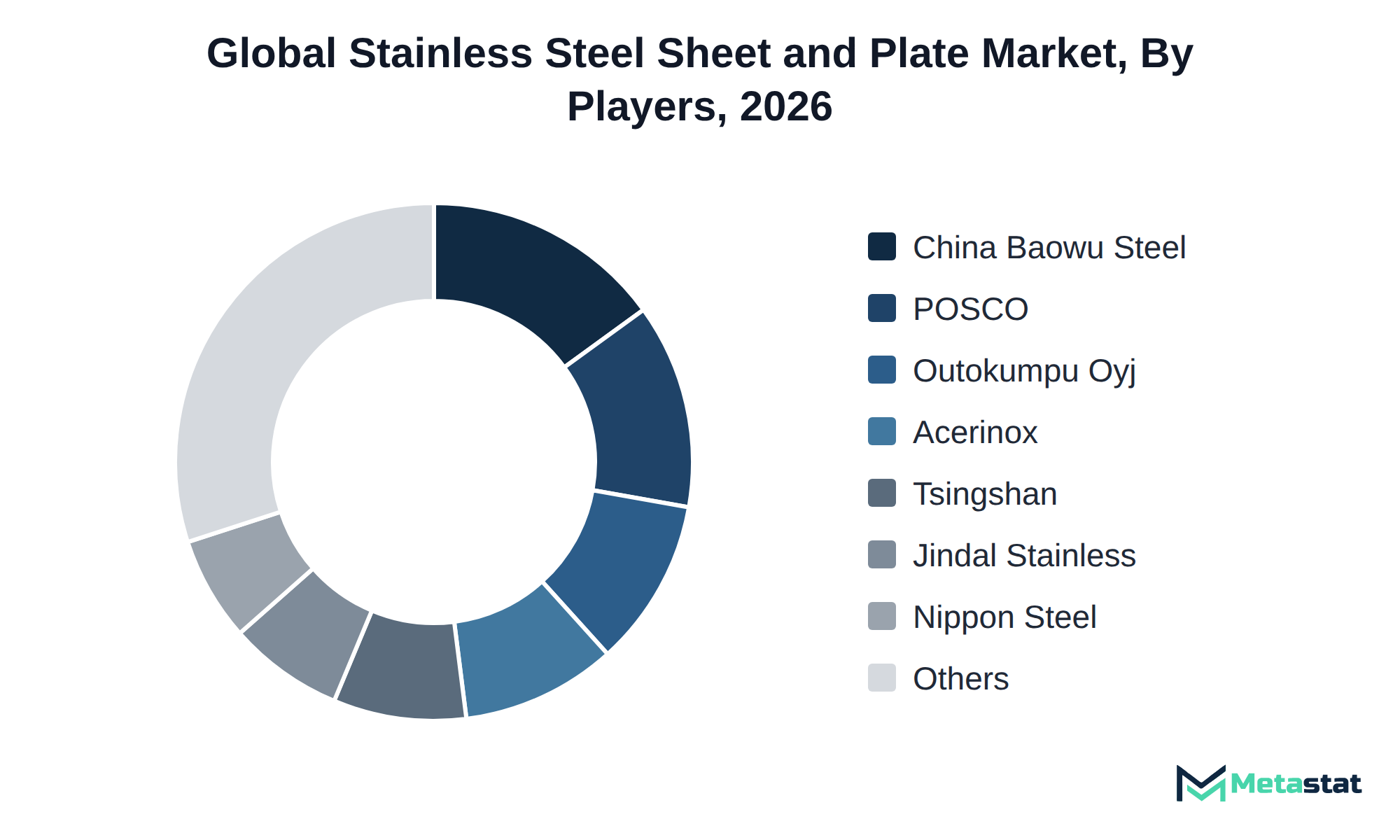
Competition within the Stainless Steel Sheet and Plate market centers on price, quality, and service capabilities. Companies differentiate their offerings through certification standards and customization options, which appeal to various buyer segments. Outokumpu Oyj focuses on high-quality stainless steel products, catering to demanding applications in construction and manufacturing. In contrast, Acerinox, S.A. emphasizes a diverse product range that meets specific client needs across multiple industries.
Pricing strategies significantly impact purchasing decisions in this market, requiring firms to balance cost and quality. Tsingshan Holding Group Co., Ltd. prioritizes competitive pricing while maintaining production efficiency, enhancing its appeal to cost-sensitive buyers. Steel Authority of India Limited targets various segments by offering a range of tailored solutions, contributing to its market presence and customer loyalty.
Achieving this growth relies on several key developments within the Stainless Steel Sheet and Plate market. Significant expansion in the Asia Pacific region, driven by increased demand in construction and manufacturing sectors, contributes to the overall market growth.
Advancements in production technologies and surface finishes, particularly the No. 1 Mill Finish, which is expected to grow from USD 41.1 billion in 2026 to USD 62.9 billion by 2033, facilitate enhanced product offerings and meet evolving consumer preferences. However, supply chain disruptions and fluctuating raw material prices pose significant risks that could hinder the market's growth. Addressing these risks will be essential for maintaining the momentum required to reach the forecasted market size.
By Grade: 200 Series Austenitic, 300 Series Austenitic, 400 Series Ferritic, 400 Series Martensitic, Duplex and Super Duplex, Precipitation-Hardening
By Surface Finish: No. 1 Mill Finish, 2B Mill Finish, 2D Mill Finish, Bright Annealed (BA), Mechanically Polished, Others (Patterned, Etched, Colored, Coated)
By End-Use Industry: Building and Construction, Consumer Goods and Appliances, Industrial Machinery, Automotive and Transportation, Chemicals and Petrochemicals, Food, Beverage and Pharmaceuticals, Energy and Power, Water and Wastewater, Others (Electronics, Medical Devices, Aerospace)
The report strategically identifies and profiles the key market players and analyses their core competencies in each sub-segment of the Stainless Steel Sheet and Plate market.
Report Attributes | Details |
Study Period | 2021-2033 |
Base Year | 2025 |
Estimated Year | 2026 |
Forecast Period | 2026-2033 |
Historical Period | 2021-2025 |
Growth Rate | CAGR 6.1% from 2026 to 2033 |
Revenue Unit | USD billion |
Segmentation | By Product Form, Grade, Surface Finish, End-Use Industry, and Region |
By Region | North America (By Product Form, Grade, Surface Finish, End-Use Industry, and Country)
|
Europe (By Product Form, Grade, Surface Finish, End-Use Industry, and Country)
| |
Asia Pacific (By Product Form, Grade, Surface Finish, End-Use Industry, and Country)
| |
South America (By Product Form, Grade, Surface Finish, End-Use Industry, and Country)
| |
Middle East and Africa (By Product Form, Grade, Surface Finish, End-Use Industry, and Country)
|
Find answers to common questions about this report
The Stainless Steel Sheet and Plate market size was valued at USD 130.8 billion in 2025.
The market is projected to grow at a CAGR of 6.1% during the forecast period from 2026 to 2033.
The North America Stainless Steel Sheet and Plate market size is estimated to reach USD 17.3 billion by 2033.
The leading segment in the Stainless Steel Sheet and Plate market is Sheet (Below 4.75 mm), with a projected value of USD 170 billion by 2033. This segment surpasses the Plate (4.75 mm and Above) segment in terms of market value.
Key drivers for the Stainless Steel Sheet and Plate market include shifts in consumer behavior, particularly in the appliances and electronics sectors, where buyers prioritize quality materials. Innovations in manufacturing techniques enhance production efficiency and reduce costs, allowing suppliers to attract diverse buyers.
Fluctuating prices of stainless steel sheet and plate significantly affect purchasing decisions among buyers, particularly in construction and industrial machinery sectors. Rising input costs for raw materials, especially nickel and chromium, create margin pressure for suppliers, complicating their ability to maintain profitability while offering competitive pricing.
The emphasis on high-quality and sustainable products drives adoption within the Stainless Steel Sheet and Plate market. Innovations in manufacturing techniques and advancements in production efficiency enhance product offerings, catering to specific end-use requirements and increasing customer satisfaction.
The Stainless Steel Sheet and Plate market is estimated to reach a valuation of USD 211.4 billion by 2033.
Key players operating in the Stainless Steel Sheet and Plate market include Outokumpu Oyj, Acerinox, S.A., Aperam S.A., Tsingshan Holding Group Co., Ltd., China Baowu Steel Group Corporation Limited, POSCO, and Jindal Stainless Limited.
The revenue for the consumer goods and appliances segment is projected to reach USD 46 billion by 2033, reflecting a compound annual growth rate of 5.2%.
The analysts below cover Chemicals and Materials research at Metastat Insights.
LEAD ANALYST
Utkarsh Khirodkar is a Lead Market Research Analyst at MetaStat Insight, specializing in market intelligence, technology sector assessments, and competitive strategy.

INDUSTRY CONSULTANT - CHEMICALS & ADVANCED MATERIALS
Chemicals and Materials · Machinery & Equipment · Packaging
Amit Gadhekar Consultant for Chemicals and Materials at MetaStat Insight, directing sector-specific intelligence, research, and strategic consulting across global chemical and processing markets.
Evaluating calorific value requirements and air permit compliance across municipal waste facilities requires localized data. Metastat Insight structured their analysis around operational throughput capacity and feedstock composition variations in Latin America and Eastern Europe. Their competitive mapping of sorting equipment vendors helped clarify technology differences between optical separators and heavy media systems. The study provided an objective baseline during our capital expenditure reviews.
Decarbonizing industrial thermal processes hinges on refrigerant regulations and compressor efficiency limits. Metastat Insights delivered a thorough market analysis that evaluated natural refrigerants like CO2 and hydrocarbons against synthetic low-GWP alternatives. The breakdown of utility incentives and grid capacity constraints across key European manufacturing hubs offered valuable perspective. The follow-up conversation with their sector analysts addressed our specific questions on mechanical vapor recompression systems efficiently.
Assessing 200mm wafer transition schedules and substrate supply bottlenecks requires precise technical intelligence. MetaStat Insight supplied an actionable breakdown comparing planar and trench MOSFET architectures across automotive and industrial drive markets. The regional capacity estimates for Asia-Pacific foundries helped clarify lead-time uncertainties during our strategic planning session. When we needed additional clarification on high-purity raw material sourcing, their analyst team responded with helpful context within twenty-four hours.
Explore related market intelligence reports worth reading alongside this one.
Starting from
$2950