
LEAD ANALYST
Utkarsh Khirodkar is a Lead Market Research Analyst at MetaStat Insight, specializing in market intelligence, technology sector assessments, and competitive strategy.

Global Thermal Spray Market Size, Share, By Offering (Coatings and Coating Services, Thermal Spray Materials, Thermal Spray Equipment and Systems), By Spray Technology (Plasma Spray, High-Velocity Oxygen Fuel (HVOF) Spray, High-Velocity Air Fuel (HVAF) Spray, Electric Arc Spray, Conventional Flame Spray, Cold Spray and Detonation Spray), By End-Use Industry (Aerospace and Defense, Energy and Power Generation, Automotive and Transportation, Medical Devices, Electronics and Semiconductors, Oil and Gas, Metals and Mining, Pulp, Paper and Printing and Others), By Component Lifecycle Stage (New Component Manufacturing and Maintenance, Repair and Overhaul (MRO)), Industry Analysis, Growth, Trends, and Forecast, 2026-2033
Report ID
MSI-5594
Published
October, 2026
Pages
267 Pages
Format
Historical
Base year
Forecast
Forecast period
Report Details
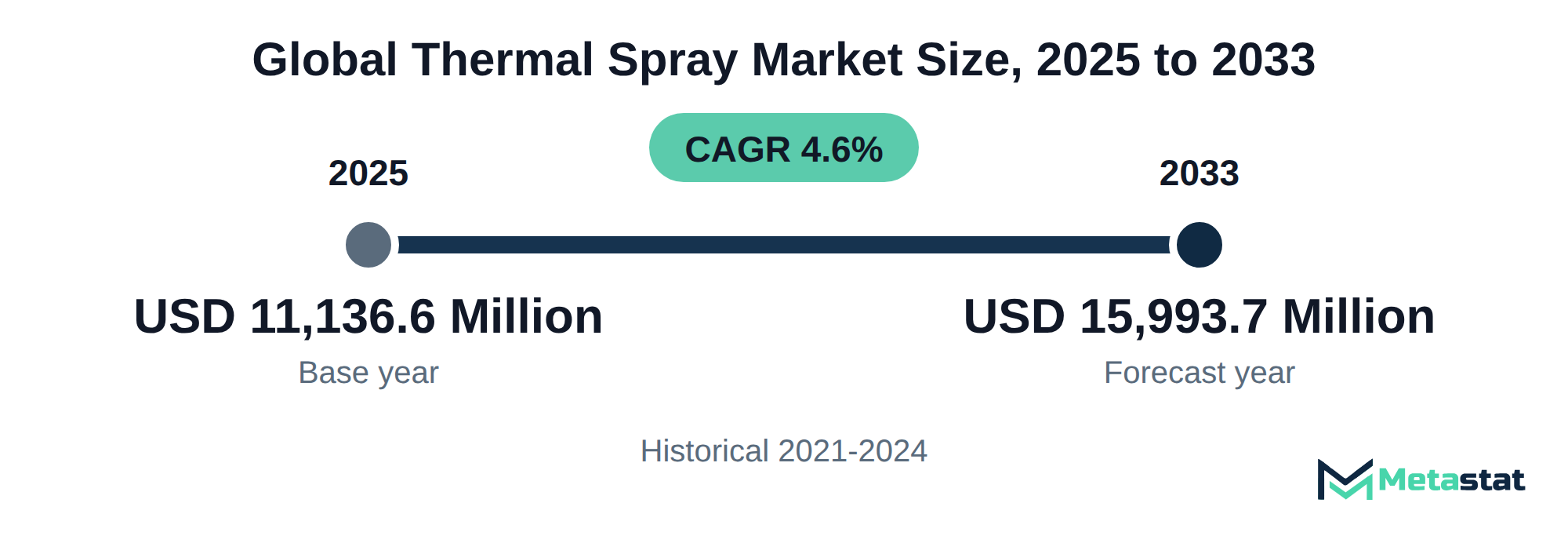
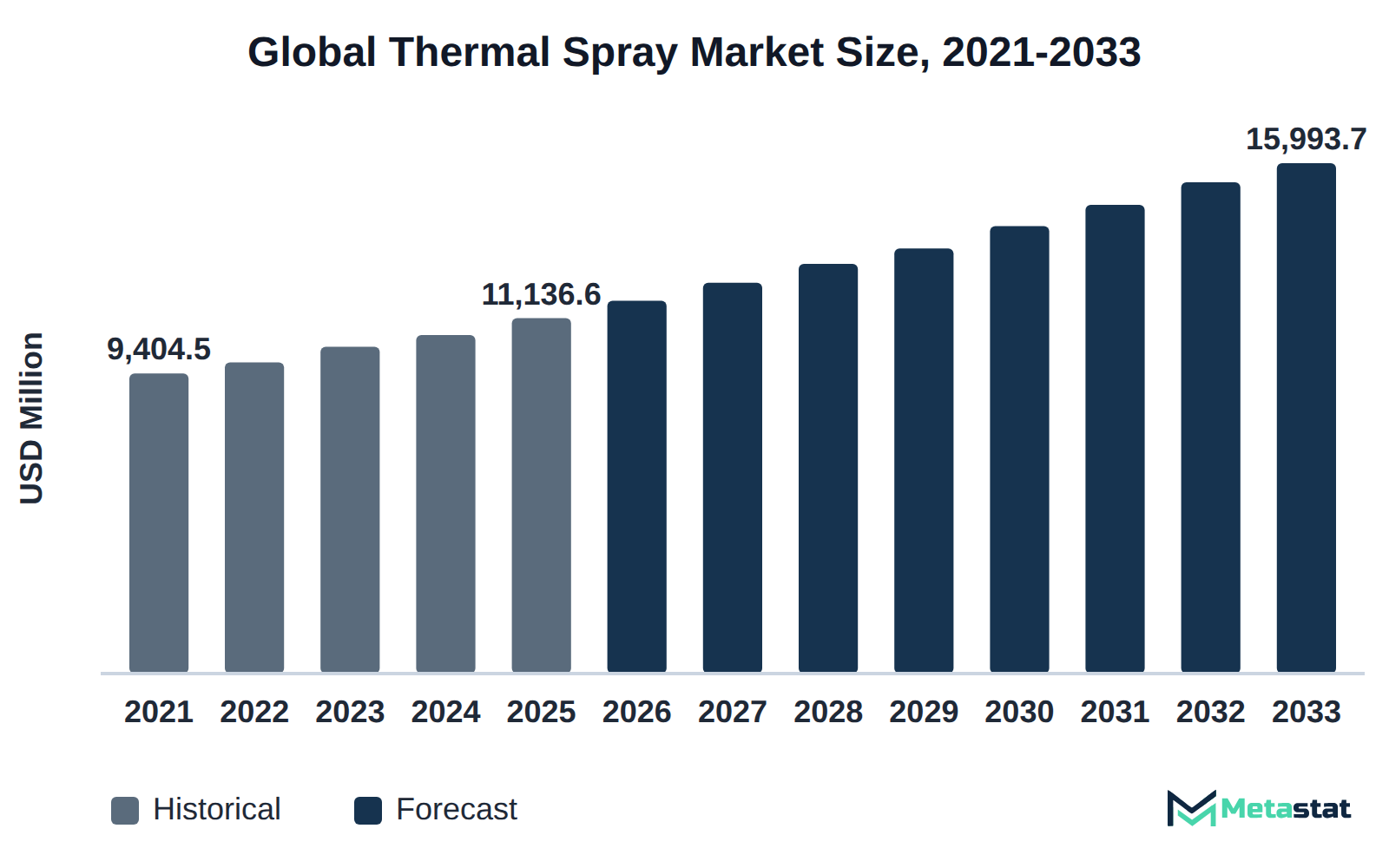
Market Valuation: Valued at $11,136.6 Million in 2025, projected to reach $15,993.7 Million by 2033 at a 4.6% CAGR.
Dominant Segment: Coatings and coating services lead the Thermal Spray market, driven by high demand for protective solutions in aerospace and defense industries that prioritize durability and performance.
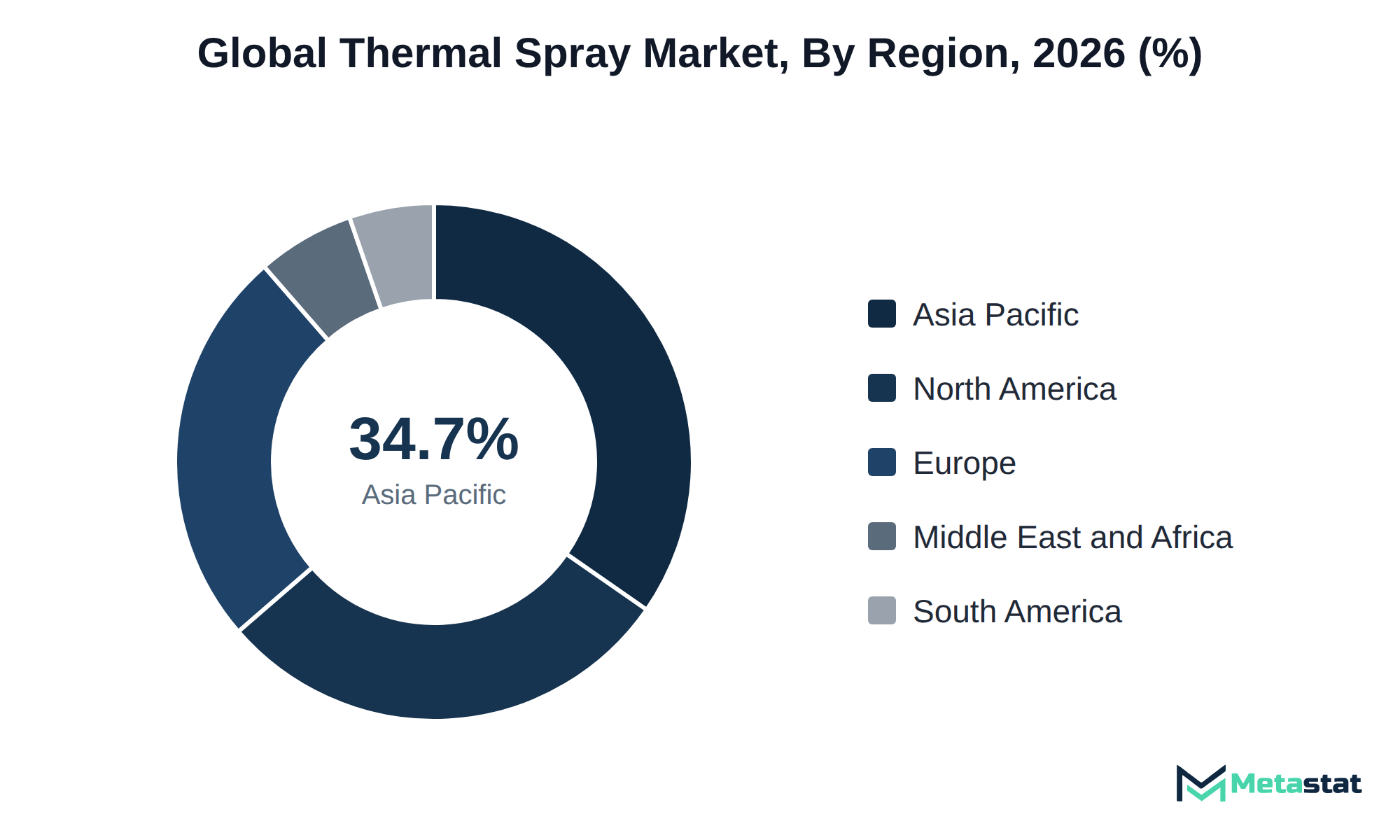
Geographic Lead: The Asia Pacific region is the largest market, capturing 34.7% of total shares, fueled by rapid industrialization and advancements in manufacturing capabilities, particularly in automotive and electronics.
What's Inside: The report includes a comprehensive analysis of market segmentation by offering, spray technology, end-use industry, and component lifecycle stage, along with competitive coverage and growth forecasts through 2033.
Emerging Trends: The increasing adoption of advanced thermal spray technologies, such as HVOF and HVAF, is reshaping the market, driven by their superior performance characteristics compared to traditional methods.
Choose Your License
Global Thermal Spray Market
The global Thermal Spray market was valued at USD 11,136.6 million in 2025 and is projected to reach USD 15,993.7 million by 2033, growing at a CAGR of 4.6% over the forecast period.
The Thermal Spray market encompasses a variety of coating technologies and materials, serving industries including aerospace, energy, automotive, and medical devices. Buyers invest in these solutions to enhance the durability and performance of components, ultimately leading to reduced maintenance costs and extended product life. The need for advanced surface protection solutions that meet stringent regulatory standards drives spending in this sector.
Growth in the market is propelled by increasing demand for high-performance coatings, particularly in the aerospace and defense sectors. Coatings and coating services represent the segment with the most value, showing a significant contribution to market revenue. North America holds 29.0% of the market in 2025, with the US leading in 2026.
The Asia Pacific region stands out as the largest market, capturing 34.7% of total shares, driven by rapid industrialization and expanding manufacturing capabilities. The region's strong growth is supported by rising adoption of advanced coating technologies, particularly in automotive and electronics. Investments in infrastructure development and energy generation support strong demand for thermal spray applications.
The Thermal Spray market covers a range of advanced coating technologies that enhance the performance and longevity of components across various industries. Buyers invest in these solutions to improve durability, reduce maintenance costs, and enhance the efficiency of their operations. The coatings applied through thermal spray techniques serve critical functions, including wear resistance, thermal barrier protection, and corrosion resistance, which are essential in industries including aerospace, energy, and automotive.
Growth in the market is driven by the increasing demand for high-performance materials and coatings that meet stringent regulatory requirements and performance standards. The coatings and coating services segment holds the most substantial value, reflecting a significant focus on surface protection within industrial applications. The aerospace and defense sector represents a key driver, with the need for advanced aerospace materials that withstand extreme conditions pushing adoption rates higher.
Investments in research and development drive innovation in the Thermal Spray market. Companies strive to enhance their product offerings and address the evolving needs of buyers. The ongoing trends toward sustainability and efficiency further increase the importance of thermal spray technologies, driven by their alignment with the broader goals of reducing environmental impact while enhancing operational performance.
Growing adoption of plasma-sprayed titanium and hydroxyapatite in orthopedic implants reflects a significant advancement in the Thermal Spray market. Plasma-sprayed coatings enhance biocompatibility and initial osseointegration of implants, which is crucial for successful surgical outcomes. The market for coatings and coating services is projected to reach USD 11,972.9 million by 2033, demonstrating a compound annual growth rate (CAGR) of 4.3% from 2026. This growth indicates strong demand from the orthopedic sector, driven by innovations in materials and technologies.
The ability of plasma spraying to apply coatings uniformly on complex geometries enables manufacturers to improve the performance of orthopedic devices. Hydroxyapatite coatings, in particular, promote bone tissue integration, proving essential for long-term implant success. Related orthopedic materials, including bone graft substitutes, address the same need for reliable bone integration. With the orthopedic industry placing increased importance on patient outcomes, the integration of these advanced coatings positions suppliers favorably in a competitive marketplace. This trend enhances operational effectiveness and supports the commercial viability of orthopedic implants, leading to higher revenues in the Thermal Spray market.
The Thermal Spray market experiences a notable shift towards High-Velocity Oxygen Fuel (HVOF) and High-Velocity Air Fuel (HVAF) technologies for wear protection and hard-chrome replacement. The HVOF segment is projected to grow from USD 4,148 million in 2026 to USD 5,784.9 million by 2033, reflecting a compound annual growth rate (CAGR) of 4.9%. This growth stems from the increasing demand for durable coatings in sectors including aerospace, automotive, and energy. Clients favor HVOF and HVAF technologies due to their superior performance characteristics compared to traditional hard-chrome plating.
Pricing structures for HVOF and HVAF services vary significantly based on factors including project scope, substrate materials, and required coatings. Contract models typically involve fixed pricing for larger projects, while smaller applications often feature variable pricing based on specific customer needs. The competitive landscape encourages suppliers to offer flexible payment options, including installment plans and service agreements, which enhance accessibility for a broader range of clients.
While more industries prioritize wear protection solutions, the adoption of HVOF and HVAF technologies contributes to overall market growth. The shift towards these advanced thermal spray technologies aligns with regulatory pressures to reduce hazardous materials like hard chrome, further driving investment in sustainable alternatives. This trend supports increased demand within the Thermal Spray market and positions suppliers who specialize in HVOF and HVAF technologies for significant opportunities ahead.
The demand for gas-turbine refurbishment and ceramic thermal-barrier coatings in the Thermal Spray market reflects the increasing focus on enhancing efficiency and longevity in energy systems. The Aerospace and Defense sector, valued at USD 4,069.8 million in 2026 and projected to reach USD 5,471.5 million by 2033, significantly drives this demand. Investments in advanced thermal spray technologies support improved performance and reliability of gas turbines, which are critical in high-stakes applications.
Thorough refurbishment with ceramic thermal-barrier coatings extends component life and optimizes fuel efficiency. This trend results from a growing emphasis on lower operational costs in energy and power generation while meeting stringent regulatory standards. Companies focusing on refurbishment within gas turbine services benefit operationally by reducing downtime and enhancing system resilience. Because every percentage point of efficiency gain translates to substantial cost savings, this segment presents strong opportunities for manufacturers and service providers.
The selection of thermal spray materials and processes significantly influences both coating costs and service life. For instance, coatings produced through Plasma Spray technology represent a critical area of focus for numerous applications. The choice of materials affects the initial expenditure and the longevity of the coatings applied. Superior materials typically result in longer-lasting solutions, reducing overall maintenance and replacement costs. Industries including aerospace and defense, which apply coatings extensively, value durability and performance, leading to increased investments in higher-quality materials and technology. Manufacturers that prioritize material selection enhance their competitive edge in the market. This approach improves customer satisfaction and contributes to profitability through reduced lifecycle costs of coated components.
Buyers in the aerospace and defense sector increasingly invest in thermal spray technologies due to an ongoing replacement cycle of aging components. This replacement cycle is closely tied to aircraft maintenance, repair and overhaul programs. This sector prioritizes performance and reliability, leading to higher expenditures on advanced coating solutions that extend the service life of critical parts. The trend of replacing older systems with newer, more efficient technologies results in a significant rise in demand for coatings and coating services within this segment. These developments indicate a stronger focus on quality and endurance.
Replacement cycles within the energy and power generation industry contribute to increased spending on thermal spray solutions. New installations and upgrades to existing infrastructure highlight the necessity for durable and efficient coatings, driving further investments in this market.
Advancements in thermal spray materials significantly impact the performance characteristics of coatings. Innovations in alloy compositions, including the development of high-performance ceramic and metal matrix composites, enhance wear resistance, thermal stability, and adhesion properties. These advancements cater to stringent performance demands across various industries, including aerospace and automotive. Improved material formulations extend service life, reduce maintenance costs, and enhance component efficiency.
The emphasis on lighter, stronger, and more durable materials aligns with the market's trajectory towards high-performance applications. Industries increasingly adopt these advanced materials, resulting in heightened demand for thermal spray services that incorporate these innovations. The introduction of new materials facilitates product differentiation and boosts competitive advantages among thermal spray providers. Increased investment in research and development activities fuels ongoing material advancements, supporting growth within the thermal spray market. This trend ensures that manufacturers remain leaders in technological progress, addressing the evolving needs of their clientele.
Pricing challenges in the market significantly impede growth, particularly affecting buyers in the aerospace and defense sector. High costs associated with advanced thermal spray technologies result in delayed purchasing decisions and smaller order volumes, which restrict overall market penetration. Price sensitivity among these buyers stems from budget constraints and the availability of alternative technologies. Fluctuations in raw material costs further exacerbate financial pressures, leading to cautious investment strategies. Companies in this sector prioritize cost-effective solutions, resulting in postponed upgrades or the adoption of lower-performance alternatives. Pricing pressure and the search for competitive pricing solutions shape buyer behavior and limit immediate growth opportunities.
Rising input costs for materials and components challenge suppliers in the Thermal Spray market. Increases in the prices of key materials, driven by supply chain disruptions and inflationary trends, exert pressure on profit margins. Suppliers respond by optimizing production processes and seeking alternative sources or materials that offer lower costs without compromising quality. Investments in technologies that enhance efficiency further mitigate cost impacts. By focusing on these strategies, suppliers enhance competitiveness while addressing the financial challenges posed by fluctuating material prices. The emphasis on cost management is essential for sustaining market stability.
New component manufacturing represents a significant growth opportunity within the Thermal Spray market. The sector is projected to increase from USD 6,780.6 million in 2026 to USD 9,087.6 million by 2033, reflecting a compound annual growth rate (CAGR) of 4.3%. This expansion is driven by rising demand for high-performance coatings across various applications, including aerospace, automotive, and energy generation. Advanced thermal spray technologies enable the production of durable components, enhancing performance and longevity. The capability to improve component efficiency and reduce maintenance requirements positions new component manufacturing as a focal point for investment among industry players. Suppliers targeting this segment expect increased revenue opportunities and strengthened market presence.
The Global Thermal Spray market is segmented based on Offering, Spray Technology, End-Use Industry, and Component Lifecycle Stage.
This segment enhances the durability and performance of various components, particularly in industries including aerospace, energy, and automotive. High demand for protective coatings drives growth, with aerospace and defense sectors leading investments due to stringent performance requirements. Compared to other segments, this one experiences a moderate growth rate, supported by the increasing need for advanced coatings that offer greater longevity and wear resistance. Growth in the Energy and Power Generation sector, projected at a CAGR of 4.8%, complements the coatings segment's expansion, further reinforcing its significance in the broader market.
Thermal Spray Materials is estimated to reach USD 2,074.4 million by 2033, at a CAGR of 4.8% during the forecast period. This segment encompasses various materials in thermal spray applications, serving industries including aerospace, automotive, and energy. Demand for these materials stems from their ability to enhance component performance and durability, especially in high-stress applications. The growing emphasis on energy efficiency and sustainability drives interest in advanced materials that reduce weight and improve operational efficiency. In comparison to other segments within the Offering category, Thermal Spray Materials experiences significant growth, with a higher CAGR than Coatings and Coating Services, which hold a CAGR of 4.3%. This dynamic highlights the increasing focus on material innovations that contribute to enhanced performance and reduced lifecycle costs, positioning the segment favorably in the competitive landscape of the Thermal Spray market.
Thermal Spray Equipment and Systems segment is expected to reach USD 1,946.4 million by 2033. This segment includes industrial coating equipment, meaning the machines and systems necessary for applying thermal spray coatings, primarily in the aerospace and energy sectors for component protection and performance enhancement. The growing emphasis on improving efficiency and durability of crucial components drives demand for advanced equipment. The aerospace sector specifically invests significantly in these systems, reflecting an ongoing need for high-performance coatings. Compared to other offerings, this segment experiences a slower growth rate, with a CAGR of 4.3% from 2026 to 2033, contrasting with the higher growth rates seen in Thermal Spray Materials, which anticipates a CAGR of 4.8% during the same period. The market's focus on innovative coating technologies further influences the purchasing decisions of manufacturers and suppliers across various industries.
Plasma Spray technology provides high-quality coatings primarily for aerospace, automotive, and energy sectors, enhancing component durability and performance. Demand in this segment is driven by the continuous need for advanced coatings to improve operational efficiency and reduce maintenance costs. Compared to other segments, Plasma Spray demonstrates a strong growth profile, attributed to its ability to produce dense and high-performance coatings. Its growth rate surpasses that of Electric Arc Spray, which exhibits a CAGR of 3.3%, highlighting the increasing preference for plasma-sprayed coatings in high-stakes applications. The focus on lightweight and efficient components in industries including aerospace emphasizes the importance of this technology, reinforcing its relevance in the evolving market.
High-Velocity Oxygen Fuel (HVOF) Spray segment is estimated to reach USD 3,800.1 million by 2033, at a CAGR of 5.3% during the forecast period. This technology is primarily for surface coatings in industries including aerospace, automotive, and energy, where durability and wear resistance are crucial. HVOF Spray offers advantages in producing dense and high-quality coatings compared to other thermal spray methods, making it particularly appealing for applications requiring high performance. The growing demand for reliable and cost-effective coating solutions drives expansion within this segment, while the increasing focus on reducing emissions and enhancing efficiency in manufacturing processes supports this trend. With a CAGR of 5.3%, HVOF Spray grows faster than other technologies. This reflects a broader shift toward advanced surface treatment solutions in critical industries.
High-Velocity Air Fuel (HVAF) Spray segment is expected to reach USD 714.9 million by 2033. This technology is for surface coating in various industries, providing enhanced wear resistance and durability for components. Industries including aerospace and automotive increasingly adopt HVAF Spray due to its efficient application and ability to produce dense, low-porosity coatings. Demand drivers include the growing focus on reducing operational costs and increasing the lifespan of components. HVAF Spray experiences slower growth compared to other technologies in the segment, including High-Velocity Oxygen Fuel (HVOF) Spray, which shows a higher CAGR of 5.3%. The distinct pricing structure and performance characteristics differentiate HVAF from its peers, making it suitable for specific applications where cost-effectiveness and quality are essential. The market's evolution reflects an ongoing trend toward advanced coating technologies that meet the rigorous demands of high-performance applications.
Electric Arc Spray segment is projected to grow at a CAGR of 3.3% during the forecast period. This technology finds applications in various industries, particularly for protective coatings in aerospace, automotive, and manufacturing sectors. The ability to create high-quality coatings at lower temperatures attracts buyers focused on minimizing thermal distortion of components. Demand for Electric Arc Spray technology is driven by the rising need for durable and corrosion-resistant coatings that withstand harsh environments, enhancing the longevity of components. Compared to other spray technologies, Electric Arc Spray operates at lower costs; however, its growth rate remains slower than that of High-Velocity Oxygen Fuel (HVOF) Spray, which is projected to expand at a CAGR of 5.3%. This slower growth highlights the competitive nature of the market and the ongoing advancements in alternative thermal spray technologies that influence adoption trends.
Conventional Flame Spray involves a process where a flame is used to melt materials, which are then propelled onto a substrate to form a coating. This method finds wide application across various industries, particularly for protecting components against wear and corrosion. Buyers from aerospace, automotive, and energy sectors use this technology because of its cost-effectiveness and versatility. A significant driver for this segment includes the ongoing demand for maintenance, repair, and overhaul activities, which require reliable coating solutions to extend the lifespan of vital components. Compared to other spray technologies, Conventional Flame Spray typically offers lower processing costs, which appeals to budget-conscious buyers. Its growth is slower because more efficient, higher-performance alternatives like HVOF and plasma spray have advanced. The Thermal Spray market benefits from the unique characteristics of this sub-segment, ensuring it maintains a critical role in various applications.
Cold Spray represents a specialized technology that uses supersonic gas flows to accelerate solid particles onto a substrate, creating a coating. This method finds applications in industries including aerospace, automotive, and energy, where it enhances surface properties and repairs components without significant heat input. Demand for lightweight and durable materials in these sectors drives growth in Cold Spray applications. Unlike other spray technologies, Cold Spray features lower operational temperatures, minimizing thermal stress on substrates. This characteristic makes it particularly appealing for sensitive components. The technology enables efficient repairs of worn parts, allowing manufacturers to extend component lifespans and reduce waste. Adoption challenges include the need for specialized equipment and skilled operators, which limit entry for several firms. Overall, the Cold Spray segment within the Thermal Spray market highlights the push towards innovative solutions in surface engineering.
Detonation Spray employs a unique process that involves controlled explosions to produce high-velocity coatings on various substrates. This technology finds significant application in industries including aerospace, defense, and energy, where robust surface characteristics are essential. The primary driver for this segment stems from increasing demand for advanced coatings that provide superior wear resistance and thermal barrier properties. Unlike other spray technologies, Detonation Spray offers higher deposition rates and better coating adhesion, making it attractive for high-performance applications. However, the complexity of the equipment and processes involved poses challenges, impacting the adoption rate among potential users. This segment generally appeals to niche markets where specialized coatings are required, distinguishing it from other segments within the Thermal Spray market.
This segment primarily focuses on providing thermal spray coatings for various aerospace components, enhancing durability and performance in critical applications. Demand is fueled by a consistent replacement cycle of aging aircraft components and increasing investments in defense technologies. Regulatory compliance on aircraft safety and performance standards drives further adoption of thermal spray solutions. Compared to other segments, Aerospace and Defense experiences moderate growth due to the complexity and stringent requirements of applications, differentiating it from segments with higher growth rates, including Energy and Power Generation. The Aerospace and Defense sector emphasizes performance, reliability, and weight reduction, making it a unique domain within the broader market.
Energy and Power Generation segment is estimated to reach USD 3,475.4 million by 2033, at a CAGR of 4.8% during the forecast period. This segment enhances the efficiency and durability of components used in power generation equipment, including turbines and generators. Key players in the energy and power sector increasingly adopt thermal spray technologies to improve the lifespan and performance of critical components, driven by ongoing demands for energy efficiency and sustainability. A notable factor influencing this segment is the regulatory framework mandating higher efficiency standards. Compared to other segments, Energy and Power Generation exhibits a moderate growth rate, with a focus on specialized applications that command higher prices due to the technical requirements involved. This differentiation highlights the tailored approach necessary for meeting the unique demands of energy generation systems within the market.
The Automotive and Transportation segment is expected to reach USD 1,877.7 million by 2033. This segment primarily serves vehicle manufacturers and transportation service providers, focusing on enhancing component durability and performance. The demand for thermal spray technologies in this sector is driven by the increasing need for lightweight and high-performance materials to meet evolving emissions regulations and fuel efficiency standards. In contrast to other segments, including Aerospace and Defense, which experiences a CAGR of 4.3%, the Automotive and Transportation segment exhibits a more stable growth trajectory, largely influenced by steady demand for vehicle parts and maintenance services. Factors including technological advancements in spray processes and rising adoption of innovative materials further shape its development, ensuring that the market remains competitive while addressing key industry challenges.
Medical Devices segment is projected to grow at a CAGR of 5.7% during the forecast period. This segment focuses on applications in the healthcare sector, specifically in the manufacturing of surgical instruments, implants, and diagnostic devices. Key customers include hospitals, medical device manufacturers, and research institutions, all of whom rely on thermal spray technology for enhancing device performance and durability. Factors driving growth in this segment include increasing demand for advanced medical technologies and a rising number of surgical procedures globally. Compared to other segments, Medical Devices experiences higher growth due to constant advancements in healthcare and regulatory standards that promote the use of innovative coatings. The segment stands out with higher price sensitivity, reflecting the specialized nature of the applications and the stringent quality requirements imposed by regulatory bodies. Revenue in this sub-segment is anticipated to significantly contribute to the overall Thermal Spray market.
This segment focuses on the unique applications of thermal spray technologies in the electronics and semiconductor industries. These technologies enhance surface properties, providing solutions for wear resistance, corrosion protection, and electronics thermal management. Demand in this segment stems from increased production of semiconductor devices and the ongoing miniaturization of electronic components. Advances in microelectronics drive innovation and adoption of thermal spray coatings, which improve the performance and durability of electronic products. Differentiation from other segments occurs through the higher precision requirements and specialized material properties needed for electronics, which often command premium pricing. Growth in this segment reflects the expansion of the global electronics market, contributing to the overall dynamics of the thermal spray market.
Oil and Gas is a critical sector where thermal spray technologies find extensive applications. This segment enhances the durability and performance of components exposed to harsh conditions, including drilling equipment, pumps, and pipelines. Durable coatings on these components are relevant to oil and gas equipment maintenance, repair and operation services, where reduced maintenance costs are a priority. The demand for reliable coatings in this industry is driven by the increasing need for enhanced efficiency and reduced maintenance costs. Rising exploration and production activities, particularly in offshore and unconventional resources, are expected to support investments in thermal spray solutions. Compared to other sub-segments, the Oil and Gas segment experiences slower growth rates due to the high costs associated with specialized coatings and a focus on optimizing existing assets rather than pursuing new investments. The unique requirements of this sector often lead to higher pricing for advanced thermal spray solutions, differentiating it from other end-use industries.
Metals and Mining serves critical functions for industries engaged in extracting and processing minerals. This segment finds significant use in applications requiring high wear and corrosion resistance, particularly in machinery and equipment operating in harsh environments. Wear-resistant coatings are relevant to wear parts such as mining ground engaging tools used in these conditions. Demand drivers include an increasing focus on efficiency and durability in mining operations. This sector experiences unique challenges with fluctuating raw material prices, influencing operational costs. Compared to other segments, this area maintains distinct pricing dynamics, often impacted by commodity price trends, which differ from the more stable pricing in Aerospace and Defense. The segment supports advancements in mining technology, contributing to the overall growth of the Thermal Spray market.
Pulp, Paper and Printing involves specialized applications of thermal spray technology tailored for the production and maintenance of equipment used in the industry. This segment finds significant demand from manufacturers focused on enhancing the durability and performance of machinery, including rollers and presses. A driving force in this segment stems from the need for improved wear resistance to cope with the abrasive nature of pulp and paper processing. Compared to other segments, this area experiences slower growth due to market maturity and established practices for surface treatments. Companies operating within Pulp, Paper and Printing prioritize cost-effective solutions while maintaining high-quality standards. The unique operational requirements of this segment demand specific thermal spray solutions that address the challenges of pulp and paper manufacturing. This distinguishes it from higher-growth segments including Aerospace and Defense in the thermal spray market.
This segment includes applications in chemicals, textiles, and general machinery, serving various industries that require specialized coatings and surface enhancements. Industries apply thermal spray technologies to improve wear resistance, corrosion protection, and thermal insulation of components. Significant demand arises from the need for durability and performance in machinery and equipment used in these sectors. This sub-segment differs from others in terms of specific applications and potentially lower growth rates due to niche focus. The broader market experiences higher growth in industries including aerospace and defense, where demand for advanced coatings is more pronounced. Adapting to regulatory changes around materials and environmental concerns influences the dynamics of this sub-segment, affecting product choices and development timelines.
This segment addresses the requirements of industries focused on producing new components, particularly in fields including aerospace, automotive, and energy. Demand for advanced coatings that enhance performance and durability drives growth in this segment. Unlike Maintenance, Repair and Overhaul (MRO), which focuses on existing components, New Component Manufacturing emphasizes the initial production phase, appealing to manufacturers seeking innovative solutions. The emphasis on improving component efficiency contributes to the higher growth rate compared to other segments. The market recognizes the value of developing high-performance coatings that withstand extreme conditions, which further supports expansion in this segment.
Maintenance, Repair and Overhaul (MRO) segment is estimated to reach USD 6,906.1 million by 2033, at a CAGR of 5% during the forecast period. This segment focuses on the repair and maintenance of equipment and components across various industries, ensuring optimal performance and longevity. Industries including aerospace, automotive, and energy heavily rely on MRO activities to maintain critical systems. Increasing demand for efficient and reliable operations drives growth in this sector. The MRO segment distinguishes itself from others through its emphasis on ongoing maintenance rather than new manufacturing, resulting in a steady revenue stream. Compared to the New Component Manufacturing segment, which experiences a CAGR of 4.3%, MRO demonstrates a faster growth trajectory. Enhanced regulations and standards within industries further contribute to the segment's expansion, particularly in sectors where safety and reliability are essential. Growth in the MRO segment highlights the importance of maintaining existing infrastructure in the thermal spray market.
Based on geography, the Global Thermal Spray market is divided into North America, Europe, Asia-Pacific, South America, Middle East, and Africa.
Significant growth in the Thermal Spray market arises from increased demand across various industries within North America. The aerospace and defense sectors drive substantial purchases, reflecting strong investments in advanced manufacturing techniques. In addition, the region's commitment to energy efficiency and power generation creates demand for thermal spray technologies. North America is projected to reach USD 4,391.9 million by the end of 2033, representing a 29% share of the global market in 2025. The presence of advanced manufacturing infrastructure supports the expansion of thermal spray applications, particularly in aerospace and defense, where high-performance coatings are essential for component durability and reliability. The diverse manufacturing landscape in the United States, Canada, and Mexico facilitates the adoption of these technologies, enhancing regional competitiveness in global markets.
Demand for thermal spray technologies within the European market derives from strong industries including aerospace, automotive, and energy. Countries including Germany and France contribute significantly due to their advanced manufacturing capabilities and high-quality standards. The emphasis on innovation in these sectors drives investment in thermal spray technologies, enhancing performance and durability of components. Regulatory frameworks in the region promote environmentally friendly practices, boosting the adoption of advanced coating technologies. By 2025, Europe is projected to hold a 25% share of the global thermal spray market, highlighting its importance in the overall landscape. Growth in this market reflects ongoing investments in research and development, aiming to meet the evolving needs of various industrial applications.
Rapid industrialization and technological advancements in the Asia-Pacific region drive significant growth in the Thermal Spray market. Countries including China and India focus on aerospace, automotive, and energy sectors as primary drivers of demand. The increased adoption of thermal spray technologies stems from enhancements in coating applications, improving durability and performance of components. Infrastructure developments, particularly in manufacturing and energy production, contribute to the region's expanding market presence. In 2025, Asia-Pacific holds a 34.7% share of the global market, reflecting strong investment in thermal spray applications. Japan's commitment to innovative technologies further supports market expansion, while South Korea focuses on enhancing production capabilities. The Thermal Spray market experiences significant growth, driven by rising demand from various industries that value the operational efficiency these technologies deliver.
Demand within the Thermal Spray market in South America remains driven by key industries including aerospace, automotive, and energy. Significant investments in infrastructure development, especially in Brazil and Argentina, enhance capabilities in manufacturing and repair processes. The region's unique market dynamics stem from the increasing adoption of advanced thermal spray technologies, reflecting the growing need for durability and efficiency in applications. By 2025, South America captures a 5.3% share of the global market, indicating potential for expansion. Companies within this region focus on using local resources and expertise to meet specific industry requirements. The market supports growth in various segments, including coatings and coating services, thermal spray materials, and equipment.
Growth in the Thermal Spray market within the Middle East and Africa is driven by industries including oil and gas, aerospace, and energy. The need for advanced coatings to enhance equipment durability and performance significantly influences demand. Countries like Saudi Arabia and the UAE invest heavily in infrastructure projects, supporting the market. Emerging economies in the region focus on diversifying energy sources, further supporting the adoption of thermal spray technologies. The region presents opportunities for suppliers looking to penetrate these growing sectors. South Africa's expanding mining industry requires specialized coatings for equipment, contributing to market expansion.
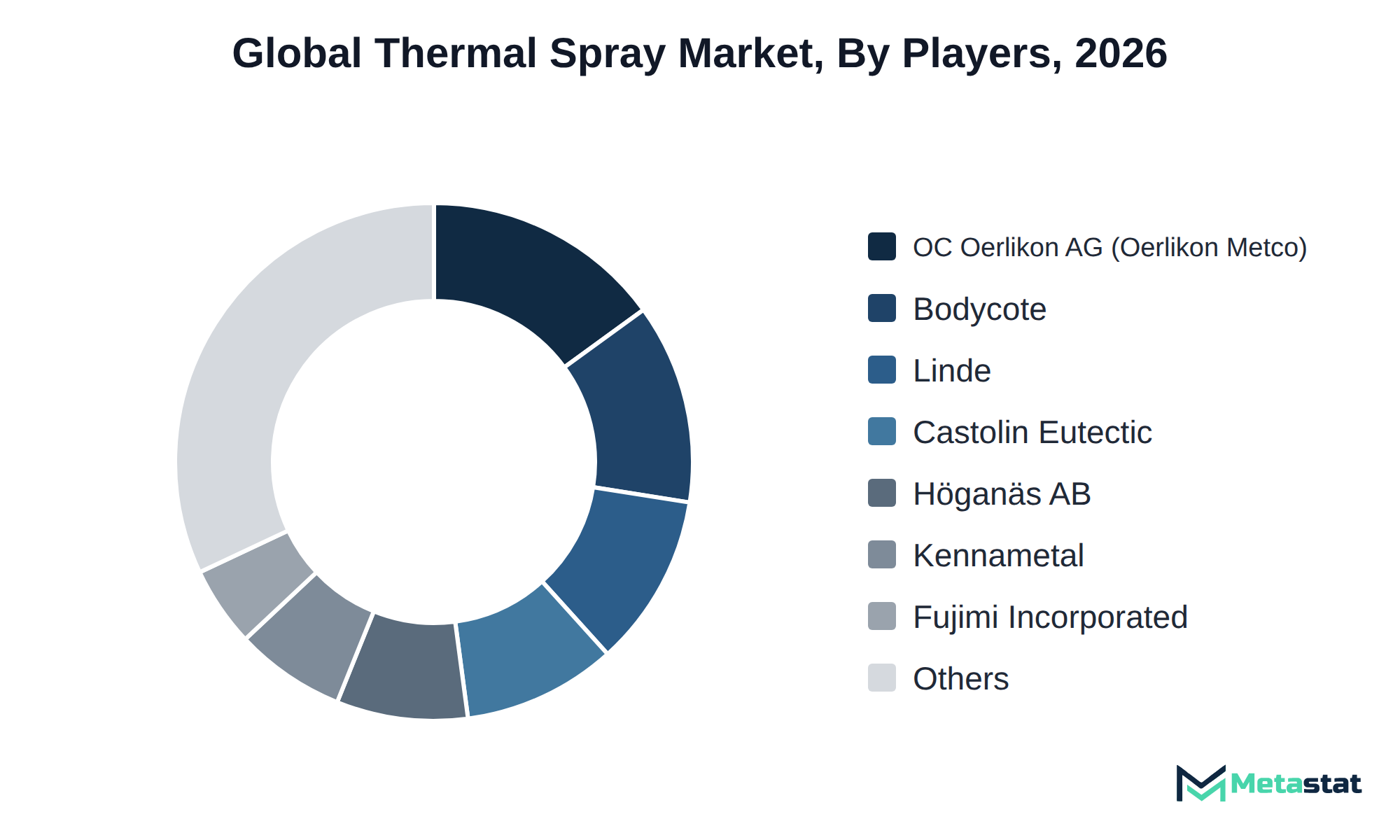
The competitive dynamics within the Thermal Spray market involve companies adopting various strategies to differentiate themselves in a diverse landscape. Companies compete based on factors including price, customization, certification, and the overall service ecosystem offered to buyers. The focus on these factors influences purchasing decisions across multiple end-use industries.
OC Oerlikon Corporation AG (Oerlikon Metco) emphasizes innovation in coatings and coating services, aiming to meet the demands of high-performance applications in sectors like aerospace and defense. Linde plc specializes in providing a wide range of gas solutions for thermal spray processes, enhancing operational efficiencies for manufacturers.
Bodycote plc differentiates itself through an extensive network of facilities that offer localized services and repair solutions, addressing the needs of customers in maintenance, repair, and overhaul (MRO). Companies including Plasma Giken Co., Ltd. focus on advanced spray technologies, particularly in the Plasma Spray segment, delivering high-quality coatings that support performance and durability.
Growth in the Thermal Spray market relies on several key developments. First, increasing demand for thermal spray coatings and coating services in the aerospace and defense sector will drive revenue. Second, advancements in spray technology, particularly the plasma spray method, will enhance operational efficiency and product performance, with an anticipated increase from USD 4,148 million in 2026 to USD 5,784.9 million by 2033. This segment’s growth is linked to expanding applications across various industries. Conversely, potential slowdowns could stem from rising material costs or supply chain disruptions impacting the thermal spray materials segment. This segment is projected to reach USD 2,074.4 million by 2033, driven by increasing adoption in energy and power generation applications. The intersection of these developments and risks will shape the trajectory of the thermal spray market through the forecast period.
By Offering: Coatings and Coating Services, Thermal Spray Materials, Thermal Spray Equipment and Systems
By Spray Technology: Plasma Spray, High-Velocity Oxygen Fuel (HVOF) Spray, High-Velocity Air Fuel (HVAF) Spray, Electric Arc Spray, Conventional Flame Spray, Cold Spray, Detonation Spray
By End-Use Industry: Aerospace and Defense, Energy and Power Generation, Automotive and Transportation, Medical Devices, Electronics and Semiconductors, Oil and Gas, Metals and Mining, Pulp, Paper and Printing, Others (Chemicals, Textiles, General Machinery)
By Component Lifecycle Stage: New Component Manufacturing, Maintenance, Repair and Overhaul (MRO)
The report strategically identifies and profiles the key market players and analyses their core competencies in each sub-segment of the Thermal Spray market.
Report Attributes | Details |
Study Period | 2021-2033 |
Base Year | 2025 |
Estimated Year | 2026 |
Forecast Period | 2026-2033 |
Historical Period | 2021-2025 |
Growth Rate | CAGR 4.6% from 2026 to 2033 |
Revenue Unit | USD million |
Segmentation | By Offering, Spray Technology, End-Use Industry, Component Lifecycle Stage, and Region |
By Region | North America (By Offering, Spray Technology, End-Use Industry, Component Lifecycle Stage, and Country)
|
Europe (By Offering, Spray Technology, End-Use Industry, Component Lifecycle Stage, and Country)
| |
Asia Pacific (By Offering, Spray Technology, End-Use Industry, Component Lifecycle Stage, and Country)
| |
South America (By Offering, Spray Technology, End-Use Industry, Component Lifecycle Stage, and Country)
| |
Middle East and Africa (By Offering, Spray Technology, End-Use Industry, Component Lifecycle Stage, and Country)
|
Find answers to common questions about this report
The Thermal Spray market size was valued at USD 11,136.6 million in 2025.
The market is projected to grow at a CAGR of 4.6% during the forecast period from 2026 to 2033.
The North America Thermal Spray market size is estimated to reach USD 4,391.9 million by 2033.
Coatings and Coating Services leads the Thermal Spray market with a value of USD 8,937.2 million in 2026. This segment represents the largest share compared to other segments in the Offering category.
Ongoing replacement cycles of aging components in the aerospace and defense sector drive increased investments in thermal spray technologies. New component manufacturing represents a significant growth opportunity, fueled by rising demand for high-performance coatings across various applications.
Pricing challenges significantly impede growth, particularly affecting buyers in the aerospace and defense sector. High costs associated with advanced thermal spray technologies lead to delayed purchasing decisions and smaller order volumes, restricting overall market penetration.
Factors favoring adoption in the Thermal Spray industry include rising demand for high-performance coatings and advancements in thermal spray technologies that enhance component efficiency and longevity. These developments position the new component manufacturing segment as a key area for investment among industry players.
The Thermal Spray market is estimated to reach a valuation of USD 15,993.7 million by 2033.
Key players operating in the Thermal Spray market include OC Oerlikon Corporation AG (Oerlikon Metco), Linde plc, Bodycote plc, TOCALO Co., Ltd., Castolin Eutectic, Kennametal Inc., and Plasma Giken Co., Ltd.
Demand for thermal spray technologies is driven by the aerospace and defense sector's ongoing replacement cycle of aging components. Investments focus on advanced coating solutions that extend service life and enhance performance.
The analysts below cover Chemicals and Materials research at Metastat Insights.
LEAD ANALYST
Utkarsh Khirodkar is a Lead Market Research Analyst at MetaStat Insight, specializing in market intelligence, technology sector assessments, and competitive strategy.

INDUSTRY CONSULTANT - CHEMICALS & ADVANCED MATERIALS
Chemicals and Materials · Machinery & Equipment · Packaging
Amit Gadhekar Consultant for Chemicals and Materials at MetaStat Insight, directing sector-specific intelligence, research, and strategic consulting across global chemical and processing markets.
When planning edge sensor rollouts across refinery environments, generic IoT reports typically miss the harsh-environment certification bottlenecks. MetaStat Insight gave an objective evaluation of ATEX and Class 1 Division 2 hardware availability, along with realistic five-year maintenance cycle cost projections. The comparison of wireless mesh versus private cellular backhaul helped our team pressure-test network reliability models for remote processing facilities.
In the biological seed treatment space, registration timelines vary drastically between the European Union, Brazil, and North America. The MetaStat Insight research handled these cross-border regulatory barriers with genuine nuance, mapping commercialization pathways alongside historical field adoption rates. The segmentation between microbial strains and biochemical active ingredients was particularly well structured.
Our team was tracking whether regional recycling infrastructure could realistically absorb the growing volume of lithium iron phosphate batteries over the next decade. The report did a solid job separating announced hydrometallurgical plant capacity from active, permitted operational throughput. That distinction made the feedstock availability projections and regional recovery rate models far more credible than standard commercial overviews.
Explore related market intelligence reports worth reading alongside this one.