
LEAD ANALYST
Utkarsh Khirodkar is a Lead Market Research Analyst at MetaStat Insight, specializing in market intelligence, technology sector assessments, and competitive strategy.

U.S. IT Asset Disposition Market Size, Share, By Asset Type (Computers & Laptops, Servers & Data Center Equipment, Storage Devices & Media, Networking & Telecommunications Equipment, Mobile Devices & Tablets, Peripherals & Office IT Equipment, Others), By Service Type (Data Destruction & Sanitization, IT Asset Remarketing & Value Recovery, IT Asset Recycling & Material Recovery, IT Asset Collection, Logistics & Inventory Management, IT Asset Decommissioning & Dismantling, IT Asset Refurbishment & Redeployment), By Organization Size (Large Enterprises, Small & Medium-Sized Enterprises (SMEs)), By End-Use Industry (IT & Telecommunications, Banking, Financial Services & Insurance (BFSI), Healthcare & Life Sciences, Government & Public Sector, Education, Manufacturing, Retail & E-commerce, Data Center & Cloud Service Providers, Others), Industry Analysis, Growth, Trends, and Forecast, 2026-2033
Report ID
MSI-5539
Published
October, 2026
Pages
255 Pages
Format
Historical
Base year
Forecast
Forecast period
Report Details
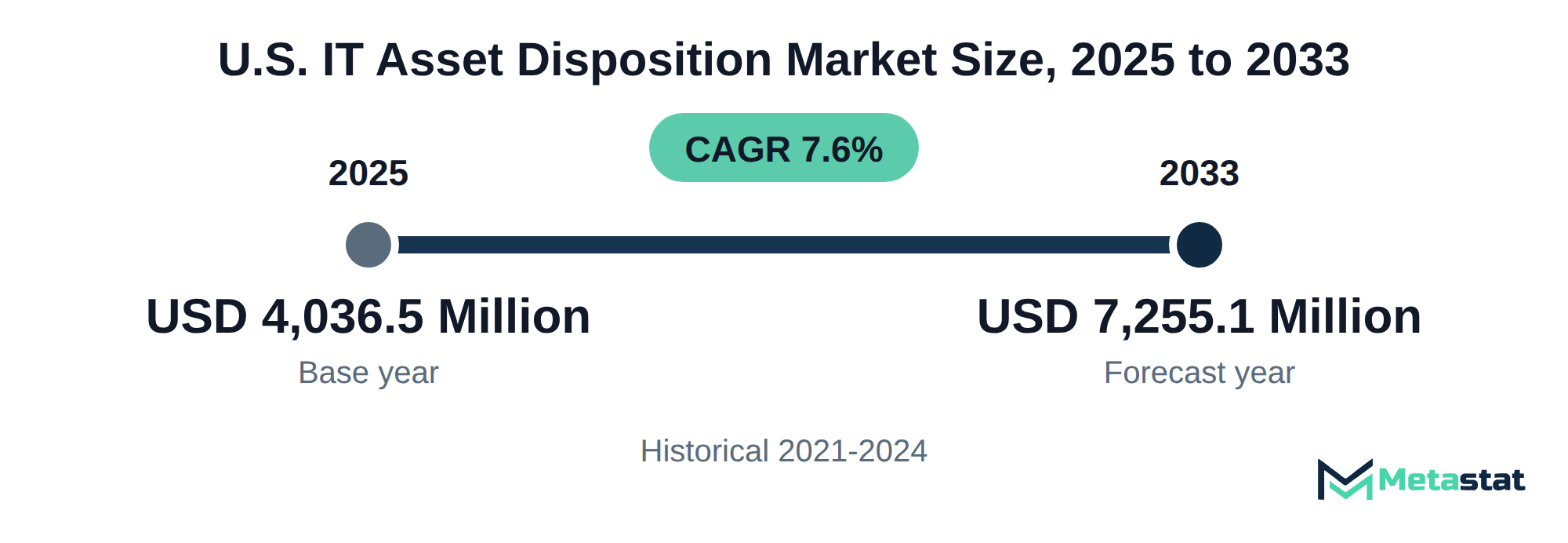
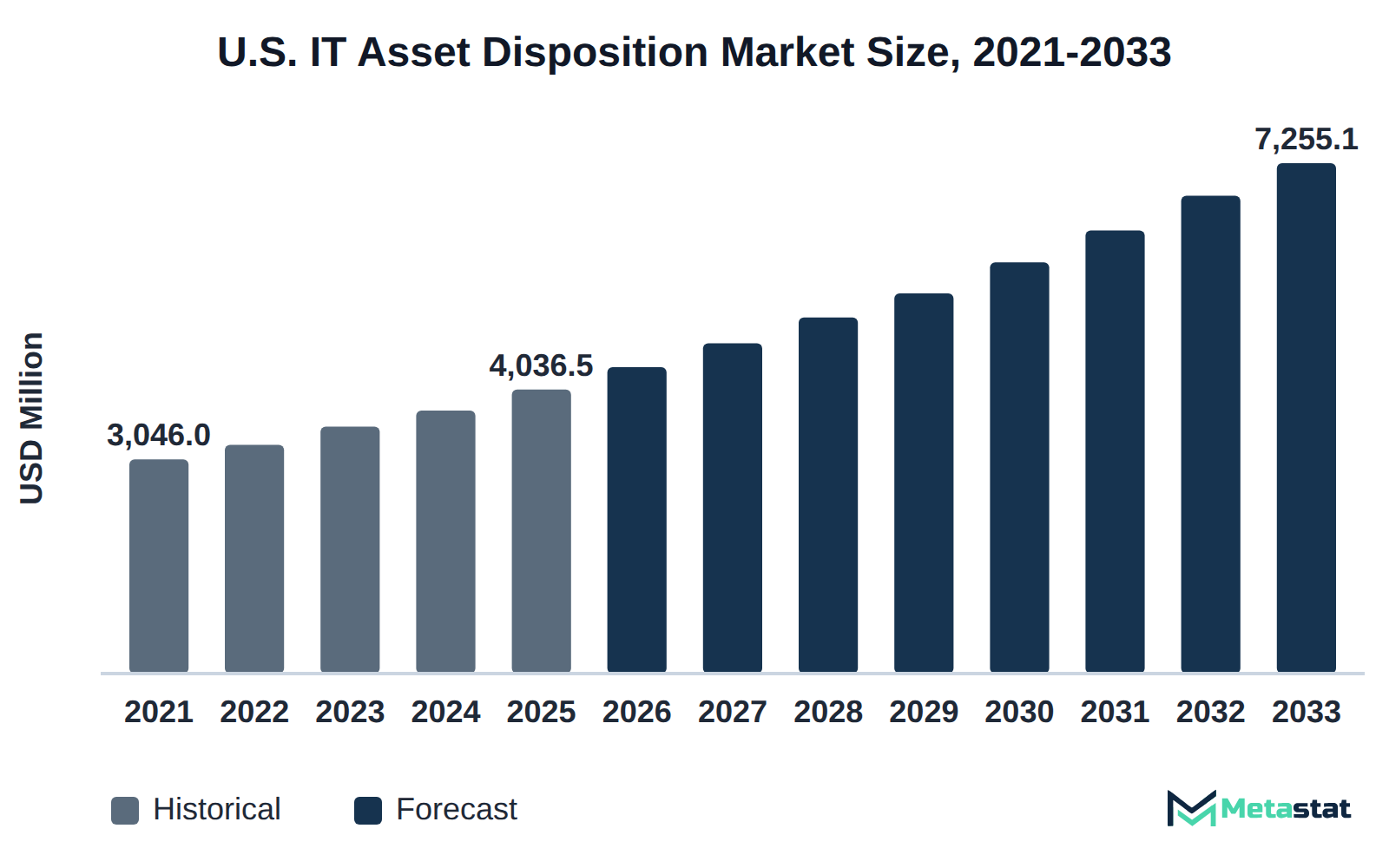
Market Valuation: Valued at $4,036.5 Million in 2025, projected to reach $7,255.1 Million by 2033 at a 7.6% CAGR.
Dominant Segment: Servers and data center equipment lead the U.S. IT Asset Disposition market, driven by the growing emphasis on data security and the need for compliance with stringent regulations.
Geographic Lead: The Western region is the largest market for IT asset disposition services, fueled by a high concentration of technology firms and data centers.
What's Inside: The report provides comprehensive analyses of market dynamics, competitive coverage, and detailed forecasts from 2026 to 2033 across various asset types and service categories.
Emerging Trends: The increasing focus on environmental sustainability is reshaping procurement strategies, with organizations prioritizing responsible disposal and recycling of IT assets.
Service Growth: Data destruction and sanitization services are projected to grow significantly, reflecting heightened awareness of data privacy and security regulations.
Choose Your License
U.S. IT Asset Disposition Market
The U.S. IT Asset Disposition market was valued at USD 4,036.5 million in 2025 and is projected to reach USD 7,255.1 million by 2033, growing at a CAGR of 7.6% over the forecast period.
The U.S. IT Asset Disposition market encompasses the processes involved in the secure and responsible disposal of outdated or unwanted information technology assets. Buyers invest in these services to ensure compliance with regulatory requirements, protect sensitive data, and recover value from retired IT equipment. The market includes various asset types, including computers, servers, storage devices, and networking equipment, focusing on maximizing recovery and minimizing environmental impact.
Growth within the market is driven by the increasing emphasis on data security and environmental sustainability. Large organizations, particularly in sectors including IT and telecommunications, account for the largest share of spending, reflecting their extensive IT infrastructure and the necessity for efficient asset management. Among the various segments, servers and data center equipment exhibit the highest value, contributing significantly to overall market expansion.
Investments in IT asset disposition initiatives are expected to rise, fueled by ongoing digital transformation across industries. This transformation necessitates the regular update of IT systems and equipment, leading to a higher turnover of assets. Consequently, firms prioritize effective disposal strategies to ensure data security and environmental compliance while capitalizing on recovery opportunities.
The U.S. IT Asset Disposition market encompasses a range of services and asset types designed to manage the lifecycle of IT equipment, from acquisition to final disposal. Buyers invest in these services to ensure compliance with data protection regulations, maximize the value of retired assets, and promote environmental sustainability. This market is characterized by a growing emphasis on responsible disposal methods, which increasingly influence purchasing decisions among organizations seeking to mitigate risks associated with data breaches and environmental impact.
Growth in the market is propelled by technological advancements and increasing awareness of data security. Among the various asset types, Servers & Data Center Equipment represents the segment with the highest value. The Western region holds the largest share of the market, reflecting robust demand for IT asset disposition services driven by the high concentration of technology firms and data centers in this area. These factors contribute to a competitive landscape that encourages innovation and service diversification.
Data Destruction & Sanitization emerges as a critical service type within the market, reflecting heightened focus on data security. Organizations invest significantly in this service to safeguard sensitive information and comply with regulatory requirements. This focus on secure data management aligns with the broader trend of increasing digitalization, prompting more businesses to prioritize effective IT asset disposition strategies. The ongoing demand for these services positions the market for sustained growth.
Data center decommissioning significantly influences the U.S. IT Asset Disposition market. The ongoing transition to AI-driven infrastructure results in a surge in the deployment of new servers, necessitating the retirement of older equipment. This shift leads to increased demand for asset disposition services, particularly in the area of servers and data center equipment, projected to reach USD 2,207 million by 2033, reflecting a compound annual growth rate of 10% during the forecast period.
The requirement for efficient data center decommissioning involves not only physical removal but data destruction and sanitization services, which enhance security and compliance. Companies recognize the commercial imperative of maintaining data integrity while minimizing environmental impact during asset retirement. The service type "Data Destruction & Sanitization" is anticipated to reach USD 1,807.3 million by 2033, marking an 8.6% CAGR. This evolution highlights the heightened importance of responsible IT asset disposal practices across industries.
The intersection of data center decommissioning and the refresh of AI servers shapes the strategies of businesses involved in asset disposition. Firms specializing in these services benefit from heightened demand driven by technological advancements and regulatory compliance, facilitating investment in operational capabilities and positioning them competitively within the U.S. IT Asset Disposition market.
Secure data destruction and adherence to regulatory compliance significantly shape procurement strategies within the U.S. IT Asset Disposition market. Enterprises prioritize comprehensive data destruction services to mitigate risks associated with data breaches and non-compliance with privacy regulations. The value of data destruction and sanitization services is projected to rise from USD 1,012.9 million in 2026 to USD 1,807.3 million by 2033, reflecting a compound annual growth rate of 8.6%. This trend highlights the increasing integration of robust data protection measures in ITAD strategies.
Pricing models in this market often vary, with suppliers offering contracts that encompass a range of services, from data destruction to asset recycling. Large enterprises typically engage in long-term agreements for comprehensive ITAD solutions, while small and medium-sized enterprises opt for more flexible, on-demand service contracts. This flexibility allows SMEs to align their ITAD expenditures with operational needs while ensuring compliance with data protection laws.
The growing emphasis on secure data destruction results in heightened competition among providers, compelling them to enhance their service offerings and pricing strategies. In this environment, enterprises benefit from a broader selection of ITAD solutions that prioritize security and regulatory compliance, ultimately facilitating safer, more responsible asset disposition.
IT asset remarketing, refurbishment, and residual value recovery significantly impact the U.S. IT Asset Disposition market. These practices align with the increasing focus on sustainability and circular economy principles, which strongly appeal to large enterprises seeking to optimize asset utilization. The asset type segment, particularly in IT asset remarketing and value recovery, is projected to reach USD 1,917.5 million by 2033, reflecting a compound annual growth rate of 8.6%.
Large enterprises possess a distinct requirement for efficient asset management strategies. These organizations prioritize maximizing the return on investment from outdated or surplus IT equipment, increasing the importance of refurbishment and remarketing activities. IT asset remarketing not only helps recover residual value but supports environmentally responsible practices by extending the lifecycle of electronic devices. This approach reduces electronic waste and aligns with corporate social responsibility goals.
The substantial projected growth in the asset type segment illustrates the commercial significance of these practices. Implementing effective remarketing strategies enables large enterprises to recoup investments while contributing positively to environmental sustainability. Consequently, organizations that embrace IT asset refurbishment and remarketing strategies position themselves favorably within the evolving landscape of the U.S. IT Asset Disposition market.
Enterprises across the U.S. increasingly prioritize certified IT asset disposition services to ensure secure hardware retirement. This trend arises from heightened awareness of data security and compliance regulations, reinforcing the importance of proper asset disposal. This significant growth indicates a strong commitment from organizations to protect sensitive information while adhering to industry standards.
The adoption of certified IT asset disposition services is especially crucial for large enterprises, which are responsible for vast amounts of data and hardware. By investing in certified services, these organizations minimize the risk of data breaches and enhance their reputation among consumers and stakeholders. The increasing focus on sustainability drives organizations to seek reliable disposal methods that include recycling and recovery of materials. This shift supports environmental objectives and aligns with corporate social responsibility initiatives.
While the U.S. IT Asset Disposition market matures, organizations prioritizing certified services will likely gain a competitive edge. The integration of secure and efficient asset retirement processes into business operations builds trust and compliance while reducing potential financial liabilities associated with improper disposal.
Corporate buyers increasingly prioritize environmental sustainability, driving demand within the market. The growing awareness of the environmental impacts of electronic waste has prompted businesses to seek responsible disposal and recycling solutions for their IT assets. Large enterprises, recognizing the importance of sustainable practices, shift their procurement strategies towards IT asset disposition services that emphasize eco-friendly processes, including recycling and material recovery. This shift leads to increased volumes of disposed assets and boosts service demand. Data from the market indicates that the IT asset recycling and material recovery service type is projected to reach USD 1,213.1 million by 2033. This trend enhances corporate responsibility and compliance with environmental standards.
Adoption of advanced technologies significantly enhances operational efficiencies in IT asset disposition, leading to improved recovery rates for retired assets. Innovations including automated data sanitization tools and artificial intelligence-driven asset tracking systems streamline processes, reducing labor costs and errors. These technological advancements appeal particularly to large enterprises that seek effective solutions for managing their IT assets. Enhanced visibility of asset life cycles and secure data destruction capabilities strengthen compliance with regulations while maximizing value recovery opportunities.
The growing emphasis on sustainability within the U.S. IT Asset Disposition market motivates suppliers to invest in technologies that facilitate resource recovery and recycling. Organizations increasingly recognize the importance of optimizing residual value through efficient remarketing strategies. This shift encourages suppliers to develop integrated service offerings, combining logistics, refurbishment, and data security processes. The market is projected to grow, driven by technological integration that aligns with corporate responsibility initiatives and market demand for environmentally responsible IT asset management solutions.
Rising costs associated with data destruction services hinder adoption among small and medium-sized enterprises (SMEs) within the U.S. IT Asset Disposition market. Many SMEs face tighter budgets, limiting their ability to invest in secure data destruction solutions. This financial constraint contributes to slower uptake of IT asset disposition services, leading to delayed replacement cycles for outdated technology. The perception of high costs deters SMEs from engaging with IT asset disposition providers, resulting in smaller orders and inconsistent service utilization. Shifting to lower-cost alternatives compromises data security, increasing risks related to data breaches. Consequently, financial considerations create significant barriers to effective asset disposition, affecting the overall growth trajectory of the market.
Talent acquisition expenses present a significant challenge for suppliers in the U.S. IT Asset Disposition market. The growing competition for skilled workers, particularly in technology and data management roles, drives up salary expectations and recruitment costs. Suppliers experience margin pressure while striving to deliver high-quality service levels, which affects overall profitability. In response, many suppliers enhance their recruitment strategies, focusing on developing partnerships with educational institutions and offering training programs to build internal talent pipelines. This shift mitigates immediate talent shortages and creates a more skilled workforce aligned with evolving industry demands. Investment in technology-driven training boosts employee retention and efficiency, assisting suppliers in navigating the competitive environment. While these strategies support operational resilience, ongoing investment in workforce development remains essential for long-term success in the market.
Surging demand for data destruction services presents a notable market opportunity within the U.S. IT Asset Disposition market. The compound annual growth rate for the data destruction and sanitization service segment is projected at 8.6% through 2033, reflecting increasing awareness regarding data privacy and security. Enterprises across various industries, particularly in IT and telecommunications, recognize the importance of compliant data disposal methods, driving investments in these services. This growth is influenced by stricter regulations and the increasing frequency of data breaches, prompting organizations to prioritize secure data handling practices. The expansion of small and medium-sized enterprises (SMEs) seeking reliable data destruction solutions contributes to overall market growth. Suppliers positioned to meet this demand by offering comprehensive data destruction services capitalize on the heightened focus on data protection, ultimately enhancing their market presence and profitability.
The U.S. IT Asset Disposition market is segmented based on Asset Type, Service Type, Organization Size, and End-Use Industry.
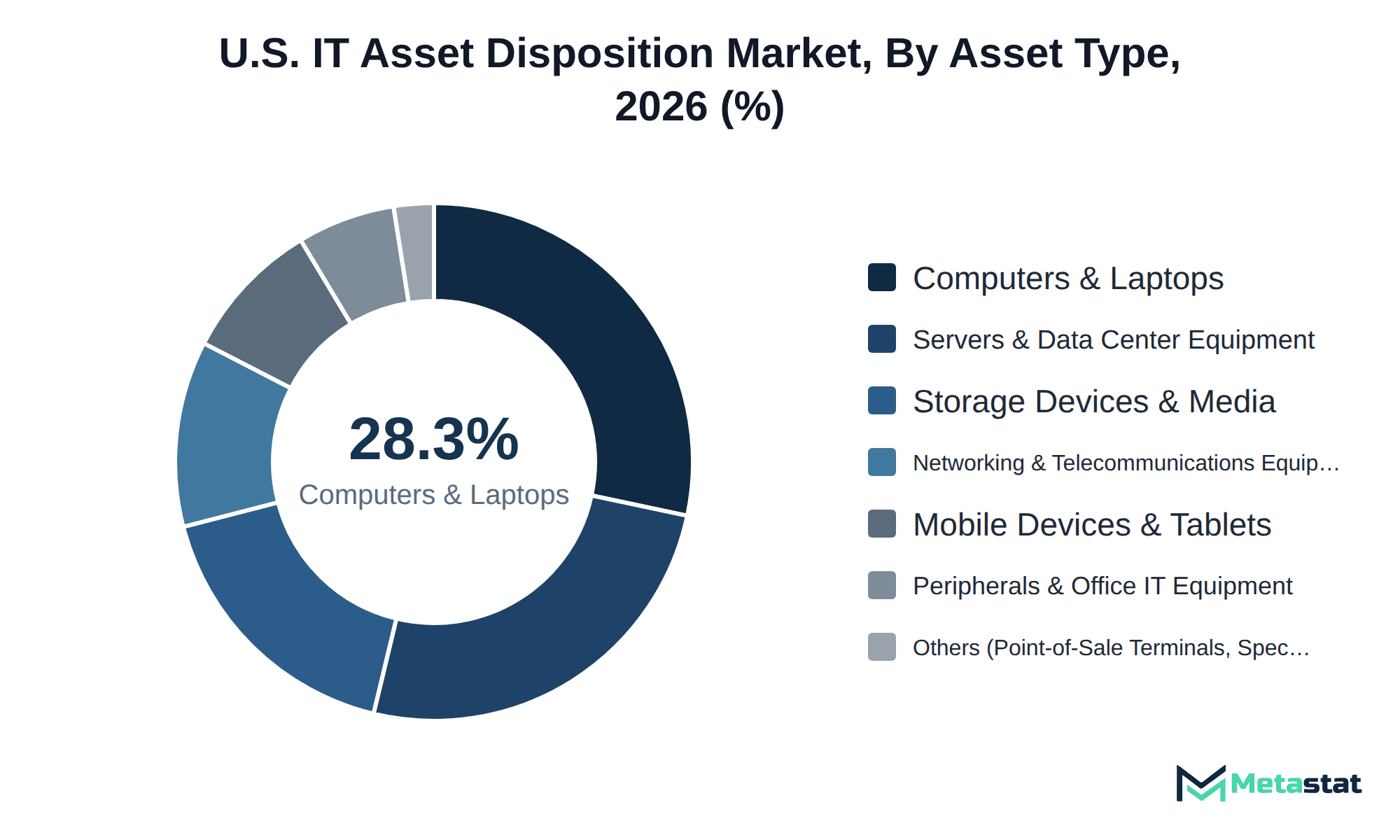
The Computers & Laptops segment is valued at USD 1,214.6 million in 2026 and is projected to reach USD 1,767.3 million by 2033, at a CAGR of 5.5% during the forecast period. This segment primarily serves businesses and organizations that require efficient management of computer assets, ensuring secure data destruction and compliance with evolving regulatory standards. Increasing awareness of data security and environmental sustainability drives demand in this segment. Compared to other asset types, the Computers & Laptops segment experiences slower growth due to a mature market and longer replacement cycles. In contrast, segments including Servers & Data Center Equipment exhibit faster growth, reflecting a shift towards cloud and data center services that necessitate frequent updates and disposals. The market continues to evolve, driven by technological advancements and stringent data protection regulations.
This segment primarily serves large enterprises and data centers, which require robust data management and processing capabilities. The growing reliance on cloud computing and virtualization drives demand for efficient IT asset disposition solutions tailored to servers and data center equipment. Unlike other asset types, this segment exhibits faster growth, attributed to increasing data security concerns and the need for compliance with stringent regulations. Organizations prioritize secure decommissioning and data destruction processes, influencing procurement strategies. The unique technological requirements of servers and data center equipment necessitate specialized services, distinguishing this segment from others including computers and laptops, which experience lower growth at a CAGR of 5.5%. Overall, the segment reflects a critical shift towards sustainable asset management practices that enhance recovery value and mitigate risks associated with data breaches.
The Storage Devices & Media segment is expected to reach USD 1,151.4 million by 2033. This segment encompasses a variety of storage hardware, including hard drives, solid-state drives, and data tapes. Companies across diverse sectors use these devices to manage data retention and retrieval efficiently. Strong demand growth arises from increasing regulatory requirements regarding data protection and privacy, compelling organizations to ensure secure handling of sensitive information. Unlike other segments, including Servers & Data Center Equipment, which is projected to grow at a CAGR of 10%, the growth rate for Storage Devices & Media stands at a lower CAGR of 5.5%. This slower growth reflects the market's maturity and the potential for technological advancements that drive up replacement cycles and innovation in storage solutions. The U.S. IT Asset Disposition market remains influenced by these dynamics, shaping procurement strategies among buyers seeking to optimize their asset lifecycles.
The Networking and Telecommunications Equipment segment is projected to grow at a CAGR of 8.5% during the forecast period. This segment encompasses a range of equipment used in the communications infrastructure, critical for various industries including IT, telecommunications, and government sectors. The increasing reliance on high-speed internet and data transmission fuels demand for upgrading and disposing of obsolete networking equipment. Businesses prioritize secure and efficient data destruction, recognizing its importance for compliance with regulations. Compared to other asset types, this segment demonstrates significant growth, driven by technological advancements and the need for scalable solutions. The market is anticipated to reach significant valuations, reflecting the essential role of network infrastructure in contemporary business operations.
Mobile devices and tablets encompass a crucial aspect of technology lifecycle management. Organizations use these devices for communication, data access, and various applications, making their proper disposition essential for data security and environmental sustainability. Rapid advancements in mobile technology lead to shorter upgrade cycles, driving demand for effective IT asset disposition strategies. Large enterprises and small and medium-sized enterprises (SMEs) engage in disposing of outdated devices to mitigate risks associated with data breaches while recovering residual value. Unique factors influencing this segment include stringent data protection regulations and heightened emphasis on sustainability practices, setting it apart from other asset types. Compared to other segments, mobile devices and tablets experience varying growth rates due to distinct purchasing behaviors and needs of consumers and businesses. The U.S. IT Asset Disposition market reflects this evolving landscape while organizations adapt to the increasing necessity for secure and responsible device disposal.
Peripherals and Office IT Equipment encompass various devices used in office environments, including keyboards, mice, printers, and other essential accessories. Organizations leverage these items to enhance productivity and streamline operations. Demand for this segment is driven by organizations seeking to optimize their workspaces and improve employee efficiency. Large enterprises typically invest more in advanced peripherals compared to small and medium-sized enterprises (SMEs), which prioritize cost-effective solutions. Growth in this segment lags compared to other asset types, reflecting a more mature market where replacement cycles are less frequent. In the U.S. IT Asset Disposition market, effective asset recovery strategies for peripherals yield significant value, addressing environmental concerns and contributing to circular economy practices.
Point-of-sale terminals and specialized IT hardware serve critical functions in retail and transaction environments, facilitating efficient payment processing and data management. Organizations across various sectors, including retail and hospitality, engage this segment to enhance customer experiences and streamline operations. Demand for these devices stems from the increasing need for efficient transaction systems, driven by consumer preferences for quick and easy payment methods. Unlike other segments, the growth trajectory for this category does not align directly with broader IT asset categories, reflecting unique market dynamics and price sensitivities. Regulatory compliance concerning data security and consumer protection influences procurement strategies within this segment, impacting the overall landscape of the U.S. IT Asset Disposition market. While sectors including computers and laptops focus on asset recovery and remarketing, point-of-sale terminals require specialized disposal methods to mitigate risks associated with sensitive transaction data.
This segment serves organizations requiring safe and compliant destruction of sensitive data stored on IT assets. Institutions including financial services and healthcare rely heavily on these services to protect data integrity and comply with regulations. The increasing focus on data privacy regulations drives demand for these services. This segment exhibits faster growth compared to others, driven by stringent requirements for data protection affecting all organization sizes. The IT Asset Remarketing & Value Recovery segment, while valuable, expands at a CAGR of 8.6%, slightly lower than Data Destruction & Sanitization. The demand for effective data destruction solutions positions this segment as a critical aspect of the U.S. IT Asset Disposition market.
This segment focuses on recovering value from retired IT assets through resale or refurbishment, appealing primarily to large enterprises and small and medium-sized enterprises (SMEs) seeking to maximize returns on obsolete equipment. Growing awareness of sustainability drives purchasing decisions, leading organizations to pursue remarketing options that reduce waste. This segment experiences faster growth compared to IT Asset Recycling & Material Recovery, which is influenced by different buyer priorities and lower price points. Demand for IT Asset Remarketing & Value Recovery is supported by increasing reliance on cost-effective solutions and the desire to extract value from existing assets, enhancing overall recovery rates in the U.S. IT Asset Disposition market.
IT Asset Recycling & Material Recovery segment is expected to reach USD 1,213.1 million by 2033. This segment focuses on recovering valuable materials from retired IT assets, allowing organizations to minimize waste and support sustainability goals. Typically used by large enterprises and small and medium-sized enterprises (SMEs), this service facilitates the responsible disposal of electronic waste. Current trends in the market highlight growing awareness of environmental issues, motivating businesses to adopt recycling practices. Demand for this segment is influenced by regulations aimed at reducing electronic waste and promoting recycling. Compared to other service types, including IT Asset Remarketing & Value Recovery, this segment experiences a slower growth rate; however, it plays a significant part in supporting responsible resource management in the U.S. IT Asset Disposition market.
IT Asset Collection, Logistics & Inventory Management segment is projected to grow at a CAGR of 6% during the forecast period. This segment addresses the requirements of businesses for efficient management of IT assets through collection, tracking, and inventory services. Organizations across various industries employ these services to streamline their asset management processes and ensure compliance with environmental regulations. One significant force driving this segment stems from the increasing focus on sustainability among corporate buyers, leading to enhanced demand for responsible asset management. This segment's growth rate is slower than that of IT Asset Remarketing & Value Recovery, which has a CAGR of 8.6%, indicating a shift in priorities toward maximizing asset value recovery rather than merely managing asset logistics. Consequently, the segment plays a critical role in the U.S. IT Asset Disposition market, supporting businesses in achieving operational efficiency while adhering to regulatory requirements.
IT Asset Decommissioning & Dismantling focuses on the process of safely retiring technology assets, ensuring compliance with regulatory standards and environmental guidelines. Organizations across various industries engage this service to mitigate risks associated with data breaches and environmental impact. Key demand drivers include increasing regulatory scrutiny concerning data protection and the growing emphasis on sustainability practices among businesses. This segment differentiates itself from others, including IT Asset Remarketing & Value Recovery, by prioritizing asset retirement and compliance over financial recovery. The market benefits from heightened awareness of the importance of responsible asset disposal and the need for companies to adhere to stringent regulations. An increasing number of businesses recognize the value of engaging specialized providers for decommissioning services, further influencing overall market dynamics and contributing to the expansion of the U.S. IT Asset Disposition market.
IT Asset Refurbishment & Redeployment focuses on reconditioning and repurposing used IT assets, extending their lifecycle and enhancing their value. This service is crucial for organizations aiming to minimize electronic waste while maximizing the return on previous investments. Large enterprises and small to medium-sized enterprises utilize refurbished assets to reduce costs and support sustainability initiatives. The demand for refurbishment is driven by increasing environmental regulations and the growing emphasis on sustainable practices. Compared to other service types, including Data Destruction & Sanitization and IT Asset Remarketing & Value Recovery, refurbishment typically involves lower prices and appeals to cost-conscious buyers seeking to optimize asset utilization. This segment operates within the broader context of the U.S. IT Asset Disposition market, where the focus on environmentally responsible methods drives competitive differentiation.
The Large Enterprises segment is valued at USD 3,133.4 million in 2026 and is projected to reach USD 5,035.8 million by 2033, at a CAGR of 7% during the forecast period. This segment involves significant IT asset management and encompasses companies that require efficient solutions for disposing of outdated technology. Organizations in this category prioritize data security and compliance, driving demand for services that ensure safe and secure disposal of assets. An increasing focus on sustainability and environmental responsibility influences purchasing decisions, with firms seeking partners that enhance their corporate social responsibility profiles. Compared to the Small & Medium-Sized Enterprises segment, Large Enterprises face more complex regulatory requirements and engage in larger-scale disposals, leading to their higher valuation and growth potential within the U.S. IT Asset Disposition market.
The Small & Medium-Sized Enterprises (SMEs) segment is estimated to reach USD 2,219.3 million by 2033, at a CAGR of 8.9% during the forecast period. This segment is essential for SMEs seeking efficient management of their IT assets, particularly in ensuring data security and compliance with regulatory standards. Demand for IT asset disposition services is driven primarily by increasing regulatory pressures and the need for effective data management practices among smaller organizations. This segment exhibits a higher growth rate compared to larger enterprises, reflecting the agility of SMEs in adopting IT asset disposition solutions tailored to their specific requirements. While larger enterprises typically engage in extensive IT asset management strategies, SMEs prioritize cost-effective solutions that enhance operational efficiency without compromising data security. Such dynamics contribute to the segment's robust expansion within the broader U.S. IT Asset Disposition market.
The IT & Telecommunications segment is valued at USD 767.3 million in 2026 and is projected to reach USD 1,178.2 million by 2033, at a CAGR of 6.3% during the forecast period. This segment primarily serves technology companies, telecom providers, and organizations reliant on IT infrastructure. Rapid advancements in technology drive demand for efficient IT asset disposition strategies, ensuring compliance with regulatory standards while maximizing asset recovery value. In contrast to other segments, the IT & Telecommunications segment experiences moderate growth compared to sectors including Servers & Data Center Equipment, which achieves a CAGR of 10%. The ongoing transition to cloud-based solutions and the need for secure data management fuel the growth of this segment, highlighting its critical role in the U.S. IT Asset Disposition market. Growing awareness of environmental sustainability further enhances the importance of responsible asset disposal practices among end-users.
The Banking, Financial Services & Insurance (BFSI) segment is estimated to reach USD 900.4 million by 2033, at a CAGR of 6.6% during the forecast period. This segment encompasses a range of services employed by financial institutions to securely manage and dispose of IT assets, ensuring compliance with regulatory requirements and safeguarding sensitive customer information. Key drivers of growth include increasing regulatory scrutiny over data security and rising awareness of the environmental impact of IT asset disposal. Compared to other segments, the BFSI segment experiences a moderate growth rate, reflecting the unique challenges faced by financial institutions in adopting IT asset disposition strategies. The competitive landscape in this sector features distinct pricing structures due to the high levels of regulatory compliance required, which sets it apart from faster-growing segments including IT & Telecommunications.
The Healthcare & Life Sciences segment is expected to reach USD 935.2 million by 2033. This segment primarily serves healthcare providers, pharmaceutical companies, and life sciences organizations that require secure disposal and management of IT assets due to strict regulatory compliance and data protection requirements. The rising emphasis on data security and regulatory adherence drives demand within this segment, reflecting the need for specialized services. Unlike other segments, including IT & Telecommunications, which grow at a CAGR of 6.3%, the Healthcare & Life Sciences segment experiences a more measured growth, necessitating tailored approaches for asset disposition. Organizations in this sector prioritize compliance over cost, influencing pricing strategies and service offerings. The U.S. IT Asset Disposition market is expected to evolve to meet the unique needs of healthcare, emphasizing secure, sustainable disposal practices.
Government & Public Sector segment is projected to grow at a CAGR of 6.7% during the forecast period. This segment involves the efficient management and disposal of IT assets within government agencies and public institutions, ensuring compliance with regulatory requirements. The demand for IT asset disposition services in this sector is driven by the increasing focus on data security and environmental sustainability. Government organizations prioritize secure data destruction and proper recycling of electronic waste to safeguard sensitive information and reduce their environmental footprint. This segment experiences slower growth compared to others due to stringent procurement processes and budget constraints typical in public sector organizations. The emphasis on compliance and regulatory mandates distinguishes it from segments including Banking, Financial Services & Insurance, which experiences a higher growth rate at a CAGR of 6.6% during the same period. The U.S. IT Asset Disposition market reflects these dynamics, highlighting the specific needs and challenges faced by government and public sector entities.
Education encompasses institutions involved in the delivery of learning, including schools, colleges, and universities. These organizations manage IT asset disposition services to handle outdated or surplus technology, ensuring data security and environmental compliance. The demand for IT asset disposition in this sector arises from heightened regulatory compliance and the importance of protecting sensitive student information. Educational institutions increasingly adopt technology to enhance learning experiences, driving the need for effective and sustainable asset management. This segment typically experiences slower growth compared to others, reflecting budget constraints common in educational settings. While larger organizations capitalize on IT asset remarketing, smaller educational institutions prioritize cost-effective disposal solutions, highlighting differing buyer dynamics in the U.S. IT Asset Disposition market.
Manufacturing involves the production of goods using various technologies and equipment, which requires effective management of IT assets to ensure smooth operations. This segment primarily serves manufacturers who rely on advanced machinery and IT infrastructure to maintain efficiency and productivity. Key forces influencing this segment include the adoption of automation technologies and the increasing emphasis on sustainability practices. Manufacturers seek to upgrade or dispose of obsolete IT assets to comply with environmental regulations while maximizing recovery value. Compared to other segments in the market, the manufacturing segment experiences unique challenges, including higher capital expenditures on technology and more stringent compliance requirements. This focus on regulatory adherence and sustainability distinguishes it from sectors with less stringent operational demands, thus shaping its position within the U.S. IT Asset Disposition market.
Retail & E-commerce involves the sale of products and services through online platforms, emphasizing the significance of effective IT asset management. This sector employs IT asset disposition strategies to manage electronic waste, protect sensitive customer data, and maximize value recovery from outdated technology. Factors influencing growth in this segment include increasing reliance on digital commerce and regulatory pressures regarding data security and environmental responsibility. Compared to other sectors, Retail & E-commerce demonstrates a unique demand for rapid asset turnover and refurbishment processes, adapting to the dynamic nature of consumer preferences. The U.S. IT Asset Disposition market sees retail companies focusing on both value recovery and data destruction to maintain compliance and enhance consumer trust.
The segment focusing on Data Center & Cloud Service Providers involves the management and disposal of IT assets related to data centers and cloud services. These providers employ these services to ensure compliance with environmental regulations and data security protocols while optimizing asset recovery and recycling processes. Growing concerns about data privacy and stringent regulations significantly influence this segment. The transition toward cloud-based solutions drives demand, pushing providers to adopt more efficient IT asset disposition strategies. Compared to other segments, this area faces higher costs due to specialized service requirements and greater regulatory scrutiny, impacting both adoption rates and pricing strategies. Organizations in this segment prioritize secure data handling and environmentally responsible disposal methods, distinguishing them from industries that prioritize cost savings or asset recovery.
Others encompasses industries including Hospitality, Professional Services, Transportation, and Logistics. This segment finds application in managing and disposing of IT assets through effective strategies that ensure data security and environmental compliance. Organizations operating in these sectors increasingly emphasize the importance of sustainable practices alongside regulatory compliance, driving demand for IT asset disposition services. The growth of digitalization and the need for efficient asset management strategies significantly influence this segment. The segment differs from others in its group due to its varied buyer profile and distinct service requirements, which affect pricing strategies. The U.S. IT Asset Disposition market reflects these differences, contributing to a unique landscape where tailored services meet specific sector needs.
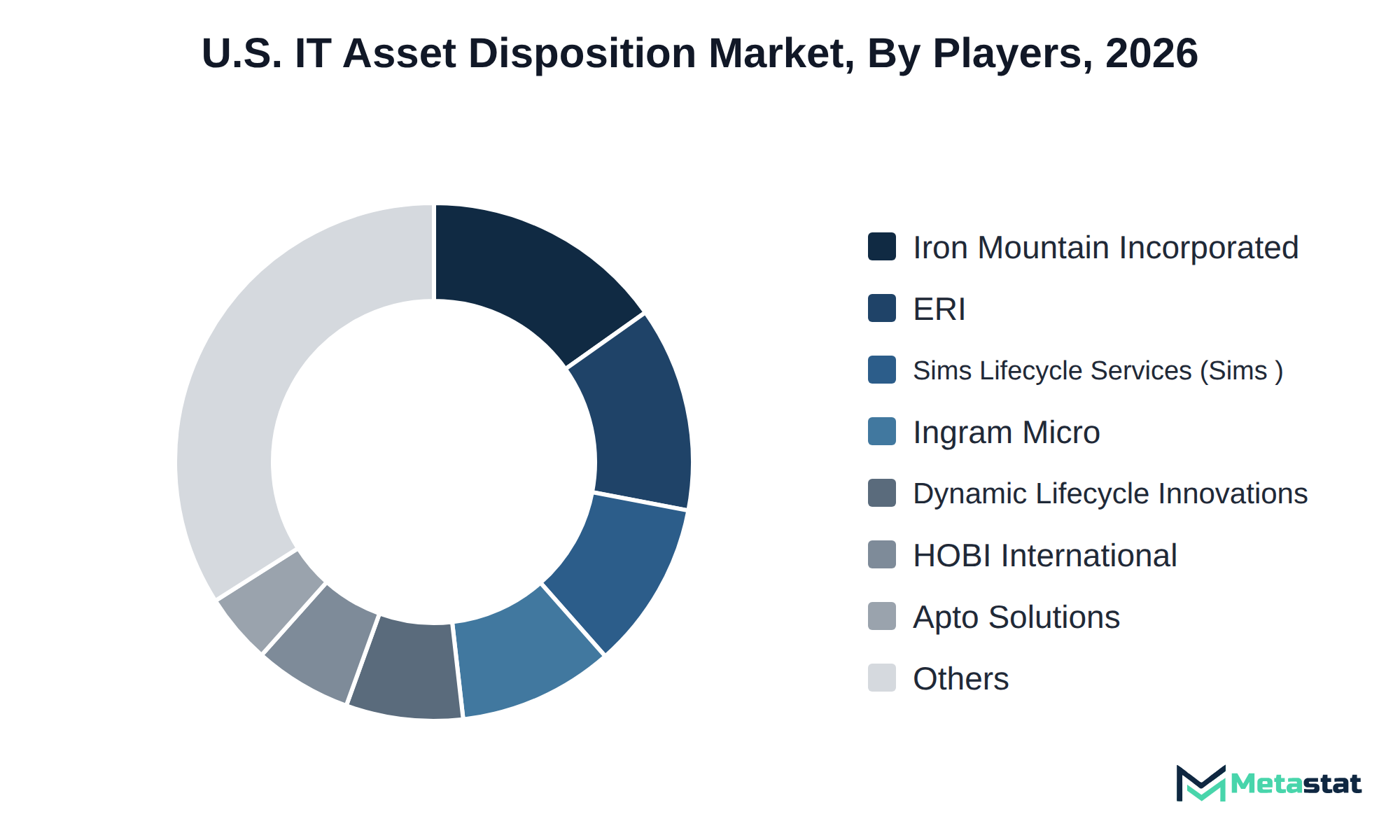
Competition within the U.S. IT Asset Disposition market revolves around service differentiation, pricing strategies, and certification standards. Companies focus on various service types, including data destruction, asset remarketing, and recycling, which cater to different buyer requirements. Buyers prioritize aspects including price, service quality, and compliance with environmental regulations when selecting providers.
Iron Mountain Incorporated emphasizes comprehensive service offerings, including data destruction and asset recovery, appealing to organizations seeking robust security solutions. ERI positions itself prominently in the recycling and material recovery segment, targeting environmentally conscious buyers. Dell Technologies focuses on integration within its ecosystem, offering IT asset disposition solutions to customers, thereby enhancing customer loyalty and retention.
Key developments driving this growth in the U.S. This growth aligns with stringent regulatory requirements surrounding data security across industries, particularly in healthcare and financial services.
The demand for IT asset remarketing and value recovery services presents another opportunity. Forecasts indicate this segment will reach USD 1,917.5 million by 2033, driven by organizations seeking to optimize their return on investment from IT assets. However, a potential risk that could impede market expansion involves fluctuations in economic conditions, leading organizations to delay or reduce their IT asset disposition activities.
While the outlook remains positive for the U.S. IT Asset Disposition market, achieving the forecast growth relies on sustained regulatory pressures and economic stability that encourage ongoing investment in IT asset management solutions.
By Asset Type: Computers & Laptops, Servers & Data Center Equipment, Storage Devices & Media, Networking & Telecommunications Equipment, Mobile Devices & Tablets, Peripherals & Office IT Equipment, Others (Point-of-Sale Terminals, Specialized IT Hardware)
By Service Type: Data Destruction & Sanitization, IT Asset Remarketing & Value Recovery, IT Asset Recycling & Material Recovery, IT Asset Collection, Logistics & Inventory Management, IT Asset Decommissioning & Dismantling, IT Asset Refurbishment & Redeployment
By Organization Size: Large Enterprises, Small & Medium-Sized Enterprises (SMEs)
By End-Use Industry: IT & Telecommunications, Banking, Financial Services & Insurance (BFSI), Healthcare & Life Sciences, Government & Public Sector, Education, Manufacturing, Retail & E-commerce, Data Center & Cloud Service Providers, Others (Hospitality, Professional Services, Transportation & Logistics)
The report strategically identifies and profiles the key market players and analyses their core competencies in each sub-segment of the IT Asset Disposition market.
|
Report Attributes |
Details |
|
Study Period |
2021-2033 |
|
Base Year |
2025 |
|
Estimated Year |
2026 |
|
Forecast Period |
2026-2033 |
|
Historical Period |
2021-2025 |
|
Growth Rate |
CAGR 7.6% from 2026 to 2033 |
|
Revenue Unit |
USD million |
|
Segmentation |
By Asset Type, Service Type, Organization Size, End-Use Industry, and Region |
Find answers to common questions about this report
The IT Asset Disposition market size was valued at USD 4,036.5 million in 2025.
The market is projected to grow at a CAGR of 7.6% during the forecast period from 2026 to 2033.
Servers and Data Center Equipment leads the IT Asset Disposition market with a projected value of USD 2,207 million by 2033. This segment demonstrates the highest growth potential compared to others in the market.
Key drivers for the U.S. IT Asset Disposition market include the increasing emphasis on environmental sustainability among corporate buyers and the rising demand for secure data destruction services. The compound annual growth rate for the data destruction and sanitization service segment is projected at 8.6% through 2033, reflecting heightened awareness regarding data privacy and security.
Rising costs associated with data destruction services restrain growth in the U.S. IT Asset Disposition market, limiting small and medium-sized enterprises' investment in secure solutions. Talent acquisition expenses challenge suppliers, driving up recruitment costs and affecting overall profitability.
Surging demand for data destruction services favors adoption within the U.S. IT Asset Disposition market, driven by increasing awareness of data privacy and security. Stricter regulations and the rise in data breaches prompt enterprises to prioritize compliant data disposal methods, enhancing market growth.
The IT Asset Disposition market is estimated to reach a valuation of USD 7,255.1 million by 2033.
Key players operating in the IT Asset Disposition market include Iron Mountain Incorporated, Sims Lifecycle Services (Sims Limited), ERI, Ingram Micro Inc., Dynamic Lifecycle Innovations, Inc., Sage Sustainable Electronics, and Dell Technologies.
The compound annual growth rate for the data destruction and sanitization service segment is projected at 8.6% through 2033, reflecting increasing awareness regarding data privacy and security.
The IT asset recycling and material recovery service type is projected to reach USD 1,213.1 million by 2033, driven by the growing emphasis on environmental sustainability.
The analysts below cover Information & Technology research at Metastat Insights.
LEAD ANALYST
Utkarsh Khirodkar is a Lead Market Research Analyst at MetaStat Insight, specializing in market intelligence, technology sector assessments, and competitive strategy.

PRINCIPAL CONSULTANT - ENTERPRISE AI & EMERGING TECHNOLOGIES
Banking & Finance · Electronics and Semiconductor · Energy and Power · Healthcare IT · Information & Technology · Professional Services
Vijay Gunti is a Principal Consultant at MetaStat Insight, bringing over two decades of experience across enterprise digital transformation, technology strategy, and intelligent systems.

LEAD CONSULTANT - COMMUNICATION, TELECOM, AND IT
Electronics and Semiconductor · Information & Technology · Machinery & Equipment · Professional Services
Ravindra Sathe Consultants for Communication, Telecom, and IT at MetaStat Insight. He leads the firm's industry research initiatives across telecommunications infrastructure, digital connectivity, enterprise networking, and emerging information technology domains.
Most industry reports on warehouse automation bundle autonomous mobile robots and fixed conveyor installations into the same top-level numbers, which complicates advisory work. This study split the market cleanly by payload tiers, navigation technology, and fleet management software layers. The regional forecast for Western Europe gave our team defensible adoption benchmarks when evaluating capital allocation for logistics clients, saving us days of secondary data scrubbing.
Analyzing the transition from natural gas to green hydrogen in iron ore reduction requires realistic infrastructure timelines. Meta stat insight supplied a detailed regional assessment of DRI plant conversion costs and scrap metal availability in North America and Western Europe. Their report carefully examined pellet quality specs and electrical grid access constraints without making oversimplified market assumptions. The research material served as a practical reference during internal technology roadmap discussions.
Integrating zero-trust access controls across legacy electronic health record systems involves complex compliance overhead. Team produced an analysis that clearly separated identity governance and administration tools from privileged access management platforms. Their evaluation of HIPAA and GDPR compliance features across cloud native solutions gave our architecture group clear baseline criteria. The custom data request regarding biometric authentication adoption in hospital networks was returned promptly with clear documentation.
Explore related market intelligence reports worth reading alongside this one.