
LEAD ANALYST
Utkarsh Khirodkar is a Lead Market Research Analyst at MetaStat Insight, specializing in market intelligence, technology sector assessments, and competitive strategy.

Global Animation Software Market Size, Share, By Animation Technique (2D Animation, 3D Animation, Stop-Motion Animation), By Deployment Model (Desktop and On-Premises, Cloud-Based), By Licensing Model (Subscription Licenses, Perpetual Licenses, Usage-Based Licenses), By End-Use Industry (Media and Entertainment, Gaming, Advertising and Marketing, Education and Training, Architecture and Construction, Healthcare and Life Sciences, Automotive and Manufacturing, Others), Industry Analysis, Growth, Trends, and Forecast, 2026-2033
Report ID
MSI-5603
Published
October, 2026
Pages
262 Pages
Format
Historical
Base year
Forecast
Forecast period
Report Details
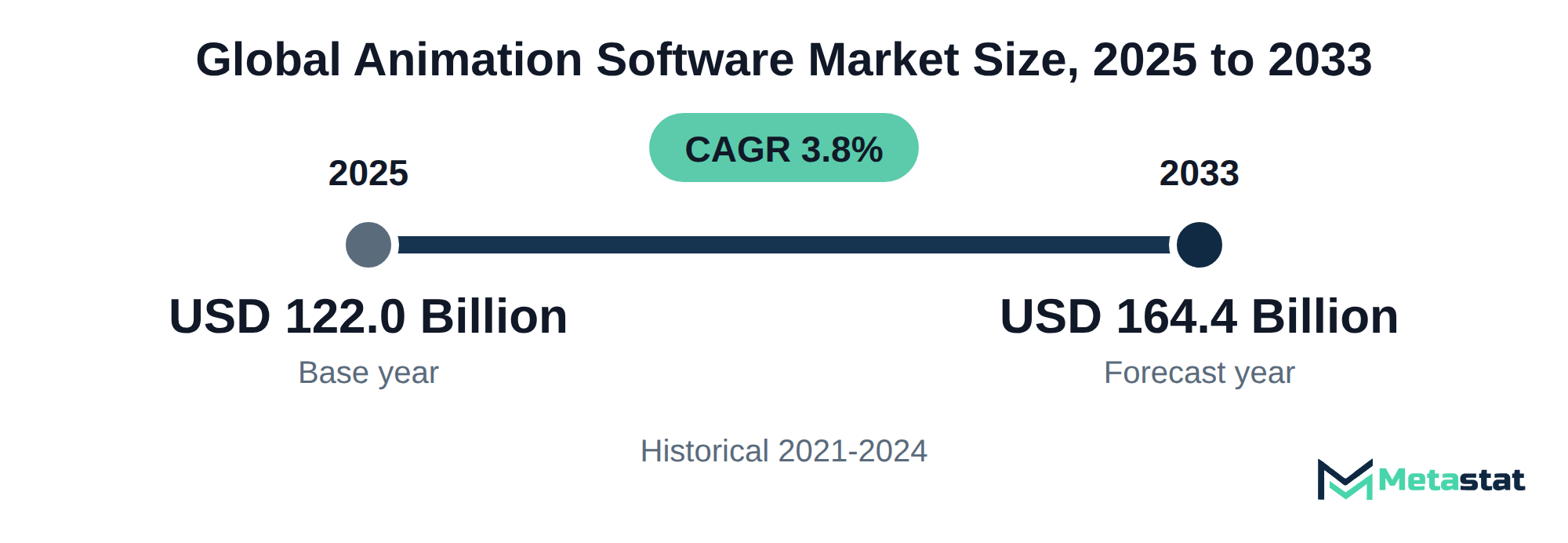
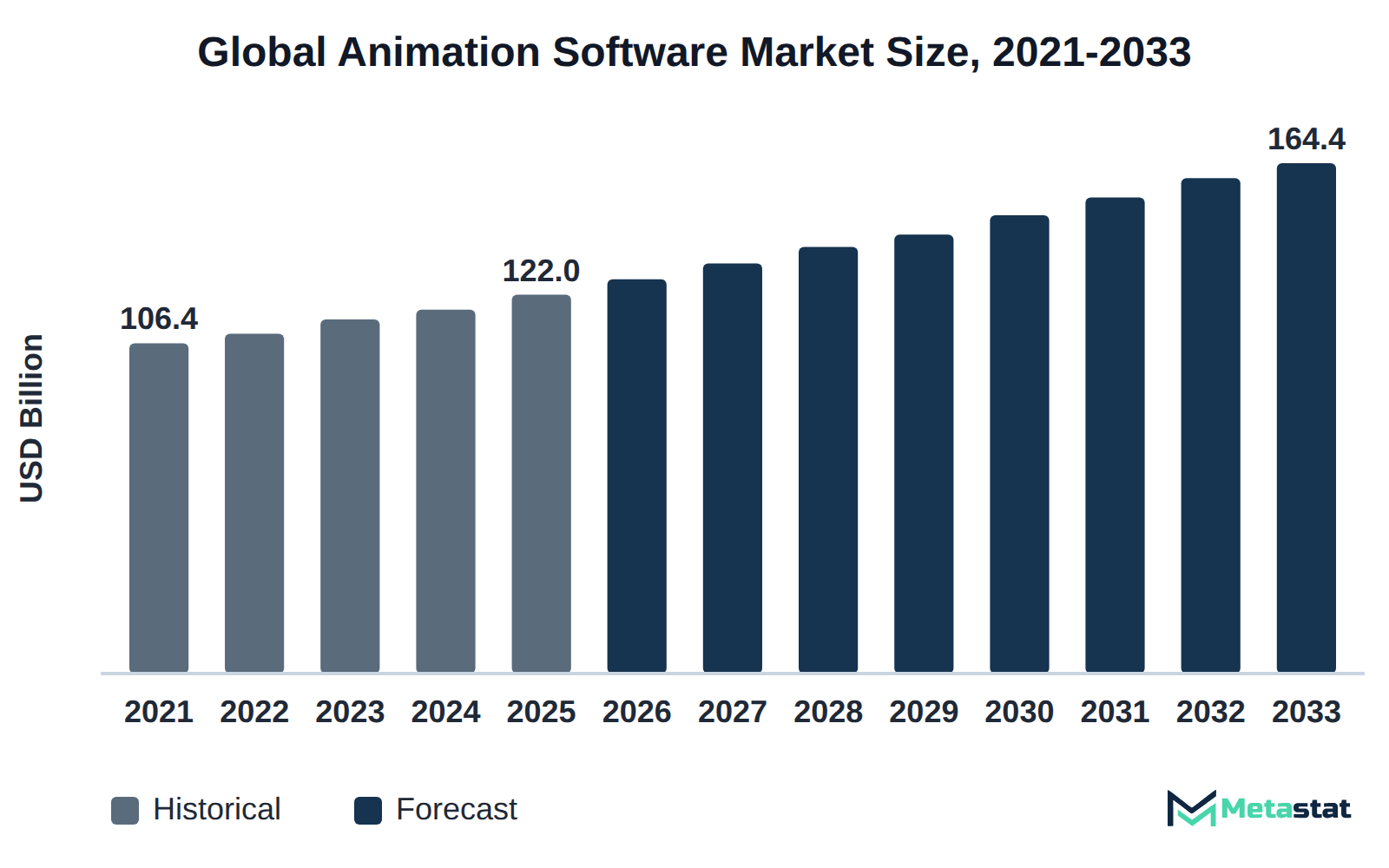
Market Valuation: Valued at $122 Billion in 2025, projected to reach $164.4 Billion by 2033 at a 3.8% CAGR.
Dominant Segment: The 3D Animation segment leads the market, driven by the increasing demand for high-quality visual effects and immersive experiences in gaming and media.
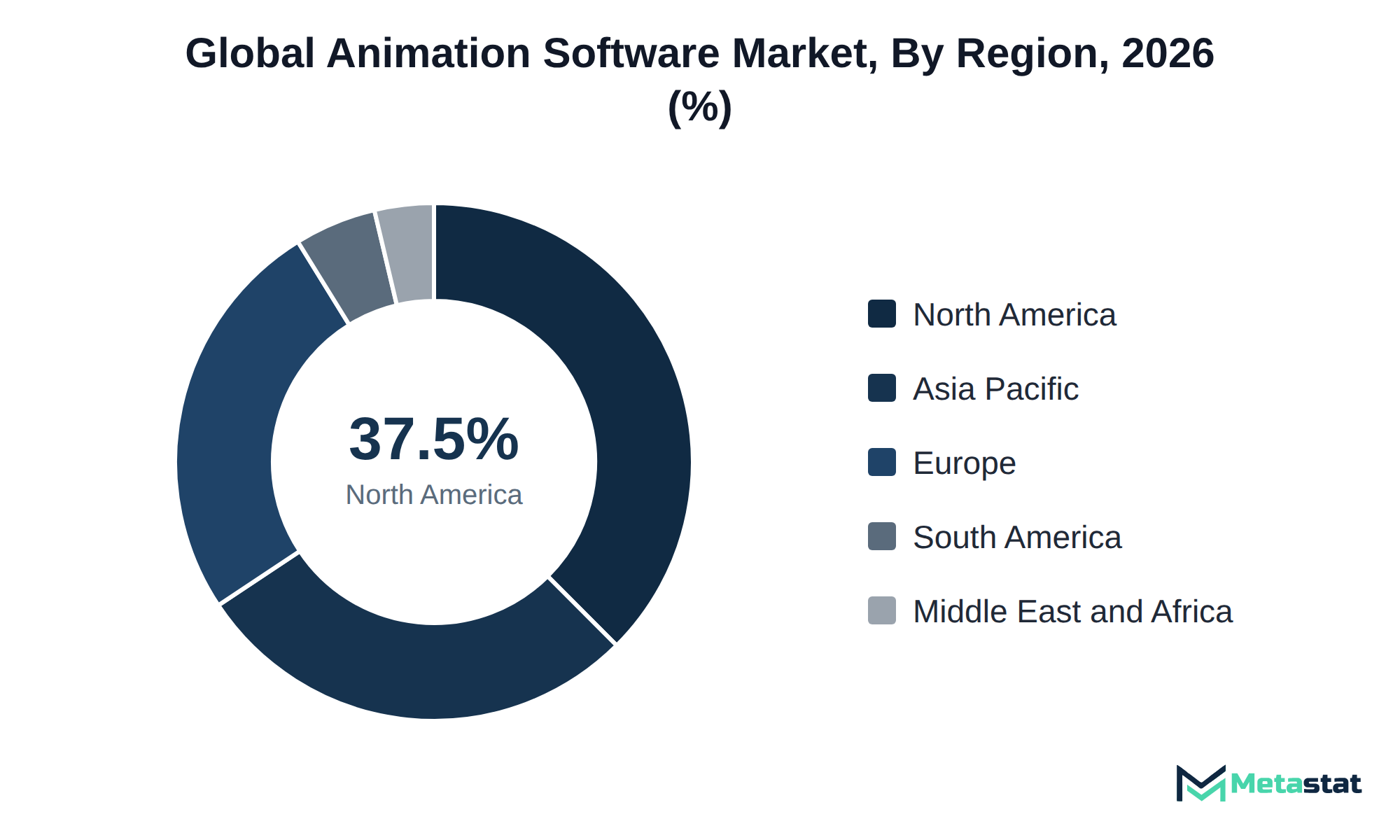
Geographic Lead: North America is the leading region, holding 37.5% of the market in 2025, with the US expected to maintain its dominance through 2026.
What's Inside: The report provides a comprehensive analysis of market dynamics, competitive landscape, and detailed forecasts from 2026 to 2033, covering various segments and deployment models.
Rising Software Prices: Increasing prices for Animation Software are limiting adoption among small and medium-sized enterprises, impacting overall market growth.
Increased Adoption of Cloud-Based Soluti: Cloud-based deployment is projected to grow significantly, reaching USD 127.6 billion by 2033, driven by the need for remote collaboration and scalability.
Choose Your License
Global Animation Software Market
The global Animation Software market was valued at USD 122 billion in 2025 and is projected to reach USD 164.4 billion by 2033, growing at a CAGR of 3.8% over the forecast period.
The Animation Software market encompasses various tools and applications designed for creating animated content across multiple platforms. Buyers invest in this market to enhance visual storytelling, improve audience engagement, and streamline production processes. The increasing demand for high-quality animation in entertainment, advertising, and education drives spending in the sector, reflecting the growing importance of animated media in capturing consumer attention.
Growth in the market is propelled by advancements in technology, particularly in 3D animation techniques. The 3D Animation segment stands out as the most valuable within the market, contributing significantly to overall revenue. North America holds 37.5% of the market in 2025, with the US leading in 2026. In comparison, Europe and Asia Pacific follow with shares of 25.5% and 28.1%, respectively, indicating a competitive landscape across regions.
Increased investment in the gaming and entertainment industries significantly influences market expansion. Game developers and animation studios seek sophisticated software solutions to create immersive experiences, enhancing their offerings and attracting wider audiences. This trend, driven by a broader shift toward digitization in creative sectors, points to continued growth and innovation.
The Animation Software market supports various applications, including 2D and 3D animation, stop-motion techniques, and various deployment models including cloud-based solutions. Buyers invest in these tools to enhance creativity, improve production efficiency, and meet the growing demand for animated content across diverse industries, including media, gaming, and advertising. Continuous evolution of technology and heightened consumer expectations drive the need for innovative solutions, enabling businesses to create captivating animated experiences.
Growth in the market is propelled by the increasing demand for high-quality animation in the media and entertainment sector. This segment represents the highest value, reflecting the industry's shift towards more immersive and engaging content. The region's strong infrastructure and established animation industry make it a key force in shaping market dynamics.
Deployment models built on cloud services are gaining traction, driven by their ability to offer scalable resources and facilitate collaboration among creative teams. This trend aligns with the market's overall expansion, as businesses seek flexible solutions to adapt to evolving demands. The Animation Software market continues to benefit from advancements in technology, ensuring that companies remain competitive while meeting the increasing expectations of clients and consumers.
Advancements in reusable character rig technology significantly enhance efficiency in episodic 2D production within the Animation Software market. This approach allows studios to streamline workflows by creating versatile character rigs that are easily adapted for multiple scenes or episodes. Transitioning from traditional animation methods to this innovative rigging technique reduces the time spent on character creation and animation, enabling faster project turnaround.
The market is projected to experience substantial growth in 2D Animation, with an expected increase from USD 51.6 billion in 2026 to USD 64.7 billion by 2033, reflecting a CAGR of 3.3%. This upward trend indicates a rising demand for efficient production methods in the animation sector. Reusable character rigs optimize resource allocation and lower production costs, which makes them attractive to studios aiming to increase output without compromising quality.
Studios adopting reusable character rigs will drive demand within the Animation Software market, prompting further investment in these technologies. Animation companies that adapt to this shift stay competitive in an industry where efficiency and quality matter.
AI-assisted inbetweening and lip sync technology enhances animation workflows, providing significant time savings and improved accuracy. This automation tool streamlines the animation process by generating intermediate frames and synchronizing character lip movements with dialogue, ultimately reducing the workload for animators. Demand for advanced software in animation pipelines is strong, and studios seeking efficiency and innovation are driving adoption.
Buyers in the animation software market often choose subscription licenses over perpetual licenses due to their flexibility and lower upfront costs. In 2026, subscription licenses account for USD 91.6 billion of the market, with expectations of rising to USD 124.3 billion by 2033 and achieving a CAGR of 4.5%. This model allows studios to access the latest features and updates without significant financial commitment, making it appealing to both small studios and large production houses. The increasing popularity of usage-based licenses further complements this trend, offering an alternative pricing strategy based on consumption, which aligns well with varying project demands. Such diverse contract models support wider accessibility and drive growth within the market. Subscription pricing of this kind also reflects the wider enterprise software-as-a-service delivery model.
The growing adoption of subscription licenses in the Animation Software market supports studios in managing costs effectively while promoting collaboration across geographically dispersed teams. This model enables studios to access advanced tools without the significant upfront investment associated with perpetual licenses, allowing for more flexible financial planning.
Cloud-based solutions enhance this economic model further by facilitating collaboration among team members located in different regions. The demand for cloud-based deployment is expected to rise significantly, reaching USD 127.6 billion by 2033. Studios use these platforms to share projects in real time so that creative inputs from diverse teams come together efficiently. Consequently, distributed studios benefit from enhanced productivity and innovation while reducing operational costs.
This shift toward subscription-based models and cloud collaboration positions studios to adapt rapidly to market changes, allowing them to iterate on their projects more frequently. By aligning with these trends, studios enhance their competitive edge within the Animation Software market, enabling them to deliver high-quality content while maintaining cost-effectiveness.
High-volume 2D production relies heavily on specific capabilities within animation software that streamline workflows and enhance efficiency. This trend highlights the importance of software features that facilitate rapid iteration and high-quality output.
Key capabilities that influence buyer decisions include user-friendly interfaces, asset management, and collaborative tools that support team projects. Software that enables integration with other production tools significantly improves productivity, allowing teams to focus on creativity rather than technical limitations. In a market where efficiency directly impacts profitability, investing in animation software equipped with these capabilities positions companies favorably against competitors.
Scalable solutions that adapt to varying project sizes contribute to meeting diverse production demands. The ability to handle larger projects while maintaining quality becomes a critical differentiator for studios. Stakeholders in the animation software market need to know which features raise 2D production efficiency to get the most from their operations.
The gaming and media industries drive growth in 3D animation applications. Increased consumer interest in high-quality visual experiences leads to higher investments in animation production. Companies enhance their projects through advanced 3D graphics, attracting a wider audience and generating additional revenue. This shift towards 3D animation significantly contributes to the overall expansion of the market. By 2033, the 3D Animation segment is projected to reach USD 95.1 billion, growing at a compound annual growth rate of 4.2%. Such growth indicates sustained demand for innovative solutions that improve storytelling and engagement within various entertainment mediums.
The growing popularity of 3D animation influences the volume of content produced and encourages businesses to explore new techniques and technologies that enhance production quality. This transition affects pricing strategies, driven by companies investing in sophisticated tools and skilled professionals to meet market expectations.
The increasing integration of advanced tools drives improvements in animation workflows, leading to enhanced productivity across various segments. Integrating real-time rendering capabilities into animation software enables creators to visualize scenes instantly, reducing the time spent on revisions and adjustments. This advancement appeals to industries including gaming and media, where rapid content production is crucial to meet audience expectations and market demands. The Animation Software market benefits from this technological shift, with studios adopting solutions that streamline collaboration and optimize production pipelines.
Producers use these advanced tools to improve their creative output while keeping costs under control. The transition from traditional methods to real-time rendering exemplifies a strategic shift in production processes, enabling teams to experiment with more complex animations without incurring significant delays. This evolution supports revenue growth within the market, with faster production timelines creating opportunities for additional projects and expanded service offerings.
Increasing prices for Animation Software present a significant constraint for multiple buyer groups, including small and medium-sized enterprises (SMEs) within the gaming and media sectors. SMEs often operate under tight budgets, leading to slower uptake of advanced animation tools. The cost-to-benefit ratio becomes a critical factor, with higher software prices resulting in smaller order volumes and delayed replacement of existing solutions. This price sensitivity impacts operational efficiency and competitiveness, with smaller firms struggling to justify investments in newer technologies compared to larger companies that absorb such costs more easily. The market's growth trajectory faces challenges from these pricing dynamics, affecting overall demand and adoption rates across various segments.
Profitability within the Animation Software market faces significant challenges due to increasing talent costs. Skilled professionals in animation and related fields command higher salaries, driven by the growing demand for high-quality content across industries. Companies struggle to manage these rising expenses while maintaining competitive pricing. This situation leads to margin pressure for suppliers, particularly smaller firms that rely heavily on talent to deliver innovative solutions.
Suppliers respond by implementing strategies aimed at reducing reliance on high-cost personnel. Many firms invest in automation tools and software enhancements that streamline production processes, allowing for greater efficiency and lower staffing needs. Organizations explore partnerships with educational institutions to cultivate a pipeline of skilled talent at lower costs. These approaches support long-term sustainability while adapting to the evolving market dynamics.
The cloud-based deployment model presents a significant growth opportunity within the Animation Software market. This model is projected to reach USD 127.6 billion by 2033, reflecting a compound annual growth rate of 5%. Increasing reliance on remote collaboration and the need for scalable solutions contribute to this trend. Businesses operating in various sectors, including media and entertainment, leverage cloud-based tools to enhance workflow efficiency and accessibility. Such tools provide users with real-time collaboration features, allowing for effective project management across geographically dispersed teams. Rising demand for innovative animation techniques further increases the attractiveness of cloud-based solutions, particularly among small and medium-sized enterprises looking to reduce costs while maintaining quality. This transition toward cloud computing is expected to reshape how animation studios and content creators approach their projects, facilitating broader participation in the market.
The Global Animation Software market is segmented based on Animation Technique, Deployment Model, Licensing Model, and End-Use Industry.
This segment finds extensive use in media, advertising, and educational content, serving creators who require compelling visual storytelling. The growing demand for animated content, driven by the rise of digital media consumption, supports this segment's expansion. Compared to 3D Animation, which exhibits a higher growth rate at a CAGR of 4.2%, 2D Animation evolves at a more modest pace. This slower growth stems from the increasing preference for 3D content in gaming and film. However, the appeal of 2D animation remains strong, particularly among smaller studios and independent creators due to lower production costs and shorter development timelines. The segment’s affordability and ease of use contribute significantly to its sustained popularity.
This segment focuses on creating three-dimensional visual content primarily in gaming, film, and virtual reality applications. Designers and developers in these industries leverage 3D animation for its ability to produce realistic and immersive experiences. Key drivers include the growing demand for high-quality visual effects and the adoption of advanced technologies, including virtual and augmented reality. Compared to 2D Animation, which has a CAGR of 3.3%, 3D Animation exhibits faster growth, attracting significant investment and innovation. This segment benefits from a higher average price point, making it appealing for enterprises seeking advanced animation solutions. Developments in the 3D Animation segment reflect the changing demands of content creators and audiences and contribute to strong expansion.
Stop-Motion Animation segment is expected to reach USD 4.6 billion by 2033. This technique involves capturing a series of individual frames to create the illusion of motion, widely used in film and television production. Buyers in the media and entertainment industry, particularly independent filmmakers and studios, adopt this approach for its unique aesthetic appeal. The segment experiences slower growth compared to 2D and 3D animation, primarily due to the greater time and labor intensity required for production. While the 3D Animation segment exhibits a CAGR of 4.2%, Stop-Motion Animation demonstrates a CAGR of 3.3%, reflecting the specialized skill set and resources needed for effective execution. Enhanced accessibility to cost-effective tools and software is expected to drive interest, providing opportunities for smaller studios to explore this captivating medium. This shift toward more user-friendly platforms supports an increase in content creation across various genres.
Desktop and On-Premises segment is valued at USD 36.2 billion in 2026 and is projected to reach USD 36.8 billion by 2033, at a CAGR of 0.2% during the forecast period. This segment primarily serves individual users and small to medium-sized enterprises that prefer localized software solutions for animation. Demand in this segment is driven by the desire for robust offline capabilities and the comfort of maintaining control over installation and data security. Compared to the Cloud-Based segment, which is experiencing rapid growth at a CAGR of 5%, the Desktop and On-Premises segment reflects a slower growth trajectory. Buyers in this segment prioritize upfront costs and stable performance, while those gravitating toward cloud solutions seek flexibility and scalability. This dichotomy highlights the varied preferences among buyers, shaping the operational strategies of providers in the market.
Cloud-Based solutions are expected to reach USD 127.6 billion by 2033, at a CAGR of 5% during the forecast period. This deployment model is used primarily by animation studios and independent creators seeking flexible access to animation tools and resources from various locations. The increasing demand for remote collaboration in the animation process drives adoption, allowing teams to work cohesively regardless of geographic barriers. Compared to Desktop and On-Premises solutions, which show slower growth with a CAGR of 0.2%, Cloud-Based offerings provide a more scalable and cost-effective option for users. This segment attracts a diverse range of buyers, including educational institutions and corporate training providers, who leverage the accessibility and convenience of cloud technology to enhance their animation projects. The shift toward cloud-based infrastructure reflects broader technological advancements and the growing preference for subscription-based models.
This licensing model caters primarily to creative professionals and studios engaged in media production, gaming, and educational content development. The growing preference for flexible payment models supports adoption, allowing studios to manage budgets efficiently. Competition within this segment remains strong, as cloud-based solutions increase accessibility and reduce upfront costs compared to traditional perpetual licenses. This dynamic drives studios toward subscription models, differing from Desktop and On-Premises options, which display slower growth at a CAGR of 0.2%. The rising integration of cloud technologies enhances collaboration for teams across various locations, positioning Subscription Licenses as a vital component in the Animation Software market.
Perpetual Licenses segment is estimated to reach USD 21 billion by 2033, at a CAGR of -2.5% during the forecast period. This licensing model allows users to pay a one-time fee for permanent access to the software, commonly used by industries requiring long-term software solutions, including media, education, and creative sectors. The decline in growth reflects a shift toward more flexible subscription-based models, driven by increased demand for scalability and lower initial costs. Unlike subscription licenses, which are projected to grow at a CAGR of 4.5%, perpetual licenses attract buyers focused on reducing long-term expenses rather than ongoing payments, impacting overall market dynamics significantly. The static nature of this segment contrasts with broader market trends favoring subscription flexibility and cloud integration.
Usage-Based Licenses segment is expected to reach USD 19.1 billion by 2033. This licensing model provides flexibility for users who prefer to pay based on the actual use of the software, appealing to freelancers and small studios with fluctuating project demands. The increase in on-demand services drives this segment, with users favoring cost-effective solutions that adjust their expenses according to usage levels. Compared to Subscription Licenses, which are anticipated to grow at a CAGR of 4.5% and reach USD 124.3 billion by 2033, Usage-Based Licenses show a different pricing structure that attracts clients seeking lower upfront costs. While Subscription Licenses require a commitment to a set payment schedule, Usage-Based Licenses allow for more adaptable spending, aligning with the financial strategies of smaller enterprises and individual users aiming to limit expenses in uncertain market conditions.
Media and Entertainment segment is valued at USD 50.6 billion in 2026 and is projected to reach USD 62.4 billion by 2033, at a CAGR of 3% during the forecast period. This segment serves professionals in film production, television, and online content creation, where animation plays a critical role in storytelling and audience engagement. Demand for innovative and visually appealing content drives growth, supported by advancements in animation technology. Unlike the Gaming segment, which is projected to grow at a CAGR of 4.4%, the Media and Entertainment segment experiences slower expansion due to established production processes and higher regulatory scrutiny. Significant investment in high-quality animation further differentiates this sector, influencing pricing strategies and purchase decisions within the Animation Software market.
Gaming segment is estimated to reach USD 33.4 billion by 2033, at a CAGR of 4.4% during the forecast period. This segment primarily serves game developers and studios seeking to create immersive experiences through animation. The increasing demand for high-quality graphics and engaging narratives drives significant interest in innovative animation software solutions. Compared to other segments, gaming exhibits a relatively faster growth trajectory due to the rapid evolution of gaming technologies and shifting consumer preferences. The need for advanced animation tools that streamline production processes and enhance visual storytelling underpins this dynamic. Rising investment in gaming startups and established firms fuels competition, prompting continual advancements in animation capabilities. This segment is distinguished by strong links to both technological advancements and changing consumer expectations, setting it apart from slower-growing segments including Advertising and Marketing.
The Advertising and Marketing segment is expected to reach USD 22.4 billion by 2033. This segment primarily serves businesses aiming to create visually appealing digital advertising and promotional content, enhancing brand visibility and consumer engagement. The integration of innovative animation techniques is essential in attracting audiences and improving overall marketing effectiveness. A notable force driving this segment involves increasing demand for personalized and dynamic marketing content, resulting in higher consumer interaction. Compared to other segments, this area exhibits a moderate growth rate, with a CAGR of 4.1% expected during the forecast period. Advertising and Marketing stands out due to its focus on creating visual narratives, which distinguishes it from sectors including Media and Entertainment that focus more on content consumption.
Education and Training segment is projected to grow at a CAGR of 4.1% during the forecast period. This segment serves educators and training organizations by providing tools that facilitate engaging learning experiences through animation. The rise in digital education and the shift towards interactive training methods significantly drive demand. Educational institutions leverage animation software to simplify complex concepts, making learning more accessible and enjoyable for students. Compared to other segments, this segment experiences slower growth due to budget constraints within educational budgets and the need for specialized training in animation techniques. The increasing emphasis on digital literacy presents a unique opportunity for growth, with educational entities aiming to enhance their curriculum with innovative teaching methods. The market continues to evolve, responding to changing dynamics in education and training.
Architecture and Construction involves the use of animation software for visualizing architectural designs and construction projects through 3D models and simulations. Architects, engineers, and construction professionals apply these tools to enhance presentations and streamline project planning. Project teams in this field also use building information modeling (BIM) for design coordination. Demand increases due to the growing emphasis on precision and efficiency in building design, resulting in better stakeholder communication and project outcomes. The Architecture and Construction segment differs from others, including Media and Entertainment, through its specific focus on detailed technical requirements and client engagements, leading to distinct usage patterns and software needs. Companies operating in this segment prioritize tools that facilitate collaboration and integrate seamlessly with other architectural software, making it essential for them to stay current with technological advancements in animation. The Animation Software market evolves to meet these specialized requirements, positioning this segment uniquely within the broader industry.
Healthcare and Life Sciences involves the application of animation software specifically for medical training, patient education, and pharmaceutical marketing. Professionals in healthcare apply this software to create visual representations that simplify complex medical concepts, enhance understanding, and improve patient engagement. Increased demand for interactive educational tools drives growth within this segment, with healthcare providers recognizing the effectiveness of animated content in conveying information more clearly than traditional methods. Compared to other segments, this area encounters slower growth due to regulatory constraints and the need for compliance with medical standards, which delays adoption. However, the focus on innovative training methods in healthcare creates unique opportunities for software development tailored to medical applications. The Animation Software market is expected to evolve, catering to diverse needs across various industries, including healthcare.
Animation Software enhances design processes in the automotive and manufacturing sectors through visualization and simulation. These applications serve various functions, including vehicle design, product prototyping, and training simulations, primarily used by automotive manufacturers and industrial designers. The growing demand for increasingly sophisticated designs drives this segment, with a notable focus on integrating augmented reality and virtual reality technologies. Compared to other segments, this area exhibits slower growth due to higher initial adoption costs associated with advanced tools and technologies. However, the continual push for innovation and efficiency positions it uniquely in the market, attracting investments aimed at improving production capabilities and reducing time to market for new products.
This segment includes applications in government and defense, and the retail sector. Government and defense agencies apply animation software for training simulations, operational planning, and public communication. Retailers employ animation for marketing campaigns, product demonstrations, and virtual stores. Growth in this segment is driven by increasing demand for realistic training environments and interactive retail experiences that enhance customer engagement. Compared to other segments, this area experiences slower growth due to specific regulatory requirements and funding constraints in government projects, which limit the adoption of innovative solutions. Although growth rates differ, the need for sophisticated visual tools continues to shape the dynamics of this part of the Animation Software market.
Based on geography, the Global Animation Software market is divided into North America, Europe, Asia-Pacific, South America, Middle East, and Africa.
North America stands out in the Animation Software market, driven by robust demand across various sectors, particularly in media and entertainment, gaming, and advertising. The region benefits from advanced technological infrastructure, enabling rapid adoption of cloud-based solutions. Strong investment in digital content creation and a growing number of animation studios contribute significantly to market growth. By 2033, North America is projected to reach USD 59 billion, representing a noteworthy share of 37.5% of the global market in 2025. This concentration of demand positions North America as a key player in the animation software landscape, influencing overall market dynamics and trends driven by innovation and creativity.
The European market demonstrates a strong presence within the animation software sector, contributing 25.5% to the global market share in 2025. Key industries driving demand include media and entertainment, where advances in technology enhance content production. Countries including Germany, France, and the UK lead the way in adopting modern animation techniques, leveraging cloud-based solutions for improved collaboration. The market benefits from robust infrastructure, supporting diverse applications across sectors. The growing emphasis on digital marketing within advertising and marketing sectors increases the demand for innovative animation solutions. Anticipated growth in the gaming industry further fuels investment in animation software, positioning Europe as a significant player in the global animation software market.
The share of the global market for Animation Software in Asia-Pacific reaches 28.1% in 2025. The presence of strong gaming and entertainment industries in countries like China, Japan, and South Korea drives demand for innovative animation solutions. Increased investment in digital content creation and local production studios further supports this trend. Cloud-based deployment models gain traction due to their flexibility and scalability, allowing creative teams to collaborate effectively across regions. Education and training sectors in the region show significant interest in animation tools, contributing to market growth. Infrastructure development in countries like India and Australia enhances access to advanced animation technologies, facilitating broader adoption. The market is expected to expand, driven by the ongoing evolution of digital media consumption patterns.
The Animation Software market in South America exhibits a distinctive profile, characterized by a growing demand primarily from the media and entertainment industry. In Brazil and Argentina, the expansion of digital content creation and streaming services drives significant interest in animation capabilities. Cloud-based deployment models gain traction due to their flexibility and cost-effectiveness, allowing businesses to access advanced animation tools without heavy upfront investments. With a market share of 5.1% in 2025, South America presents potential for further growth driven by rising digital engagement. The market's trajectory reflects an increasing focus on innovative advertising and marketing strategies, reflecting a shift towards more immersive consumer experiences.
The Animation Software market within the Middle East and Africa reflects a niche segment with distinct growth potential. Demand stems from industries including media, entertainment, and education, where visualization and creative content creation play critical roles. Saudi Arabia and the UAE invest significantly in digital infrastructure, enhancing the adoption of animation technologies. Regulatory support for creative industries and technology adoption furthers market expansion. The region accounts for 3.7% of the global market share in 2025. South Africa contributes to the market through its active media sector, while the Rest of Middle East and Africa presents emerging opportunities for growth in animation applications.
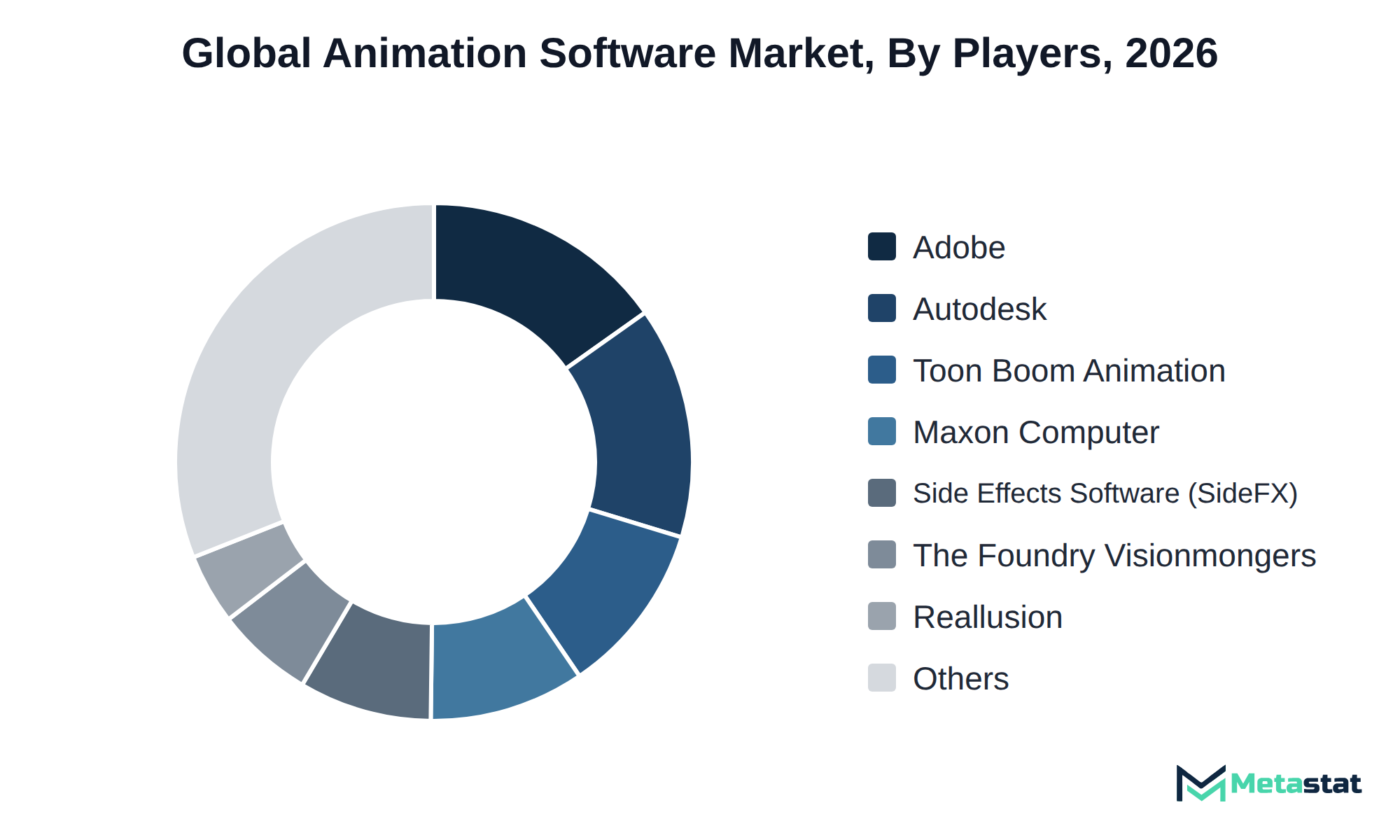
The Animation Software market features a diverse competitive environment, with suppliers employing various strategies to capture market share. The field separates into distinct segments, including animation technique, deployment model, and licensing model, which significantly influence buyer choices.
Price, customization, service, and ecosystem integration drive buyer decisions in the market. For instance, Autodesk, Inc. and Adobe Inc. emphasize user-friendly interfaces and extensive features to enhance customer satisfaction. Meanwhile, Toon Boom Animation Inc. focuses on specialized solutions for media and entertainment, attracting clients seeking tailored applications.
Companies like Epic Games, Inc. and Unity Software Inc. prioritize cloud-based deployment models, allowing for flexibility and accessibility in their offerings. This strategic positioning enables them to cater to the growing demand for collaborative and remote work environments. The Animation Software market remains dynamic, with companies continually adapting to meet evolving consumer needs.
This growth relies on several key developments within the Animation Software market. Firstly, a significant increase in demand for cloud-based deployment options is anticipated, projected to reach USD 127.6 billion by 2033, reflecting a strong preference for scalable and accessible solutions among users. The growth of subscription licensing models, expected to grow from USD 91.6 billion in 2026 to USD 124.3 billion by 2033, will enhance user engagement and revenue predictability for providers in the market. Finally, expansion within the gaming industry, where demand is likely to rise to USD 33.4 billion by 2033, will contribute significantly to overall market growth. However, a potential risk exists in the form of competition in the Asia Pacific region, which pressures pricing and limits revenue growth. The need for continuous innovation and differentiation in offerings will become critical to maintaining market share. Without these developments and careful navigation of competition, achieving the forecasted USD 164.4 billion faces challenges.
By Deployment Model: Desktop and On-Premises, Cloud-Based
By Licensing Model: Subscription Licenses, Perpetual Licenses, Usage-Based Licenses
By End-Use Industry: Media and Entertainment, Gaming, Advertising and Marketing, Education and Training, Architecture and Construction, Healthcare and Life Sciences, Automotive and Manufacturing, Others (Government and Defense, Retail)
The report strategically identifies and profiles the key market players and analyses their core competencies in each sub-segment of the Animation Software market.
Report Attributes | Details |
Study Period | 2021-2033 |
Base Year | 2025 |
Estimated Year | 2026 |
Forecast Period | 2026-2033 |
Historical Period | 2021-2025 |
Growth Rate | CAGR 3.8% from 2026 to 2033 |
Revenue Unit | USD billion |
Segmentation | By Animation Technique, Deployment Model, Licensing Model, End-Use Industry, and Region |
By Region | North America (By Animation Technique, Deployment Model, Licensing Model, End-Use Industry, and Country)
|
Europe (By Animation Technique, Deployment Model, Licensing Model, End-Use Industry, and Country)
| |
Asia Pacific (By Animation Technique, Deployment Model, Licensing Model, End-Use Industry, and Country)
| |
South America (By Animation Technique, Deployment Model, Licensing Model, End-Use Industry, and Country)
| |
Middle East and Africa (By Animation Technique, Deployment Model, Licensing Model, End-Use Industry, and Country)
|
Find answers to common questions about this report
The Animation Software market size was valued at USD 122 billion in 2025.
The market is projected to grow at a CAGR of 3.8% during the forecast period from 2026 to 2033.
The North America Animation Software market size is estimated to reach USD 59 billion by 2033.
3D Animation leads the Animation Software market with a projected value of USD 95.1 billion by 2033. This segment surpasses others in terms of revenue potential.
Increased consumer interest in high-quality visual experiences drives growth in the Animation Software market. The cloud-based deployment model presents a significant growth opportunity, projected to enhance workflow efficiency and accessibility for businesses.
North America holds the dominant share of the Animation Software market, with a projected value of USD 59 billion in 2033, representing 37.5 percent of the total market. This region surpasses others in market share, including Europe and Asia Pacific.
Increasing prices for Animation Software present a significant constraint, particularly for small and medium-sized enterprises that operate under tight budgets. Profitability faces challenges due to rising talent costs, which pressure margins and compel suppliers to seek cost-saving strategies.
The cloud-based deployment model significantly enhances adoption by providing scalable solutions and facilitating remote collaboration. This trend supports workflow efficiency and accessibility, particularly among small and medium-sized enterprises seeking innovative animation techniques while managing costs.
The Animation Software market is estimated to reach a valuation of USD 164.4 billion by 2033.
Key players operating in the Animation Software market include Autodesk, Inc., Adobe Inc., Toon Boom Animation Inc., Maxon Computer GmbH, Side Effects Software Inc. (SideFX), Reallusion Inc., Epic Games, Inc., and Unity Software Inc.
The analysts below cover Information & Technology research at Metastat Insights.
LEAD ANALYST
Utkarsh Khirodkar is a Lead Market Research Analyst at MetaStat Insight, specializing in market intelligence, technology sector assessments, and competitive strategy.

PRINCIPAL CONSULTANT - ENTERPRISE AI & EMERGING TECHNOLOGIES
Banking & Finance · Electronics and Semiconductor · Energy and Power · Healthcare IT · Information & Technology · Professional Services
Vijay Gunti is a Principal Consultant at MetaStat Insight, bringing over two decades of experience across enterprise digital transformation, technology strategy, and intelligent systems.

LEAD CONSULTANT - COMMUNICATION, TELECOM, AND IT
Electronics and Semiconductor · Information & Technology · Machinery & Equipment · Professional Services
Ravindra Sathe Consultants for Communication, Telecom, and IT at MetaStat Insight. He leads the firm's industry research initiatives across telecommunications infrastructure, digital connectivity, enterprise networking, and emerging information technology domains.
Tracking ceramic matrix composite adoption in high-bypass aero engines requires strict attention to material qualification cycles and FAA airworthiness testing milestones. The MetaStat Insight team provided a detailed timeline of silicon carbide fiber manufacturing capacity and commercial foundry lead times. Having clear visibility into upstream thermal barrier coating supply helped us stress-test our long-term component procurement strategy.
Transitioning ultra-class mining haul trucks to alternative power requires concrete data on remote hydrogen refueling infrastructure economics. The report evaluated megawatt-scale electrolyzer installation expenses, onsite storage safety mandates, and heavy-duty fuel cell stack degradation under continuous duty cycles. That technical rigor helped our engineers benchmark realistic total operating cost horizons for off-highway fleet decarbonization.
Enterprise zero-trust network rollouts are often slowed down by multi-cloud transit latency and proprietary hardware retirement schedules. This study provided realistic total cost of ownership models comparing cloud-delivered security edge solutions against traditional hardware refreshes. The analysis of contract renewal lengths and software maintenance fees gave us clear visibility into enterprise replacement cycles over the next three to five years.
Explore related market intelligence reports worth reading alongside this one.