
LEAD ANALYST
Utkarsh Khirodkar is a Lead Market Research Analyst at MetaStat Insight, specializing in market intelligence, technology sector assessments, and competitive strategy.

Global Applied AI Services Market Size, Share, By Service Type (AI Strategy and Advisory, AI Solution Design and Integration, AI Application Development and MLOps, Intelligent Workflow Automation, Managed AI Services), By Deployment Model (Public Cloud, Private Cloud, Hybrid Cloud, On-Premises and Edge), By Technology (Machine Learning and Predictive Analytics, Generative AI and Large Language Models, Computer Vision, Natural Language Processing and Conversational AI, AI Agents and Decision Intelligence), By End-Use Industry (Banking, Financial Services and Insurance, IT and Telecommunications, Manufacturing, Healthcare and Life Sciences, Retail and E-Commerce, Public Sector, Energy and Utilities, Transportation and Logistics), Industry Analysis, Growth, Trends, and Forecast, 2026-2033
Report ID
MSI-5736
Published
November, 2026
Pages
254 Pages
Format
Historical
Base year
Forecast
Forecast period
Report Details
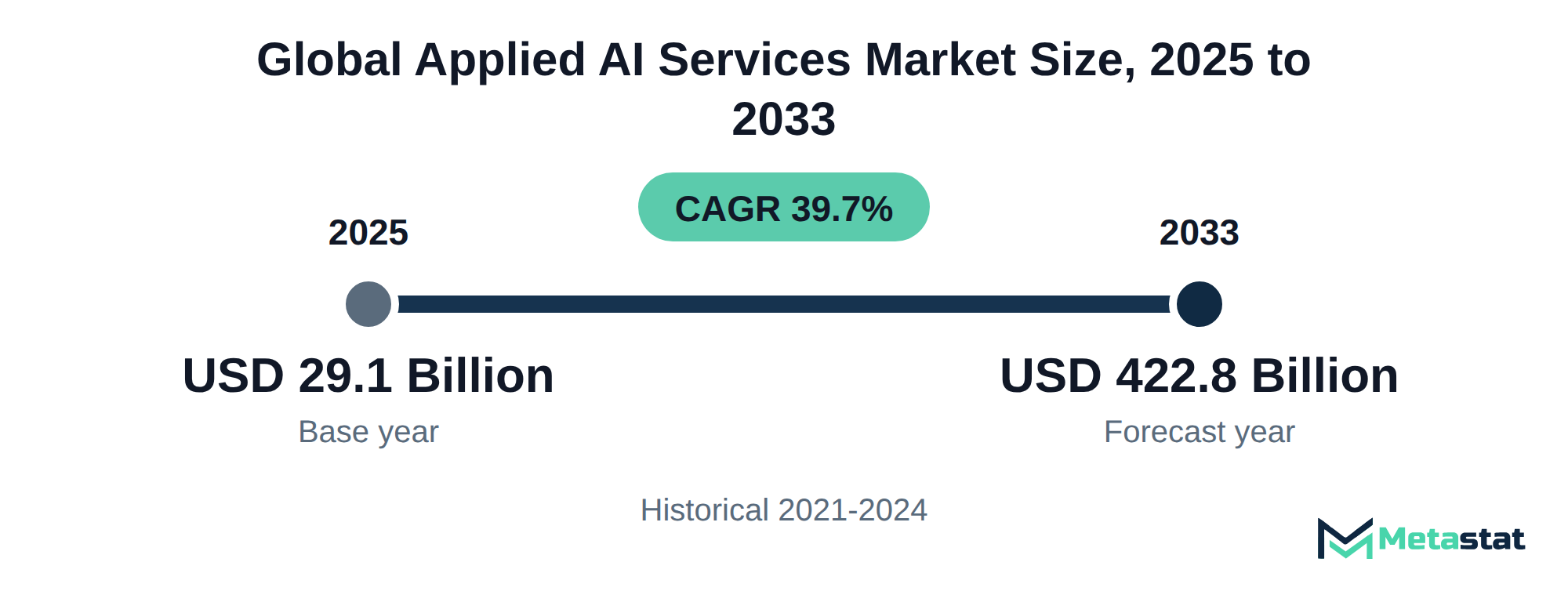
Market Valuation: Valued at $29.1 Billion in 2025, projected to reach $422.8 Billion by 2033 at a 39.7% CAGR.
Dominant Segment: AI Solution Design and Integration leads the market, projected to reach USD 117.9 billion by 2033, driven by organizations seeking tailored AI solutions to enhance operational efficiency.
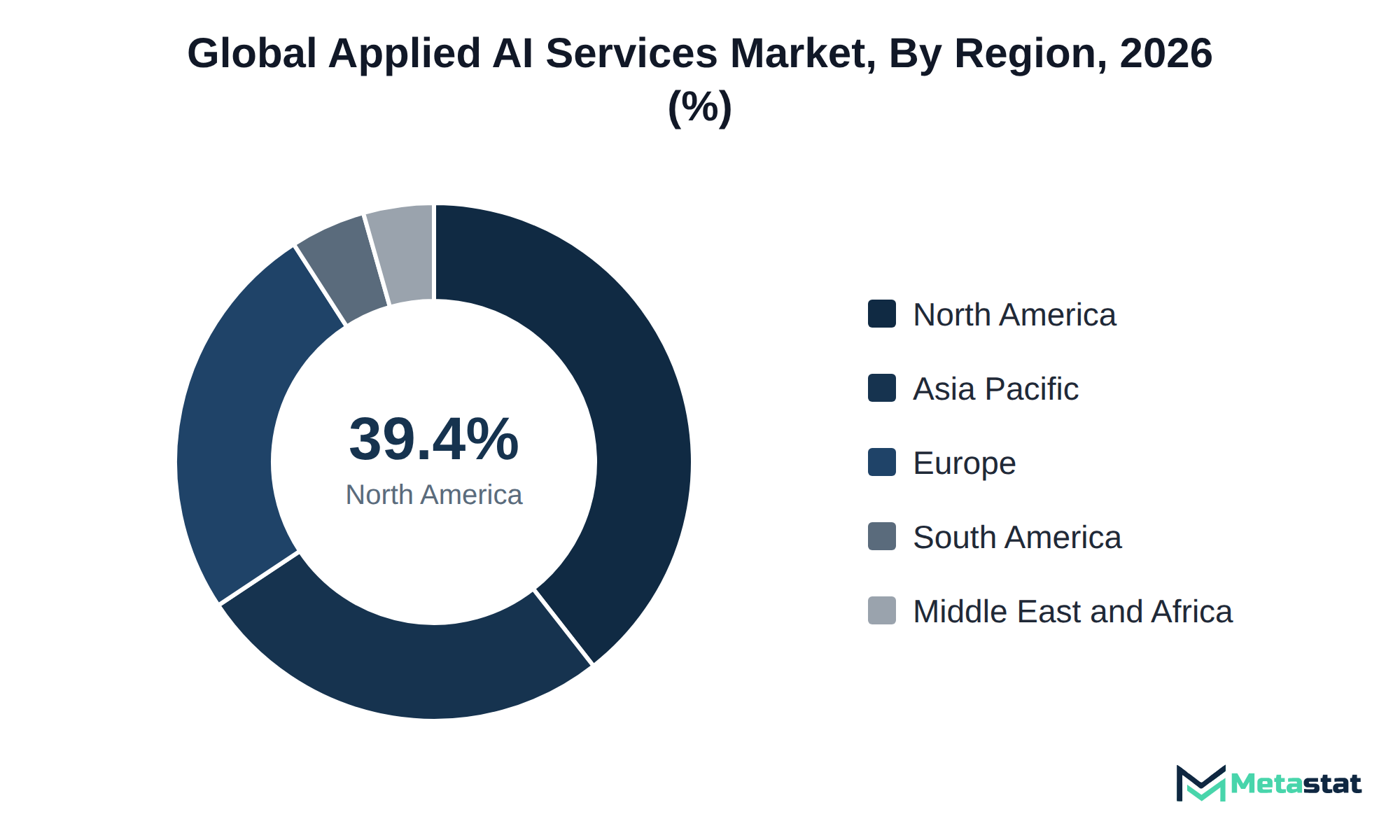
Geographic Lead: North America is the dominant region, holding 39.4% of the market in 2025, with substantial investments in AI technologies driving growth, particularly in the US.
What's Inside: The report provides a comprehensive analysis of the Applied AI Services market, covering service types, deployment models, technologies, and end-use industries, along with competitive insights and forecasts.
Emerging Trends: The shift towards cloud-native AI deployment is reshaping spending patterns, with Intelligent Workflow Automation expected to grow at a CAGR of 41.1%, reflecting a strong demand for scalable solutions.
Security Focus: As organizations scale Applied AI Services, there is an increasing emphasis on security measures, particularly in sectors like banking and healthcare, to protect sensitive data and ensure compliance.
Choose Your License
Global Applied AI Services Market
The global Applied AI Services market was valued at USD 29.1 billion in 2025 and is projected to reach USD 422.8 billion by 2033, growing at a CAGR of 39.7% over the forecast period.
The Applied AI Services market encompasses a variety of offerings aimed at enhancing operational efficiency and decision-making through artificial intelligence. Buyers invest in these services to utilize advanced technologies that drive innovation, improve customer experiences, and streamline processes. Industries such as banking, financial services, and healthcare show strong demand for AI solutions, using data analytics and predictive capabilities to gain a competitive edge.
Growth in the market is fueled by the increasing adoption of cloud-based technologies and the rising demand for automation across various sectors. Public cloud deployment represents the segment with the most value, reflecting a significant transition towards scalable solutions. North America holds 39.4% of the market in 2025, with the US leading in 2026. This regional dominance reflects substantial investments made by organizations in AI advancements to enhance their service offerings.
One main growth driver stems from the continuous evolution of machine learning and predictive analytics, which enable organizations to make informed decisions based on data-driven insights. Businesses increasingly recognize the potential of AI technologies, resulting in strong expansion. The commitment to integrating AI solutions into everyday operations signals a shift across industries, positioning the market for sustained growth in the coming years.
The Applied AI Services market includes various service types that enable businesses to leverage artificial intelligence for improved efficiency and strategic decision-making. Buyers invest in these services to address specific operational challenges, enhance productivity, and stay competitive in evolving industries. Key segments including AI Solution Design and Integration and AI Application Development and MLOps have grown significantly, reflecting the increasing reliance on AI technologies across multiple sectors.
Escalating demand for automation and improved data analytics capabilities drives growth in the Applied AI Services market. This region's robust infrastructure and technological advancements provide a solid foundation for AI adoption, supporting innovation and driving market expansion. Among the various service types, AI Solution Design and Integration stands out with significant projected growth, indicating a clear preference among businesses to invest in tailored AI solutions.
The increasing emphasis on data-driven insights and operational efficiency further advances the market. Companies across diverse sectors, including banking, healthcare, and manufacturing, recognize the necessity of integrating AI services to enhance their operational frameworks. The growing trend towards cloud-based deployment models and the adoption of advanced technologies like generative AI contribute to the anticipated market growth, highlighting the importance of AI in future business strategies.
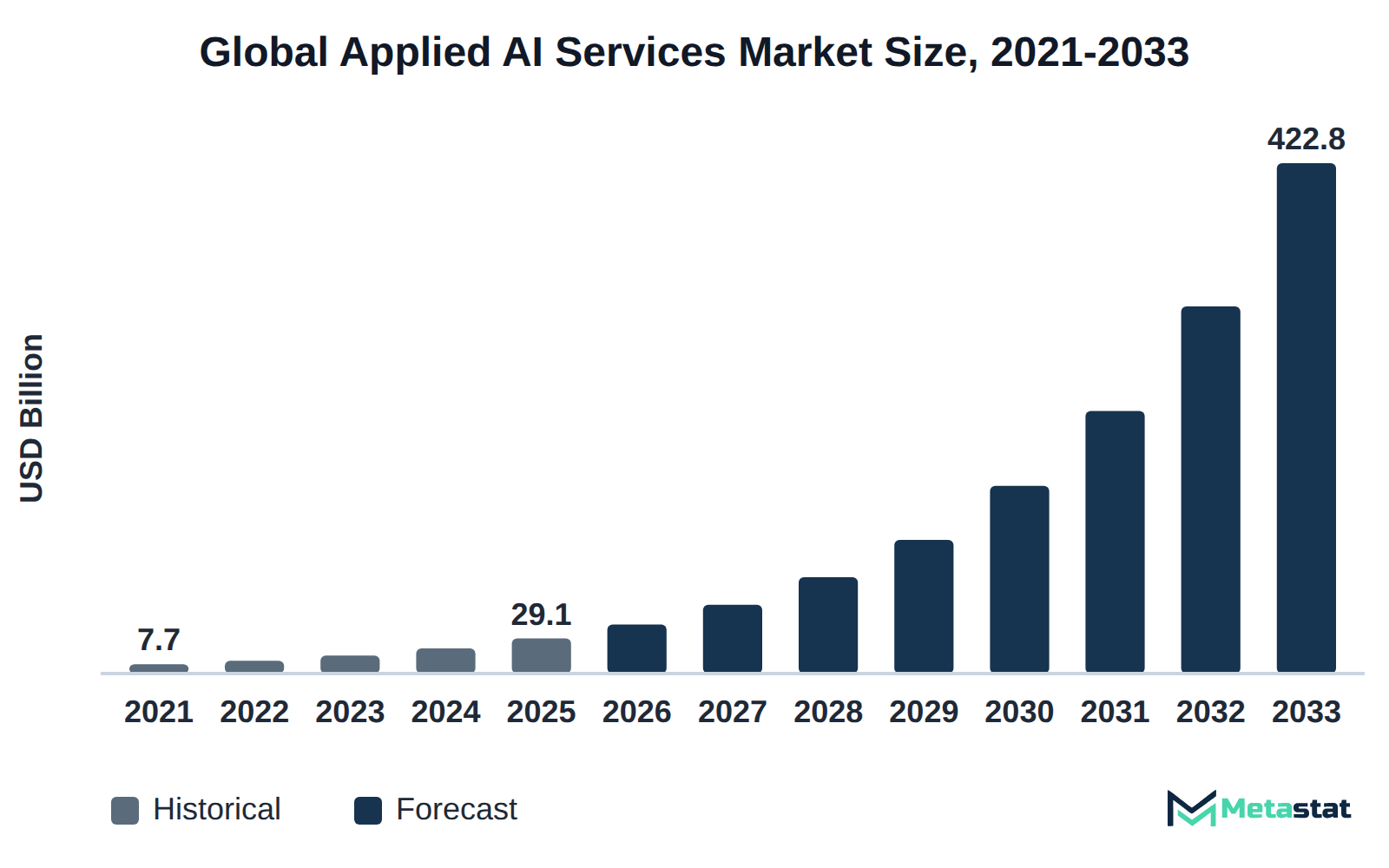
Enterprise AI integration transitions from pilot projects to managed operations, reflecting a significant shift in the Applied AI Services market. This shift is driven by the growing recognition of the strategic value that AI solutions bring to organizations across various sectors. This transformation allows firms to implement AI technologies more effectively and realize enhanced operational efficiencies.
AI Solution Design and Integration is a key service type, projected to reach USD 117.9 billion by 2033, indicating strong demand for AI integration services. This segment's growth is fueled by organizations seeking tailored AI solutions that address specific operational challenges and enhance decision-making processes. Increased investment in AI technology ensures that enterprises optimize their resources, streamline workflows, and improve customer experiences.
The movement towards managed operations signifies a broader adoption trend, in which enterprises use AI as an integral part of their overall strategies rather than only for isolated initiatives. This evolution creates a competitive edge, allowing organizations to respond swiftly to market demands and innovate continuously. Enhanced efficiencies and reduced operational costs arise from the effective integration of AI into core business functions, ultimately driving growth in the Applied AI Services market.
The shift toward cloud-native AI deployment significantly influences spending patterns in workflow automation. In 2026, the segment for Intelligent Workflow Automation is expected to experience substantial growth, with a compound annual growth rate (CAGR) of 41.1% projected through 2033. This rapid expansion reflects buyers' increasing preference for solutions that provide flexibility, scalability, and integration capabilities in cloud environments.
Pricing strategies in the Applied AI Services market increasingly focus on subscription models rather than traditional one-time payments. This model aligns with the cloud-native approach, enabling businesses to adopt AI services with lower upfront costs. Organizations transitioning to these subscription-based contracts often encounter tiered pricing structures based on usage and features. This shift allows for cost-effective scaling and facilitates experimentation with various AI solutions without extensive financial commitments.
Consequently, organizations benefit from enhanced budgeting predictability while exploring intelligent automation technologies. The willingness to invest in Intelligent Workflow Automation solutions reflects a commitment to operational efficiency, ultimately driving competitive advantage across various sectors.
Healthcare and life sciences organizations face unique challenges that require tailored solutions, driving the need for generative AI and MLOps services. Adoption of these technologies enables these firms to streamline processes, enhance patient care, and utilize vast amounts of data for decision-making. In 2026, the market value for healthcare and life sciences in the Applied AI Services market is expected to reflect substantial investment in these advanced technologies.
While generative AI continues to evolve, healthcare providers increasingly rely on machine learning algorithms to develop predictive models that identify patient risks and optimize treatment plans. The ability to automate routine tasks through MLOps enhances operational efficiency, allowing healthcare professionals to focus on more complex patient needs. This sector anticipates a compound annual growth rate of 42.3% through 2033, highlighting the significant demand for specialized services that address the specific requirements of healthcare and life sciences.
As AI technology advances, investments in generative AI and MLOps services help healthcare organizations improve outcomes and operational efficiencies. The growing emphasis on personalized medicine further increases the demand for these services, positioning firms that invest in generative AI at a competitive advantage within the market. Such strategic positioning is critical for success in an increasingly data-driven healthcare environment.
The scaling of Applied AI Services involves a critical focus on security protocols to protect sensitive data and ensure compliance with regulations. With cybersecurity threats increasing, organizations prioritize the implementation of robust security frameworks. In 2025, the market value reached USD 29.1 billion, reflecting a growing investment in security measures alongside AI service expansion.
Companies integrating AI solutions recognize the need to adopt thorough security practices. Implementing measures including data encryption, access controls, and regular security audits helps mitigate risks associated with data breaches. AI systems are deployed in sectors like Banking, Financial Services, and Insurance, which is expected to grow from USD 8.6 billion in 2026 to USD 80.2 billion by 2033. That deployment highlights the need for stringent security protocols. This industry's focus on safeguarding financial data drives demand for reliable security frameworks within AI services.
The Applied AI Services market continues to expand with increased investments in secure solutions, establishing a competitive advantage for organizations that prioritize security. By addressing these security needs, businesses enhance trust with clients and stakeholders while facilitating compliance with industry regulations.
Organizations in sectors including banking, financial services, and insurance are increasingly investing in advanced analytics capabilities to enhance customer experiences and streamline operations. The growing need for real-time insights and data-driven decision-making drives this trend, with businesses prioritizing the adoption of sophisticated artificial intelligence technologies. Significant investment in analytics tools enables organizations to derive valuable insights from vast amounts of data, directly impacting operational efficiency and revenue generation. The Applied AI Services market reflects this shift. The AI Strategy and Advisory segment is projected to grow from USD 7 billion in 2026 to USD 57.3 billion by 2033, driven by heightened demand for strategic guidance in AI deployment. This substantial growth illustrates the increasing emphasis on analytics as a core component of business strategy, shaping competitive dynamics within the market.
In addition, the rise of digital transformation initiatives across various industries fuels demand for managed AI services. Companies are incorporating AI solutions into their digital frameworks to automate processes, improve customer interactions, and enhance overall productivity. This trend has a strong impact in the IT and telecommunications sector, where spending on AI solutions is expected to reach USD 73.2 billion by 2033.
Rapid advancements in generative AI technologies drive significant enhancements in service delivery across various sectors. These innovations enable the development of tailored applications that improve personalized customer interactions and automate complex processes, particularly in industries including healthcare and finance. By integrating generative AI into existing workflows, organizations achieve greater efficiency and accuracy, translating into improved service outcomes. The potential for these technologies to generate creative content and analyze vast datasets supports the increasing demand for Applied AI Services. This trend attracts investment from businesses seeking to gain a competitive edge through enhanced customer engagement and operational effectiveness. In the context of the Applied AI Services market, the expansion of generative AI leads to the creation of new solutions that address evolving consumer expectations and regulatory requirements, driving market growth.
Price sensitivity remains a significant restraint affecting the adoption of Applied AI Services among buyers in various industries. Organizations, particularly those in the banking, financial services, and insurance sectors, face budget constraints that slow the uptake of these advanced solutions. Higher costs associated with implementing AI technologies deter several businesses from making immediate investments, leading to smaller order sizes and delayed project timelines. The requirement for specialized skills and infrastructure further increases expenses, hindering market growth. Companies often opt for more affordable alternatives or postpone technology upgrades, impacting their competitive edge. This limitation reflects a broader trend in which organizations prioritize cost-effective solutions.
Profitability in the Applied AI Services market faces significant challenges due to escalating talent costs. High demand for skilled professionals in artificial intelligence and related fields contributes to this issue, impacting service providers' ability to maintain competitive pricing. Suppliers respond by investing in training programs and partnerships with educational institutions to cultivate a skilled workforce. Many companies adopt automation tools to streamline processes and reduce reliance on human resources, thereby managing operational costs more effectively. This strategic shift allows firms to remain competitive while addressing the financial burden associated with high talent costs. The focus on enhancing employee productivity through advanced technologies supports overall growth and sustainability in this evolving market.
AI Strategy and Advisory services represent a significant growth opportunity within the Applied AI Services market. This segment is projected to expand from USD 7 billion in 2026 to USD 57.3 billion by 2033, reflecting a compound annual growth rate (CAGR) of 35%. Businesses increasingly recognize the importance of strategic guidance in implementing AI solutions effectively, driving increased investment in advisory services. Key buyer groups, including financial services and healthcare, prioritize tailored strategies that align with their specific operational needs and objectives. The growing complexity of AI technologies and their integration into existing workflows necessitates expert guidance, further boosting demand for these services. This trend highlights the evolving role of advisory services in shaping successful AI adoption journeys across various industries, particularly for organizations looking to capitalize on AI's potential.
The Global Applied AI Services market is segmented based on Service Type, Deployment Model, Technology, and End-Use Industry.
This segment serves businesses aiming to develop and implement effective AI strategies, enhancing their operational capabilities and decision-making processes. Key industries applying these services include banking, financial services, and insurance, where firms capitalize on AI to improve customer experiences and streamline operations. The growth of this segment is driven by increasing investments in advanced analytics and strategic AI initiatives. Compared to other service types, AI Strategy and Advisory demonstrates a significant growth rate, reflecting a higher demand for strategic insights and tailored AI integration, distinguishing it from segments including Intelligent Workflow Automation, which grows at a slower pace.
AI Solution Design and Integration segment is estimated to reach USD 117.9 billion by 2033, at a CAGR of 39.9% during the forecast period. This segment focuses on creating tailored AI solutions and integrating them into existing systems, catering primarily to organizations seeking to enhance operational efficiency and data-driven decision-making. Industries including banking, healthcare, and retail increasingly adopt these services, driven by demand for personalized solutions that improve customer experiences. The rapid pace of technological advancements further fuels this growth, significantly influencing service delivery in various sectors. Compared to other segments, including AI Strategy and Advisory, this segment experiences faster expansion, emphasizing the strong market preference for integrated AI solutions. AI-driven transformation of business operations positions this segment as a major contributor to market growth.
AI Application Development and MLOps segment is expected to reach USD 106.2 billion by 2033. This segment focuses on creating and maintaining AI applications, integrating machine learning operations to enhance software development processes. Organizations across various industries apply these services to improve operational efficiency and deploy AI solutions effectively. The primary demand driver stems from the increasing need for automation and data-driven insights, especially in sectors including healthcare and finance. Compared to other segments, AI Application Development and MLOps exhibits a significant growth rate, with a projected CAGR of 39.9%. This growth reflects heightened investment in application development compared to slower segments like AI Strategy and Advisory, allowing clients to capitalize on the advantages of AI technologies. The growing complexity of AI solutions drives the need for specialized application development and operational capabilities, reinforcing this segment's importance in the broader applied AI services market.
Intelligent Workflow Automation segment is projected to grow at a CAGR of 41.1% during the forecast period. This segment focuses on streamlining and automating complex processes, enhancing operational efficiency for organizations across various industries including manufacturing, healthcare, and finance. The increasing demand for efficiency in operations drives many organizations to adopt intelligent workflows, aiming for improved productivity and reduced operational costs. In contrast to segments like AI Solution Design and Integration, which has a CAGR of 39.9%, Intelligent Workflow Automation experiences faster growth due to its ability to deliver immediate operational benefits. This segment stands out by catering to industries that prioritize automation and process optimization, enabling them to remain competitive in a changing market.
Managed AI Services focus on the ongoing management and optimization of AI systems, ensuring that organizations maintain efficiency and effectiveness in their AI deployments. This service type is employed by various sectors, including healthcare, manufacturing, and financial services, where organizations require continuous support for their AI initiatives. The demand for such services is driven by the increasing complexity of AI systems and the need for expert oversight to maximize their value. Compared to other service types, like AI Solution Design and Integration, the Managed AI Services segment experiences more stable growth due to consistent operational requirements and the ongoing nature of service provisioning. Organizations prioritize these services to ensure AI systems align with changing business goals and regulatory standards, enhancing overall performance and compliance. Investment in this segment reflects a strategic move toward leveraging AI capabilities for sustained operational excellence.
Public Cloud segment is valued at USD 17.4 billion in 2026 and is projected to reach USD 168.4 billion by 2033, at a CAGR of 38.3% during the forecast period. This deployment model serves organizations seeking scalable and flexible solutions that enhance their AI capabilities without the burden of maintaining underlying infrastructure. Businesses in various sectors, including healthcare and finance, adopt public cloud services to accelerate their AI initiatives, driven by cost efficiency and rapid deployment. In contrast to private cloud options, which offer greater control and security at a higher cost and slower growth, the public cloud segment attracts a broader range of buyers due to competitive pricing and ease of access. Its projected CAGR of 38.3% reflects its appeal while organizations increasingly prioritize agility and responsiveness in their AI deployments.
Private Cloud segment is estimated to reach USD 81.8 billion by 2033, at a CAGR of 38.2% during the forecast period. This segment primarily serves organizations requiring secure and scalable AI solutions within private environments. Industries including healthcare and finance, where data privacy and compliance are critical, increasingly adopt private cloud models to manage sensitive information effectively. The surge in data regulation and heightened concerns over security risks drive the demand for private cloud services. Compared to other deployment models, including public cloud, the private cloud segment grows at a slightly slower rate due to higher implementation costs and complexity, yet offers distinct advantages in customization and control. The ongoing evolution of cloud technologies supports this segment's growth, creating aligned opportunities for organizations seeking tailored AI infrastructure.
Hybrid Cloud segment is expected to reach USD 124.1 billion by 2033. This deployment model enables organizations to combine both public and private cloud services, providing a flexible approach to AI integration. Companies across various industries, including healthcare, finance, and manufacturing, adopt hybrid cloud solutions to manage workloads efficiently while ensuring data security. Key growth drivers for this segment include increasing demand for scalable infrastructure and necessity for regulatory compliance. The Hybrid Cloud segment's projected CAGR reflects a robust 39.9%, driven by its ability to offer tailored solutions that meet diverse operational needs. Compared to other deployment models, its unique flexibility differentiates it, appealing to businesses seeking a balance between cost-effectiveness and security. This growth trajectory positions the Hybrid Cloud segment prominently within the Applied AI Services market, highlighting its significance in the broader context of AI solutions.
The On-Premises and Edge segment is projected to grow at a CAGR of 42.2% during the forecast period. This model provides organizations with the ability to deploy AI solutions within their own infrastructure, making it appealing for industries with strict data governance and security requirements, including finance and healthcare. The increasing focus on data privacy drives demand for on-premises solutions, allowing companies to maintain control over sensitive information. Compared to other deployment models, the On-Premises and Edge segment experiences faster growth due to the rising need for localized data processing capabilities. The capital expenditure associated with on-premises solutions deters several buyers, but the benefits of enhanced security and compliance attract numerous organizations, contributing to the segment's robust expansion within the market. Advancements in edge computing technologies enhance the performance of on-premises AI applications, making this an attractive option for businesses aiming for efficiency and reliability.
Machine Learning and Predictive Analytics segment is valued at USD 12.4 billion in 2026 and is projected to reach USD 107.2 billion by 2033, at a CAGR of 36.1% during the forecast period. This segment focuses on applying algorithms and statistical models to analyze data and predict future outcomes. Industries including finance and healthcare use these capabilities to optimize decision-making processes and improve customer interactions. A significant driver for this segment stems from the growing demand for data-driven insights, particularly in sectors where large amounts of data are generated. Compared to other segments, Machine Learning and Predictive Analytics offers a more dynamic growth trajectory, influenced by technological advancements and the increasing complexity of data analysis requirements. The escalating need for real-time analytics solutions enhances its appeal over alternatives, ensuring a competitive edge for organizations investing in these capabilities.
Generative AI and Large Language Models segment is estimated to reach USD 149.9 billion by 2033, at a CAGR of 45.4% during the forecast period. This segment encompasses advanced technologies that facilitate natural language understanding and content generation, serving industries including IT and telecommunications, healthcare, and retail. An increasing demand for automation in customer interactions and content creation drives its growth, enabling companies to enhance operational efficiency and reduce costs. Unlike other segments, this area exhibits faster growth, reflecting a significant shift in how organizations approach AI implementations. The growing interest from various sectors highlights the potential of generative AI technologies, positioning organizations to capitalize on emerging opportunities within the applied AI services market.
Computer Vision segment is expected to reach USD 55.9 billion by 2033. This technology focuses on enabling machines to interpret and understand visual data from the world, primarily in industries including healthcare, automotive, and retail. The increasing demand for automated image and video analysis drives growth in this segment, enhancing efficiency and accuracy in various applications. Organizations adopt computer vision solutions to improve operational workflows, enhance surveillance systems, and facilitate advanced analytics. This segment experiences significant growth, with a CAGR expected to outperform many others in the market, reflecting a rising preference for innovative solutions. Technological advancements in machine learning and AI contribute to reducing costs and expanding capabilities, attracting a diverse range of buyers seeking tailored solutions to specific challenges.
Natural Language Processing and Conversational AI segment is projected to grow at a CAGR of 38.1% during the forecast period. This technology focuses on enabling machines to understand and respond to human language in a meaningful way. Industries including customer service and healthcare leverage this segment to improve user interaction and enhance service delivery. The rising demand for automated customer support systems drives adoption, contributing to its significant growth. Compared to other segments, including Machine Learning and Predictive Analytics, which is anticipated to grow at a CAGR of 36.1%, the Natural Language Processing and Conversational AI segment experiences slightly higher growth rates. This distinction highlights the increasing focus on enhancing customer engagement through advanced language understanding technologies, which continue to evolve rapidly. The market sees substantial interest from organizations aiming to optimize communication channels and streamline interactions with users.
AI Agents and Decision Intelligence encompass a growing area that enhances automated decision-making through AI-powered agents. Organizations leverage this technology for applications including customer service automation, fraud detection, and supply chain optimization, allowing for improved operational efficiency and responsiveness. Key demand drivers include the increasing need for organizations to adapt swiftly to market dynamics and the pursuit of cost reductions in operational processes. This segment distinguishes itself from others by focusing on real-time decision-making capabilities, which are critical for industries like finance and retail. Unlike AI Strategy and Advisory services, which require extensive consulting efforts, AI Agents and Decision Intelligence deliver immediate impacts through automation technologies. Consequently, the segment is positioned to benefit significantly from advancements in AI technology, spurred by rising investments in digital transformation across various sectors, thus driving growth in the market.
This segment supports various functions including risk management, fraud detection, and customer service enhancement through automation and data analysis. Leading institutions in finance and insurance apply these services to improve operational efficiency and enhance decision-making processes. The significant growth in this segment is driven by increasing demand for advanced analytics and machine learning capabilities to mitigate risks and optimize customer experiences. Unlike other segments, this area experiences a relatively higher growth rate due to the critical nature of data-driven solutions in financial decision-making and compliance, contrasting with the more gradual growth observed in sectors including manufacturing.
IT and Telecommunications segment is estimated to reach USD 73.2 billion by 2033, at a CAGR of 39.2% during the forecast period. This segment primarily serves organizations in the IT and telecom sectors, facilitating improved operational efficiency, enhanced customer engagement, and streamlined communications. Demand arises from the increasing need for automation and data-driven decision-making, driving investments in AI capabilities. The rapid evolution of technologies creates a competitive landscape, compelling organizations to adopt advanced AI solutions to maintain relevance against their peers. This segment experiences faster growth compared to many others, reflecting heightened investments in digital transformation initiatives. With its focus on improving service delivery and operational processes, IT and Telecommunications stands out prominently in the Applied AI Services market.
The Manufacturing segment is expected to reach USD 57.8 billion by 2033. This segment focuses on implementing AI technologies to enhance production efficiency, quality control, and supply chain management. Manufacturers use AI services to optimize operations and reduce costs. Demand for these services stems from the increasing need for automation and data-driven decision-making in factories. The Manufacturing segment experiences a distinct growth trajectory, influenced by advancements in predictive analytics and machine learning technologies. The expected CAGR for this segment aligns with the broader trends in the Applied AI Services market, reflecting a strong push toward integrating AI solutions in production processes. By 2033, growth in this segment is anticipated to significantly influence overall market dynamics, demonstrating robust demand for innovative solutions tailored for manufacturing applications.
Healthcare and Life Sciences segment is projected to grow at a CAGR of 42.3% during the forecast period. This segment focuses on applying AI technologies to enhance patient care, streamline operations, and drive innovation in the medical field, with healthcare providers and pharmaceutical companies among the primary users. The increasing demand for advanced analytics and personalized medicine fuels growth in this sector. Regulatory compliance and data security present challenges that influence adoption rates. Compared to other segments, the Healthcare and Life Sciences segment benefits from a unique blend of rapid technological advancements and critical regulatory oversight, distinguishing it with a higher growth rate. With a projected value of USD 80.2 billion by 2033, the segment reflects strong momentum in using AI to improve health outcomes and operational efficiency in the market.
Retail and E-Commerce represents a dynamic sector enhancing customer experiences and streamlining operations through applied AI services. Companies in this segment leverage AI for personalized marketing, inventory management, and customer support. Retailers and e-commerce platforms draw insights from customer data to optimize product offerings and improve engagement. The growing consumer expectation for personalized experiences drives demand for these services. This segment experiences rapid growth, distinguished by heightened competition among retailers seeking to adopt advanced technology solutions. The continuous evolution of AI technology presents both opportunities and challenges, influencing investment priorities. Compared to other segments, Retail and E-Commerce experiences faster adoption of AI solutions due to direct consumer interaction, making it particularly sensitive to shifts in consumer preferences and technological advancements. The Applied AI Services market is expected to thrive as businesses prioritize innovation and efficiency in meeting customer needs.
The Public Sector incorporates applications of artificial intelligence to improve government operations, enhance service delivery, and streamline processes. Government agencies apply these services for data analysis, decision-making, and automating routine tasks, which improves efficiency and responsiveness. Demand for AI services in this sector is driven by the increasing need for enhanced public services and effective management of resources. Regulatory compliance requirements further influence adoption, compelling agencies to integrate advanced technologies. While experiencing steady growth, the Public Sector segment typically lags behind the faster-expanding segments including Healthcare and Life Sciences, which benefit from higher investment levels and innovation. Agencies often focus on cost-effective solutions, limiting the types of AI technologies implemented compared to sectors with larger budgets. Overall, dynamics in the Public Sector present unique challenges and opportunities that differ significantly from those in the Applied AI Services market.
Energy and Utilities encompass a critical sector where applied AI services play a significant role in enhancing efficiency and sustainability. Organizations in this field leverage AI technologies for optimizing resource management, predictive maintenance, and improving operational workflows. Key drivers for this segment include the increasing demand for renewable energy and the push toward smart grid technologies. These factors promote investments in AI-driven solutions to facilitate better decision-making and operational efficiencies. Compared to other segments, Energy and Utilities experience a specific focus on regulatory compliance and environmental impact, which influences the adoption of AI technologies. This segment necessitates tailored approaches that address the unique challenges faced by utility providers and energy companies, distinguishing it from other industries that prioritize different aspects of AI integration.
The Transportation and Logistics segment focuses on optimizing supply chain management, enhancing route planning, and improving inventory management through advanced AI algorithms. Companies operating in this sector leverage applied AI services to automate processes, reduce operational costs, and enhance service efficiency. Demand for these services stems from the increasing need for real-time tracking and data-driven decision-making in logistics operations. This segment differs from others, including Banking and Financial Services, by targeting a unique set of buyers who prioritize operational efficiency over transactional processing. Emerging technologies in generative AI are expected to drive innovations, enabling smarter transportation solutions tailored to evolving market needs.
Based on geography, the Global Applied AI Services market is divided into North America, Europe, Asia-Pacific, South America, Middle East, and Africa.
Demand for applied AI services in North America emphasizes key industries including banking, financial services, and insurance, where investments in AI strategy and advisory services drive significant growth. The increasing adoption of AI technologies among businesses reflects a robust focus on enhancing operational efficiency and decision-making capabilities. Regulatory initiatives promoting technological advancement and innovation further support this growth. By 2033, the region is projected to reach USD 151 billion, fueled by a strong emphasis on AI solution design and integration across various sectors. In 2025, North America accounts for a substantial 39.4% share of the global market, highlighting its critical role in shaping the applied AI services landscape.
Germany, France, the UK, Italy, Spain, and Russia drive significant demand within the Applied AI Services market, influenced by a strong focus on digital transformation initiatives. The presence of advanced technological infrastructure enhances the adoption of AI solutions across sectors including banking, financial services, and manufacturing. European companies prioritize compliance with stringent regulations, creating a competitive landscape that emphasizes innovation and efficiency. The market is expected to hold a notable share in 2025, reflecting strong growth driven by rising investments in AI strategy and advisory services. Increasing collaboration among leading technology firms in the region contributes to the rapid development of AI applications, positioning Europe as a key player in the global market.
Rapid advancements in technology and increasing awareness of AI capabilities drive demand for the Applied AI Services market in Asia-Pacific. Countries including China and India lead in adopting AI solutions across diverse industries, including healthcare and financial services. Investments in digital transformation initiatives fuel growth, particularly in sectors focusing on automation and data analytics. The region's strong emphasis on research and development supports innovation, enhancing competitive positioning. By 2025, Asia-Pacific is expected to hold a share of 26.2% of the global market. This growth reflects the rising importance of AI technologies, enabling organizations to improve efficiency and enhance customer experiences. Enhanced government policies in support of AI integration further position the market for substantial expansion in the coming years.
Brazil and Argentina stand out as the primary markets driving demand for applied AI services within South America. The increasing focus on digital transformation across various industries enhances the urgency for AI adoption. In particular, sectors including banking and financial services, along with healthcare, leverage AI technologies to optimize operations and improve customer experiences. The Applied AI Services market in this region benefits from rising investments in infrastructure and cloud computing, enhancing the capacity for innovative service delivery. South America holds a share of 4.7% of the global market in 2025, reflecting potential growth opportunities driven by emerging technologies. Investments in AI strategy and advisory services are anticipated to gain traction, providing a foundation for future developments in the market.
The Middle East and Africa stand out in the Applied AI Services market, driven by strong investment in digital transformation across several sectors. Key industries include banking, financial services, and healthcare, which increasingly adopt AI technologies to enhance operational efficiency and customer experience. Saudi Arabia and the UAE lead this growth through initiatives aimed at integrating AI into public services, aligning with national strategies focused on innovation. South Africa contributes significantly, particularly in the telecommunications sector, where applied AI enhances service delivery and customer engagement. The region's share of the global market in 2025 registers at 4.4%, reflecting the growing importance of this market segment within the broader economic landscape.
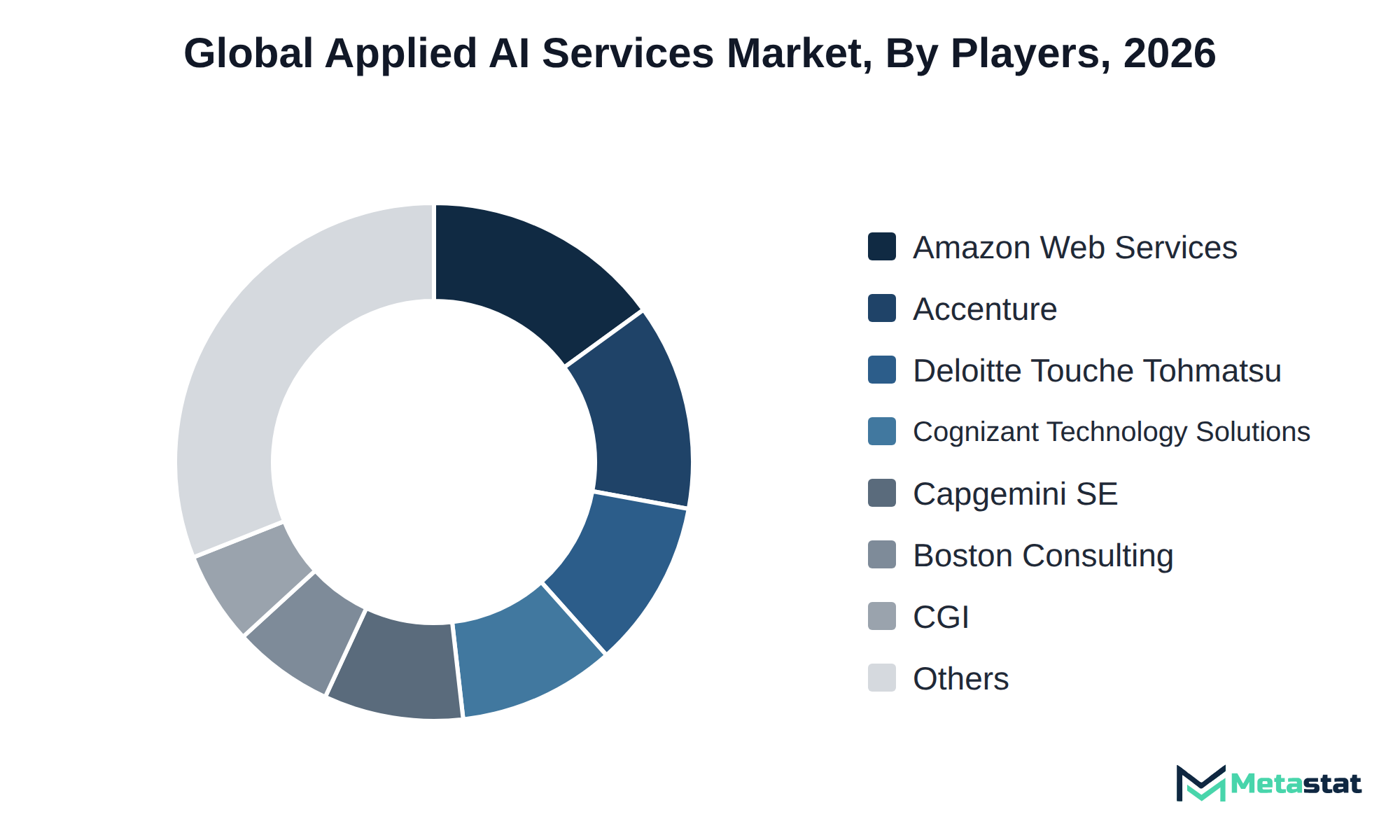
Companies in the applied AI services market compete through various strategies, including service type differentiation and deployment model selection. Firms focus on price, customization, certification, and the strength of their ecosystems to attract buyers.
Accenture plc excels in AI strategy and advisory services, addressing the growing demand for tailored solutions across sectors. Similarly, Capgemini SE emphasizes AI solution design and integration, leveraging its extensive industry knowledge to enhance its service offerings. Conversely, IBM Corporation prioritizes machine learning and predictive analytics, positioning itself as a key player in technological advancements within the market.
Amazon Web Services, Inc. and Microsoft Corporation dominate the public cloud deployment model, providing scalable and versatile solutions for clients. Deloitte Touche Tohmatsu Limited focuses on intelligent workflow automation, promoting efficiency in business operations. These strategic approaches enhance service delivery and influence customer choice and retention across various industries.
Achieving this growth in the Applied AI Services market requires advancements in several key areas, including increased adoption of AI Strategy and Advisory services and the integration of Generative AI and Large Language Models. The Generative AI segment, expected to reach USD 149.9 billion by 2033, positions firms to innovate and enhance customer engagement through advanced applications.
Despite this promising outlook, risks including regulatory challenges and potential data privacy concerns could impede progress. North America, with a projected market value of USD 151 billion by 2033, faces scrutiny regarding AI implementation and ethical use. The Applied AI Services market relies on navigating these challenges while driving investment in technology and talent. Ensuring alignment between innovation and regulation will be vital for sustaining growth and realizing the full potential of the market.
By Service Type: AI Strategy and Advisory, AI Solution Design and Integration, AI Application Development and MLOps, Intelligent Workflow Automation, Managed AI Services
By Deployment Model: Public Cloud, Private Cloud, Hybrid Cloud, On-Premises and Edge
By Technology: Machine Learning and Predictive Analytics, Generative AI and Large Language Models, Computer Vision, Natural Language Processing and Conversational AI, AI Agents and Decision Intelligence
By End-Use Industry: Banking, Financial Services and Insurance, IT and Telecommunications, Manufacturing, Healthcare and Life Sciences, Retail and E-Commerce, Public Sector, Energy and Utilities, Transportation and Logistics
The report strategically identifies and profiles the key market players and analyses their core competencies in each sub-segment of the Applied AI Services market.
Report Attributes | Details |
Study Period | 2021-2033 |
Base Year | 2025 |
Estimated Year | 2026 |
Forecast Period | 2026-2033 |
Historical Period | 2021-2025 |
Growth Rate | CAGR 39.7% from 2026 to 2033 |
Revenue Unit | USD billion |
Segmentation | By Service Type, Deployment Model, Technology, End-Use Industry, and Region |
By Region | North America (By Service Type, Deployment Model, Technology, End-Use Industry, and Country)
|
Europe (By Service Type, Deployment Model, Technology, End-Use Industry, and Country)
| |
Asia Pacific (By Service Type, Deployment Model, Technology, End-Use Industry, and Country)
| |
South America (By Service Type, Deployment Model, Technology, End-Use Industry, and Country)
| |
Middle East and Africa (By Service Type, Deployment Model, Technology, End-Use Industry, and Country)
|
Find answers to common questions about this report
The Applied AI Services market size was valued at USD 29.1 billion in 2025.
The market is projected to grow at a CAGR of 39.7% during the forecast period from 2026 to 2033.
The North America Applied AI Services market size is estimated to reach USD 151 billion by 2033.
AI Solution Design and Integration leads the Applied AI Services market with a projected value of USD 117.9 billion by 2033. This segment surpasses others in terms of revenue potential within the forecast period.
Significant investment in advanced analytics capabilities enhances customer experiences and streamlines operations. The rise of digital transformation initiatives across various industries fuels demand for managed AI services.
North America holds the dominant share of the Applied AI Services market, with a projected value of USD 151 billion in 2033, representing 39.4 percent of the total market.
Price sensitivity represents a significant restraint on the growth of the Applied AI Services market. Higher costs associated with implementing AI technologies deter businesses from making immediate investments, resulting in smaller order sizes and delayed project timelines.
Several factors favor the adoption of Applied AI Services in various industries. The increasing demand for AI Strategy and Advisory services highlights the need for expert guidance in implementing AI solutions. Key buyer groups, including financial services and healthcare, prioritize tailored strategies to achieve specific operational objectives, driving investment in these services.
The Applied AI Services market is estimated to reach a valuation of USD 422.8 billion by 2033.
Key players operating in the Applied AI Services market include Accenture plc, Amazon Web Services, Inc., Capgemini SE, Deloitte Touche Tohmatsu Limited, IBM Corporation, Microsoft Corporation, Tata Consultancy Services Limited, and Wipro Limited.
The analysts below cover Information & Technology research at Metastat Insights.
LEAD ANALYST
Utkarsh Khirodkar is a Lead Market Research Analyst at MetaStat Insight, specializing in market intelligence, technology sector assessments, and competitive strategy.

PRINCIPAL CONSULTANT - ENTERPRISE AI & EMERGING TECHNOLOGIES
Banking & Finance · Electronics and Semiconductor · Energy and Power · Healthcare IT · Information & Technology · Professional Services
Vijay Gunti is a Principal Consultant at MetaStat Insight, bringing over two decades of experience across enterprise digital transformation, technology strategy, and intelligent systems.

LEAD CONSULTANT - COMMUNICATION, TELECOM, AND IT
Electronics and Semiconductor · Information & Technology · Machinery & Equipment · Professional Services
Ravindra Sathe Consultants for Communication, Telecom, and IT at MetaStat Insight. He leads the firm's industry research initiatives across telecommunications infrastructure, digital connectivity, enterprise networking, and emerging information technology domains.
Evaluating sovereign cloud deployments for core banking platforms demands a clear view of data residency regulations and migration exit strategies. MetaStat Insight delivered an exhaustive review of regional latency tolerances, mainframe decommission milestones, and third-party vendor concentration risk. The regulatory compliance mapping across European and Asian financial jurisdictions gave our team a dependable baseline for multi-cloud infrastructure discussions.
Replacing petrochemical surfactants with bio-based alternatives requires realistic timelines on industrial precision fermentation scaling. The market research broke down commercialization timelines, feedstock sugar price sensitivities, and regional cosmetic ingredient regulatory approvals in Europe and East Asia. That supplier readiness mapping gave our formulations team reliable context when comparing renewable chemical sourcing roadmaps.
Tracking ceramic matrix composite adoption in high-bypass aero engines requires strict attention to material qualification cycles and FAA airworthiness testing milestones. The MetaStat Insight team provided a detailed timeline of silicon carbide fiber manufacturing capacity and commercial foundry lead times. Having clear visibility into upstream thermal barrier coating supply helped us stress-test our long-term component procurement strategy.
Explore related market intelligence reports worth reading alongside this one.
Starting from
$2950