
LEAD ANALYST
Utkarsh Khirodkar is a Lead Market Research Analyst at MetaStat Insight, specializing in market intelligence, technology sector assessments, and competitive strategy.

Global Circuit Breakers and Fuses Market Size, Share, By Product Type (Circuit Breakers and Fuses), By Rated Voltage (Up to 1 kV, Above 1 kV to 36 kV, Above 36 kV to 245 kV, Above 245 kV), By Current Type (Alternating Current (AC) and Direct Current (DC)), By End-Use Industry (Power Generation & Utilities, Industrial Facilities, Residential Buildings, Commercial Buildings, Automotive & Transportation, Consumer Electronics & Appliances, Data Centers & Telecommunications), Industry Analysis, Growth, Trends, and Forecast, 2026-2033
Report ID
MSI-5576
Published
October, 2026
Pages
302 Pages
Format
Historical
Base year
Forecast
Forecast period
Report Details
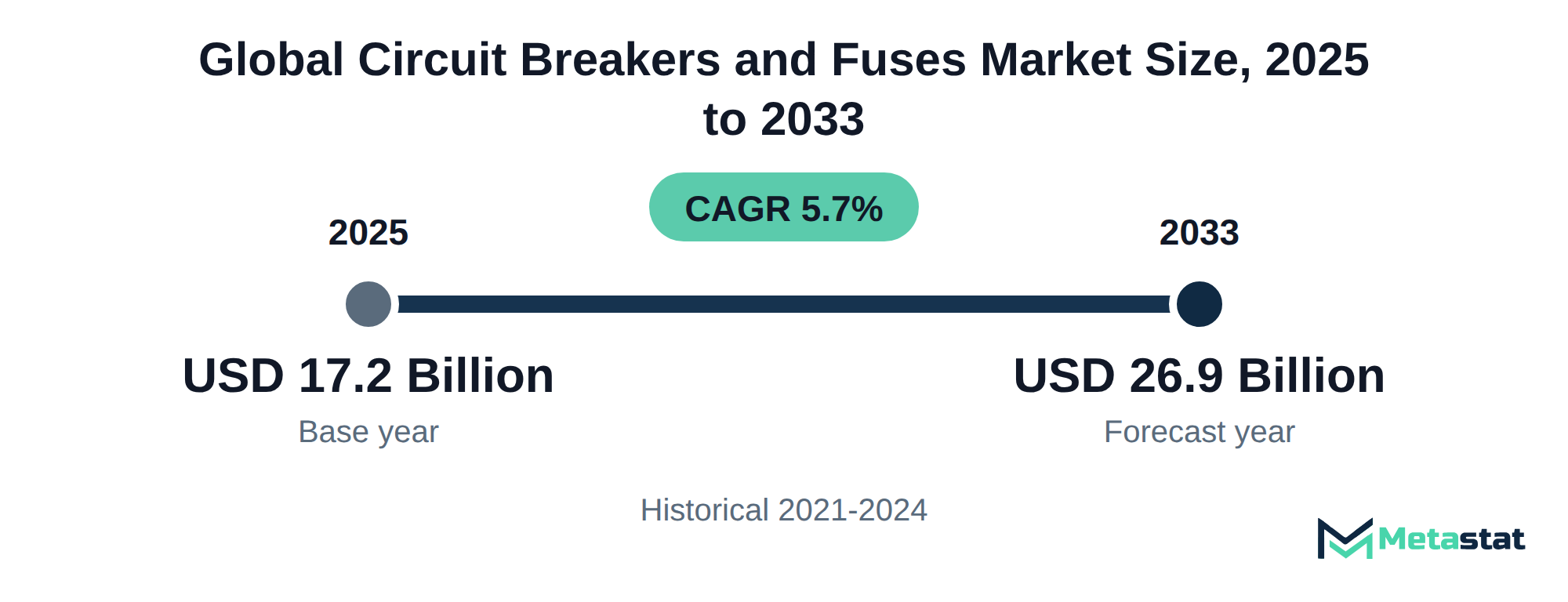
Market Valuation: Valued at $17.2 Billion in 2025, projected to reach $26.9 Billion by 2033 at a 5.7% CAGR.
Dominant Segment: Circuit Breakers lead the market, driven by their essential role in safeguarding electrical systems and increasing investments in infrastructure upgrades.
Geographic Lead: Asia Pacific is the leading region, accounting for 42.8% of the market in 2025, fueled by rapid urbanization and industrialization in countries like China and India.
What's Inside: The report provides comprehensive competitive coverage, detailed analyses of market dynamics, and forecasts extending to 2033, focusing on product types, rated voltages, and end-use industries.
Emerging Growth in Direct Current System: The market for direct current applications is projected to grow significantly, driven by the rise of renewable energy sources and electric vehicle infrastructure.
Digitalization Drives Smart Grid Investm: Advancements in digital technologies are enhancing the demand for smart grid solutions, leading to increased investments in circuit protection technologies.
Choose Your License
Global Circuit Breakers and Fuses Market
The global Circuit Breakers and Fuses market was valued at USD 17.2 billion in 2025 and is projected to reach USD 26.9 billion by 2033, growing at a CAGR of 5.7% over the forecast period.
The Circuit Breakers and Fuses market covers electrical devices that protect circuits from overloads and short circuits. Buyers invest in these products primarily to enhance safety and reliability in various applications, including industrial, commercial, and residential settings. The need for reliable electrical infrastructure drives demand, particularly in regions with growing energy requirements and modernization efforts.
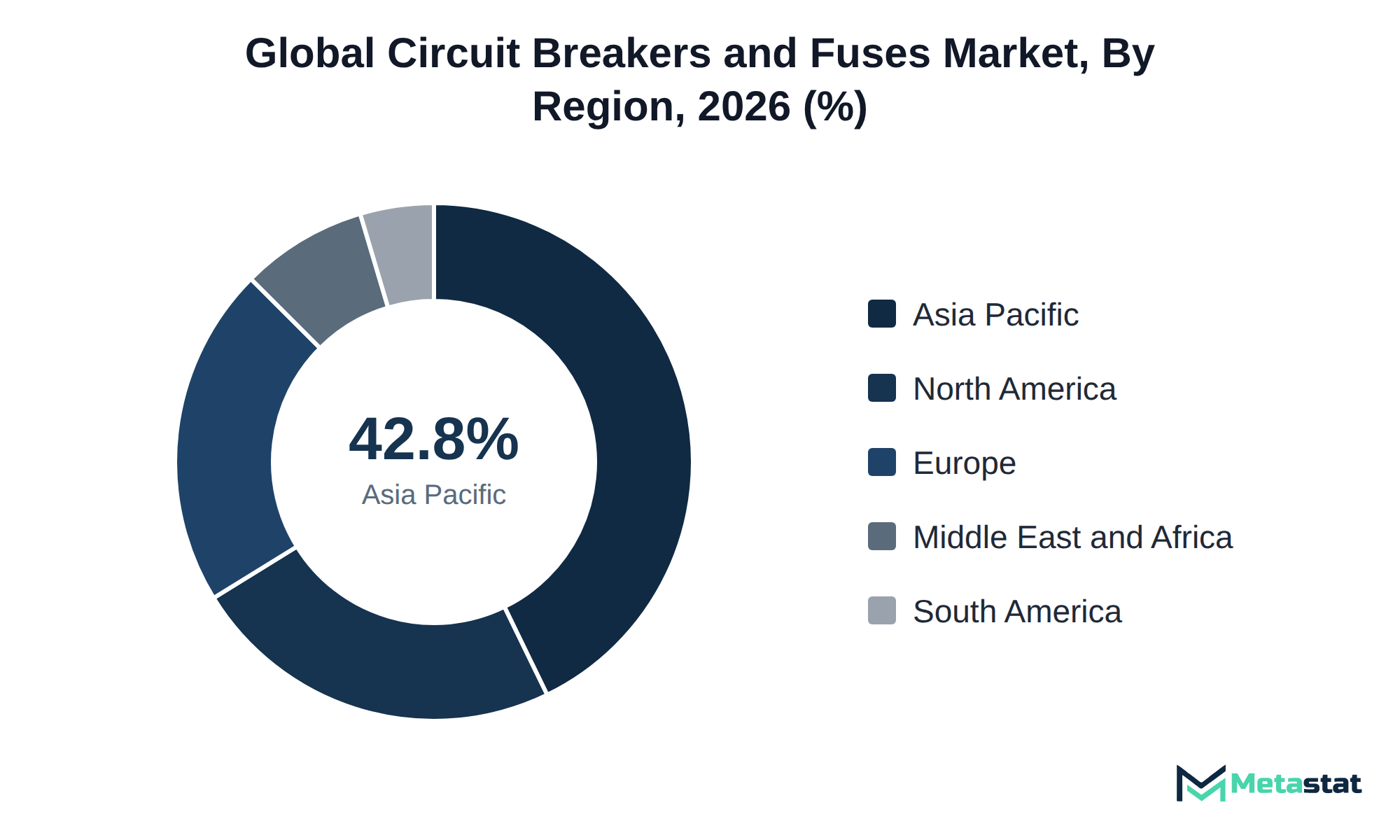
Growth in the market is fueled by increasing investments in power generation and infrastructure upgrades. Among the product types, Circuit Breakers represent the largest segment, reflecting their crucial role in safeguarding electrical systems. In terms of regional shares, Asia Pacific accounted for 42.8% of the market in 2025, indicating significant activity in countries including China and India, where rapid urbanization and industrialization occur. North America holds 23.4% of the market in 2025, with the US leading in 2026.
Technological advancements, including smart circuit breakers with digital monitoring capabilities, support market expansion by improving operational efficiency and safety standards. These innovations appeal to buyers who prioritize performance and reliability, further driving the adoption of circuit protection solutions across various industries. Evolving electrical safety standards and regulations keep the market responsive to emerging needs.
The Circuit Breakers and Fuses market features essential components for electrical safety and reliability across various applications. Buyers invest in these devices to ensure the protection of equipment, optimize energy efficiency, and comply with safety regulations. Industries including power generation, residential construction, and commercial facilities prioritize these investments to mitigate risks associated with electrical faults and enhance operational efficiency.
Growth in the market is driven by increasing demand for reliable energy solutions and the expansion of infrastructure projects worldwide. The Circuit Breakers segment holds the largest value, reflecting a significant portion of spending in the market. North America holds 23.4% of the market in 2025, with the US leading in 2026, followed closely by the Asia Pacific region, which demonstrates strong growth potential due to rising electricity consumption and advancements in technology.
While the market evolves, the emphasis on sustainable energy solutions encourages innovation among manufacturers. Upgrading existing electrical systems to accommodate renewable energy sources enhances the appeal of circuit breakers and fuses. This transformation supports market expansion by driving investments in advanced electrical solutions that meet the growing demands of various sectors.
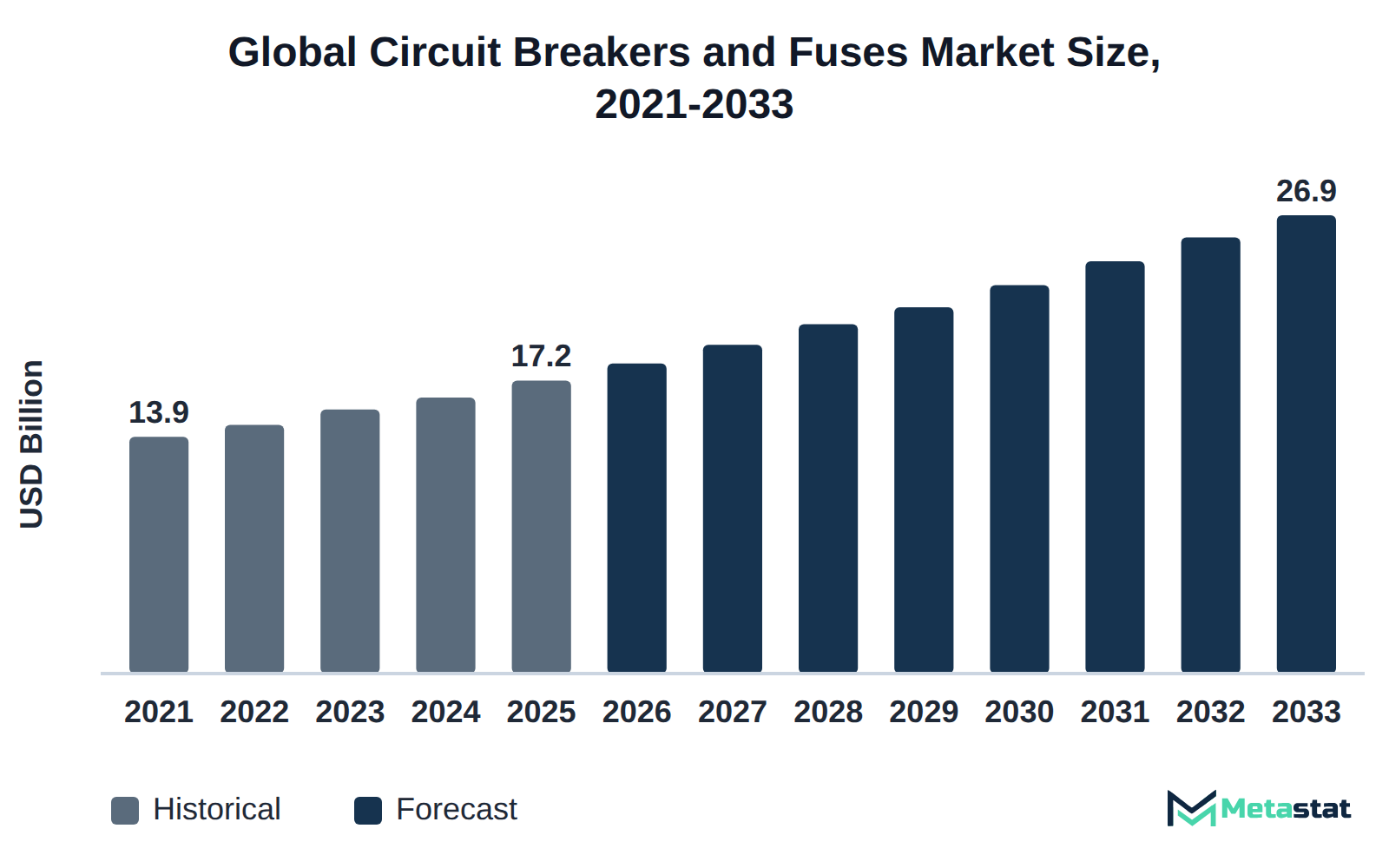
The transition to SF6-free circuit breakers and vacuum switching technologies is reshaping utility procurement strategies. These shifts are driven by the increasing regulatory focus on reducing greenhouse gas emissions, particularly due to the environmental impact of sulfur hexafluoride (SF6), a potent greenhouse gas used in traditional high-voltage circuit breakers. The global Circuit Breakers and Fuses market reflects this shift. The circuit breakers segment is projected to grow from USD 14.5 billion in 2026 to USD 21.7 billion by 2033, a compound annual growth rate of 5.9%. This growth indicates a broader move toward sustainable practices in electrical infrastructure.
Vacuum switching technology stands out due to its efficiency and reliability, making it a preferred choice for many utilities. The technology offers enhanced performance while eliminating the environmental concerns associated with SF6. Utilities adopting these advanced solutions gain operational efficiency and contribute to sustainability goals, creating a competitive advantage in an increasingly eco-conscious market. While the demand for environmentally friendly solutions escalates, investments in these technologies are expected to reshape procurement strategies within the utility sector, driving growth and innovation in the Circuit Breakers and Fuses market.
Protection requirements for direct current (DC) systems, including solar photovoltaic (PV) installations, battery storage, and electric vehicle (EV) charging stations, have become increasingly critical in the Circuit Breakers and Fuses market. The global shift towards sustainable energy sources and electrification of transport has increased the demand for reliable DC protection solutions. In 2026, the market for direct current applications is expected to reach USD 4.7 billion by 2033, reflecting a compound annual growth rate (CAGR) of 9.7%.
Purchasing decisions for DC protection devices hinge on specific contract models and pricing structures. Buyers evaluate options based on performance specifications, regulatory compliance, and total cost of ownership. Suppliers typically offer flexible pricing and financing plans, enabling buyers to align expenditures with projected returns on investment from enhanced energy efficiency and reliability. An informed selection process weighs long-term cost implications rather than initial purchase price alone.
The integration of advanced technologies and smart grid concepts in DC applications drives the necessity for innovative protection solutions. Investing in high-quality circuit breakers and fuses designed for DC systems allows buyers to significantly reduce maintenance costs and improve system reliability. This proactive approach mitigates operational risks and supports sustainable growth within the market.
Localization efforts in Saudi Arabia focus on enhancing the procurement of circuit protection solutions, particularly circuit breakers and fuses tailored for high-ambient conditions. The region's unique climate demands products that perform reliably under elevated temperatures, making it essential for suppliers to offer specialized solutions. This need aligns with forecast growth in the circuit breakers and fuses market, which is projected to reach USD 26.9 billion by 2033. That growth offers a significant opportunity for manufacturers that adapt their offerings to meet local conditions.
In the context of rated voltage, circuit breakers rated "up to 1 kV" represent a segment with substantial potential, projected to grow from USD 7.3 billion in 2026 to USD 11.3 billion by 2033, demonstrating a compound annual growth rate (CAGR) of 6.4%. This demand is largely driven by the power generation and utilities sector, which requires durable circuit protection to ensure uninterrupted service in high-ambient environments. The emphasis on localization enhances operational efficiency and supports the development of a sustainable supply chain within the region, thereby strengthening the competitive position of suppliers who effectively respond to this demand.
Investing in technology that accommodates local climatic conditions improves product performance and encourages partnerships between domestic firms and international manufacturers, leading to knowledge transfer and innovation. This collaborative approach enhances the overall resilience of the market, driving growth in both revenue and market share for participants that prioritize localized solutions in their procurement strategies.
High-fault-current data centers require specific circuit breakers and fuses to ensure reliable protection against electrical faults. Circuit breakers designed for high-fault-current applications enhance safety and operational continuity. In particular, circuit breakers serving alternating current (AC) systems hold significant value, with a projected revenue of USD 22.2 billion by 2033. This growth illustrates increasing demand for robust protection solutions within critical infrastructures like data centers.
Data centers, which handle significant power loads, necessitate circuit breakers that interrupt high fault currents promptly. This requirement highlights the necessity for circuit breakers rated above 1 kV, which are expected to generate USD 9.9 billion in revenue by 2033. These products assure operators of effective fault management, reducing the risk of equipment damage and service interruptions.
The Circuit Breakers and Fuses market demonstrates a clear trend toward higher voltage ratings and enhanced capabilities. By investing in suitable circuit breakers and fuses, data center operators achieve operational resilience while minimizing downtime and maintenance costs, leading to improved overall efficiency and profitability.
Growing emphasis on infrastructure upgrades influences investment decisions among utility companies, industrial facilities, and commercial buildings. Aging electrical systems require modern circuit breakers and fuses that enhance safety and efficiency. This shift towards replacement of outdated equipment contributes to a substantial increase in demand. The market is expected to expand from USD 17.2 billion in 2025 to USD 26.9 billion by 2033, reflecting a compound annual growth rate of 5.7%. With an increased focus on reliability and performance, buyers prioritize high-efficiency solutions that ensure operational continuity while minimizing downtime. The trend towards sustainability further emphasizes the necessity for advanced circuit protection technology, reinforcing purchasing behaviors across various industries. Such developments create growth opportunities within the market.
Regulatory pressures and evolving technology continue to shape the procurement landscape, pushing stakeholders to adopt innovative solutions that comply with stringent safety standards. This dynamic transformation highlights the urgency for investment in modern electrical infrastructure.
Advancements in digital technologies significantly influence the Circuit Breakers and Fuses market, particularly through the integration of smart grid solutions. Utilities and industrial facilities prioritize investments in digital infrastructure to enhance operational efficiency and reliability. The adoption of smart grid technologies enables real-time monitoring and control of electrical systems, leading to improved response times during outages and better load management. Consequently, demand for circuit breakers and fuses that support these technologies increases.
The growing emphasis on data analytics and automation within energy management systems drives the need for advanced circuit protection solutions. Such developments lead to a shift toward digitalized protection mechanisms that include communication capabilities, allowing integration with existing systems. This trend enhances safety and facilitates compliance with evolving operational standards, ultimately benefiting end users across various sectors. The market experiences growth due to these digitalization efforts, with stakeholders increasingly seeking to modernize their electrical infrastructure.
Price volatility represents a significant challenge within the Circuit Breakers and Fuses market, impacting purchasing decisions among industrial facilities and utilities. Fluctuating prices for raw materials, including metals and plastics, contribute to unpredictable costs for circuit breakers and fuses. These price fluctuations lead to smaller order sizes or delayed procurement, driven by buyers seeking to avoid overcommitting to potentially inflated costs. Utilities, in particular, face pressure to maintain budgetary constraints, resulting in a cautious approach to replacement and upgrades. This restraint ultimately curtails market growth, as buyers prioritize cost control over immediate investment in advanced electrical protection solutions. Uncertainty surrounding future pricing trends complicates long-term planning for procurement strategies, further limiting demand in the market.
Increasing material costs present a significant challenge for suppliers in the Circuit Breakers and Fuses market. The prices of essential materials, including metals and plastics, have experienced upward trends, impacting overall production expenses. This situation pressures suppliers to maintain competitive pricing while managing profit margins. Suppliers adapt by exploring alternative sourcing strategies and optimizing supply chain processes to mitigate these rising costs. Several have invested in research and development to identify lower-cost materials that meet performance and safety standards. Collaboration with suppliers and manufacturers enables better negotiation on raw material prices, supporting long-term cost stability. These strategies aim to enhance competitiveness and ensure continued growth in the market despite ongoing cost pressures. Investment in alternative materials and sourcing strategies will likely influence future pricing dynamics across the industry. Proactive measures strengthen supplier resilience to changing costs while maintaining product quality and market share.
Rapid growth in direct current (DC) systems presents a notable opportunity within the market. This growth is driven by increasing reliance on renewable energy sources, electric vehicles, and battery storage systems requiring reliable protection against overloads and short circuits. Industries focusing on renewable energy generation and electric mobility increasingly seek advanced direct current solutions to enhance operational efficiency and safety. The expansion of the market in this segment is expected to attract investment and encourage innovation, pushing suppliers to develop advanced technologies tailored for DC applications. Direct current systems represent a significant growth area, reinforcing the overall trajectory of the market.
The Global Circuit Breakers and Fuses market is segmented based on Product Type, Rated Voltage, Current Type, and End-Use Industry.
Circuit breakers protect electrical circuits from overloads and ensure operational safety for industries including power generation, manufacturing, and residential applications. Growth in this segment is driven by increasing investment in infrastructure upgrades and rising demand for reliable energy distribution systems. Compared to the Fuses segment, which is projected to reach USD 5.2 billion by 2033 with a CAGR of 4.9%, Circuit Breakers demonstrate a stronger growth trajectory due to their essential function in modern electrical grids and smart technologies. The ongoing transition towards renewable energy sources necessitates advanced protection solutions that Circuit Breakers provide, further enhancing their significance in the market.
Fuses protect electrical circuits from overloads and short circuits across various applications, including residential and commercial buildings. Demand for fuses is driven by the increasing focus on electrical safety standards, particularly in urban infrastructure development. Unlike circuit breakers, fuses operate through a simple mechanism of melting a wire when excessive current flows, making them more cost-effective for certain applications. However, the growth rate of the fuses segment lags behind that of circuit breakers, which is expected to see a CAGR of 5.9% during the same period. This disparity reflects a shift towards more advanced protective technologies in critical industrial sectors, while fuses remain essential for smaller-scale applications.
Circuit breakers rated for up to 1 kV find extensive use in residential and commercial applications. These devices enhance electrical safety by preventing overloads and short circuits, ensuring reliable operation in various environments. A strong demand driver stems from increasing infrastructure development and urbanization, leading to higher investments in residential and commercial buildings. This segment outpaces others in growth, reflecting a more significant expansion than the segment for devices rated above 1 kV, which targets primarily industrial applications. The market is influenced by evolving safety standards and by technological advancements that improve efficiency and reliability in electrical systems.
The Above 1 kV to 36 kV segment is estimated to reach USD 9.9 billion by 2033, at a CAGR of 5.3% during the forecast period. This segment finds extensive application in high-voltage power distribution, particularly within industrial settings and utilities that demand reliable protection against electrical faults. The growing focus on enhancing grid efficiency and safety significantly increases the demand for this segment, particularly in regions undergoing substantial infrastructure development. This segment demonstrates a steadier growth rate, driven by its critical role in high-capacity systems, unlike the higher growth observed in the 'Up to 1 kV' segment. Manufacturers targeting this area face challenges related to regulatory compliance and technology integration, impacting overall pricing and competitive dynamics. The ongoing transition towards renewable energy sources further supports investment in advanced protection solutions, resulting in sustained demand.
The Above 36 kV to 245 kV segment is expected to reach USD 4.6 billion by 2033. This segment primarily serves high-voltage transmission applications, ensuring power distribution in industrial settings and large utility projects. The increasing demand for reliable power supply and enhanced grid stability drives growth in this segment. It differs from lower voltage segments, which cater to residential and commercial applications at different price points. While the CAGR for this segment is not specified, higher operational costs associated with equipment and installation influence its pricing strategy. Enhanced reliability and safety standards further support adoption in critical infrastructure, distinguishing it from other categories focused on lower voltage applications that experience more rapid growth. The market benefits from investments in renewable energy projects, which necessitate robust high-voltage solutions, creating a favorable environment for this segment.
Valued at USD 4.6 billion in 2026, the Above 245 kV segment is projected to grow at a CAGR of 6.6% during the forecast period. This segment primarily serves high-voltage applications within power generation and transmission networks, requiring robust solutions to ensure reliability and safety. The increasing demand for renewable energy sources and infrastructure investments in the power sector drives growth in this segment. Compared to other rated voltage segments, Above 245 kV demonstrates a prominent growth rate, supported by investments in modernizing grid infrastructure. This segment appeals to utility companies focusing on high-capacity transmission solutions, differentiating it from lower-rated voltage segments due to its specialized features and higher price points. Significant demand is anticipated, driven by the global shift towards sustainable energy solutions and technological advancements in high-voltage equipment.
Valued at USD 15.7 billion in 2026, this segment is projected to reach USD 22.2 billion by 2033, at a CAGR of 5% during the forecast period. Alternating Current (AC) solutions play an important role in various applications, particularly in residential buildings, commercial establishments, and industrial facilities. The increasing demand for electricity in these sectors drives the need for efficient circuit protection. Enhanced safety regulations and standards further influence the adoption of such solutions. The growth rate for this segment is comparatively robust, reflecting a steady rise in demand, unlike the Direct Current (DC) segment, which experiences a higher CAGR of 9.7%. With a focus on safety and reliability, the market for Alternating Current solutions remains essential for diverse industries, ensuring a steady demand trajectory.
This segment is essential for applications in renewable energy systems, electric vehicles, and data centers, serving industries that prioritize efficient energy management and storage. The rapid growth of DC systems is driven by increasing demand for renewable energy sources that harness solar and wind power. Advancements in battery storage technology enhance the adoption of DC solutions, allowing improved performance and reliability. Compared to other segments, the DC segment exhibits faster growth, influenced by the surge in electric vehicle infrastructure and the transition toward sustainable energy sources. This segment stands out with a projected CAGR of 9.7%, surpassing the growth rates of other current types, indicating a strong shift in preference among buyers in the market.
Valued at USD 6.4 billion in 2026, this segment is projected to reach USD 9.6 billion by 2033, at a CAGR of 5.9% during the forecast period. This segment supports electricity generation and distribution, serving utilities and power generation facilities. Demand primarily arises from the global push for renewable energy sources and the modernization of existing infrastructure. Increasing investments in renewable energy projects stimulate market growth. In comparison to other segments, including Industrial Facilities, which experiences a CAGR of 4.8%, this segment demonstrates stronger growth driven by investments in sustainable energy solutions. The integration of advanced technologies and regulatory frameworks promoting clean energy initiatives enhances its appeal. Heightened competition emerges as suppliers innovate to meet the evolving demands of utilities.
Industrial Facilities segment is estimated to reach USD 5.4 billion by 2033, at a CAGR of 4.8% during the forecast period. This segment focuses on providing electrical safety and power management solutions for manufacturing plants, warehouses, and processing facilities, ensuring reliable operations in demanding environments. A significant driver for this segment includes increasing investment in automation and efficiency upgrades across industrial sectors, which emphasizes the need for advanced electrical protection systems. This segment's growth differs from others, including Power Generation & Utilities, which is projected to grow at a faster CAGR of 5.9%. The unique requirements of industrial facilities, including higher durability and performance standards, contribute to a distinct product focus compared to commercial or residential applications. Regulatory compliance regarding workplace safety further fuels demand for effective circuit breakers and fuses that meet industrial standards.
The Residential Buildings segment is expected to reach USD 3.1 billion by 2033. This segment focuses on providing electrical protection and control in residential properties, catering primarily to homeowners and contractors involved in building or renovating homes. Increasing investments in residential construction and renovation drive demand, influenced by rising property values and a growing emphasis on energy efficiency. Unlike other segments, including Power Generation & Utilities, the Residential Buildings segment exhibits slower growth, with a projected CAGR of 4.9%. Factors including the need for reliable electrical safety measures and compliance with local regulations play crucial roles in shaping the segment's trajectory. The market continues to evolve, reflecting changing consumer preferences for integrated smart home technologies that enhance safety and energy management.
Commercial Buildings segment is projected to grow at a CAGR of 4.9% during the forecast period. This segment encompasses various applications within retail, office spaces, and hospitality, significantly contributing to energy consumption and electrical safety. The increasing demand for energy-efficient systems drives investment in modern electrical infrastructure within the sector. Regulations focusing on energy efficiency and safety standards fuel the adoption of advanced circuit breakers and fuses. Compared to other segments, the Commercial Buildings sector experiences slower growth relative to Power Generation & Utilities, which has a CAGR of 5.9%. The unique requirements of commercial buildings, including diverse electrical loads and safety measures, differentiate this segment from residential and industrial counterparts, impacting market dynamics and product offerings in the Circuit Breakers and Fuses market.
Automotive & Transportation focuses on electrical systems in vehicles, including cars, trucks, and public transport. This segment serves automotive manufacturers and aftermarket suppliers, providing essential circuit protection and management solutions. Key trends driving this segment include increasing demand for electric vehicles (EVs) and the need for energy-efficient technologies. The shift toward EVs requires more sophisticated circuit protection due to higher voltage and current demands compared to traditional vehicles. This segment experiences a different growth trajectory compared to others, influenced by rapid advancements in automotive technology and regulatory pressures for emissions reduction. Investment in electric mobility and smart transportation systems fuels demand for advanced circuit breakers and fuses, creating opportunities for several suppliers in the market.
Consumer electronics and appliances encompass devices that serve everyday needs, including smartphones, televisions, and kitchen equipment. These products are crucial in residential settings, requiring reliable protection against electrical faults. The primary demand driver for this segment stems from increasing consumer adoption of smart devices and home automation solutions. Enhanced functionality and energy efficiency in modern appliances further fuel this growth. Compared to other sub-segments, the consumer electronics segment typically experiences slower growth due to market saturation and price sensitivity among buyers. Nonetheless, innovations in technology continue to reshape the landscape, compelling manufacturers to adapt their offerings and ensure compliance with safety standards. With ongoing trends in energy efficiency and sustainability, the market for circuit breakers and fuses that support consumer electronics and appliances remains integral to ensuring safe and efficient operation.
The Data Centers & Telecommunications segment is critical to managing and distributing digital information. This segment services various industries, including cloud computing and telecommunications, which rely heavily on a consistent power supply and protection against electrical faults. Rapid advancements in technology drive demand for reliable circuit breakers and fuses that ensure uninterrupted operations. Increased data consumption and the expansion of cloud services significantly influence this segment's growth trajectory. Compared to other segments, it exhibits higher growth potential due to the ongoing digital transformation across industries. This sector faces unique challenges, including the necessity for advanced protection solutions that adapt to evolving technologies, differentiating it from traditional segments including industrial facilities.
This segment encompasses specialized applications in healthcare, aerospace, and defense sectors, which require reliable electrical safety and performance solutions. These industries employ circuit breakers and fuses to protect equipment and ensure operational continuity in critical environments. Demand in this segment is influenced primarily by technological advancements and increased investments in infrastructure. Companies prioritize high-performance and durable components due to stringent regulations and the need for enhanced safety standards. Compared to other segments, this segment typically faces slower growth rates, driven by high costs associated with compliance and specific requirements of end users. The market caters to a niche audience focused on maintaining safety and reliability in sensitive applications, differentiating it from broader industrial or residential segments where price sensitivity plays a more significant role.
Based on geography, the Global Circuit Breakers and Fuses market is divided into North America, Europe, Asia-Pacific, South America, Middle East, and Africa.
Demand for circuit breakers and fuses in North America derives primarily from the power generation and utilities sector. Key players in this sector include major utility companies that invest significantly in infrastructure upgrades and maintenance to ensure stable and efficient energy distribution. Regulatory frameworks aimed at enhancing electrical safety and reliability further drive investment in electrical safety solutions, particularly in residential and commercial applications. The market is projected to reach USD 6.1 billion by the end of 2033, reflecting a growth trajectory supported by ongoing investments in modernization. The share of the global market in 2025 indicates strong regional demand for advanced circuit breakers and fuses.
Demand in the European Circuit Breakers and Fuses market derives from a variety of industries, particularly power generation and utilities. Countries including Germany, France, and the UK stand out due to their investments in renewable energy infrastructure and modernization of existing electrical grids. The need for enhanced electrical protection solutions ensures reliability and safety in energy distribution. The region's robust regulatory framework, focusing on environmental sustainability, influences purchasing decisions, prompting utilities and industrial players to adopt advanced circuit breakers and fuses. By 2025, Europe's share of the global market reflects strong growth potential due to ongoing transitions in energy production and consumption.
Asia-Pacific is projected to account for 42.8% of the global Circuit Breakers and Fuses market by 2025. Rapid industrialization and urbanization in countries like China and India drive strong demand for electrical infrastructure and safety solutions. Significant investments in renewable energy projects further fuel adoption, particularly in the power generation sector. Infrastructure developments and government initiatives support the expansion of electrical networks, enhancing the need for circuit breakers and fuses. Increasing electrification in residential and commercial buildings creates opportunities for market growth. The region's diverse industrial base, including manufacturing and utilities, highlights a crucial demand for reliable electrical protection solutions, ensuring continued market expansion through 2033.
Demand for circuit breakers and fuses in South America stems primarily from the power generation and utilities sector, particularly in Brazil and Argentina. The market benefits from increasing investments in renewable energy infrastructure, which drives the requirement for reliable electrical safety devices. Significant infrastructure projects in these countries support the installation of electrical equipment necessary for both urban and rural electrification efforts. South America accounted for 4.6% of the global market in 2025. Regulatory frameworks aimed at improving energy efficiency further stimulate demand, influencing purchasing decisions across various end-use industries. The circuit breakers and fuses market in this region is projected to grow due to these developing trends and regulatory support.
The Circuit Breakers and Fuses market in the Middle East and Africa exhibits distinct characteristics driven by the region's evolving industrial landscape. Demand primarily stems from power generation and utilities, with significant infrastructure developments occurring in countries like Saudi Arabia and the UAE. Investments in renewable energy projects enhance the market's growth potential. The region's share of the global market stands at 7.9% in 2025, reflecting a commitment to improving electrical safety and reliability. South Africa contributes to market dynamics through its industrial facilities, while ongoing governmental initiatives promote the adoption of advanced technologies. Increasing energy demands and infrastructure projects support growth in the Circuit Breakers and Fuses market across this diverse region.
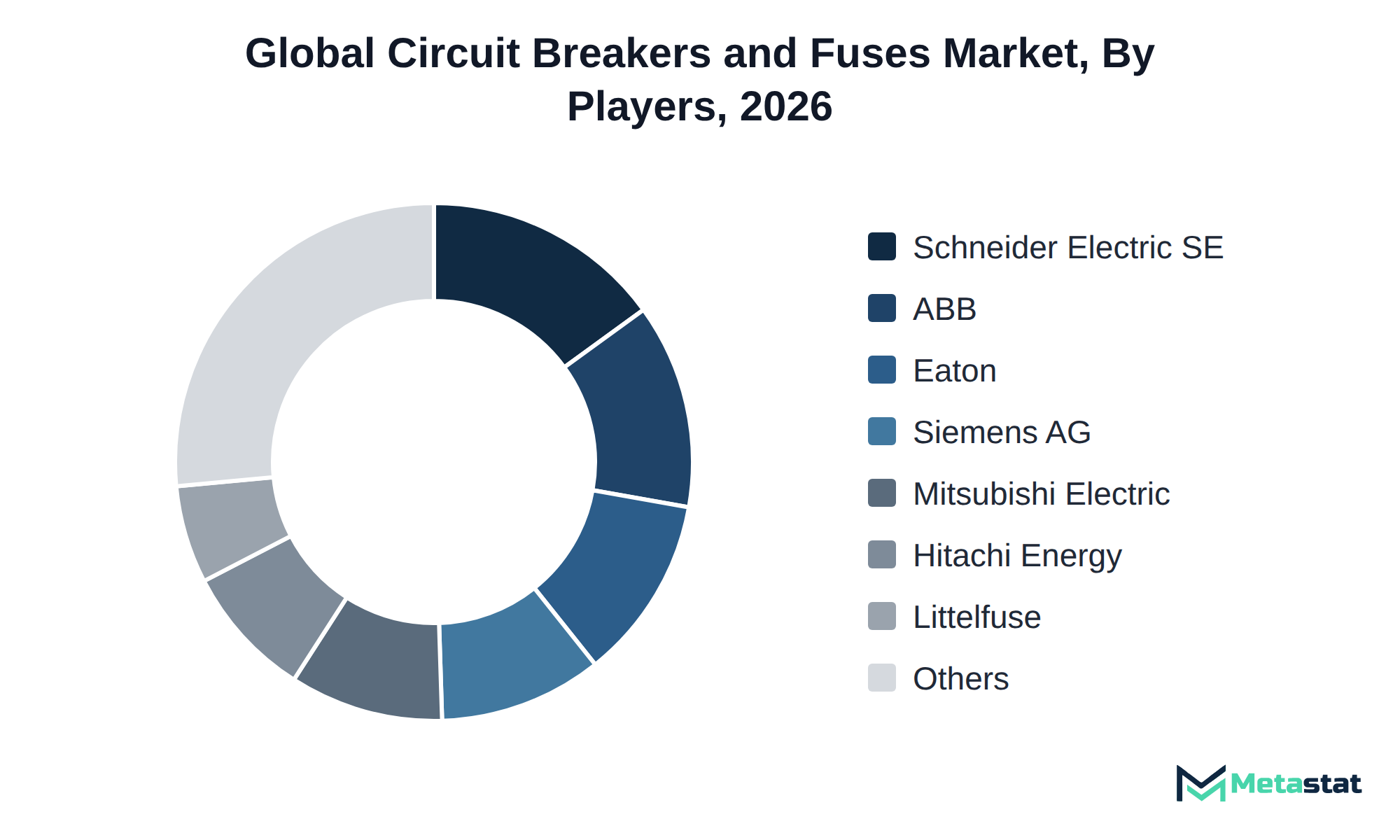
The Circuit Breakers and Fuses market features diverse strategic approaches among companies. Players focus on various aspects including product differentiation, pricing strategies, and technology innovation to enhance their competitive edge. Schneider Electric SE and ABB Ltd. emphasize technological advancements and innovative solutions, positioning their products to meet the demands of modern infrastructure. Companies including Eaton Corporation plc and Siemens AG use extensive distribution networks and customer service capabilities to attract clients, emphasizing reliability and support.
Buyers prioritize factors including price, certification, customization, and service when selecting products within the market. Companies including Mitsubishi Electric Corporation and Hitachi Energy Ltd. demonstrate strong capabilities in customization, allowing tailored solutions for specific industries. Littelfuse, Inc. and Mersen S.A. focus on certification to ensure compliance with industry standards, enhancing buyer confidence. The competitive dynamics create an environment where firms continuously adapt to meet evolving buyer preferences and technological advancements.
Achieving this growth relies on several developments in the Circuit Breakers and Fuses market. This growth aligns with rising investments in power generation and utilities, reflecting a commitment to enhance infrastructure and reliability.
Second, the adoption of Direct Current (DC) technologies is anticipated to support the market, with expected growth to USD 4.7 billion by 2033, driven by advancements in renewable energy systems and electric vehicle infrastructure. The Asia Pacific region, noted for its significant growth potential due to urbanization and industrialization, particularly influences this trend.
However, supply chain challenges pose a risk to achieving projected growth. Disruptions in manufacturing and materials supply, particularly in key regions like North America and Europe, could hinder timely production and availability of circuit breakers and fuses, affecting overall market performance.
By Product Type: Circuit Breakers, Fuses
By Current Type: Alternating Current (AC), Direct Current (DC)
By End-Use Industry: Power Generation & Utilities, Industrial Facilities, Residential Buildings, Commercial Buildings, Automotive & Transportation, Consumer Electronics & Appliances, Data Centers & Telecommunications, Others (Healthcare, Aerospace & Defense)
The report strategically identifies and profiles the key market players and analyses their core competencies in each sub-segment of the Circuit Breakers and Fuses market.
Report Attributes | Details |
Study Period | 2021-2033 |
Base Year | 2025 |
Estimated Year | 2026 |
Forecast Period | 2026-2033 |
Historical Period | 2021-2025 |
Growth Rate | CAGR 5.7% from 2026 to 2033 |
Revenue Unit | USD billion |
Segmentation | By Product Type, Rated Voltage, Current Type, End-Use Industry, and Region |
By Region | North America (By Product Type, Rated Voltage, Current Type, End-Use Industry, and Country)
|
Europe (By Product Type, Rated Voltage, Current Type, End-Use Industry, and Country)
| |
Asia Pacific (By Product Type, Rated Voltage, Current Type, End-Use Industry, and Country)
| |
South America (By Product Type, Rated Voltage, Current Type, End-Use Industry, and Country)
| |
Middle East and Africa (By Product Type, Rated Voltage, Current Type, End-Use Industry, and Country)
|
Find answers to common questions about this report
The Circuit Breakers and Fuses market size was valued at USD 17.2 billion in 2025.
The market is projected to grow at a CAGR of 5.7% during the forecast period from 2026 to 2033.
The North America Circuit Breakers and Fuses market size is estimated to reach USD 6.1 billion by 2033.
Circuit Breakers leads the market with a projected value of USD 21.7 billion by 2033, compared to Fuses, which is expected to reach USD 5.2 billion in the same year.
Key drivers for the Circuit Breakers and Fuses market include the growing emphasis on infrastructure upgrades among utility companies, industrial facilities, and commercial buildings. rapid growth in direct current systems, driven by increasing reliance on renewable energy sources and electric vehicles, significantly influences market demand.
Asia Pacific holds the dominant share of the Circuit Breakers and Fuses market, accounting for 42.8 percent. This region's significant share reflects its extensive industrial base and growing demand for electrical infrastructure.
Price volatility and increasing material costs restrain growth in the Circuit Breakers and Fuses market. Fluctuating prices for raw materials create unpredictable costs, leading to cautious purchasing decisions among buyers.
Rapid growth in direct current systems, driven by the increasing reliance on renewable energy sources and electric vehicles, presents significant adoption opportunities. The projected demand for DC protection solutions, reaching USD 4.7 billion by 2033, highlights the industry's shift towards advanced technologies tailored for these applications.
The Circuit Breakers and Fuses market is estimated to reach a valuation of USD 26.9 billion by 2033.
Key players operating in the Circuit Breakers and Fuses market include Schneider Electric SE, ABB Ltd., Eaton Corporation plc, Siemens AG, Mitsubishi Electric Corporation, and Havells India Limited.
The analysts below cover Electronics and Semiconductor research at Metastat Insights.
LEAD ANALYST
Utkarsh Khirodkar is a Lead Market Research Analyst at MetaStat Insight, specializing in market intelligence, technology sector assessments, and competitive strategy.

PRINCIPAL CONSULTANT - ENTERPRISE AI & EMERGING TECHNOLOGIES
Banking & Finance · Electronics and Semiconductor · Energy and Power · Healthcare IT · Information & Technology · Professional Services
Vijay Gunti is a Principal Consultant at MetaStat Insight, bringing over two decades of experience across enterprise digital transformation, technology strategy, and intelligent systems.

PRINCIPAL CONSULTANT - QUALITY SYSTEMS & COMPLIANCE
Electronics and Semiconductor · Machinery & Equipment · Professional Services
Omkar Phadtare is an Industry Consultant at MetaStat Insight, specializing in quality systems, regulatory compliance, and standards benchmarking to drive data-driven market intelligence and strategic industry research.

ENERGY & INFRASTRUCTURE INDUSTRY CONSULTANT
Automotive and Transportation · Electronics and Semiconductor · Energy and Power · Machinery & Equipment
Saurabh Vasant Ganvir consults for Energy & Infrastructure Industry at MetaStat Insight, specializing in renewable energy, solar EPC, and electric vehicle (EV) infrastructure markets.

LEAD CONSULTANT - COMMUNICATION, TELECOM, AND IT
Electronics and Semiconductor · Information & Technology · Machinery & Equipment · Professional Services
Ravindra Sathe Consultants for Communication, Telecom, and IT at MetaStat Insight. He leads the firm's industry research initiatives across telecommunications infrastructure, digital connectivity, enterprise networking, and emerging information technology domains.
Tracking capacity expansion in single-use bioprocessing requires dependable data on raw material availability and cleanroom-grade polymer supply chains. The competitive landscape chapter gave a grounded evaluation of secondary component suppliers across North America and Asia-Pacific rather than simply reprinting press releases. Having that level of supplier benchmarking helped clarify dual-sourcing considerations for our clinical pipeline planning.
When evaluating distributed energy resource management systems, standard research summaries tend to gloss over the operational differences between front-of-the-meter utility deployments and behind-the-meter industrial sites. The MetaStat Insight report addressed those distinctions directly, especially regarding software interoperability standards and grid interconnection backlogs. The five-year market sizing across regional transmission organizations provided actionable context for our grid modernization strategy.
Most industry reports on warehouse automation bundle autonomous mobile robots and fixed conveyor installations into the same top-level numbers, which complicates advisory work. This study split the market cleanly by payload tiers, navigation technology, and fleet management software layers. The regional forecast for Western Europe gave our team defensible adoption benchmarks when evaluating capital allocation for logistics clients, saving us days of secondary data scrubbing.
Explore related market intelligence reports worth reading alongside this one.