
LEAD ANALYST
Utkarsh Khirodkar is a Lead Market Research Analyst at MetaStat Insight, specializing in market intelligence, technology sector assessments, and competitive strategy.

Global Electrically Conductive Foam Market Size, Share, By Material Type (Polyurethane Foam, Polyethylene Foam, Silicone Foam, EVA Foam, EPDM and Neoprene Foams), By Product Form (Sheets and Rolls, Gaskets and Seals, Adhesive Tapes, Pads and Inserts, Blocks and Molded Profiles), By Application (EMI and RFI Shielding, ESD Protection, Grounding and Electrical Contact, Conductive Sensing Interfaces), By End-Use Industry (Consumer Electronics, Telecommunications and Data Centers, Automotive and Transportation, Aerospace and Defense, Industrial Equipment, Medical Devices, Scientific and Laboratory Equipment), Industry Analysis, Growth, Trends, and Forecast, 2026-2033
Report ID
MSI-2843
Published
October, 2026
Pages
303 Pages
Format
Historical
Base year
Forecast
Forecast period
Report Details
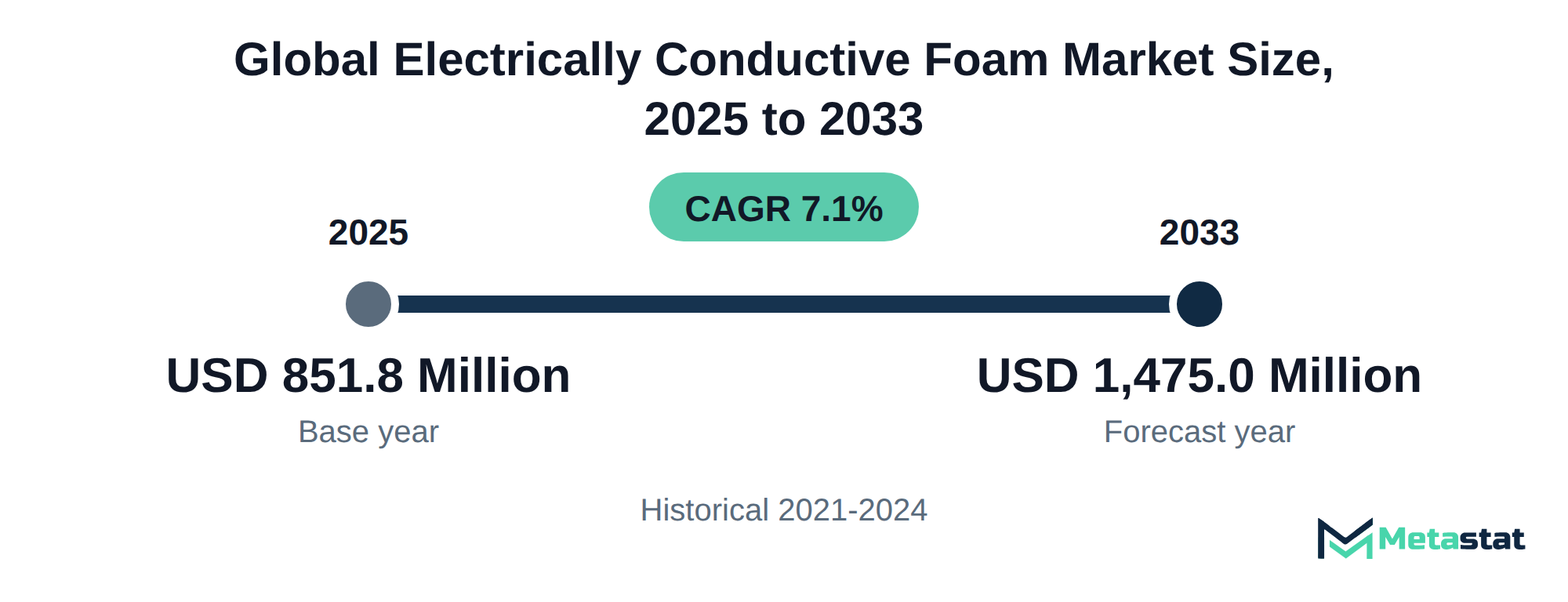
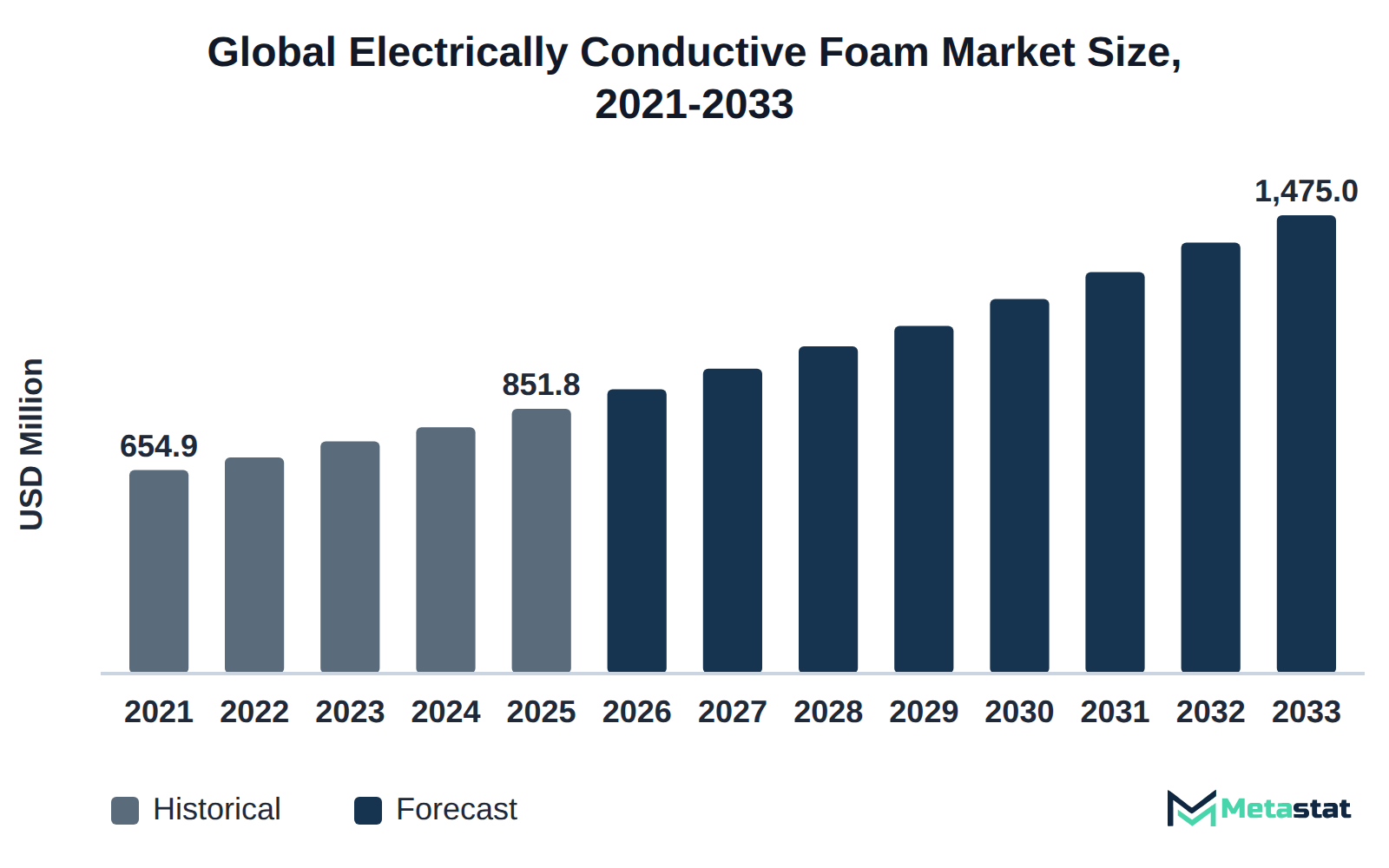
Market Valuation: Valued at $851.8 Million in 2025, projected to reach $1,475 Million by 2033 at a 7.1% CAGR.
Dominant Segment: Polyurethane foam leads the Electrically Conductive Foam market, driven by its critical role in providing effective EMI shielding and ESD protection across various industries.
Geographic Lead: North America is the leading region, holding 26.5% of the market in 2025, with the US expected to continue its dominance due to a strong electronics manufacturing base.
What's Inside: The report provides an in-depth analysis of market segmentation by material type, product form, application, and end-use industry, along with competitive coverage and forecasts through 2033.
Emerging Technologies: The market is poised for growth due to advancements in materials and manufacturing techniques, enhancing the performance of electrically conductive foam in critical applications.
Increased Demand from Telecommunications: The telecommunications sector is a significant driver of market growth, projected to reach USD 403 million by 2033 as infrastructure investments and 5G deployments increase.
Choose Your License
Global Electrically Conductive Foam Market
The global Electrically Conductive Foam market was valued at USD 851.8 million in 2025 and is projected to reach USD 1,475 million by 2033, growing at a CAGR of 7.1% over the forecast period.
The Electrically Conductive Foam market spans polyurethane, polyethylene, silicone, EVA, and other foams that provide electrical conductivity in diverse applications. Buyers invest in these products primarily to ensure effective electromagnetic interference (EMI) shielding and electrostatic discharge (ESD) protection, which are critical in sectors including consumer electronics, telecommunications, and automotive. The growing reliance on electronic devices and the increasing demand for efficient electrical performance drive significant spending in this market.
Growth in the Electrically Conductive Foam market is influenced by various factors, including technological advancements and rising awareness regarding the importance of EMI and ESD protection. Polyurethane foam, the leading segment by value, meets the demands of industries focused on high-performance materials. North America holds 26.5% of the market in 2025, with the US leading in 2026. The region's established electronics manufacturing base underpins this position.
Increased adoption of electrically conductive foam in emerging technologies, including electric vehicles and advanced communication systems, represents a substantial growth opportunity. Industries expand their operations and integrate innovative solutions, driving demand for these materials. Continuous development in product formulations and applications is expected to enhance market potential and attract investment.
The Electrically Conductive Foam market addresses the increasing demand for materials that facilitate electrical conductivity across multiple applications. Buyers invest in these products to enhance the performance and reliability of electronic devices, particularly in industries where electromagnetic interference poses significant risks. Innovation and the development of advanced materials drive spending in this market, as suppliers align products with the changing needs of consumers and businesses.
Growth in the market is primarily fueled by the expanding consumer electronics sector, which accounts for a considerable portion of demand. Among the material types, polyurethane foam leads in value, reflecting its widespread use in various applications. This region demonstrates strong market activity due to its established manufacturing base and high adoption rates of advanced technologies.
The increasing emphasis on product safety and efficiency in electronic devices drives growth. Companies continue to refine their product offerings to maintain a competitive advantage. The need for high-quality, reliable materials encourages investment in research and development, which supports market expansion through solutions that meet stringent industry standards.
Low-force conductive foam gaskets have gained traction in the Electrically Conductive Foam market due to their capacity to meet the increasing demands of compact electronic devices and high-speed servers. These gaskets provide effective electromagnetic interference (EMI) and radio frequency interference (RFI) shielding while minimizing the force required for compression during installation. This low compression force matters to manufacturers improving the performance of densely packed electronic assemblies, where space is limited.
In the forecast period, the application of low-force conductive foam gaskets in EMI and RFI shielding is projected to rise significantly. The sector is expected to reach USD 869.1 million by 2033, highlighting the growing acceptance of these components in critical applications. Manufacturers recognize the importance of integrating these gaskets into their designs to meet stringent EMC shielding regulations and consumer expectations.
The commercial consequence of adopting low-force conductive foam gaskets involves improved system reliability and performance. By ensuring optimal shielding effectiveness with minimal compression force, manufacturers enhance the longevity and functionality of their electronic products. This shift is driving further investment and innovation in gasket technologies for high-density electronic applications.
Metal-plated polyurethane and carbon-filled polyethylene play critical roles in shielding and electrostatic discharge (ESD) packaging. These materials feature prominent applications in industries requiring protection against electromagnetic interference (EMI) and static electricity. Buyers of electrically conductive foam typically face varied pricing structures, often shaped by purchase volumes and material specifications. For instance, polyurethane foam is projected to grow from USD 557.9 million in 2026 to USD 873.6 million by 2033, highlighting the increasing demand for high-quality shielding solutions.
Contract models vary significantly among suppliers. Some offer flexible pricing based on long-term agreements, while others adopt a transactional approach based on immediate needs. For instance, buyers prefer contracts that provide stability in pricing for materials including carbon-filled polyethylene, which is expected to contribute significantly to the market's growth. The emphasis on custom solutions tailored to unique applications enhances buyer engagement and investment in these materials.
In the electrically conductive foam market, understanding these purchasing dynamics becomes crucial for stakeholders. Anticipated growth within specific segments, including EMI and RFI shielding, indicates that buyers prioritize suppliers who offer both competitive pricing and high-performance materials. The evolving landscape of contract models shapes procurement strategies, ultimately influencing market competition and profitability.
The automotive industry demands high-performance materials for electronic applications, particularly in the context of Electrically Conductive Foam. This market specifically addresses the need for foam components that comply with stringent qualification standards in automotive electronics. The segment for automotive and transportation is projected to reach USD 311.8 million by 2033, reflecting growing investment in vehicle electrification and advanced electronic systems.
Compression stability is a critical factor in the selection of conductive foam components. The ability of foam to maintain performance under varying compressive loads directly impacts the longevity and reliability of electronic assemblies in vehicles. This characteristic ensures effective electromagnetic interference (EMI) shielding and electrostatic discharge (ESD) protection, essential for safe operation. With EMI and RFI shielding applications expected to grow to USD 869.1 million by 2033, demand for high-quality conductive foams in the automotive sector becomes increasingly evident.
Investing in reliable conductive foam solutions aligns with the industry's shift towards more electronic features in vehicles. By prioritizing components that meet these rigorous qualification standards, manufacturers enhance the overall safety and functionality of their offerings in the Electrically Conductive Foam market.
Electrical resistance and compression significantly influence the performance of electrically conductive foam in electromagnetic interference (EMI) shielding applications. Resistance levels determine the material's effectiveness in attenuating electromagnetic waves, while compression affects the foam's ability to maintain contact with surfaces, enhancing shielding effectiveness. The EMI and RFI shielding application segment is projected to grow from USD 521.6 million in 2026 to USD 869.1 million by 2033, reflecting a compound annual growth rate (CAGR) of 7.6%. This growth indicates an increasing demand for effective EMI shielding solutions across various industries.
The importance of optimizing both resistance and compression is critical for manufacturers targeting the electrically conductive foam market. Materials with lower resistance levels typically yield better shielding performance, while maintaining appropriate compression ensures consistent contact with electronic components. Manufacturers focusing on these characteristics support their customers’ requirements for higher shielding efficiency. This focus drives competitive advantage, positioning firms favorably within the rapidly expanding market.
The telecommunication and data centers sector drives demand for electrically conductive foam due to increasing infrastructure investments and the deployment of advanced technologies. This sector seeks materials that ensure optimal performance in electronic equipment while minimizing electromagnetic interference. The expansion of 5G networks and data centers necessitates reliable shielding and electrostatic discharge protection for 5G network equipment and server hardware. Buyers within this industry allocate significant resources towards acquiring high-performance materials. The market is projected to reach USD 403 million by 2033, reflecting an 8.2% compound annual growth rate. This growth reflects a shift in purchasing patterns, with telecommunications firms prioritizing innovative solutions that enhance operational efficiency and equipment longevity.
The introduction of advanced materials and manufacturing techniques significantly enhances the performance characteristics of electrically conductive foam. Innovations in conductive additives and polymer formulations improve conductivity while maintaining flexibility and lightweight properties. These advancements attract interest from sectors including consumer electronics and telecommunications, which require effective solutions for electromagnetic interference (EMI) shielding and electrostatic discharge (ESD) protection. Enhanced product forms, including pads, inserts, and gasket solutions, further cater to specific industry needs, facilitating integration into compact electronic devices and complex data systems. Increased efficiency in production processes reduces costs, enabling broader market reach and adoption across various applications. The market is anticipated to experience continuous growth driven by these technological improvements, which expand the range of applications and functionality across multiple industries.
Advancements in material science and manufacturing techniques support demand for electrically conductive foam as a key component in next-generation electronic systems. These developments improve performance and contribute to the market's overall expansion, creating a competitive environment that encourages further innovation.
Rising costs of raw materials influence purchasing decisions for electrically conductive foam, particularly within consumer electronics and telecommunications sectors. Manufacturers face challenges in sourcing affordable inputs, leading to increased prices for end products. This situation affects budget-conscious buyers, resulting in slower uptake and smaller order volumes. Companies aiming to maintain margins hesitate to invest in new technologies or replace existing materials, ultimately impacting growth potential in the market. Businesses in these sectors opt for alternatives, delaying their transition to advanced electrically conductive foams. Price sensitivity among buyers significantly constrains the market expansion, limiting opportunities for suppliers focused on innovation and enhanced performance characteristics.
Rising input costs create significant challenges for suppliers in the Electrically Conductive Foam market. Increased prices for key materials, including polyurethane, the polyether polyols used in its production, and polyethylene, strain profit margins and complicate pricing strategies. This situation prompts suppliers to explore cost-effective alternatives and optimize production processes to mitigate these pressures. For instance, several manufacturers invest in developing new formulations that incorporate less expensive materials while maintaining desired performance levels. Enhancing manufacturing efficiency through automation and improved technologies effectively addresses cost challenges.
Market players collaborate with suppliers to secure more favorable pricing agreements and stabilize input costs. This collaborative approach enables firms to maintain competitive pricing while minimizing the impact of fluctuating raw material costs. The focus on developing innovative solutions drives growth, ensuring suppliers meet the evolving demand for high-performance electrically conductive foam products.
The application of electrically conductive foam for electromagnetic interference (EMI) and radio frequency interference (RFI) shielding presents a significant growth opportunity. The expansion stems from the rising need for effective shielding solutions in consumer electronics, telecommunications, and automotive applications. Enhanced performance in electronic devices and systems drives demand for materials that provide reliable protection against EMI and RFI. This situation leads to increased adoption of specialized foam products tailored to meet the stringent requirements of various industries. Ongoing advancements in manufacturing processes and material science support the development of more efficient shielding solutions, further contributing to market growth.
The Global Electrically Conductive Foam market is segmented based on Material Type, Product Form, Application, and End-Use Industry.
This material finds extensive application in industries including consumer electronics, telecommunications, and automotive, where it serves critical functions like EMI shielding and ESD protection. Increasing demand for electronic devices, particularly smartphones and tablets, drives the need for high-performance materials, fueling growth in this segment. Compared to the polyethylene foam segment, which has a projected CAGR of 6.4%, polyurethane foam demonstrates a slightly higher growth potential. Its unique properties, including flexibility and durability, make it a preferred choice among manufacturers, enabling better performance in various applications. The market for electrically conductive foam continues to evolve, supported by advancements in material technology and increasing end-user requirements.
Polyethylene Foam segment is estimated to reach USD 374.1 million by 2033, at a CAGR of 6.4% during the forecast period. This foam type serves various applications, particularly in the consumer electronics and automotive industries, where its lightweight and shock-absorbent properties are essential. The driving force behind this segment stems from growing demand for lightweight materials that offer effective protection and insulation in electronics. Compared to other materials, including polyurethane foam, which has a CAGR of 6.6%, polyethylene foam presents a slightly slower growth trajectory. Its competitive pricing further differentiates it, attracting a broader range of buyers, especially in cost-sensitive applications. Overall, the unique characteristics of polyethylene foam position it as a viable option for manufacturers seeking reliable and economical solutions in their products.
Silicone Foam segment is expected to reach USD 120.1 million by 2033. This material is used predominantly in applications requiring reliable electrical performance, particularly in industries including consumer electronics and telecommunications. Demand for Silicone Foam is driven by its excellent thermal stability and resistance to environmental factors, making it ideal for sensitive electronic components. The segment's growth is fueled by ongoing advancements in technology and an increasing emphasis on the miniaturization of electronic devices. Compared to other materials, Silicone Foam shows a unique balance of performance characteristics, with a growth rate of 7.6% projected through 2033. This rate positions it competitively within the broader market, appealing to manufacturers seeking both reliability and efficiency in their product offerings. While Polyurethane Foam holds a larger market share, the distinctive properties of Silicone Foam cater to niche applications requiring enhanced durability and performance.
EVA Foam is projected to grow at a CAGR of 9.2% during the forecast period. This material is widely used in consumer electronics, telecommunications, and automotive applications for its lightweight properties and effective electrical conductivity. Demand increases due to the rise of lightweight electronic devices and the need for efficient EMI shielding solutions. Unlike polyurethane and polyethylene foams, EVA Foam offers higher elasticity and durability, appealing to industries focused on product longevity and performance. The segment differentiates itself through its capacity to provide excellent cushioning and shock absorption, which is critical in sensitive electronic components. Continued growth is anticipated driven by advancements in production technologies and the expanding applications of EVA Foam in emerging sectors.
EPDM and Neoprene Foams serve unique purposes in various applications requiring electrical conductivity. These materials are particularly valuable in cushioning and sealing applications where resistance to environmental factors, including moisture and temperature fluctuations, is critical. Buyers in sectors like automotive, aerospace, and industrial equipment use these foams for their durability and protective characteristics. An increase in demand for these materials results from the need for reliable performance in harsh conditions. Compared to other materials within the group, the growth trajectory of this segment remains moderate, influenced by advancements in alternative foam technologies that enhance overall performance. In contrast to Polyurethane Foam and Polyethylene Foam, which have more established market positions, EPDM and Neoprene Foams experience slower adoption rates among consumers seeking immediate, high-performance solutions. This creates a distinctive position for the segment, reflecting an ongoing evolution within the Electrically Conductive Foam market.
Sheets and Rolls segment is valued at USD 352.5 million in 2026 and is projected to reach USD 528.3 million by 2033, at a CAGR of 6% during the forecast period. This segment finds extensive application in industries including consumer electronics and telecommunications for electromagnetic interference (EMI) shielding and electrostatic discharge (ESD) protection. The growing demand for reliable and efficient solutions to protect sensitive electronic components influences market dynamics. Compared to other product forms, including Gaskets and Seals, which exhibit a CAGR of 8%, the Sheets and Rolls segment experiences moderate growth. Factors including advancements in material technology and rising consumer electronics production drive this segment's expansion. Competitive pricing and versatility in applications further distinguish Sheets and Rolls from other product categories, enhancing its attractiveness to manufacturers across sectors in the Electrically Conductive Foam market.
Gaskets and Seals segment is estimated to reach USD 500.6 million by 2033, at a CAGR of 8% during the forecast period. This segment finds application in various industries, particularly in telecommunications, automotive, and consumer electronics, where effective sealing and electrical conductivity are critical. Demand is driven by the increasing need for reliable electronic devices that require robust shielding against electromagnetic interference. Compared to other product forms, Gaskets and Seals exhibit higher growth potential, reflecting a significant shift towards advanced sealing solutions. The unique material properties of this segment enable superior performance, distinguishing it from alternatives including Sheets and Rolls, which do not provide the same level of sealing effectiveness. Consequently, the market for Gaskets and Seals is expected to expand in response to these evolving industry demands.
Adhesive Tapes segment is expected to reach USD 311.5 million by 2033. This segment finds applications primarily in the consumer electronics industry, where it serves functions including electrical insulation and EMI shielding. Growth in this sector is fueled by increasing demand for compact and efficient electronic devices. The segment benefits from technological advancements in electronics adhesive formulations, which enhance performance and reliability. Compared to other product forms, including Gaskets and Seals, the Adhesive Tapes segment demonstrates a slower growth trajectory, driven by a CAGR of 6.3% during the forecast period. Focusing on high-performance applications, this segment attracts specific buyer groups prioritizing durability and electrical conductivity, distinguishing it from other segments in the market.
Pads and Inserts segment is projected to grow at a CAGR of 6.3% during the forecast period. This segment serves various applications, offering cushioning and protection in electronic devices and automotive components. It finds extensive usage in consumer electronics, where manufacturers require reliable solutions for vibration dampening and electrical insulation. The increasing demand for lightweight and efficient materials fuels growth in this segment. Pricing pressures from raw material costs present challenges, but innovation in manufacturing processes enhances product performance and differentiation. While the overall market experiences growth, this segment's expansion reflects a unique focus on specialized applications, contrasting with the broader trends seen in other product forms. The increasing emphasis on product reliability in sectors including telecommunications and automotive further strengthens prospects for the Pads and Inserts segment.
Blocks and Molded Profiles consist of forms produced through molding techniques, offering unique applications in various industries. This sub-segment plays critical roles in sectors including consumer electronics and automotive, where customized shapes and sizes are essential for device functionality and performance. Demand for these profiles arises from the need for specific applications, including grounding and electrical contact, which require precise geometry that other foam forms cannot provide. The cost-effectiveness associated with large-scale production of molded profiles positions this sub-segment as an attractive option for manufacturers. Compared to other product forms, Blocks and Molded Profiles typically engage different buyer profiles, often attracting industries seeking tailored solutions rather than standard products. This characteristic further differentiates it within the Electrically Conductive Foam market, highlighting its specialized nature and potential for growth among niche applications.
This segment finds extensive applications in consumer electronics, telecommunications, and data centers, where managing electromagnetic interference is critical for device performance. The increasing reliance on wireless technology and the growth of smart devices drive demand for effective shielding solutions. Compared to other segments, the EMI and RFI Shielding sub-segment exhibits a relatively faster growth rate, supported by ongoing advancements in communication technologies that enhance the necessity for robust interference protection. Innovations in material technologies serve to further improve the effectiveness of these shielding solutions, catering to evolving market needs and specifications.
ESD Protection segment is estimated to reach USD 371.4 million by 2033, at a CAGR of 5.2% during the forecast period. This segment finds application in industries including consumer electronics and telecommunications, where protecting sensitive components from electrostatic discharge is essential. Increasing demand for electronic devices and stringent regulations regarding ESD control drive growth in this sector. Compared to other segments, ESD Protection displays slower growth, with a CAGR of 5.2%, contrasting with the faster growth observed in applications like EMI and RFI Shielding, which achieve a CAGR of 7.6%. The unique requirements of ESD protection highlight the importance of specialized materials and formulations, differentiating it from segments focused on broader applications.
Grounding and Electrical Contact segment is expected to reach USD 200 million by 2033. This segment focuses on ensuring reliable electrical connections and grounding in various applications, particularly in consumer electronics and telecommunications. Industries adopt this application due to its ability to prevent electrical interference and ensure safety through effective grounding solutions. The segment benefits from increasing demand for reliable electronic components, driven by advancements in technology and growing consumer electronics markets. Compared to other applications, this segment experiences moderate growth, with unique pricing pressures that differ from the higher growth rates seen in EMI and RFI Shielding. The market anticipates a strong focus on innovations in conductive materials that enhance performance, aligning with the evolving needs of specific end-user industries.
Projected growth for the Others (Conductive Sensing Interfaces) segment stands at a CAGR of 9.8% during the forecast period. Used primarily in applications requiring sensitive touch controls and detection systems, this segment finds demand from industries including consumer electronics and automotive. The increasing focus on integrating touch-sensitive interfaces in devices drives growth, reflecting a trend toward more user-friendly technology. Compared to other applications like EMI and RFI Shielding, which grows at a CAGR of 7.6%, the rapid expansion of this segment indicates its significant importance within the market. The higher growth rate demonstrates evolving consumer preferences, necessitating advanced materials for effective performance in conductive sensing. This growth trajectory creates opportunities for suppliers, positioning them to cater to rising demands within the Electrically Conductive Foam market.
Consumer Electronics segment is valued at USD 363.5 million in 2026 and is projected to reach USD 534.1 million by 2033, at a CAGR of 5.6% during the forecast period. This segment is primarily applied in devices including smartphones, tablets, and laptops, where reliable EMI and RFI shielding are critical. Increasing demand for high-performance electronic devices drives adoption, with manufacturers emphasizing product efficiency and durability. Unlike other segments, including Telecommunications and Data Centers, which grow at a CAGR of 8.2%, the Consumer Electronics segment experiences a steadier growth trajectory. The ongoing trend toward miniaturization in electronics further enhances the need for efficient conductive materials, reinforcing the relevance of electrically conductive foam in this sector. The market reflects a continuous push for innovation, aligning with consumer expectations for advanced technologies and design integration.
Telecommunications and Data Centers segment is estimated to reach USD 403 million by 2033, at a CAGR of 8.2% during the forecast period. This segment plays a critical role in ensuring optimal functionality and efficiency of communication networks, data storage, and transmission systems, serving industries that rely heavily on advanced technological infrastructure. The increasing demand for reliable connectivity and data management drives growth, particularly in urban areas where data centers are proliferating. Compared to other segments, this segment experiences faster growth due to rising investments in digital infrastructure. The need for enhanced performance in telecommunications and data centers encourages manufacturers to innovate solutions that meet stringent performance requirements, distinguishing this segment from others with slower growth rates and different buyer profiles. This evolving environment positions the segment favorably within the Electrically Conductive Foam market.
This segment serves various applications, primarily involving vehicle manufacturing and transportation infrastructure, where electrically conductive foam provides essential properties including EMI shielding and ESD protection. Ongoing advancements in electric and hybrid vehicle technologies drive demand for these materials, reflecting a significant shift in automotive design. With a CAGR of 7.6%, this segment experiences strong growth, influenced by the increasing focus on reducing electromagnetic interference in complex electronic systems. Compared to other segments, Automotive and Transportation typically faces higher costs due to specialized requirements and stringent performance standards, reinforcing its distinct market position. The Electrically Conductive Foam market continues expanding, driven by advancements in automotive technology.
Aerospace and Defense segment is projected to grow at a CAGR of 7.6% during the forecast period. This segment finds application in military and commercial aerospace operations, where it supports various critical functions including EMI and RFI shielding, ESD protection, and grounding. The demand for reliable, high-performance aerospace materials drives the expansion, particularly from manufacturers focused on enhancing equipment performance and safety standards. The CAGR of 7.6% highlights stronger growth potential compared to other segments, reflecting increasing investment in defense technologies and commercial aviation. This segment differentiates itself through higher pricing and specialized applications that require advanced materials to ensure compliance with stringent safety regulations and operational demands. While the market continues to evolve, the focus on innovation and quality remains essential for meeting the sophisticated needs of the aerospace and defense industries.
Industrial Equipment encompasses a range of devices and machinery across various sectors, including manufacturing, assembly, and processing. This segment plays a critical role for buyers involved in sectors including automotive, aerospace, and heavy machinery, where electrical conductivity is necessary for operational efficiency and safety. Demand for electrically conductive foam within this segment is driven by the increasing emphasis on automation and digitalization in industrial applications. The growth potential of this segment is influenced by the commitment to improve energy efficiency and reduce operational costs. Compared to other segments, Industrial Equipment often experiences slower growth due to cautious adoption of new materials and technologies, reflecting the need for thorough testing and compliance with stringent industry standards. The Electrically Conductive Foam market continues to evolve, adapting to these industry demands and technological advancements.
Medical Devices form an important end-use category in the Electrically Conductive Foam market, where the foam supports proper functionality in electronic medical equipment. Manufacturers in the medical field rely on electrically conductive foam to provide shielding against electromagnetic interference and static discharge, essential for the reliability of medical devices. Growth in this segment is driven by increasing demand for advanced medical technologies and stricter regulatory standards for device safety. Compared to other segments, medical devices typically involve higher price points due to specialized requirements and rigorous testing protocols, differentiating this segment from consumer electronics, which experiences faster growth driven by broader market adoption. This segment's trajectory reflects ongoing advancements in medical technologies, influencing both product development and market dynamics.
Applications involving scientific and laboratory equipment require specialized electrically conductive foam solutions. These materials ensure electromagnetic interference (EMI) and radio-frequency interference (RFI) shielding for sensitive devices used in research and testing. Industries including pharmaceuticals, biotechnology, and environmental testing rely on these solutions to maintain equipment performance and accuracy. Demand for this segment is driven by the increasing adoption of advanced technologies in laboratories, highlighting the growing need for reliable materials in sensitive environments. Unlike other segments, this category serves specific niche markets with unique requirements, resulting in different pricing strategies and tailored solutions. Continued innovation in laboratory technologies enhances the relevance of electrically conductive foam, reinforcing its importance in the overall market.
Based on geography, the Global Electrically Conductive Foam market is divided into North America, Europe, Asia-Pacific, South America, Middle East, and Africa.
Significant growth opportunities exist within the Electrically Conductive Foam market in North America, particularly driven by the consumer electronics and telecommunications sectors. Ongoing advancements in technology, along with a surge in demand for electronic devices, stimulate the need for effective EMI and RFI shielding solutions. The market is projected to reach USD 371.4 million by the end of 2033, reflecting an increasing preference for high-performance materials in various applications. The region's established infrastructure, including a robust supply chain and research capabilities, enhances the production and proliferation of these materials. Key players in the United States, Canada, and Mexico capitalize on these trends, ensuring competitive positioning in the evolving landscape.
Demand for electrically conductive foam in Europe reflects strong growth opportunities, driven by industries including consumer electronics and telecommunications. Countries including Germany, France, and the UK contribute significantly to market activity due to robust manufacturing sectors. The increasing adoption of electronic devices necessitates effective shielding against electromagnetic interference, creating a substantial requirement for conductive foam materials. Regulatory initiatives focusing on electronic waste management and sustainability further influence purchasing decisions, prompting manufacturers to seek compliant materials. With a regional share of 21.1% in 2025, Europe significantly shapes market dynamics. Investments in research and development enhance product innovation, supporting the expanding application of electrically conductive foam across various end-use industries.
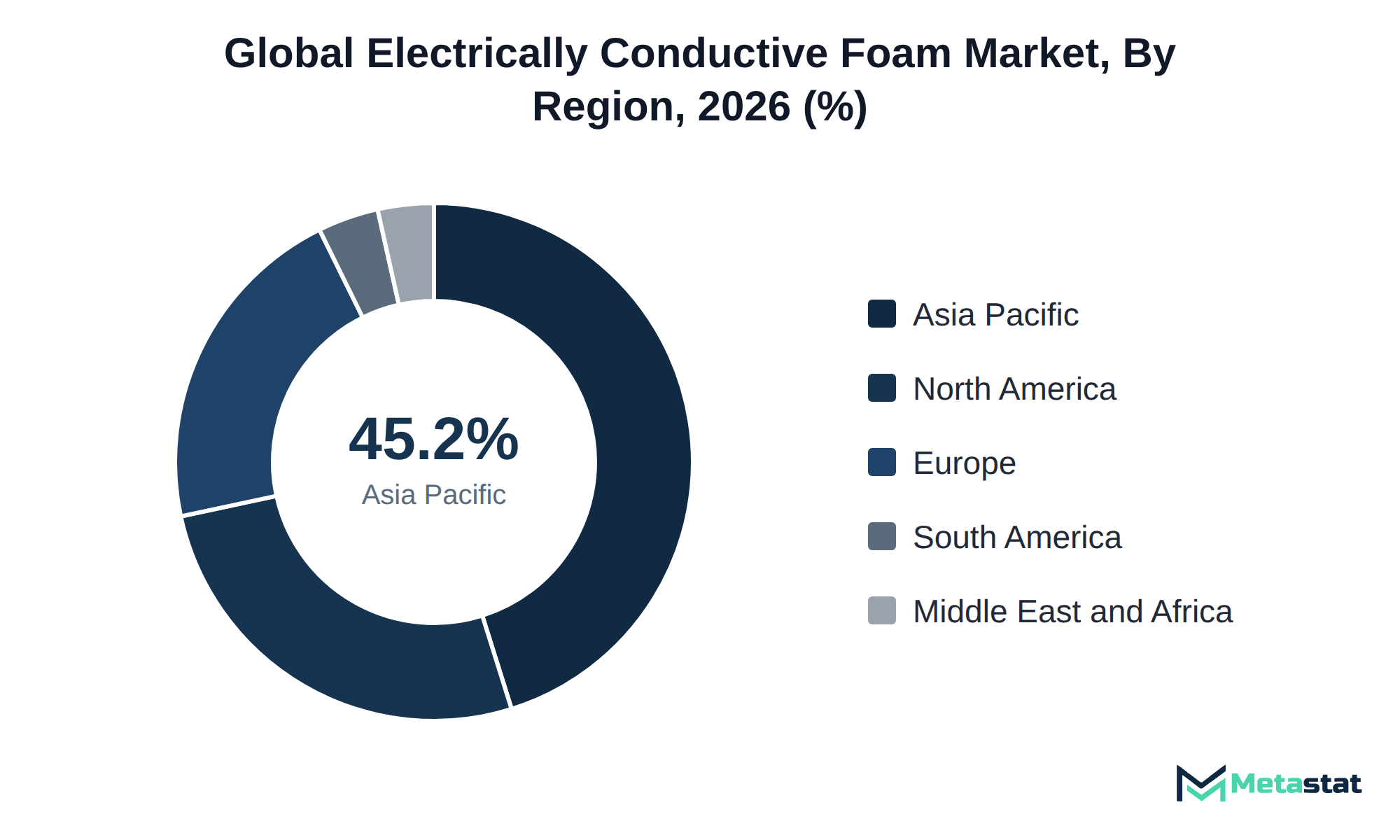
Asia-Pacific holds a 45.2% share of the Electrically Conductive Foam market in 2025. This region benefits from a robust consumer electronics industry, with strong demand driven by the increasing adoption of smart devices and electronic components. Countries like China and India lead in manufacturing and technology innovation, propelling the growth of the market. Infrastructure advancements enhance the production capabilities for various applications, including EMI and RFI shielding, which is critical for electronic devices. Regulatory support for technology development supports investments in the region, stimulating market expansion. The increasing importance of telecommunications and data centers further contributes to the demand for high-quality electrically conductive foam solutions, essential for ensuring device functionality and reliability.
Brazil and Argentina represent key markets within the Electrically Conductive Foam market, driven by demand from consumer electronics and telecommunications industries. The market in South America reflects its growing importance in the global landscape. Increasing investments in technology and infrastructure improvements support market growth in this region. Rising export opportunities for locally manufactured products enhance competitive positioning for manufacturers. The presence of established companies facilitates innovation and development, ensuring that the market adapts to evolving customer needs. These factors contribute to a positive outlook for the Electrically Conductive Foam market in South America, emphasizing potential for increased market penetration and revenue generation.
The market in the Middle East and Africa is characterized by a growing interest in electrically conductive foam applications across sectors including telecommunications and automotive. Demand thrives due to increasing investments in infrastructure development and the expansion of technology-driven initiatives in countries like Saudi Arabia and the UAE. These efforts aim to enhance connectivity and support advancements in electronics, highlighting the significance of the electrically conductive foam market within these industries. South Africa contributes to market growth, particularly in automotive applications, where electrically conductive foam serves critical functionalities. The region is projected to account for 3.5% of the global market share in 2025, emphasizing its emerging role in this sector.
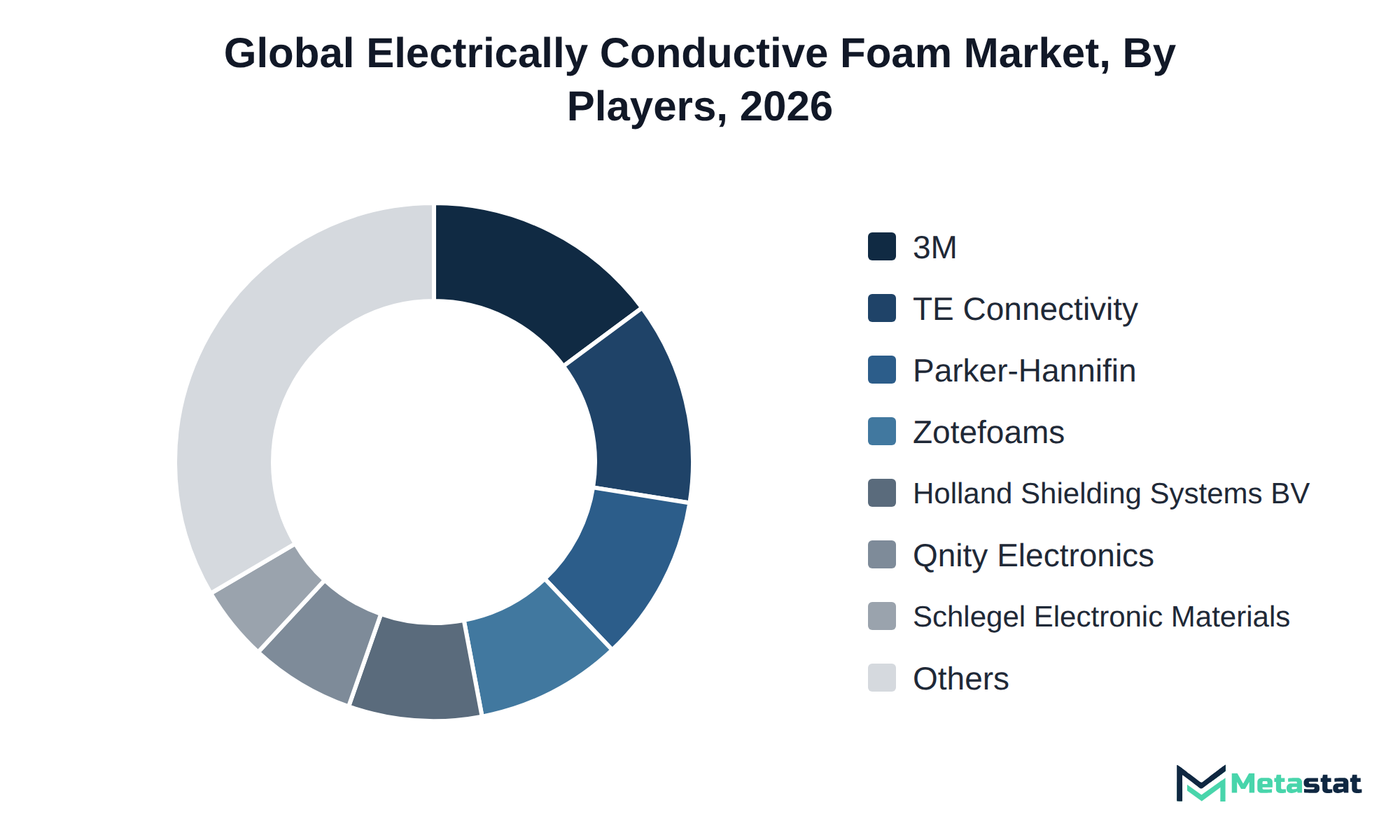
The Electrically Conductive Foam market features a range of players focusing on various product types and applications. Companies like 3M Company and Parker-Hannifin Corporation emphasize their extensive product offerings and technological capabilities. Their focuses include high-performance materials for applications including EMI and RFI shielding, which cater to growing demand in consumer electronics and telecommunications.
Regional specialty formulators like Zotefoams plc and SEIREN Co., Ltd. differentiate their offerings through customization and specialized applications, addressing unique customer requirements in sectors including automotive and aerospace. Price competitiveness remains a crucial factor for buyers, alongside certification and reliability in performance, influencing purchasing decisions across the market.
Players engage in developing innovative solutions to enhance their market positions. For instance, Schlegel Electronic Materials, Inc. and TE Connectivity plc focus on systems that integrate smoothly with existing customer setups, promoting ease of use and operational efficiency for buyers. Other companies, including Desco Industries, Inc. and Tech Etch, Inc., use their expertise to produce tailored solutions that meet specific industry standards, serving a diverse client base.
The competitive environment highlights the importance of balancing product quality, cost-effectiveness, and customer service, ensuring that companies remain responsive to the evolving needs of industries reliant on electrically conductive foam.
Growth in the Electrically Conductive Foam market through 2033 relies on several factors. A significant driver includes the increasing demand for EMI and RFI shielding solutions across industries, particularly in consumer electronics, where the segment is projected to grow from USD 521.6 million in 2026 to USD 869.1 million by 2033. The expansion of telecommunications and data centers will further increase demand, anticipated to reach USD 403 million by 2033. A strong push toward adopting innovative materials, including polyurethane foam, will enhance performance and functionality, with a projected growth from USD 557.9 million in 2026 to USD 873.6 million by 2033.
However, potential risks, including rising raw material costs and supply chain disruptions, could impede growth. These factors particularly affect the automotive and transportation sectors, where demand for electrically conductive foam is anticipated to reach USD 311.8 million by 2033. Addressing these challenges effectively will be crucial for the market to achieve the forecasted value of USD 1,475 million.
By Material Type: Polyurethane Foam, Polyethylene Foam, Silicone Foam, EVA Foam, Others (EPDM and Neoprene Foams)
By Product Form: Sheets and Rolls, Gaskets and Seals, Adhesive Tapes, Pads and Inserts, Others (Blocks and Molded Profiles)
By Application: EMI and RFI Shielding, ESD Protection, Grounding and Electrical Contact, Others (Conductive Sensing Interfaces)
By End-Use Industry: Consumer Electronics, Telecommunications and Data Centers, Automotive and Transportation, Aerospace and Defense, Industrial Equipment, Medical Devices, Others (Scientific and Laboratory Equipment)
The report strategically identifies and profiles the key market players and analyses their core competencies in each sub-segment of the Electrically Conductive Foam market.
|
Report Attributes |
Details |
|
Study Period |
2021-2033 |
|
Base Year |
2025 |
|
Estimated Year |
2026 |
|
Forecast Period |
2026-2033 |
|
Historical Period |
2021-2025 |
|
Growth Rate |
CAGR 7.1% from 2026 to 2033 |
|
Revenue Unit |
USD million |
|
Segmentation |
By Material Type, Product Form, Application, End-Use Industry, and Region |
|
By Region |
North America (By Material Type, Product Form, Application, End-Use Industry, and Country)
|
|
Europe (By Material Type, Product Form, Application, End-Use Industry, and Country)
|
|
|
Asia Pacific (By Material Type, Product Form, Application, End-Use Industry, and Country)
|
|
|
South America (By Material Type, Product Form, Application, End-Use Industry, and Country)
|
|
|
Middle East and Africa (By Material Type, Product Form, Application, End-Use Industry, and Country)
|
Find answers to common questions about this report
The Electrically Conductive Foam market size was valued at USD 851.8 million in 2025.
The market is projected to grow at a CAGR of 7.1% during the forecast period from 2026 to 2033.
The North America Electrically Conductive Foam market size is estimated to reach USD 371.4 million by 2033.
Polyurethane Foam leads the Electrically Conductive Foam market with a value of USD 557.9 million in 2026. This segment outpaces others in terms of revenue generation.
Key drivers for the Electrically Conductive Foam market include increasing infrastructure investments in the telecommunication and data centers sector and the rising demand for effective electromagnetic interference shielding and electrostatic discharge protection. These factors contribute to a projected market value of USD 403 million by 2033, reflecting an 8.2 percent compound annual growth rate.
Rising costs of raw materials significantly constrain market growth, as manufacturers face challenges in sourcing affordable inputs, leading to increased prices for end products. Price sensitivity among buyers restricts the adoption of advanced electrically conductive foams, resulting in slower uptake and smaller order volumes.
The application of electrically conductive foam for electromagnetic interference (EMI) and radio frequency interference (RFI) shielding is experiencing significant growth due to the increasing demand for effective shielding solutions in consumer electronics, telecommunications, and automotive sectors. Ongoing advancements in manufacturing processes and material science enhance the development of more efficient shielding solutions, further encouraging adoption across various industries.
The Electrically Conductive Foam market is estimated to reach a valuation of USD 1,475 million by 2033.
Key players operating in the Electrically Conductive Foam market include 3M Company, Qnity Electronics, Inc., Parker-Hannifin Corporation, Schlegel Electronic Materials, Inc., Zotefoams plc, TE Connectivity plc, and Insul-Fab.
The EMI and RFI shielding segment is projected to reach USD 869.1 million by 2033, reflecting a compound annual growth rate of 7.6% from USD 521.6 million in 2026.
The analysts below cover Chemicals and Materials research at Metastat Insights.
LEAD ANALYST
Utkarsh Khirodkar is a Lead Market Research Analyst at MetaStat Insight, specializing in market intelligence, technology sector assessments, and competitive strategy.

INDUSTRY CONSULTANT - CHEMICALS & ADVANCED MATERIALS
Chemicals and Materials · Machinery & Equipment · Packaging
Amit Gadhekar Consultant for Chemicals and Materials at MetaStat Insight, directing sector-specific intelligence, research, and strategic consulting across global chemical and processing markets.
Integrating zero-trust access controls across legacy electronic health record systems involves complex compliance overhead. Team produced an analysis that clearly separated identity governance and administration tools from privileged access management platforms. Their evaluation of HIPAA and GDPR compliance features across cloud native solutions gave our architecture group clear baseline criteria. The custom data request regarding biometric authentication adoption in hospital networks was returned promptly with clear documentation.
Evaluating calorific value requirements and air permit compliance across municipal waste facilities requires localized data. Metastat Insight structured their analysis around operational throughput capacity and feedstock composition variations in Latin America and Eastern Europe. Their competitive mapping of sorting equipment vendors helped clarify technology differences between optical separators and heavy media systems. The study provided an objective baseline during our capital expenditure reviews.
Decarbonizing industrial thermal processes hinges on refrigerant regulations and compressor efficiency limits. Metastat Insights delivered a thorough market analysis that evaluated natural refrigerants like CO2 and hydrocarbons against synthetic low-GWP alternatives. The breakdown of utility incentives and grid capacity constraints across key European manufacturing hubs offered valuable perspective. The follow-up conversation with their sector analysts addressed our specific questions on mechanical vapor recompression systems efficiently.
Explore related market intelligence reports worth reading alongside this one.