
LEAD ANALYST
Utkarsh Khirodkar is a Lead Market Research Analyst at MetaStat Insight, specializing in market intelligence, technology sector assessments, and competitive strategy.

Global High-SKU Inventory Monetisation Market Size, Share, By Inventory Type (Overstock and Excess Inventory, Slow-Moving and Aged Inventory, End-of-Season and Discontinued Inventory, Customer Returns and Open-Box Inventory, Cancelled-Order Inventory, Near-Expiry and Short-Dated Inventory, Dead Stock and Unsold Inventory, Factory Seconds and Damaged Inventory), By SKU Portfolio Size (1,000-10,000 SKUs, 10,001-50,000 SKUs, 50,001-100,000 SKUs, Above 100,000 SKUs), By Monetisation Model (B2B Wholesale and Bulk Resale, Online Liquidation Auctions, Fixed-Price Inventory Marketplaces, Managed Inventory Liquidation Services, Direct-to-Consumer Resale and Recommerce), By End-Use Industry (Retail and E-commerce, Consumer Electronics and IT, Apparel and Footwear, Home Appliances and Furniture, Beauty and Personal Care, Food and Beverage, Industrial and Automotive, Others (Toys, Books and General Merchandise)), Industry Analysis, Growth, Trends, and Forecast, 2026-2033
Report ID
MSI-5721
Published
November, 2026
Pages
264 Pages
Format
Historical
Base year
Forecast
Forecast period
Report Details
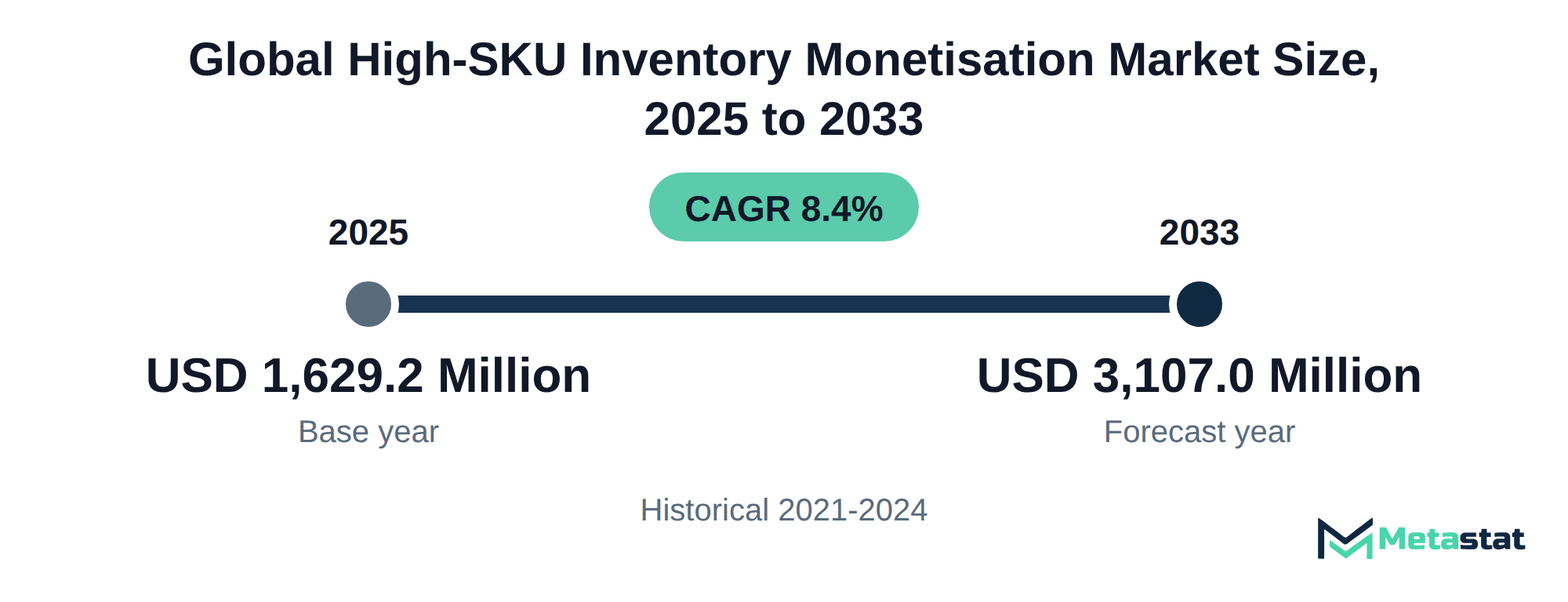
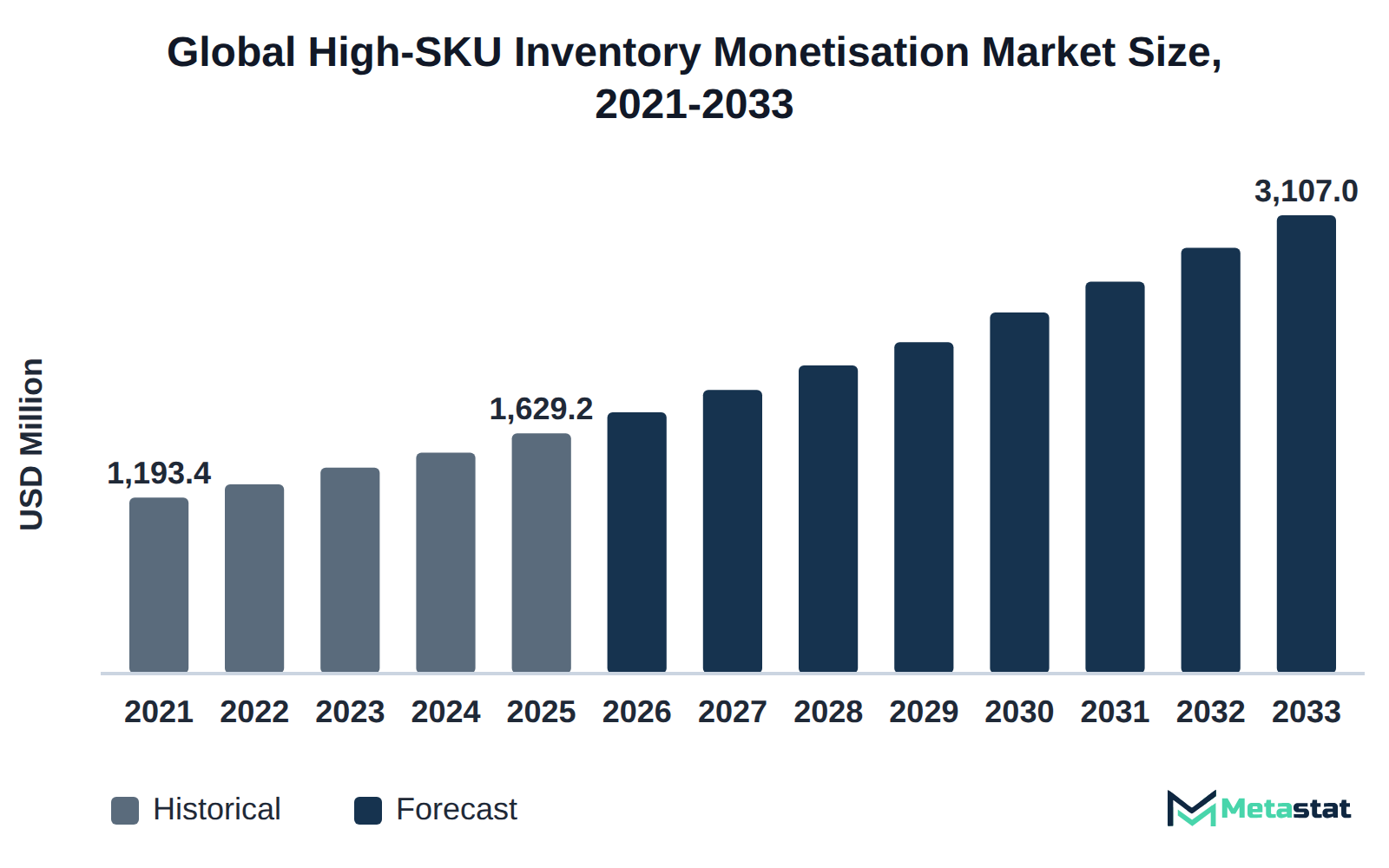
Market Valuation: Valued at $1,629.2 Million in 2025, projected to reach $3,107 Million by 2033 at a 8.4% CAGR.
Dominant Segment: Overstock and Excess Inventory leads the market, driven by the need for businesses to optimize cash flow and reduce holding costs. This segment reflects the substantial amount of surplus stock that retailers and e-commerce platforms face.
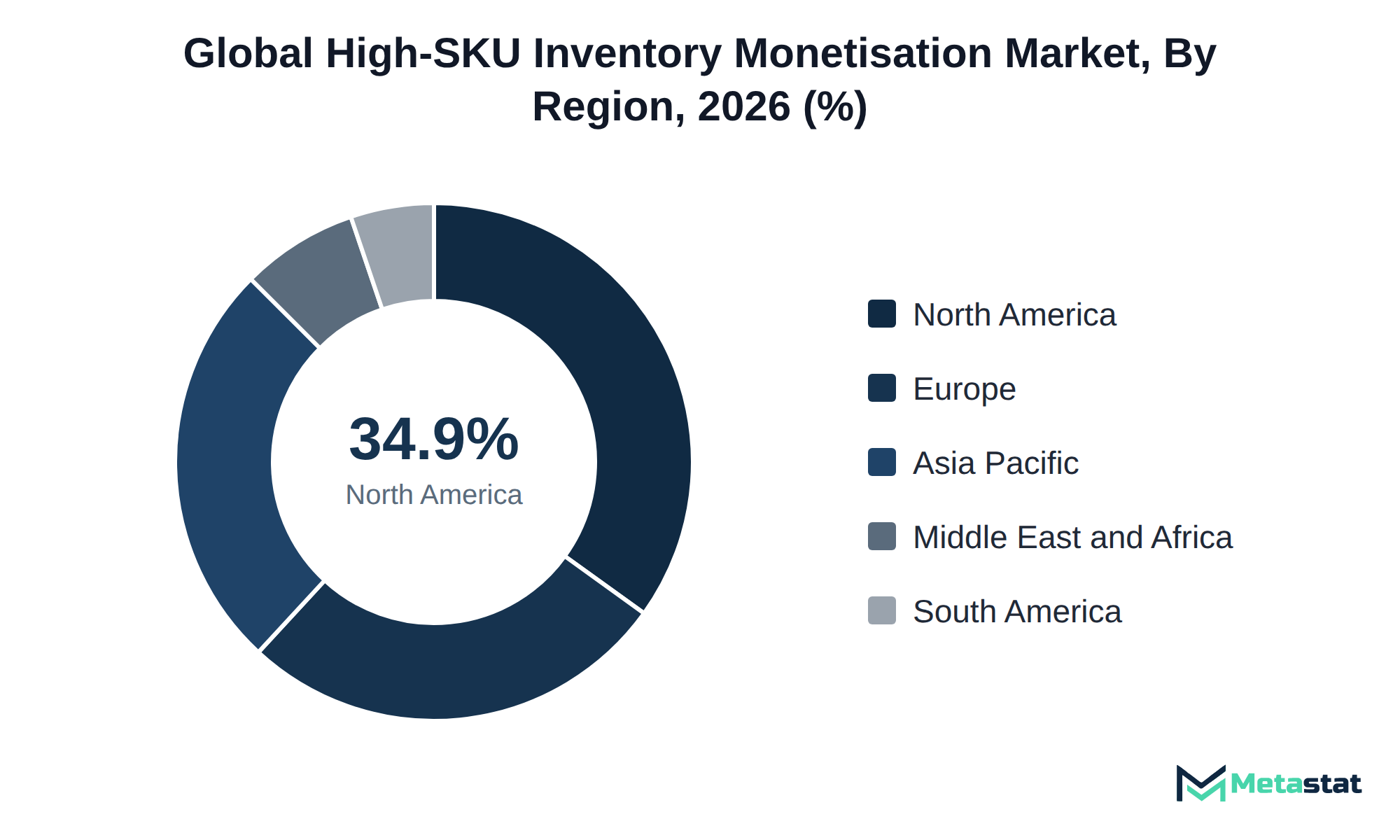
Geographic Lead: North America holds the largest market share at 34.9% in 2025, with the US expected to continue leading in 2026. The region's strong e-commerce infrastructure and consumer demand significantly contribute to this growth.
What's Inside: The report provides a comprehensive analysis of the competitive landscape, market dynamics, and growth trends from 2026 to 2033. It covers various monetisation models, inventory types, and end-use industries, offering valuable insights for stakeholders.
Growth Drivers: The market is propelled by rising e-commerce prevalence and the increasing complexity of supply chains, necessitating advanced inventory management solutions. The shift towards sustainability and circular economy practices further encourages innovative monetisation strategies.
Choose Your License
Global High-SKU Inventory Monetisation Market
The global High-SKU Inventory Monetisation market was valued at USD 1,629.2 million in 2025 and is projected to reach USD 3,107 million by 2033, growing at a CAGR of 8.4% over the forecast period.
The High-SKU Inventory Monetisation market encompasses various strategies for managing and monetising excess inventory, including overstock, slow-moving items, and customer returns. Buyers engage in this market to optimise their inventory management, reduce holding costs, and recover value from unsold stock. Industries including retail, consumer electronics, and apparel increasingly invest in monetisation solutions to enhance operational efficiency and maintain competitive advantage.
Growth within the market is driven by the rising need for efficient inventory management solutions. Retail and e-commerce segments represent the largest share of value, with a strong push towards online liquidation auctions and B2B wholesale models. North America holds 34.9% of the market in 2025, with the US leading in 2026. The increasing complexity of supply chains necessitates advanced monetisation strategies to address challenges related to excess inventory.
Regional dynamics further influence growth, with Asia Pacific and Europe following closely in market share. The growing trend towards sustainability and circular economy practices encourages companies to explore innovative monetisation options. The ongoing digital transformation within industries enhances the adoption of technology-driven solutions, creating a more robust market environment.
The High-SKU Inventory Monetisation market offers significant value for businesses seeking to optimise their inventory management. Buyers invest in these solutions to reduce holding costs, improve cash flow, and enhance operational efficiency. The growing need for effective inventory monetisation strategies arises from increasing competition and the necessity for retailers to maintain profitability while managing large SKU volumes.
Growth in the market is driven by the rising prevalence of e-commerce, which necessitates efficient handling of excess and slow-moving inventory. Among the various segments, Overstock and Excess Inventory represents the largest share, reflecting the substantial amount of surplus stock businesses face. This region’s strong e-commerce infrastructure and consumer demand contribute significantly to the growth observed.
The increasing adoption of advanced technologies for inventory tracking and management further supports market expansion. Businesses invest in these technologies to enhance visibility, streamline operations, and respond rapidly to market changes. The evolving landscape of consumer preferences and buying behaviours necessitates that companies adapt their inventory strategies to remain competitive, highlighting the importance of the High-SKU Inventory Monetisation market.
AI-driven SKU classification technology significantly enhances the efficiency of managing high-SKU inventory monetisation. This innovation enables businesses to automate processes related to sorting and categorising inventory, thus facilitating quicker liquidation of overstock and slow-moving products. The increased accuracy in SKU classification results in reduced operational costs and improved inventory management strategies. For instance, the segment of overstock and excess inventory is projected to reach USD 553.7 million by 2033, demonstrating the commercial potential of effective inventory management solutions.
The application of AI in SKU classification allows retailers and e-commerce platforms to identify and prioritise items for liquidation based on various criteria, including demand trends and expiry dates. This targeted approach aligns with broader trends in the High-SKU Inventory Monetisation market, where businesses strive for more agile and responsive inventory strategies. Companies implementing AI-driven solutions expect improved inventory turnover rates and enhanced financial performance driven by optimised resource allocation. Overall, AI is reshaping high-SKU inventory monetisation, with significant benefits for companies in this space.
B2B surplus inventory marketplaces have emerged as key platforms for businesses to monetize excess stock efficiently. A significant trend involves the adoption of bulk resale channels, which streamline the purchase process while allowing buyers to acquire large quantities at competitive prices. The High-SKU Inventory Monetisation market experiences substantial growth in this area, driven by the projected value of USD 833.9 million in the B2B wholesale and bulk resale segment by 2033.
Buyers typically engage through contract models that emphasize volume and recurring transactions, minimizing unit costs. Pricing structures often reflect the inventory type, with overstock and excess inventory commanding different rates compared to slow-moving or aged inventory. Buyers benefit from negotiating fixed prices or participating in auctions that allow competitive bidding, enhancing transparency in the purchase process. Businesses optimize inventory turnover and reduce holding costs.
This shift in purchasing offers commercial benefits, enabling businesses to maintain cash flow while managing excess inventory efficiently. The market presents opportunities for suppliers and buyers to use these marketplaces, ultimately creating a more sustainable approach to inventory management.
Retail and e-commerce sectors experience heightened pressure to effectively manage returns, overstock, and aged stock. Effective monetisation of these inventory types is critical for maintaining healthy cash flow and optimising warehouse space. In 2026, the market for overstock and excess inventory is projected to reach USD 323.4 million, with expectations of expanding to USD 553.7 million by 2033, reflecting a compound annual growth rate (CAGR) of 8.0%. This growth highlights the importance of implementing robust strategies for monetising slow-moving inventory, allowing businesses to recover value while reducing holding costs.
Companies operating in retail and e-commerce require tailored solutions for monetising returns, which differ significantly from other inventory types. The specific needs of these buyers revolve around rapidly liquidating returned or excess products to recapture lost revenue. The ability to streamline processes for customer returns and open-box inventory significantly enhances operational efficiency. With a CAGR of 9.4% expected for customer returns and open-box inventory monetisation, firms operating in this space generate substantial revenue potential, thereby reinforcing their competitive advantage in the market.
The High-SKU Inventory Monetisation market indicates that businesses increasingly adopt digital resale platforms to effectively manage and monetise excess inventory. This trend highlights the critical role digital platforms play in optimising inventory liquidation efforts for companies across various sectors.
Businesses leveraging these platforms enhance their operational efficiency while reducing storage costs associated with unsold inventory. The emergence of online liquidation auctions, which is expected to achieve a value of USD 581.9 million by 2033, signifies a shift towards more dynamic and responsive inventory management practices. This model not only facilitates quicker sales but creates a competitive environment that drives prices higher for surplus stock.
While companies recognise the potential of digital channels for inventory monetisation, the market landscape transforms, allowing for increased participation from diverse industries. The strategic use of these platforms culminates in improved cash flow and better overall financial health, positioning businesses to respond adeptly to changing consumer demands and market conditions. The growing trend towards digital resale significantly influences the profitability and sustainability of inventory monetisation strategies.
Recent changes in consumer purchasing behavior drive increased engagement in the High-SKU Inventory Monetisation market. Retailers and e-commerce platforms experience a growing demand for diverse product offerings, leading them to strategically manage excess and slow-moving inventory. The rise of omnichannel shopping and consumer preferences for discounted products contribute to this trend. Such shifts prompt businesses to explore innovative monetisation strategies to remain competitive and enhance profitability. This momentum highlights the importance of adapting to changing consumer behaviors and leveraging inventory monetisation techniques to optimise operational efficiency.
Growing emphasis on sustainability and responsible consumption further influences purchasing decisions. Consumers increasingly prefer products that minimise environmental impact, prompting businesses to adopt sustainable practices. The High-SKU Inventory Monetisation market aligns with these values, offering opportunities for firms to appeal to environmentally conscious buyers while boosting their revenue through effective inventory management.
Innovations in technology significantly impact the monetisation of excess inventory. Enhanced data analytics and artificial intelligence streamline inventory tracking and forecasting, allowing companies to identify slow-moving or excess stock more effectively. Advanced algorithms enable precise demand forecasting, which helps businesses optimise their SKU management strategies. These advancements lead to improved decision-making regarding pricing and inventory turnover.
Retail and e-commerce sectors experience heightened competition, compelling players to adopt new technologies for better inventory control. The integration of automated systems for inventory liquidation facilitates quicker turnaround times, reducing the risks associated with holding surplus products. Enhanced online platforms for liquidation auctions and B2B wholesale enable sellers to reach wider audiences, further enriching the market.
The High-SKU Inventory Monetisation market benefits from ongoing technological integration, driving efficiency and profitability. Continuous developments in inventory management software and automation tools position companies to maximise returns on their surplus inventory, reinforcing long-term demand across the market.
Pricing pressures significantly impact the adoption of high-SKU inventory monetisation strategies among small and medium-sized enterprises (SMEs). Many SMEs face challenges in allocating budgets for advanced inventory monetisation tools, leading to slower uptake of these solutions. Margins in sectors including retail and consumer electronics remain tight, driving cautious spending on inventory management innovations. High initial costs associated with certain monetisation models contribute to delayed replacement of outdated inventory processes, limiting operational efficiency. This constraint results in smaller order volumes and reduced participation in liquidation activities, ultimately affecting the competitiveness of SMEs within their respective markets. The market experiences slower growth rates due to these financial constraints, with businesses prioritizing essential investments over discretionary spending on inventory monetisation.
Suppliers face significant margin pressure within the High-SKU Inventory Monetisation market due to rising operational costs and competitive pricing strategies. Increased costs for logistics, warehousing, and technology implementation affect profitability. Many suppliers respond by enhancing operational efficiencies and leveraging automation to streamline their processes, ultimately reducing overhead. Investment in data analytics and inventory management software supports more precise forecasting and inventory control, effectively minimising excess stock. In the face of these challenges, partnerships with wholesalers and auction platforms enhance revenue opportunities. Suppliers explore innovative monetisation models, including direct-to-consumer resale, to expand market reach while maintaining competitive pricing. Emphasis on customer engagement through targeted marketing strategies strengthens loyalty, further stabilising revenue streams amid fluctuating market conditions.
The segment of Customer Returns and Open-Box Inventory offers substantial growth potential within the market. This segment exhibits a compound annual growth rate (CAGR) of 9.4%, indicating increasing demand for effective solutions to manage returns and unsold products. Retailers and e-commerce platforms require strategies to monetise these returns efficiently, creating a pathway for innovation in liquidation services and resale channels. The rising focus on sustainability and cost-saving measures further drives interest in this inventory type, prompting businesses to explore new avenues for recovery. Providers that offer tailored services for managing customer returns will likely capture a notable share of this growing opportunity. The evolving consumer expectations surrounding returns necessitate enhanced monetisation strategies, leading to further investment in this area.
The Global High-SKU Inventory Monetisation market is segmented based on Inventory Type, SKU Portfolio Size, Monetisation Model, and End-Use Industry.
This segment serves businesses seeking to liquidate surplus stock resulting from overproduction, seasonal fluctuations, or changes in consumer demand. The retail and e-commerce sectors heavily rely on this segment, responding to the growing demand for effective inventory management. A significant driver for this segment includes pressure to optimise cash flow by reducing holding costs, which influences many retailers to pursue monetisation strategies. Compared to other inventory types, Overstock and Excess Inventory distinguishes itself with a strong growth trajectory and value in the market, reflecting higher demand for rapid liquidation solutions than segments like Slow-Moving and Aged Inventory, which exhibits a CAGR of 7.9%.
Slow-Moving and Aged Inventory segment is estimated to reach USD 426.9 million by 2033, at a CAGR of 7.9% during the forecast period. This segment involves products that remain unsold for extended periods and require strategic approaches for effective monetisation. Retailers and wholesalers typically utilise this inventory type to liquidate slow-moving items, which often results in lower profit margins. Key factors influencing this segment include increased consumer demand for discounted products and the necessity for businesses to clear out aging stock to optimise warehouse space. Compared to other inventory types, the slower growth rate is evident, with segments like Customer Returns and Open-Box Inventory exhibiting higher demand, with a CAGR of 9.4%. The market for Slow-Moving and Aged Inventory remains a vital component, providing opportunities for companies aiming to enhance their inventory turnover while managing excess stock efficiently.
End-of-Season and Discontinued Inventory segment is expected to reach USD 362 million by 2033. This segment focuses on unsold items from previous seasons or products that are no longer available in the market, serving retailers and brands seeking to liquidate excess stock. The primary demand driver involves the need for retailers to clear out seasonal inventory, allowing for new product lines. This segment distinguishes itself from others, including Overstock and Excess Inventory, through a targeted approach to specific items that have lost their market relevance, potentially leading to slower growth. The CAGR for this segment is not specified, indicating more stable revenue generation compared to segments like Customer Returns and Open-Box Inventory, which exhibit faster growth rates. Fluctuations in consumer preferences and seasonal trends significantly influence performance and pricing strategies in this segment of the High-SKU Inventory Monetisation market.
Customer Returns and Open-Box Inventory segment is projected to grow at a CAGR of 9.4% during the forecast period. This segment includes items returned by customers or merchandise that has been opened but not fully used. Retailers and e-commerce platforms leverage this segment to recapture value from returned goods and open-box items, which typically face challenges in resale due to perceived defects or lack of packaging. Increasing consumer expectations for return policies and growing environmental awareness drive demand for effective management strategies in this segment. Compared to other inventory types, Customer Returns and Open-Box Inventory experiences faster growth, appealing to businesses seeking to optimize their revenue streams. This segment’s distinct nature highlights its importance in the High-SKU Inventory Monetisation market, where maximizing the value of returned products is crucial to overall inventory management efficacy.
Cancelled-Order Inventory consists of items that were ordered but not completed, leaving businesses with surplus stock. Retailers, e-commerce platforms, and wholesalers utilise this inventory to recoup potential losses and minimise waste. A significant force influencing this segment includes increasing return rates in online shopping, prompting companies to seek effective monetisation strategies. The segment differentiates itself from others, including Overstock and Excess Inventory, by focusing specifically on items awaiting fulfilment and likely to have a different pricing structure. While Overstock and Excess Inventory generally experience stable demand, Cancelled-Order Inventory sees fluctuations driven by consumer preferences and market trends. This difference highlights the need for businesses to adopt targeted approaches to manage and sell these inventories effectively, directly impacting operational efficiency and revenue recovery.
Near-Expiry and Short-Dated Inventory encompasses products approaching their expiration or sell-by dates. Retailers and manufacturers utilise this inventory to optimise sales, minimise waste, and recover costs. Heightened consumer awareness regarding product freshness pushes businesses to liquidate such inventory efficiently. Competing in this area involves navigating pricing strategies that reflect the urgency of sale, differentiating it from segments like Overstock and Excess Inventory, which typically exhibit slower turnover rates. The demand for Near-Expiry and Short-Dated Inventory is driven by cost-conscious consumers and businesses looking to maximise profitability while reducing spoilage. This segment appeals particularly to discount retailers and liquidation platforms, which attract buyers seeking bargains on expiring products. The dynamic pricing strategies employed frequently yield faster sales compared to other inventory types, enhancing overall operational efficiency within the market.
Dead Stock and Unsold Inventory consists of items that businesses cannot sell, resulting in capital tied up within their operations. This inventory type assists retailers and manufacturers in recapturing value by transitioning these products to secondary markets. Demand for dead stock monetisation is driven by reduced financial losses associated with unsold goods. Unlike segments including Overstock and Excess Inventory, which often see quicker turnover, the dead stock segment involves more challenges in terms of pricing and buyer engagement. These factors contribute to slower growth compared to other inventory types. Retailers and e-commerce operators actively engage in this segment to mitigate losses, making it essential for effective inventory management strategies. The High-SKU Inventory Monetisation market continues to evolve, adapting to these dynamics while providing pathways for businesses to optimize asset utilization.
Factory Seconds and Damaged Inventory encompasses items that fail to meet quality standards due to defects or damage. Retailers and wholesalers recover value from unsellable products in this inventory type. Market growth aligns with increasing emphasis on sustainability and cost-saving measures, compelling businesses to find profitable avenues for damaged stock. Demand in this segment benefits from the trend of consumers seeking discounted prices on slightly imperfect items. The competitive pricing environment influences the recovery rates of such products, often yielding lower prices compared to other inventory types, including Overstock and Excess Inventory. This market presents unique opportunities for businesses focusing on repair or refurbishment, enhancing the appeal of these items to budget-conscious consumers.
Display stock and refurbished inventory includes items that have been previously used or displayed but still retain a level of quality suitable for resale. Retailers and e-commerce businesses adopt this segment to recapture value from products that no longer fit their primary sales strategies. Growth in this segment is driven by increasing consumer demand for sustainable and cost-effective purchasing options. Buyers in this category seek lower-priced alternatives, which positions this segment differently than others focusing on new items or excess supplies. Price sensitivity among consumers influences procurement strategies, making this sub-segment attractive for businesses aiming to align with emerging shopping trends. In contrast to segments like overstock and excess inventory, the display stock and refurbished inventory segment caters to a niche market that values sustainability and affordability, thus differentiating itself through consumer engagement and pricing strategy within the broader high-SKU inventory monetisation market.
Segment valued at USD 591.2 million in 2026 is projected to reach USD 927.1 million by 2033, at a CAGR of 6.6% during the forecast period. Organizations with an SKU portfolio size of 1,000-10,000 SKUs typically include mid-sized retailers and e-commerce platforms that deal with a diverse range of products, allowing them to efficiently manage their inventory levels. This segment experiences growth driven by increasing demand for efficient inventory management solutions, particularly among businesses aiming to reduce costs associated with overstock. Compared to larger SKU portfolios, this segment exhibits slower growth, influenced by conservative purchasing and inventory practices. In this context, the High-SKU Inventory Monetisation market continues to evolve while businesses seek to optimize inventory turnover ratios and improve overall profitability.
10,001-50,000 SKUs segment is estimated to reach USD 858.2 million by 2033, at a CAGR of 7.7% during the forecast period. This segment primarily caters to businesses managing moderate SKU volumes, often leveraged by retailers and e-commerce platforms to optimize inventory liquidation strategies. Demand for this segment is driven by the increasing need for efficient inventory turnover among businesses facing high holding costs. With a slightly lower growth rate than the 1,000-10,000 SKUs segment, which grows at a CAGR of 6.6%, this sub-segment appeals to larger retailers that generate substantial excess inventory. Companies within this segment operate on tighter margins, encouraging them to seek effective monetisation solutions that align with market trends while ensuring better asset recovery. The market shows strong potential for sustained growth due to ongoing digital transformation in retail operations.
The 50,001-100,000 SKUs segment is expected to reach USD 655 million by 2033. This segment includes businesses managing inventory that falls within a substantial range of SKUs, commonly used by larger retailers and e-commerce platforms. The growing emphasis on efficient inventory management drives the demand for these solutions, reflecting an ongoing trend toward digitization and optimization in retail operations. This segment displays a higher growth rate than the 1,000-10,000 SKUs and 10,001-50,000 SKUs segments, which is evident from their respective compound annual growth rates of 6.6% and 7.7%. Factors influencing this segment include rising operational efficiency requirements and advancements in technology that facilitate the monetization of extensive SKU portfolios. These trends position the 50,001-100,000 SKUs segment as a vital component in the overall dynamics of the High-SKU Inventory Monetisation market.
The Above 100,000 SKUs segment is projected to grow at a CAGR of 11.1% during the forecast period. This segment caters to large enterprises managing extensive product lines, enabling them to efficiently handle vast quantities of inventory. Strong demand arises from sectors including retail, e-commerce, and consumer electronics, where complexities in inventory management drive the need for effective monetisation strategies. Differentiating from other segments, the Above 100,000 SKUs segment experiences faster growth due to increasing online retail activity and the expansion of global supply chains. The market faces challenges related to operational costs. However, opportunities exist to leverage technology and data analytics to improve inventory turnover and optimise pricing through revenue management, enhancing overall profitability.
This segment serves various industries, including retail and e-commerce, by facilitating the liquidation of surplus inventory through bulk transactions. Demand stems from businesses aiming to quickly convert excess inventory into cash while minimizing losses. This segment experiences growth driven by increasing online liquidation platforms and a growing emphasis on sustainability in inventory management. Unlike other monetisation models, including Online Liquidation Auctions, B2B Wholesale and Bulk Resale offers a more direct approach, appealing to buyers seeking larger quantities at discounted rates. The market offers potential for higher revenue and efficiency through strategic inventory monetisation, further strengthening the segment's position.
Online Liquidation Auctions segment is estimated to reach USD 581.9 million by 2033, at a CAGR of 9.4% during the forecast period. This segment facilitates the sale of excess inventory through auction formats, appealing to businesses looking to quickly liquidate surplus items. Retailers and wholesalers frequently engage in this model to optimize their inventory turnover and recover costs. Growing demand for efficient inventory management drives this segment, with businesses seeking alternatives to traditional liquidation methods. Compared to other monetisation models, Online Liquidation Auctions show a faster growth rate, reflecting a shift toward digital platforms and heightened competition. This segment's growth contrasts with Fixed-Price Inventory Marketplaces, which exhibit a slower CAGR of 7.7%. The rapid expansion of technology in auction platforms enhances accessibility and transparency, benefiting both buyers and sellers. This dynamic creates a favorable environment for continued growth in the High-SKU Inventory Monetisation market.
Fixed-Price Inventory Marketplaces segment is expected to reach USD 697.8 million by 2033. This segment provides a platform for businesses and consumers to purchase inventory at set prices, streamlining the sales process for suppliers and reducing the complexities associated with auctions or negotiations. Retailers, wholesalers, and e-commerce platforms leverage fixed-price models to increase sales velocity and clear excess stock efficiently. Demand for these marketplaces is driven by the need for quick inventory turnover and predictable pricing, which appeals to various industries. Compared to other monetisation models, this segment exhibits moderate growth potential due to its straightforward approach, differentiating it from the Online Liquidation Auctions segment, which is projected to grow at a CAGR of 9.4%. The adoption of fixed-price strategies supports effective inventory management and contributes to the overall growth of the market.
Managed Inventory Liquidation Services segment is projected to grow at a CAGR of 8.6% during the forecast period. This segment facilitates the process of selling surplus inventory directly through managed services, appealing primarily to businesses in retail and e-commerce. Companies leverage these services to streamline their inventory sales, optimizing cash flow and reducing storage costs. Demand for managed inventory liquidation is driven by growing pressures to reduce excess stock and improve operational efficiency. Unlike other monetisation models, including Online Liquidation Auctions, this segment focuses on providing a comprehensive service that handles the entire liquidation process. The projected value of this segment is expected to reach USD 697.8 million by 2033, reflecting the increasing importance of effective inventory management strategies within the High-SKU Inventory Monetisation market.
Direct-to-Consumer Resale and Recommerce involves the resale of products directly to consumers, typically through online platforms. This segment attracts buyers seeking discounted goods and unique items that are no longer available through traditional retail channels. E-commerce businesses and individual sellers apply this model to liquidate excess inventory and engage with budget-conscious consumers. Rapid growth in online shopping and a cultural shift toward sustainability drive demand for this segment. Compared to B2B Wholesale and Bulk Resale, this segment appeals to a different buyer demographic, focusing on individual consumers rather than businesses. The High-SKU Inventory Monetisation market has adapted to these trends by enhancing online resale platforms, increasing competition and enabling sellers to reach a broader audience.
The Retail and E-commerce segment is valued at USD 372.8 million in 2026 and is projected to reach USD 616.4 million by 2033, at a CAGR of 7.4% during the forecast period. This segment caters to retailers and online marketplaces looking to liquidate excess inventory and optimize cash flow. Significant growth stems from the increasing demand for efficient inventory management solutions driven by the rise of e-commerce. Unlike other segments, the Retail and E-commerce segment emphasizes rapid turnover and effective liquidation strategies to accommodate changing consumer preferences. The need for quick capital recovery from overstocked items influences the purchasing behavior of businesses operating in this segment. Demand for innovative monetization approaches, including online platforms, enhances competitive positioning within the high-SKU inventory monetisation market. Factors including fluctuating consumer trends and seasonal sales impact inventory levels, leading to increased transactional activity in this particular segment.
Consumer Electronics and IT segment is estimated to reach USD 525.4 million by 2033, at a CAGR of 8.8% during the forecast period. This segment encompasses products including computers, smartphones, and other electronic devices, widely used by consumers and businesses. The rapid advancement of technology drives strong demand for newer models and upgrades, placing pressure on companies to efficiently manage excess inventory. Unlike other segments, this one experiences higher consumer engagement and faster turnover rates, distinguishing it with a higher growth rate compared to sectors including Home Appliances and Furniture. Companies in the consumer electronics industry benefit from agile liquidation strategies to minimize losses associated with unsold inventory. Streamlining inventory management processes supports overall growth in the High-SKU Inventory Monetisation market while businesses adapt to evolving consumer preferences.
Apparel and Footwear segment is expected to reach USD 454.2 million by 2033. This segment is primarily used by retailers and e-commerce platforms to manage excess stock and optimize inventory turnover. The growth of this segment is driven by rising consumer demand for fashionable apparel and footwear, along with the ongoing shift towards online shopping. This sub-segment experiences a higher growth rate compared to others, with a CAGR of 8.7% anticipated during the forecast period. Unlike segments that deal with technology products or home goods, the Apparel and Footwear segment uniquely caters to rapidly changing fashion trends, necessitating agile monetisation strategies. Emphasis on sustainability and textile recycling within this sector further shapes buyer preferences, enhancing the importance of effective inventory liquidation solutions in the High-SKU Inventory Monetisation market.
Home Appliances and Furniture segment is projected to grow at a CAGR of 8.7% during the forecast period. This segment includes large items including refrigerators, washing machines, sofas, and tables, commonly used by households and businesses. Retailers and merchants manage high-SKU inventory monetisation strategies to efficiently handle surplus and damaged stock, maximizing recovery from their assets. A key driver for this segment stems from shifting consumer preferences toward online purchasing, which prompts retailers to optimize inventory management practices. Compared to other segments, the Home Appliances and Furniture segment experiences slower growth due to the higher price points associated with these items. The market anticipates that the demand for innovative and energy-efficient appliances will further enhance recovery opportunities, differentiating it from segments with lower-priced items.
Beauty and Personal Care encompasses products designed for personal hygiene and cosmetic enhancement, catering to both individual consumers and professionals within the industry. This segment serves a diverse range of buyers, including retailers, e-commerce platforms, and salons, driving demand for effective inventory monetisation strategies. Increased emphasis on environmentally friendly products influences purchasing decisions, with consumers seeking sustainable options. The rapid growth of e-commerce accelerates the need for efficient inventory management. Compared to other segments, Beauty and Personal Care often experiences more stable demand, with consumers regularly replenishing their supplies. This consistent turnover contrasts with other inventory types that face sporadic purchasing patterns. The High-SKU Inventory Monetisation market supports stakeholders in optimising inventory levels, ensuring that products remain profitable and responsive to market trends.
Food and Beverage encompasses a variety of products including perishable items, packaged goods, and beverages that cater to consumer tastes and preferences. Businesses in this segment, including grocery stores and restaurants, implement high-SKU inventory monetisation strategies to manage excess stock, particularly during peak seasons or promotional events. Demand in this sector is influenced by changing consumer preferences toward healthier options and sustainability practices, driving businesses to adapt their inventory strategies. This segment experiences a different pace of growth compared to others, primarily due to the perishable nature of its products, which often requires quicker turnover. The necessity for businesses to maintain freshness and quality contrasts with segments with non-perishable items, highlighting the unique challenges of managing high-SKU food and beverage inventories. Companies operating in the High-SKU Inventory Monetisation market targeting this sector focus on innovative solutions to optimize inventory levels and reduce waste.
Industrial and Automotive encompasses products related to manufacturing and vehicle production, highlighting the importance of effective inventory management in these sectors. Businesses in this segment apply high-SKU inventory monetisation strategies to handle excess and obsolete inventory, ensuring that valuable resources are not wasted. Factors including increasing demand for automation and technological advancements drive growth in this area, with companies seeking to streamline operations and reduce costs. Compared to other end-use industries, the Industrial and Automotive segment experiences slower growth due to more complex manufacturing processes and longer product life cycles. This complexity leads to a distinct buyer profile, requiring tailored solutions for managing high volumes of specialized inventory efficiently. Companies within the market strive to optimize stock liquidation to maximize returns while minimizing the risk associated with unsold products.
Products falling under the category of Others (Toys, Books and General Merchandise) focus on a diverse array of inventory items that cater to various consumer interests and preferences. Retailers and e-commerce platforms engage with this segment to monetize surplus stock, ensuring that unsold items reach consumers while optimizing warehouse space. Driving factors influencing this segment include changing consumer trends and the increasing adoption of online shopping behaviors, which stimulate demand for diverse merchandise. This segment distinguishes itself through its broader appeal, attracting different buyer demographics compared to other inventory types. It often experiences fluctuations in demand driven by seasonal trends and market preferences, which further impacts pricing strategies and inventory turnover rates. While this segment shares common ground with other inventory types, its unique attributes shape its positioning and success.
Based on geography, the Global High-SKU Inventory Monetisation market is divided into North America, Europe, Asia-Pacific, South America, Middle East, and Africa.
North America stands out in the High-SKU Inventory Monetisation market, driven by a robust retail and e-commerce sector. Key players in the United States, Canada, and Mexico are aggressively managing excess and aged inventory to optimize revenue streams. The projected market value for North America will reach USD 1,020 million by the end of 2033, reflecting a strong growth trajectory. A significant portion of demand arises from industries focusing on effective inventory liquidation practices, which support operational efficiency and profitability. The regional share of the global market in 2025 accounts for 34.9%, highlighting the region's substantial influence. Increasing adoption of online liquidation auctions and managed inventory services reinforces this trend, enabling businesses to streamline their inventory monetisation strategies effectively.
Europe accounts for 26.9% of the global High-SKU Inventory Monetisation market in 2025. The region's diverse landscape encompasses several key industries, including retail and e-commerce, which drive demand for efficient inventory management solutions. Countries including Germany, France, and the UK experience growth due to their established retail environments and increasing consumer expectations for rapid fulfillment and product availability. Regulations surrounding product returns and environmental sustainability further influence inventory monetisation strategies within the region. Technological advancements in e-commerce platforms enhance the capabilities of market participants, allowing them to better manage excess inventory and improve overall efficiency. These factors collectively shape the competitive dynamics of the market in Europe.
Growth within the High-SKU Inventory Monetisation market in the Asia-Pacific region relies on diverse retail sectors. Countries like China, India, and Japan drive demand through increasing e-commerce activities and consumer electronics sales. Regulatory support for digital trade enhances online platforms, facilitating smoother transactions for businesses. The region's infrastructure development, particularly in logistics and technology, reinforces the capability to manage large SKU inventories efficiently. With a market share of 25.6% in 2025, the region is projected to reach USD 3,107 million by 2033. Enterprises in South Korea and Australia focus on innovative liquidation strategies, further supporting the market's expansion.
Demand within the High-SKU Inventory Monetisation market in South America arises from the retail and e-commerce sectors, particularly in Brazil and Argentina. The growth of online shopping in these countries drives the need for effective inventory management solutions. Infrastructure improvements, including better logistics and distribution networks, enhance market access for suppliers and retailers. The region's share of the global market stood at 5.2% in 2025, indicating a growing interest in monetisation strategies. Companies operating in South America face unique challenges related to fluctuating currency values and economic conditions that impact purchasing decisions. The opportunity for innovation in inventory monetisation services reflects evolving business needs for efficiency and profitability.
In the Middle East and Africa, demand within the High-SKU Inventory Monetisation market derives from various sectors, including retail and e-commerce, where inventory management is essential. Countries including Saudi Arabia and the UAE invest significantly in infrastructure and digital initiatives, enhancing the efficiency of inventory processes. South Africa contributes to market growth through its expanding retail landscape and increasing adoption of e-commerce platforms. The region accounts for 7.3% of the global market in 2025, reflecting a growing interest in monetising high-SKU inventory. Challenges include varying local regulations and economic conditions, which impact operational costs and inventory management strategies. Overall, the market exhibits promising prospects driven by advancements in technology and increasing awareness of effective inventory monetisation strategies.
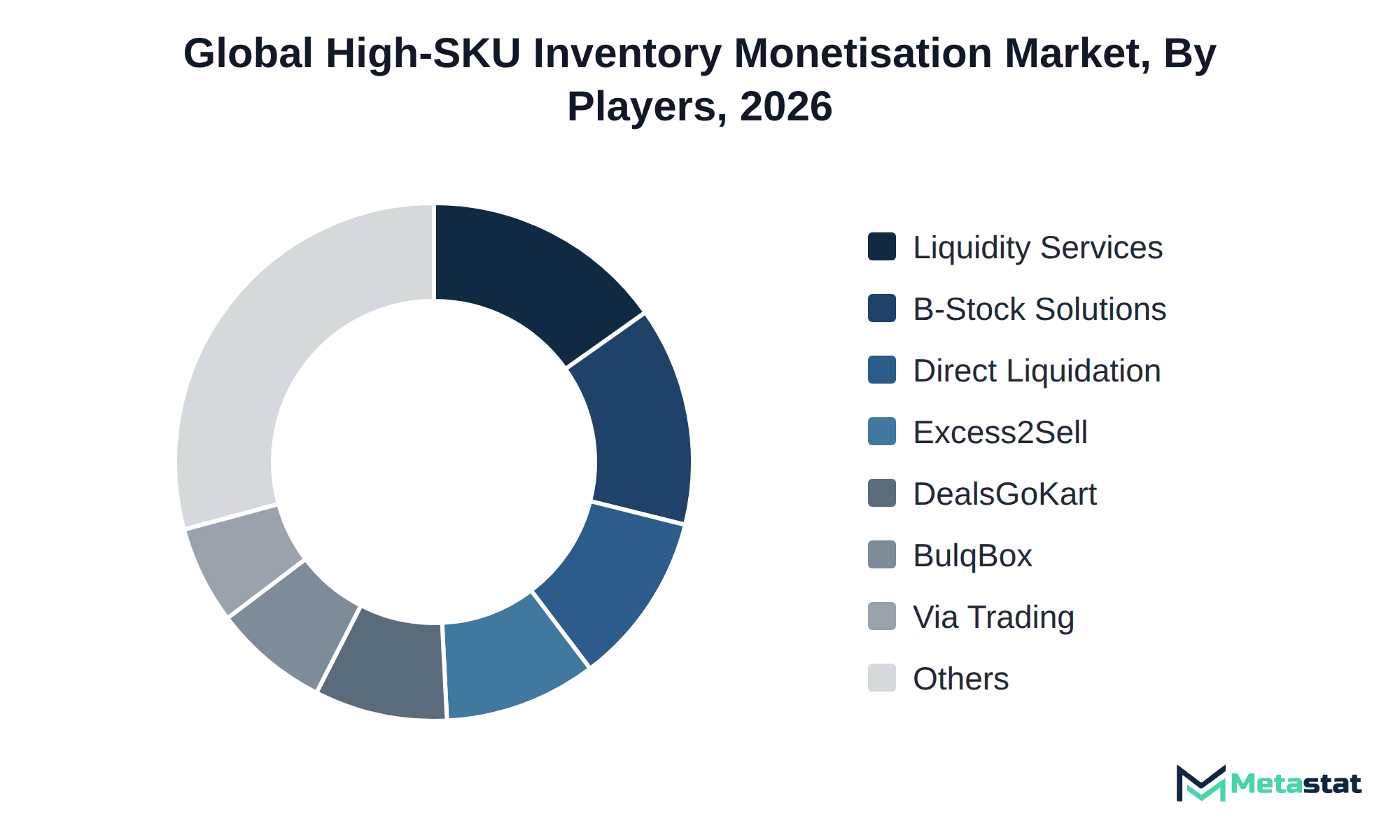
Competition within the High-SKU Inventory Monetisation market divides along various lines, including monetisation models and inventory types. Companies including B-Stock Solutions and Liquidity Services, Inc. focus on B2B wholesale and bulk resale, while others like Excess2Sell and DealsGoKart engage in online liquidation auctions. This segmentation influences buyer choice based on pricing, service quality, and inventory specialization.
Specific companies within the market emphasize distinct operational strategies. For instance, BulqBox prioritizes managed inventory liquidation services, enhancing efficiency for clients. Via Trading offers diverse inventory types, catering to a wide range of customer needs. Direct Liquidation stands out with a strong presence in fixed-price inventory marketplaces, appealing to buyers seeking straightforward pricing models.
Achieving this growth relies on several key developments in the High-SKU Inventory Monetisation market. First, increasing demand from the retail and e-commerce sector drives significant revenue, with a projected value of USD 616.4 million by 2033. Second, the rise of online liquidation auctions, expected to reach a valuation of USD 581.9 million, enhances monetisation opportunities across various industries. Lastly, the growth of overstock and excess inventory, with an anticipated value of USD 553.7 million, plays a critical role in expanding inventory monetisation avenues. Potential risks exist that could hinder market growth. Economic fluctuations or shifts in consumer spending patterns could impact the performance of key segments, specifically in North America, which holds a substantial market share of 34.9 percent. Consequently, fluctuations in demand create challenges in achieving the forecasted market size. The combination of these factors will critically shape the trajectory of the High-SKU Inventory Monetisation market through 2033.
By Inventory Type: Overstock and Excess Inventory, Slow-Moving and Aged Inventory, End-of-Season and Discontinued Inventory, Customer Returns and Open-Box Inventory, Cancelled-Order Inventory, Near-Expiry and Short-Dated Inventory, Dead Stock and Unsold Inventory, Factory Seconds and Damaged Inventory, Others (Display Stock and Refurbished Inventory)
By Monetisation Model: B2B Wholesale and Bulk Resale, Online Liquidation Auctions, Fixed-Price Inventory Marketplaces, Managed Inventory Liquidation Services, Direct-to-Consumer Resale and Recommerce
By End-Use Industry: Retail and E-commerce, Consumer Electronics and IT, Apparel and Footwear, Home Appliances and Furniture, Beauty and Personal Care, Food and Beverage, Industrial and Automotive, Others (Toys, Books and General Merchandise)
The report strategically identifies and profiles the key market players and analyses their core competencies in each sub-segment of the High-SKU Inventory Monetisation market.
Report Attributes | Details |
Study Period | 2021-2033 |
Base Year | 2025 |
Estimated Year | 2026 |
Forecast Period | 2026-2033 |
Historical Period | 2021-2025 |
Growth Rate | CAGR 8.4% from 2026 to 2033 |
Revenue Unit | USD million |
Segmentation | By Inventory Type, SKU Portfolio Size, Monetisation Model, End-Use Industry, and Region |
By Region | North America (By Inventory Type, SKU Portfolio Size, Monetisation Model, End-Use Industry, and Country)
|
Europe (By Inventory Type, SKU Portfolio Size, Monetisation Model, End-Use Industry, and Country)
| |
Asia Pacific (By Inventory Type, SKU Portfolio Size, Monetisation Model, End-Use Industry, and Country)
| |
South America (By Inventory Type, SKU Portfolio Size, Monetisation Model, End-Use Industry, and Country)
| |
Middle East and Africa (By Inventory Type, SKU Portfolio Size, Monetisation Model, End-Use Industry, and Country)
|
Find answers to common questions about this report
The High-SKU Inventory Monetisation market size was valued at USD 1,629.2 million in 2025.
The market is projected to grow at a CAGR of 8.4% during the forecast period from 2026 to 2033.
The North America High-SKU Inventory Monetisation market size is estimated to reach USD 1,020 million by 2033.
Overstock and Excess Inventory leads the High-SKU Inventory Monetisation market with a projected value of USD 553.7 million by 2033. This segment outpaces others in growth potential, reflecting a compound annual growth rate of 8 percent.
Key drivers for the High-SKU Inventory Monetisation market include recent changes in consumer purchasing behavior and the rise of omnichannel shopping. Increased demand for diverse product offerings and consumer preferences for discounted products significantly influence inventory monetisation strategies. These factors promote the exploration of innovative solutions to manage excess and slow-moving inventory effectively.
North America holds the dominant share of the High-SKU Inventory Monetisation market, with a value of USD 1,020 million projected for 2033, representing 34.9 percent of the total market.
Pricing pressures significantly impact the adoption of high-SKU inventory monetisation strategies among small and medium-sized enterprises (SMEs). Many SMEs face challenges in allocating budgets for advanced inventory monetisation tools, leading to slower uptake of these solutions.
Growing emphasis on sustainability and responsible consumption drives adoption in the High-SKU Inventory Monetisation market. Businesses that align their practices with environmentally conscious consumer preferences enhance their revenue while effectively managing inventory.
The High-SKU Inventory Monetisation market is estimated to reach a valuation of USD 3,107 million by 2033.
Key players operating in the High-SKU Inventory Monetisation market include B-Stock Solutions, Liquidity Services, Inc., Excess2Sell, DealsGoKart, BulqBox, Via Trading, Direct Liquidation, and Stocklear.
The analysts below cover Information & Technology research at Metastat Insights.
LEAD ANALYST
Utkarsh Khirodkar is a Lead Market Research Analyst at MetaStat Insight, specializing in market intelligence, technology sector assessments, and competitive strategy.

PRINCIPAL CONSULTANT - ENTERPRISE AI & EMERGING TECHNOLOGIES
Banking & Finance · Electronics and Semiconductor · Energy and Power · Healthcare IT · Information & Technology · Professional Services
Vijay Gunti is a Principal Consultant at MetaStat Insight, bringing over two decades of experience across enterprise digital transformation, technology strategy, and intelligent systems.

LEAD CONSULTANT - COMMUNICATION, TELECOM, AND IT
Electronics and Semiconductor · Information & Technology · Machinery & Equipment · Professional Services
Ravindra Sathe Consultants for Communication, Telecom, and IT at MetaStat Insight. He leads the firm's industry research initiatives across telecommunications infrastructure, digital connectivity, enterprise networking, and emerging information technology domains.
Tracking maintenance cycle demand for secondary flight display units and terrain collision avoidance systems across regional jet fleets involves complex aftermarket dynamics. MetaStat Insight provided practical analysis separating airline retrofit programs from OEM forward-fit production schedules in North America and Southeast Asia. The supplier matrix highlighted component obsolescence timelines without resorting to vague generalizations. The dataset served as a dependable reference during our annual program review meetings.
Evaluating secondary resin quality across post-consumer packaging streams requires reliable technical segmentation. MetaStat Insight delivered an objective assessment that distinguished between extrusion-grade flake pricing and optical sorting throughput limitations across Western Europe. The competitive positioning breakdown for licensed depolymerization technology providers answered several questions during our feedstock feasibility audit. Their team clarified regional trade restrictions on mixed plastic scrap quickly when our team submitted follow-up requests.
Evaluating sovereign cloud deployments for core banking platforms demands a clear view of data residency regulations and migration exit strategies. MetaStat Insight delivered an exhaustive review of regional latency tolerances, mainframe decommission milestones, and third-party vendor concentration risk. The regulatory compliance mapping across European and Asian financial jurisdictions gave our team a dependable baseline for multi-cloud infrastructure discussions.
Explore related market intelligence reports worth reading alongside this one.
Starting from
$2950
Starting from
$2950