
LEAD ANALYST
Utkarsh Khirodkar is a Lead Market Research Analyst at MetaStat Insight, specializing in market intelligence, technology sector assessments, and competitive strategy.

India Wet Wire Drawing Lubricants Market Size, Share, By Type (Polymer-Based Lubricants, Synthetic Lubricants, Semi-Synthetic Lubricants and Hybrid Lubricants), By Metal Type (Ferrous and Non-Ferrous), By Distribution Channel (Direct Sales, Distributors and Dealers, Online Retail and Industrial Suppliers), By End-Use Industry (Automotive and Tyre Manufacturing, Construction and Infrastructure, Electrical Cables and Power Transmission, Industrial Fasteners and Springs, Welding and Metal Fabrication and Telecommunications and Electronics), Industry Analysis, Growth, Trends, and Forecast, 2026-2033
Report ID
MSI-5552
Published
October, 2026
Pages
282 Pages
Format
Historical
Base year
Forecast
Forecast period
Report Details
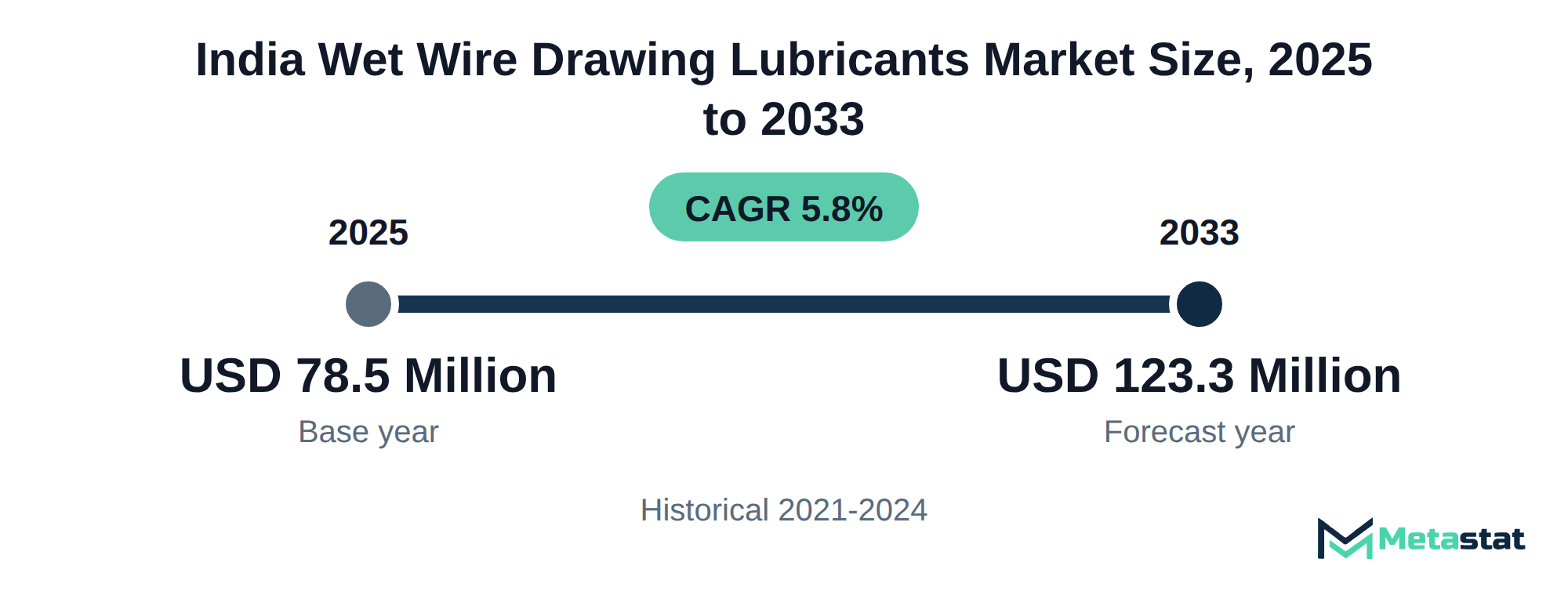
Market Valuation: Valued at $78.5 Million in 2025, projected to reach $123.3 Million by 2033 at a 5.8% CAGR.
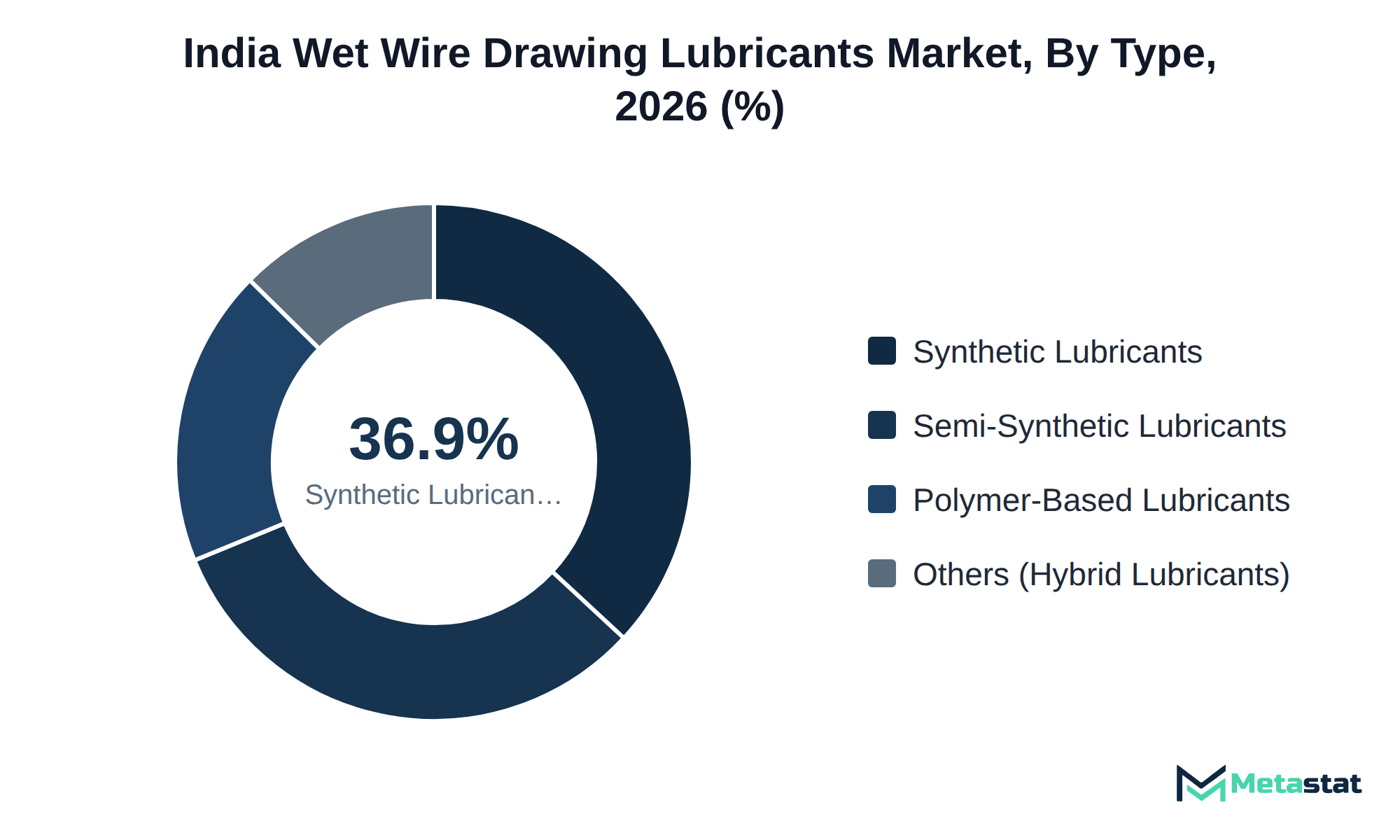
Dominant Segment: Synthetic lubricants lead the market, driven by their superior performance characteristics that enhance operational efficiency and product quality in wire drawing processes.
Geographic Lead: The western region of India dominates the market due to its robust industrial activity and infrastructure development, fostering consistent demand for high-quality lubricants.
What's Inside: This report provides a comprehensive analysis of the India Wet Wire Drawing Lubricants market, covering competitive dynamics, segment performance, and detailed forecasts from 2026 to 2033.
Growth Drivers: The automotive and tyre manufacturing sectors significantly drive market growth, with increasing demand for high-performance lubricants reflecting broader trends in manufacturing efficiency.
Emerging Trends: There is a notable shift towards polymer-based lubricants, projected to grow at a CAGR of 6.5%, as manufacturers prioritize sustainability and performance in their lubrication solutions.
Choose Your License
India Wet Wire Drawing Lubricants Market
The India Wet Wire Drawing Lubricants market was valued at USD 78.5 million in 2025 and is projected to reach USD 123.3 million by 2033, growing at a CAGR of 5.8% over the forecast period.
The India Wet Wire Drawing Lubricants market encompasses various types of lubricants used in the wire drawing process, primarily focusing on enhancing operational efficiency and product quality. Buyers invest in these lubricants to facilitate smoother wire drawing operations, reduce friction, and prolong tool life. Key industries including automotive and electrical manufacturing drive demand due to their reliance on high-quality wire products, which necessitate effective lubrication solutions.
Among the segments, synthetic lubricants hold the most significant market value, reflecting a growing preference for advanced formulations that offer superior performance. The market experiences growth driven by increasing demand from automotive and tyre manufacturing industries. This sector's expansion correlates with rising consumer preferences for high-performance vehicles, necessitating efficient wire drawing processes to meet production demands.
In terms of regional contributions, certain areas dominate the market share, with specific regions leading due to established industrial bases and infrastructure. The growth trajectory of the market aligns with ongoing advancements in lubrication technologies, enhancing operational efficiencies across diverse applications. Manufacturers continue to push for higher productivity, which supports investment in effective wet wire drawing lubricants.
Investment in the India Wet Wire Drawing Lubricants market reflects the essential role these products play in enhancing the wire drawing process. Buyers, including automotive and construction industries, prioritize these lubricants for their ability to improve efficiency, reduce wear on machinery, and ensure product quality. Demand for specialized lubricants aligns with increasing production rates and technological advancements in manufacturing processes.
The growth trajectory of the market is driven by rising demand for synthetic lubricants, which offer superior performance characteristics compared to traditional options. Among the segments, synthetic lubricants hold the most significant value, appealing to industries that require high-performance solutions. The non-ferrous metal segment experiences substantial growth, reflecting a shift in manufacturing practices and material preferences.
Geographically, the western region of India holds the largest market share, where industrial activity and infrastructure development are strong. This region benefits from a concentration of manufacturing facilities, driving consistent lubricant demand. Manufacturers seek to optimize production processes, and investment in high-quality lubricants becomes a priority, positively influencing market dynamics.
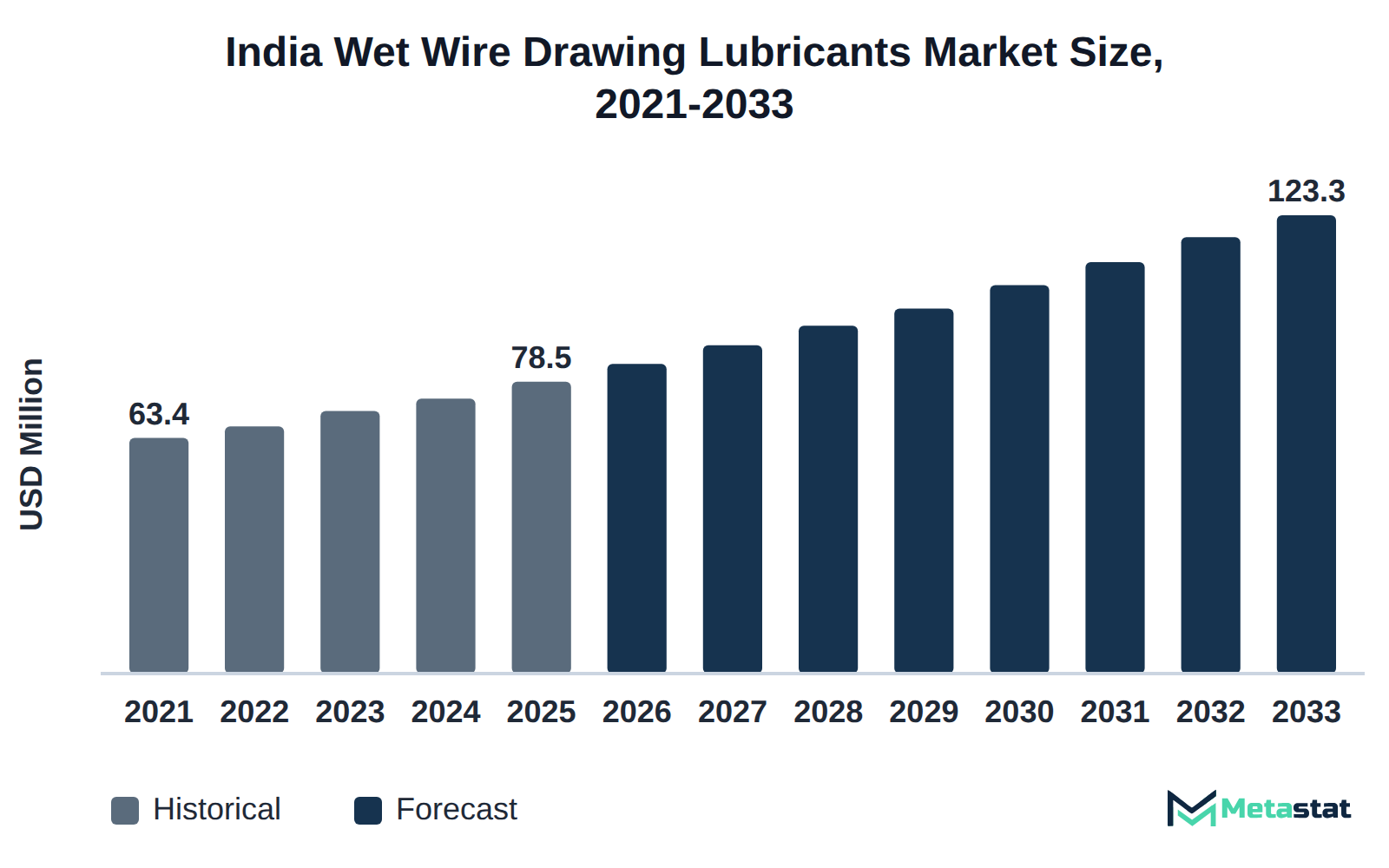
Synthetic wet wire drawing lubricants enable high-speed production processes in the India Wet Wire Drawing Lubricants market. These lubricants enhance the efficiency of wire drawing operations, significantly reducing friction and wear on machinery. The adoption of synthetic lubricants is expected to reach USD 49.7 million by 2033, reflecting a compound annual growth rate of 6.9%. This shift towards synthetic formulations is driven by their superior performance characteristics compared to traditional lubricants.
Manufacturers in the automotive and electrical industries increasingly prioritize synthetic lubricants for their ability to maintain integrity under extreme conditions. Drawn wire for vehicle electrical systems connects this demand to the automotive cables industry. This focus on high performance results in improved product quality and reduced downtime, translating to cost savings and productivity gains. The long-lasting nature of synthetic lubricants minimizes the frequency of lubricant changeovers, enhancing operational efficiency.
While the demand for high-speed production increases, the adoption of synthetic lubricants positions manufacturers competitively within the market. This transition supports performance enhancements and aligns with broader industry trends emphasizing sustainability and operational excellence. Strategic investment in synthetic lubricants indicates a positive outlook for manufacturers aiming to optimize their production capabilities in the India Wet Wire Drawing Lubricants market.
Pricing strategies in the India Wet Wire Drawing Lubricants market reflect the competitive dynamics shaped by demand from copper and aluminium cable manufacturers. These manufacturers obtain their feedstock from the copper wire rod industry, an upstream part of the same value chain. These buyers frequently engage in long-term contracts with lubricant suppliers to secure stable pricing and ensure consistent quality. The automotive and tyre manufacturing sector, a key driver of lubricant consumption, contributes to a significant portion of the market's revenue. This sector is expected to increase from USD 20.5 million in 2026 to USD 31 million by 2033, illustrating the importance of stable pricing structures.
Contract models often incorporate volume discounts or tiered pricing, where larger orders receive reduced rates. This approach benefits both buyers and suppliers, promoting loyalty and encouraging bulk purchases. Suppliers provide performance-based payment options, further aligning their interests with customer satisfaction and product reliability. Such arrangements enhance buyer relationships while providing predictability in supply chains.
Understanding pricing and contract strategies helps manufacturers optimize their lubricant procurement. The growing demand for wet wire drawing lubricants in cable manufacturing highlights the need for effective purchasing strategies, resulting in competitive advantages in a changing market environment.
In the Indian steel wire production sector, lubricant consumption is essential in determining die life and overall production efficiency. Steel wire for tyre reinforcement is processed into steel cord, which ties this sector to tyre manufacturing. Steel wire manufacturers, particularly in the automotive and tyre manufacturing industry, spend USD 20.5 million in lubricants by 2026, which increases to USD 31 million by 2033. This significant investment highlights the importance of selecting the right lubricants to enhance die longevity and minimize operational downtime.
The choice of lubricant directly impacts die wear, influencing production rates and product quality. With a projected compound annual growth rate (CAGR) of 6.1% in the automotive and tyre manufacturing sector, manufacturers prioritize high-performance lubricants that optimize die life. Lubricants that reduce friction and provide better protection against wear enhance the overall productivity of steel wire production.
In the context of the India Wet Wire Drawing Lubricants market, selecting the appropriate lubricant leads to notable cost savings and improved operational efficiency. Manufacturers that understand the unique requirements of their production processes and choose lubricants tailored to those needs experience a competitive advantage in the market.
Indian wire manufacturers prioritize specific performance characteristics when selecting wet wire drawing lubricants. Key factors include the lubricant’s compatibility with metal types and the required viscosity for optimal production efficiency. For instance, the market anticipates growth in demand for synthetic lubricants, projected to reach USD 49.7 million by 2033, reflecting their superior performance in reducing friction and wear during the drawing process.
The choice of lubricant influences operational efficiency, production costs, and product quality. Synthetic lubricants offer enhanced properties, including thermal stability and higher lubrication effectiveness, which lead to improved wire quality and reduced scrap rates. These advantages directly affect the profitability of wire manufacturing operations, making the selection of appropriate lubricants a critical decision for manufacturers in the India Wet Wire Drawing Lubricants market.
The automotive and tyre manufacturing industry drives significant demand for lubricants, reflecting a shift towards high-performance materials that enhance wire drawing efficiency. This sector increasingly prioritizes quality and performance, leading to higher expenditures on advanced lubricant solutions. The transition from traditional to synthetic lubricants aims to improve operational efficiency and product quality. Key players within the automotive manufacturing segment recognize the advantages of using specialized lubricants, resulting in increased volume requirements to support their production processes. From 2026 to 2033, the automotive and tyre manufacturing sector is projected to expand from USD 20.5 million to USD 31 million, indicating a compound annual growth rate of 6.1%. This growth reinforces the need for high-quality lubricants as the requirements of the industry evolve. The demand shifts reinforce the competitive environment in the India Wet Wire Drawing Lubricants market, creating opportunities for suppliers to innovate and adapt their product offerings.
The shift towards synthetic lubricants significantly influences the India Wet Wire Drawing Lubricants market. Enhanced performance characteristics, including better lubricity and thermal stability, make synthetic options preferable for manufacturers seeking to optimize productivity. Industries like automotive, electrical cables, and construction increasingly adopt these lubricants to meet stringent operational requirements. Manufacturers benefit from reduced friction and wear, leading to prolonged die life and improved output efficiency. Synthetic lubricants offer greater versatility in varying operational conditions, providing manufacturers with a competitive edge. This transition is expected to support market growth during the forecast period, contributing to a projected compound annual growth rate of 6.9% for synthetic lubricants. The market's focus on performance enhancement aligns with broader trends in manufacturing, ensuring that synthetic lubricants play an essential role in advancing wire drawing processes across various sectors.
Price sensitivity presents a significant restraint for the India Wet Wire Drawing Lubricants market, particularly impacting industries including automotive and tyre manufacturing. Many manufacturers prioritize cost control, leading to slower uptake of higher-quality lubricants. This price-conscious approach results in smaller orders or delayed replacement of existing lubricant products. While companies face pressure to maintain operational margins, opting for lower-cost alternatives becomes more appealing, even if those alternatives do not offer the same performance benefits. The financial implications of this restraint extend to suppliers, who experience reduced revenue growth due to diminished demand for premium lubricants. Consequently, this dynamic affects overall market growth, hindering advancements and innovations in lubricant formulations that could enhance production efficiency and product longevity.
Rising raw material costs present a significant challenge for suppliers in the India Wet Wire Drawing Lubricants market. Increased prices for essential inputs, including base oils and additives, pressure profit margins, compelling suppliers to seek alternatives or adjust pricing strategies. This situation affects various industries relying on lubricants, including automotive and electrical cable manufacturing, where budget constraints heighten the focus on cost efficiency.
In response, suppliers are exploring innovative formulations that incorporate lower-cost materials without compromising performance. Several are increasing operational efficiency through technology upgrades and process optimizations to mitigate the impact of these rising costs. These adjustments aim to maintain competitiveness and product quality while influencing market dynamics and future growth.
The polymer-based lubricants segment presents a significant growth opportunity. It is projected to increase from USD 15.7 million in 2026 to USD 24.5 million by 2033, a compound annual growth rate (CAGR) of 6.5%. This expansion is driven by increasing demand for efficient lubrication solutions in various end-use applications, particularly in sectors including automotive and electrical cables. Manufacturers invest in innovative formulations that enhance performance while reducing environmental impact. The rising focus on sustainability and operational efficiency supports the adoption of polymer-based products, which often outperform traditional options. This shift towards advanced lubricants addresses current market demands and positions suppliers to capture a larger share of the evolving market. With the market expected to experience continuous growth through 2033, targeting this segment will enhance strategic positioning and revenue potential for active participants. The polymer-based lubricants segment serves as a key driver of the India Wet Wire Drawing Lubricants market during the forecast period.
The India Wet Wire Drawing Lubricants market is segmented based on Type, Metal Type, Distribution Channel, and End-Use Industry.
These lubricants primarily serve to enhance the wire drawing process, benefiting sectors including automotive, electrical cable manufacturing, and construction. Demand for Polymer-Based Lubricants is driven by compatibility with various metal types and effectiveness in high-speed drawing applications. Growth in this segment is faster than that of Semi-Synthetic Lubricants, which experience a lower CAGR. The Polymer-Based Lubricants segment appeals to buyers focused on maximizing efficiency and minimizing wear on machinery, differentiating it from other lubricant types in the market. Advancements in polymer technology and the increasing demand for high-performance lubricants significantly contribute to its expansion.
This category focuses on high-performance applications, specifically enhancing efficiency in wire drawing processes. Industries including automotive and electrical cable manufacturing heavily adopt these lubricants due to their superior properties, which enhance productivity and extend equipment life. A significant driver of growth within this segment is the increasing demand for advanced materials that improve performance under high-speed conditions. Compared to polymer-based lubricants, which are projected to grow at a CAGR of 6.5%, synthetic lubricants display a faster growth trajectory, driven by their ability to deliver better lubrication and cooling properties. The trend toward synthetic lubricants reflects broader technological advancements in manufacturing, which demand higher efficiency and lower operational costs in the Indian market.
Semi-Synthetic Lubricants segment is expected to reach USD 32.7 million by 2033. These lubricants serve in various wire drawing applications, offering a balanced performance between price and efficiency. Users in automotive and electrical cable manufacturing particularly favor this segment for its effectiveness in enhancing productivity during the drawing process. Growth is driven by increasing demand for cost-effective lubrication solutions that do not compromise on quality. Compared to polymer-based and synthetic alternatives, semi-synthetic lubricants typically offer a more competitive pricing structure, appealing to budget-conscious buyers. The segment's growth is projected at a CAGR of 6.5%, reflecting a solid market position within the broader India Wet Wire Drawing Lubricants market. Its formulation combines synthetic and mineral oil properties, which enhances lubrication, lowers friction, and improves operational efficiency in wire production.
The Others (Hybrid Lubricants) segment is projected to grow at a CAGR of 6.6% during the forecast period. This segment finds applications in various industries that require versatile lubricants capable of performing under different conditions. The hybrid nature of these lubricants allows them to provide properties from both synthetic and mineral oils, appealing to manufacturers looking for cost-effective solutions without compromising performance. Demand for hybrid lubricants is driven by increasing needs for operational efficiency and reduced friction in processes including wire drawing. Unlike purely synthetic lubricants, which are expected to reach USD 49.7 million by 2033 at a CAGR of 6.9%, hybrid lubricants cater to a broader market segment due to their adaptability and pricing. This segment supports industries focused on quality and economic feasibility, establishing a unique position within the India Wet Wire Drawing Lubricants market.
Ferrous segment is valued at USD 35.9 million in 2026 and is projected to reach USD 50.3 million by 2033, at a CAGR of 5% during the forecast period. This segment primarily serves the manufacturing of ferrous metal products, including wire and cable applications, where lubrication is critical for reducing friction and extending die life. Demand from automotive and construction industries significantly drives this segment, reflecting ongoing investments in infrastructure and vehicle production. Unlike synthetic and semi-synthetic lubricants, the ferrous segment experiences slower growth, with a CAGR of 5%, compared to synthetic lubricants' 6.9%. This distinction highlights a preference among several buyers for traditional lubricants in specific applications, maintaining a balance between performance and cost-effectiveness. The market continues to experience innovation aimed at enhancing the performance of ferrous lubricants, thus supporting increased adoption across relevant sectors.
Non-Ferrous segment is estimated to reach USD 73 million by 2033, at a CAGR of 6.3% during the forecast period. This segment focuses on lubricants used in the drawing of non-ferrous metals, particularly copper and aluminum. The aluminium wire rod industry supplies the feedstock that these lubricants help draw into wire. Industries including electrical cable manufacturing heavily depend on these lubricants for their wire drawing processes. Demand for non-ferrous lubricants is driven by the growing need for high-performance materials in electrical applications. Compared to other segments, this segment experiences faster growth, attributed to increasing production rates in related industries. Non-Ferrous lubricants demonstrate higher price sensitivity, impacting purchasing decisions within the market. Overall, the demand for efficient wire drawing solutions directly influences the growth trajectory of this segment.
Direct Sales segment is valued at USD 44.4 million in 2026 and is projected to reach USD 68.7 million by 2033, at a CAGR of 6.4% during the forecast period. This segment primarily serves manufacturers and end-users who prefer direct transactions, facilitating a streamlined purchasing process for high-quality lubricants. Increased demand from industries including automotive and electrical cable manufacturing significantly drives this segment, where users prioritize product quality and supplier reliability over price. Compared to other distribution channels, Direct Sales demonstrates a faster growth rate due to the increasing preference for personalized service and direct engagement with suppliers. This channel allows manufacturers to build stronger relationships with customers, leading to more effective responses to specific lubricant requirements. In contrast, other channels like Distributors and Dealers exhibit slower growth, reflecting a shift towards direct customer engagement in the India Wet Wire Drawing Lubricants market.
Distributors and Dealers segment is estimated to reach USD 32.5 million by 2033, at a CAGR of 4.3% during the forecast period. This segment facilitates the distribution of wet wire drawing lubricants to various end-use industries, including automotive and electrical applications. Distributors and dealers keep products available to manufacturers, which extends market penetration and customer reach. Demand for lubricants in this segment is driven by increased production in industries requiring high-quality wire products and the shift towards enhanced product performance. Compared to other distribution channels, including Direct Sales, which exhibits a higher growth rate of 6.4%, the Distributors and Dealers segment demonstrates steady growth, reflecting its established presence and the importance of personal relationships in sales and customer service. The market benefits from ongoing innovations in lubricant formulations, increasing the need for knowledgeable distributors equipped to advise clients on optimal product choices.
Online Retail segment is expected to reach USD 6.5 million by 2033. This distribution channel caters primarily to small and medium enterprises that prefer the convenience of online purchasing for lubricants. The rise of e-commerce platforms supports quicker access to products, enhancing customer choice and availability. Growth in this segment is driven by an increasing number of buyers turning to digital channels for lubricant procurement, particularly in industries including automotive and electrical cables. Online Retail differs from traditional channels like Direct Sales and Distributors and Dealers, which typically involve higher transaction volumes but slower growth rates. The CAGR for Online Retail is competitive, balancing convenience against traditional procurement methods, which often dominate in larger orders. This dynamic encourages suppliers to expand their online presence, thereby influencing the overall growth trajectory for the India Wet Wire Drawing Lubricants market.
Industrial Suppliers segment is projected to grow at a CAGR of 4.1% during the forecast period. This segment primarily serves manufacturers and industries requiring lubricants for various applications, including metalworking and processing operations. Industrial Suppliers focus on providing tailored solutions to enhance efficiency and performance in manufacturing processes. Demand for these lubricants is driven by increasing emphasis on operational efficiency and the growing need for high-performance materials. Compared to other distribution channels, including Direct Sales and Distributors and Dealers, this segment offers specific pricing structures and personalized service, reflecting a strategic approach to customer needs. Higher service levels and customized offerings distinguish Industrial Suppliers from competitors, creating a unique market position. The market for these lubricants sees growth, fueled by rising industrial activities across sectors seeking reliable and effective lubrication solutions.
This segment is used primarily by automotive and tyre manufacturers for wire drawing processes that require high-performance lubricants, which enhance the efficiency and quality of production. Its performance is closely tied to the broader automotive tyre industry. Rising demand for vehicles contributes to the segment's growth, driven by increasing consumer preferences for automobiles and the expanding automotive industry. Compared to other segments, the Automotive and Tyre Manufacturing segment exhibits a higher growth rate due to its critical role in supporting the production of components that meet stringent industry standards. The market benefits from ongoing advancements in lubricant technology that enhance performance, leading to increased adoption and investment in innovative solutions.
Construction and Infrastructure segment is estimated to reach USD 17.8 million by 2033, at a CAGR of 4.7% during the forecast period. This segment supports construction activities, including building projects and infrastructure development. Demand for wet wire drawing lubricants in this sector derives primarily from construction companies that require efficient lubrication solutions for wire drawing processes. A key driver of growth in this segment involves increasing investments in infrastructure projects across India, reflecting a broader trend towards urbanization and industrial development. Compared to other segments, the Construction and Infrastructure segment exhibits a slower growth rate, influenced by the cyclical nature of construction activities and fluctuating material costs. The market for construction lubricants experiences unique challenges, including regulatory changes and the need for high-performance materials that withstand demanding conditions.
Electrical Cables and Power Transmission segment is expected to reach USD 47.2 million by 2033. This segment is essential for the production of high-quality electrical cables, necessary for various applications in power distribution and transmission. Cables for transmission networks overlap with the high voltage cables industry. The demand primarily comes from electrical manufacturers and construction companies, where the reliability and efficiency of lubricants directly impact operational performance. Growth in this segment is driven by increasing investments in infrastructure and expanding power generation initiatives. Compared to other segments, including Automotive and Tyre Manufacturing, which is projected to grow at a CAGR of 6.1%, the Electrical Cables and Power Transmission segment exhibits different market dynamics, appealing to buyers focused on long-term reliability rather than immediate cost considerations. This focus on reliability results in stability in pricing and product quality within the market.
Industrial Fasteners and Springs segment is projected to grow at a CAGR of 4.4% during the forecast period. This segment serves critical functions in various applications including machinery, automotive assemblies, and construction equipment, serving manufacturers specializing in these fields. Its component demand overlaps with the wider industrial fasteners industry. Growth in this segment is driven by increasing demand for high-performance components, enhancing productivity and reliability in end products. The segment distinguishes itself from others within the market due to its relatively stable pricing dynamics and specific buyer profiles focused on quality and durability. While other end-use segments experience more rapid growth, the Industrial Fasteners and Springs segment maintains consistent demand, reflecting its essential role in manufacturing processes across multiple industries.
Welding and Metal Fabrication serves an essential role in various applications, primarily focused on metalworking processes. Industries engaged in this segment employ lubricants to enhance performance and extend the lifespan of tools and machinery involved in welding and fabrication tasks. Demand for high-quality lubricants is driven by growth in construction and manufacturing sectors, which require effective solutions to ensure precision and efficiency in metal processing. Unlike other segments, Welding and Metal Fabrication faces specific challenges related to the technical requirements of lubrication in high-temperature environments. This niche necessitates specialized formulations, often resulting in higher costs compared to more standard lubricant segments. The unique demands of this sub-segment differentiate it from others, particularly regarding performance expectations and pricing dynamics, ultimately shaping the competitive landscape within the India Wet Wire Drawing Lubricants market.
Telecommunications and Electronics cover applications focused on the production of wire and cable for communication and power distribution. This sub-segment primarily serves manufacturers within the electronics and telecommunications industries, where lubricant efficiency directly influences product quality and operational efficiency. Demand in this sector is driven by the increasing adoption of advanced technology, including 5G network equipment and supporting infrastructure, which require highly reliable wire drawing lubricants. Price sensitivity significantly influences companies seeking cost-effective solutions without compromising performance. Compared to other segments, this area experiences unique fluctuations in growth rates, influenced by rapid technological advancements and evolving regulatory standards. The India Wet Wire Drawing Lubricants market reflects these dynamics, with ongoing innovations tailored to meet the specific needs of the telecommunications and electronics sectors.
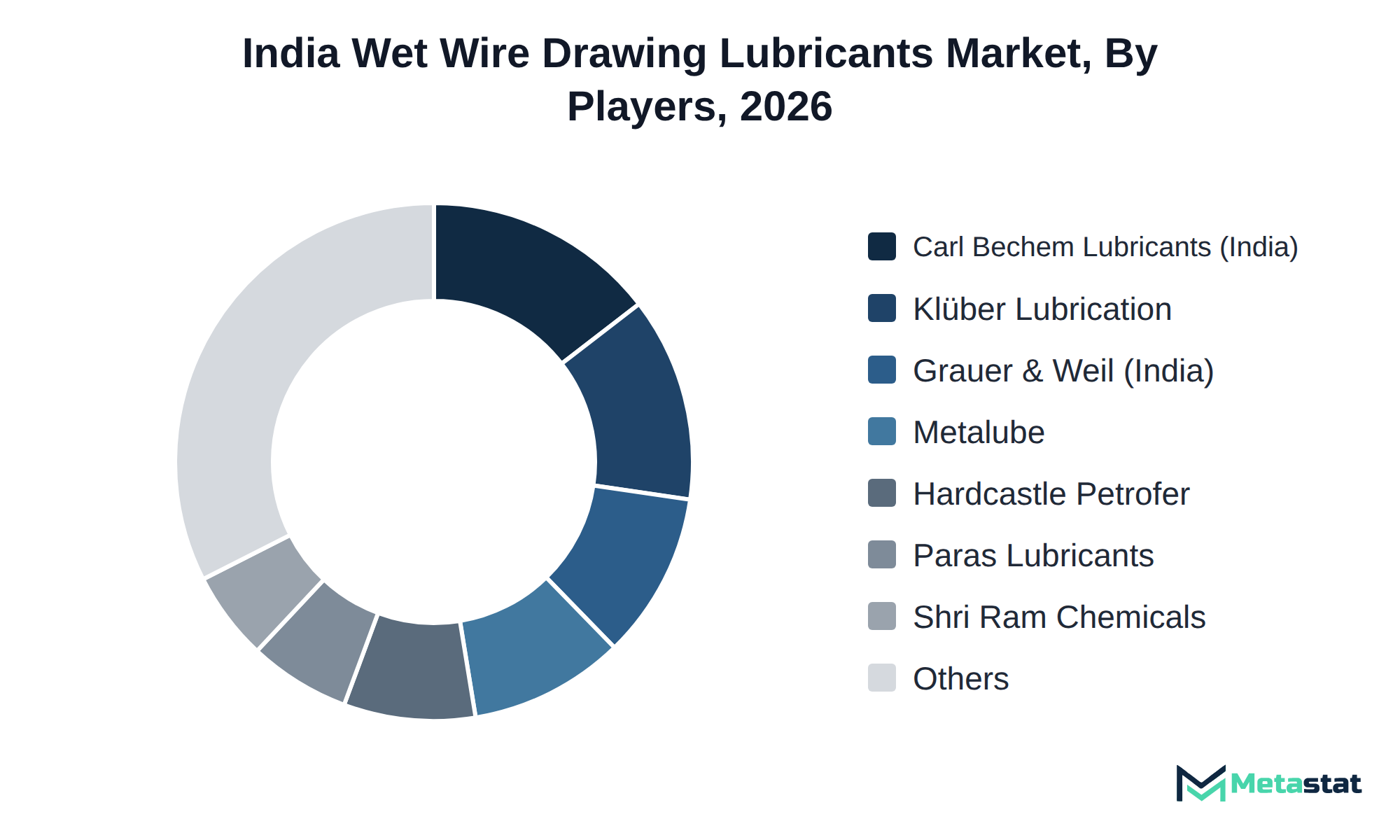
The India Wet Wire Drawing Lubricants market features diverse companies competing through various strategies. Key players include Carl Bechem Lubricants (India) Private Limited, Metalube Limited, and CONDAT S.A., each focusing on distinct lubricant formulations tailored to specific applications. These companies apply technological advances to improve product performance and meet evolving industry standards, which strengthens their competitive positioning.
Buyers in the market prioritize price, certification, customization, and service quality when selecting lubricants. For instance, Klüber Lubrication GmbH emphasizes high-performance synthetic lubricants, while Grauer & Weil (India) Limited provides multiple polymer-based solutions. These factors contribute to differentiation among suppliers, impacting buyer decisions and shaping competitive dynamics in the market.
Key developments driving growth in the India Wet Wire Drawing Lubricants market include the increasing adoption of synthetic lubricants, projected to reach USD 49.7 million by 2033, supported by a strong CAGR of 6.9%. The expansion of direct sales distribution channels will facilitate better market access and penetration, growing to USD 68.7 million. The automotive and tyre manufacturing sector, forecasted to increase to USD 31 million, represents a significant end-use industry driving demand for higher-quality lubricants.
Risks including fluctuating raw material prices impede growth. Variability in costs affects the profitability of suppliers and impacts their ability to invest in marketing and distribution. The India Wet Wire Drawing Lubricants market relies on stability in material sourcing to maintain the momentum required to reach USD 123.3 million. Operational efficiencies and innovation in lubricant formulations play vital roles in mitigating these risks and ensuring continued market advancement.
By Type: Polymer-Based Lubricants, Synthetic Lubricants, Semi-Synthetic Lubricants, Others (Hybrid Lubricants)
By Metal Type: Ferrous, Non-Ferrous
By Distribution Channel: Direct Sales, Distributors and Dealers, Online Retail, Industrial Suppliers
By End-Use Industry: Automotive and Tyre Manufacturing, Construction and Infrastructure, Electrical Cables and Power Transmission, Industrial Fasteners and Springs, Welding and Metal Fabrication, Others (Telecommunications and Electronics)
The report strategically identifies and profiles the key market players and analyses their core competencies in each sub-segment of the Wet Wire Drawing Lubricants market.
Report Attributes | Details |
Study Period | 2021-2033 |
Base Year | 2025 |
Estimated Year | 2026 |
Forecast Period | 2026-2033 |
Historical Period | 2021-2025 |
Growth Rate | CAGR 5.8% from 2026 to 2033 |
Revenue Unit | USD million |
Segmentation | By Type, Metal Type, Distribution Channel, End-Use Industry, and Region |
Find answers to common questions about this report
The Wet Wire Drawing Lubricants market size was valued at USD 78.5 million in 2025.
The market is projected to grow at a CAGR of 5.8% during the forecast period from 2026 to 2033.
Synthetic Lubricants lead the Wet Wire Drawing Lubricants market with a projected value of USD 49.7 million by 2033. This segment surpasses others in terms of revenue potential.
The automotive and tyre manufacturing industry drives significant demand for lubricants due to a shift towards high-performance materials that enhance wire drawing efficiency. The polymer-based lubricants segment presents a growth opportunity, reflecting increasing demand for efficient lubrication solutions in various end-use applications.
Price sensitivity and rising raw material costs restrain the growth of the Wet Wire Drawing Lubricants market. Industries including automotive and tyre manufacturing prioritize cost control, while suppliers face pressure on profit margins, compelling them to seek alternatives or adjust pricing strategies.
Several factors favor adoption in the India Wet Wire Drawing Lubricants market. The increasing demand for efficient lubrication solutions in automotive and electrical cable sectors drives manufacturers to focus on innovative formulations. Enhanced performance characteristics and sustainability concerns position these products favorably within the evolving market.
The Wet Wire Drawing Lubricants market is estimated to reach a valuation of USD 123.3 million by 2033.
Key players operating in the Wet Wire Drawing Lubricants market include Carl Bechem Lubricants (India) Private Limited, Metalube Limited, CONDAT S.A., Klüber Lubrication GmbH, Lubrimetal S.p.A., Grauer & Weil (India) Limited, and Hardcastle Petrofer Private Limited.
The automotive and tyre manufacturing industry shows significant growth, projected to expand from USD 20.5 million in 2026 to USD 31 million by 2033, reflecting a compound annual growth rate of 6.1%.
The shift towards synthetic lubricants is driven by enhanced performance characteristics, including better lubricity and thermal stability, appealing to manufacturers seeking to optimize productivity.
The analysts below cover Chemicals and Materials research at Metastat Insights.
LEAD ANALYST
Utkarsh Khirodkar is a Lead Market Research Analyst at MetaStat Insight, specializing in market intelligence, technology sector assessments, and competitive strategy.

INDUSTRY CONSULTANT - CHEMICALS & ADVANCED MATERIALS
Chemicals and Materials · Machinery & Equipment · Packaging
Amit Gadhekar Consultant for Chemicals and Materials at MetaStat Insight, directing sector-specific intelligence, research, and strategic consulting across global chemical and processing markets.
Ambulatory surgical centers have very different purchasing cycles for robotic-assisted surgery platforms than major hospital networks. The MetaStat Insight study focused squarely on capital expenditure depreciation, procedural reimbursement pathways, and surgeon training overhead. That operational clarity made it much simpler to validate multi-year procedure growth forecasts against actual ambulatory center adoption patterns.
When planning edge sensor rollouts across refinery environments, generic IoT reports typically miss the harsh-environment certification bottlenecks. MetaStat Insight gave an objective evaluation of ATEX and Class 1 Division 2 hardware availability, along with realistic five-year maintenance cycle cost projections. The comparison of wireless mesh versus private cellular backhaul helped our team pressure-test network reliability models for remote processing facilities.
In the biological seed treatment space, registration timelines vary drastically between the European Union, Brazil, and North America. The MetaStat Insight research handled these cross-border regulatory barriers with genuine nuance, mapping commercialization pathways alongside historical field adoption rates. The segmentation between microbial strains and biochemical active ingredients was particularly well structured.
Explore related market intelligence reports worth reading alongside this one.
Starting from
$2950