
LEAD ANALYST
Utkarsh Khirodkar is a Lead Market Research Analyst at MetaStat Insight, specializing in market intelligence, technology sector assessments, and competitive strategy.

Global Low-Voltage Circuit Breaker Market Size, Share, By Product Type (MCB, MCCB, ACB, RCBO, RCCB and Others), By Rated Operational Voltage (Up to 250 V, Above 250 V to 600 V and Above 600 V to 1,000 V), By Rated Current (Up to 100 A, Above 100 A to 400 A, Above 400 A to 800 A and Above 800 A), By End Use (Residential, Commercial, Industrial and Utilities), Industry Analysis, Growth, Trends, and Forecast, 2026-2033
Report ID
MSI-5645
Published
October, 2026
Pages
298 Pages
Format
Historical
Base year
Forecast
Forecast period
Report Details
Market Valuation: Valued at $17.3 Billion in 2025, projected to reach $28.2 Billion by 2033 at a 6.3% CAGR.
Dominant Segment: The miniature circuit breaker (MCB) segment leads the market, driven by high demand for compact and efficient solutions in residential and commercial applications.
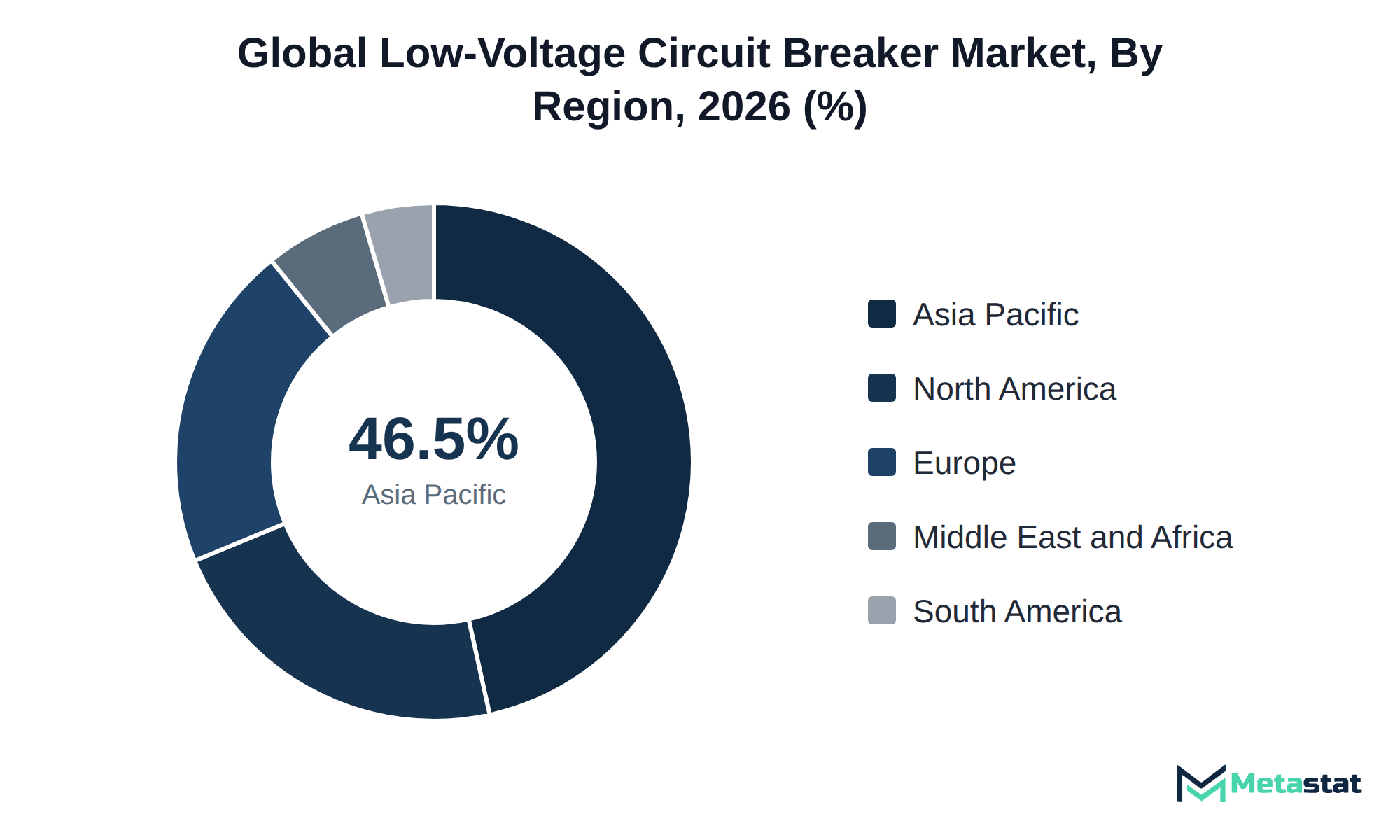
Geographic Lead: Asia Pacific dominates the market with a 46.5% share, fueled by rapid urbanization and industrialization that heighten the need for electrical infrastructure.
What's Inside: The report includes comprehensive competitive coverage, detailed analyses of market dynamics, and forecasts extending to 2033, providing insights into various product types and end-use applications.
RCBO Growth: Residual-current circuit breakers (RCBOs) are projected to grow at a CAGR of 11.3%, reflecting increased adoption in electrified buildings due to heightened safety and energy efficiency demands.
Technological Advancements: Innovations in circuit breaker technology, including smart features and IoT integration, are driving market expansion and improving operational efficiencies across sectors.
Choose Your License
Global Low-Voltage Circuit Breaker Market
The global Low-Voltage Circuit Breaker market was valued at USD 17.3 billion in 2025 and is projected to reach USD 28.2 billion by 2033, growing at a CAGR of 6.3% over the forecast period.
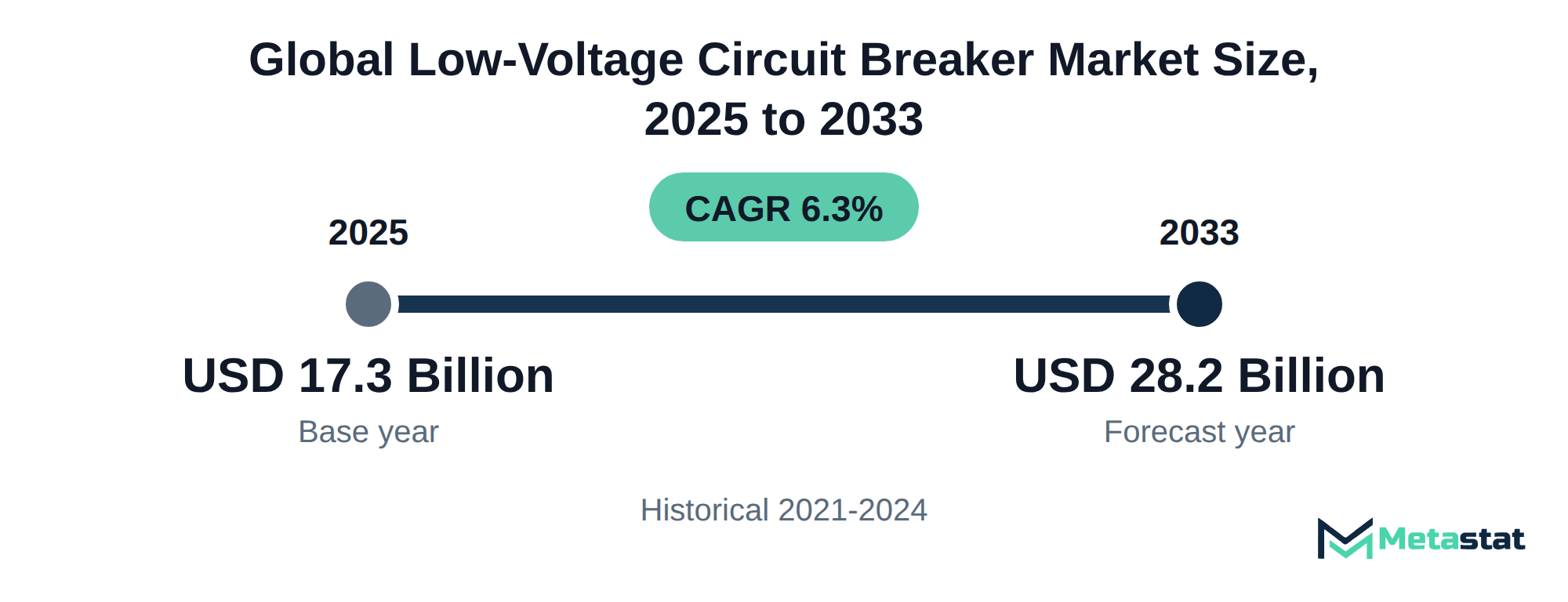
The Low-Voltage Circuit Breaker market covers devices that protect electrical circuits from overloads and short circuits. Buyers invest in these products to enhance safety, ensure compliance with electrical standards, and improve the reliability of electrical systems. The primary consumer groups include residential, commercial, and industrial sectors, which require dependable circuit protection solutions to mitigate risks associated with electrical failures.
Growth in the market is driven by increasing electricity consumption and the need for advanced safety features. The segment of miniature circuit breakers (MCB) represents the largest share of revenue, reflecting the demand for compact and efficient solutions in residential and commercial applications. By region, Asia Pacific leads the market with a 46.5% share, reflecting rapid urbanization and industrialization that raise demand for electrical infrastructure.
North America holds 22.2% of the market in 2025, with the US leading in 2026. A growing focus on energy efficiency and renewable energy integration adds to demand for low-voltage circuit breakers, as these devices manage power distribution and ensure system stability. Continued investments in infrastructure and technology advancements are expected to support market expansion through the forecast period.
The market includes various types of circuit breakers designed to ensure the safety and reliability of electrical systems across numerous applications. Buyers invest in low-voltage circuit breakers to safeguard equipment and prevent costly downtime caused by electrical failures. The increasing demand for energy-efficient solutions, along with growing concerns over electrical safety, drives spending in this sector.
The market experiences growth due to rising industrialization and urbanization, particularly within the Asia Pacific region, which holds 46.5% of the market. The molded case circuit breaker (MCB) segment holds the largest value, reflecting the preference for compact and efficient devices that cater to diverse applications. In 2025, North America accounts for 22.2% of the market, with the US expected to lead in 2026.
Technological advancements contribute significantly to market growth, with innovations focused on improving performance and enhancing safety features. This competitive landscape encourages suppliers to invest in research and development, aiming to meet the evolving regulatory standards and consumer expectations. The ongoing shift toward renewable energy sources further drives the demand for reliable low-voltage circuit breakers.
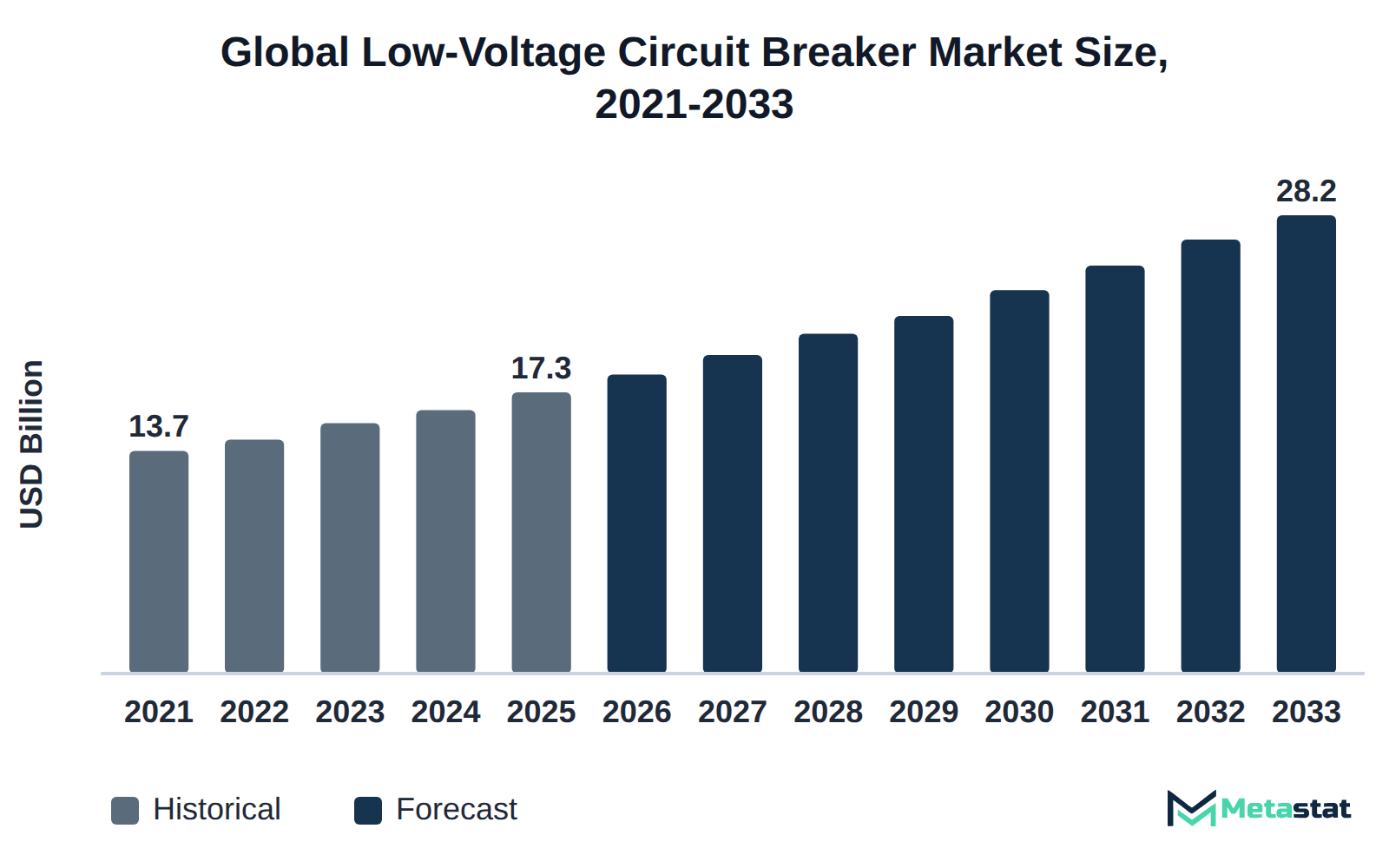
Residual-current circuit breakers (RCBOs) are experiencing increased adoption in electrified buildings, driven by the growing emphasis on safety and energy efficiency. The use of RCBOs provides dual protection against overloads and earth faults, crucial for preventing electrical shocks and fire hazards in residential, commercial, and industrial environments. This segment is projected to grow at a compound annual growth rate (CAGR) of 11.3%, reflecting a strong market shift toward enhanced safety standards.
The Low-Voltage Circuit Breaker market is responding to heightened regulatory requirements and consumer awareness regarding electrical safety. With the increasing electrification of various sectors, the demand for effective protection devices like RCBOs has surged. This trend aligns with overall growth in the low-voltage circuit breaker segment, where RCBOs now help buyers comply with safety regulations and standards.
The adoption of RCBOs improves operational safety and the overall reliability of electrical installations. Buildings incorporate more sophisticated electrical systems, and the integration of RCBOs supports improved performance and longevity of electrical networks, ultimately influencing customer satisfaction and driving market expansion.
Electronic-trip molded case circuit breakers (MCCBs) and air circuit breakers (ACBs) play a vital role in ensuring the continuity of data center power, where reliability is crucial. Businesses increasingly prioritize these technologies to safeguard critical operations against power disruptions. In 2025, the low-voltage circuit breaker market anticipates a valuation of USD 17.3 billion, with electronic-trip MCCBs and ACBs contributing to this growth.
Buyers in the low-voltage circuit breaker market often engage in multi-year contracts to secure favorable pricing and ensure long-term reliability for their power distribution needs. The average contract length for data center projects extends from three to five years, permitting clients to negotiate better pricing structures based on volume and commitment levels. With the market projected to reach USD 28.2 billion by 2033, demand for electronic-trip MCCBs and ACBs will spur competitive pricing strategies among suppliers.
Typically, pricing for these devices varies based on specifications, including rated current and operational voltage. For instance, MCCBs rated above 100 A to 400 A offer buyers strong protection and reliability. Buyers weigh the costs against operational efficiency, and investments in high-quality MCCBs and ACBs emerge as essential for minimizing downtime.
Supplier relationships often influence purchasing decisions. Long-term partnerships with manufacturers allow for better service levels and quicker response times during emergencies. Rising demand for electronic-trip MCCBs and ACBs within data centers points to more sophisticated procurement strategies. Buyers need to evaluate their options carefully in the low-voltage circuit breaker market.
Procurement of low-voltage circuit breakers for solar, storage, and electric vehicle (EV) charging applications up to 1 kV presents unique challenges and opportunities for buyers. The transition toward renewable energy sources and the increasing adoption of electric vehicles drive demand for efficient and reliable circuit protection devices. This growth signifies heightened investment in renewable energy infrastructure and EV charging stations.
Buyers in the solar and storage sectors prioritize innovative features including compact size, high fault current capacity, and rapid response times. These features enhance safety and efficiency in energy management systems. For example, the market for miniature circuit breakers (MCB) is anticipated to expand from USD 10.8 billion in 2026 to USD 15.5 billion by 2033, driven by their suitability for residential and commercial solar photovoltaic applications. The MCB segment grows at a CAGR of 5.3%, reflecting its role in changing energy systems.
Procurement strategies account for regulatory compliance, as various standards govern the installation and operation of circuit breakers in energy applications. Buyers informed about these standards position themselves to make strategic purchases that support sustainable operations. The distinct requirements of solar, storage, and EV charging applications shape procurement strategies within the low-voltage circuit breaker market, ultimately influencing growth and investment in these sectors.
Each type of low-voltage circuit breaker serves a distinct purpose, catering to various operational needs and environments. Miniature Circuit Breakers (MCBs) offer protection against overloads and short circuits, primarily in residential and light commercial applications. The MCB market is projected to achieve a value of USD 15.5 billion by 2033, reflecting a compound annual growth rate (CAGR) of 5.3%. This growth highlights increasing demand for reliable and efficient low-voltage protection solutions in household and small business settings.
Molded Case Circuit Breakers (MCCBs) provide broader operational capabilities, accommodating higher current ratings and voltage levels. This type is ideal for industrial applications, where the market for MCCBs is expected to reach USD 8 billion by 2033, with a CAGR of 6.6%. The durability of MCCBs supports their adoption in environments where electrical loads fluctuate significantly, ensuring operational safety and system reliability.
Air Circuit Breakers (ACBs) excel in high-current applications and large installations, while Residual Current Breakers with Overcurrent (RCBOs) combine overload protection with earth fault protection, making them suitable for diverse electrical systems. The unique attributes of these devices enhance their appeal in the low-voltage circuit breaker market, while companies seek tailored solutions for specific challenges encountered in residential, commercial, and industrial sectors.
Growing concerns over electrical safety significantly influence purchasing behavior among buyers in the residential and commercial sectors. Enhanced awareness of potential hazards and the importance of reliable electrical systems drive a shift toward the adoption of advanced low-voltage circuit breakers. This heightened focus on safety has prompted an increase in the volume of circuit breaker installations, which supports industry growth. The residential segment, in particular, reflects a rising demand for these devices, evidenced by an anticipated growth in value from USD 6.3 billion in 2026 to USD 8.8 billion by 2033. The Low-Voltage Circuit Breaker market benefits from this trend, with consumers prioritizing safety features in their electrical systems.
Replacement cycles for aging electrical infrastructure, coupled with emerging regulatory standards, further accelerate this momentum. Buyers seek reliable solutions to enhance safety in increasingly electrified environments, reflecting a proactive approach to electrical management. This transformation in purchasing behavior signals increased investment in circuit protection and drives sustained demand growth in the market.
Innovations in circuit breaker technology contribute significantly to market expansion. The introduction of smart circuit breakers enhances operational efficiencies and monitoring capabilities. These devices integrate advanced digital features, enabling real-time data collection and analytics, which allow users to manage energy consumption effectively. Increased investments in smart grid technologies drive demand for these advanced solutions across various industries, including residential, commercial, and industrial sectors. Features such as remote control and automated alerts improve user experience and safety. The integration of Internet of Things (IoT) technology in low-voltage circuit breakers supports energy management systems, increasing their adoption in energy-efficient buildings. With the growth of renewable energy sources, the market experiences heightened demand for circuit breakers that handle variable loads and protect systems from faults. Innovations that drive enhanced performance and reliability strengthen the commercial prospects of the low-voltage circuit breaker market, creating competitive advantages among manufacturers.
Price sensitivity among buyers hampers the growth of the Low-Voltage Circuit Breaker market, particularly in the residential and commercial segments. Higher prices associated with advanced circuit breaker technologies deter potential buyers, resulting in slower uptake and smaller order sizes. Several consumers prioritize cost over enhanced safety features, leading to a reliance on less expensive alternatives that lack advanced functionalities. This trend is evident in regions where economic constraints are more pronounced, affecting the ability of buyers to invest in premium solutions. The perceived value of investing in high-quality circuit breakers diminishes among cost-conscious consumers, delaying replacement cycles and extending the lifespan of existing, less efficient systems. This restraint limits overall market demand, growth potential, and innovation in the sector.
Rising input costs create significant challenges for suppliers in the Low-Voltage Circuit Breaker market. Increases in raw material prices, particularly metals and plastics, exert pressure on profit margins, limiting the ability to maintain competitive pricing. Suppliers face the challenge of balancing production costs with market demand, particularly in price-sensitive segments including residential and commercial applications. In response, companies adopt strategies to optimize their supply chains, including seeking alternative materials and negotiating long-term contracts with suppliers to mitigate volatile prices. Innovations in manufacturing processes further enhance operational efficiency, allowing suppliers to offset rising costs. These measures help suppliers stay competitive and protect margins as input costs fluctuate.
Rapid adoption of Residual-Current Circuit Breakers (RCBOs) emerges in electrified buildings, driven by heightened awareness surrounding electrical safety and energy efficiency. Projected growth in this segment indicates a compound annual growth rate (CAGR) of 11.3%, highlighting strong potential for investment and expansion. Increasing construction of smart buildings and renovation initiatives necessitate advanced safety solutions, positioning RCBOs as a crucial component in residential and commercial applications.
The market shows particular promise in regions with strong construction activity and stringent safety regulations. The demand for RCBOs aligns with rising standards for electrical systems, effectively reducing the risk of electrical shock and fire hazards. This trend presents a significant opportunity for suppliers and manufacturers to enhance product portfolios and capture market share in the Low-Voltage Circuit Breaker market. Enhanced availability and technological advancements in RCBOs will further support this upward trajectory, reflecting a strategic response to evolving customer preferences.
The Global Low-Voltage Circuit Breaker market is segmented based on Product Type, Rated Operational Voltage, Rated Current, and End Use.
MCB segment is valued at USD 10.8 billion in 2026 and is projected to reach USD 15.5 billion by 2033, at a CAGR of 5.3% during the forecast period. This segment primarily serves residential and commercial applications, where it protects electrical circuits from overloads and short circuits. Increased regulatory focus on safety standards drives demand for MCBs, particularly in new construction and renovation projects. Compared to other product types, MCBs exhibit slower growth; for instance, MCCBs experience a higher CAGR of 6.6%. Price sensitivity affects MCBs, leading to competitive pricing strategies among manufacturers. This segment differentiates itself from others through its targeted application and regulatory compliance, ensuring enhanced safety and reliability within various electrical systems. The evolving regulatory landscape, alongside technological advancements, shapes the growth trajectory of this segment within the broader low-voltage circuit breaker market.
Molded case circuit breakers (MCCBs) are estimated to reach USD 8 billion by 2033, at a CAGR of 6.6% during the forecast period. These devices serve crucial roles in industrial and commercial applications, protecting electrical systems from overloads and short circuits. The increasing demand for reliable and efficient electrical systems drives growth within this segment, with buyers including industrial manufacturers and commercial enterprises focused on safety and operational efficiency. In contrast to other product types, MCCBs exhibit a higher growth rate compared to molded case breakers (MCBs), which have a CAGR of 5.3%. The differentiation primarily arises from the greater current handling capacity and enhanced features of MCCBs, appealing to larger-scale operations that require robust protection solutions. The rise in infrastructure development and a growing emphasis on electrical safety standards further support market expansion.
ACB segment is expected to reach USD 3.6 billion by 2033. ACBs serve critical functions in electrical systems, commonly used in industrial and commercial applications to manage high current loads and ensure stability. In large installations, ACBs are often installed within low and medium voltage switchgear. The segment experiences growth due to increasing demand for reliable power distribution, particularly in sectors including manufacturing and large facilities. Steady technological advancements enhance performance, supporting adoption across varied industries. Compared to MCBs and MCCBs, ACBs address higher current ratings and provide superior operational reliability, reflected in their projected compound annual growth rate (CAGR) of 8.0%. This positioning differentiates ACBs from lower-rated circuit breakers, which cater primarily to residential applications, highlighting distinct buyer preferences across segments. The market recognizes the essential role of ACBs in maintaining operational efficiency, particularly where power quality is critical.
RCBO segment is projected to grow at a CAGR of 11.3% during the forecast period. These devices protect both electrical circuits and equipment by detecting earth faults and ensuring safe operation, particularly in residential and commercial applications. The increasing demand for safety measures among end-users drives this segment, reinforcing the need for reliable protection against electrical hazards. Regulatory requirements and standards regarding electrical safety further enhance the adoption of RCBOs, differentiating them from other product types. While molded case circuit breakers and air circuit breakers see steady growth, RCBOs expand faster, highlighting the value of their combined overload and earth fault protection. Anticipated growth in the Low-Voltage Circuit Breaker market emphasizes the segment's importance in enhancing electrical safety standards across various sectors.
Residual-current circuit breakers (RCCBs) offer essential protection against electrical faults, primarily used in residential and commercial settings to prevent electrical shock and fire hazards. These devices ensure safety by detecting imbalances in electrical current and disconnecting the supply when necessary. In the US, GFCI receptacles provide comparable shock protection at the outlet. The segment's growth is influenced by increasing regulatory requirements focused on safety standards, pushing buyers toward adopting RCCBs for compliance with local legislation. Compared to other circuit breaker types, RCCBs attract different buyer profiles due to their specialized functionality, appealing particularly to those prioritizing safety in electrical installations. The segment displays significant growth potential driven by heightened awareness surrounding electrical safety, alongside technological improvements that enhance device performance and reliability.
Others (MPCB, CBE) includes a range of circuit breakers not classified under MCB, MCCB, ACB, or RCBO. This sub-segment serves specific applications and industries that require tailored protective solutions. Typically, these circuit breakers find use in specialized settings, including industrial environments and transport infrastructure, where standard breakers do not suffice. In industrial motor control, protective breakers are often paired with magnetic contactors. Demand for these products is driven by the increasing complexity of electrical systems and the need for customized protection. Compared to other segments, the Others (MPCB, CBE) sub-segment often experiences slower growth rates due to its niche applications and limited buyer base. While segments like MCCB and ACB benefit from broad market adoption, the Others (MPCB, CBE) segment appeals primarily to specialized industries, reflecting differentiated priorities in terms of performance and pricing in the market.
Valued at USD 7.2 billion in 2026, this segment is projected to reach USD 9.8 billion by 2033, at a CAGR of 4.7% during the forecast period. The "Up to 250 V" range primarily serves residential and commercial applications, where ensuring electrical safety and preventing overloads is crucial. Demand in this segment benefits from increasing awareness around electrical safety standards and regulatory requirements. Compared to other segments, including those rated above 250 V, this segment experiences a slower growth rate. Factors including the simplicity of installation and the affordability of devices in the "Up to 250 V" category make them particularly appealing to smaller-scale users, including homeowners and small businesses. The market's focus on safety and compliance significantly influences purchasing decisions, ensuring ongoing relevance in a changing environment of electrical infrastructure.
The Above 250 V to 600 V segment is estimated to reach USD 13 billion by 2033, at a CAGR of 6.6% during the forecast period. This segment primarily caters to industrial and commercial users requiring robust electrical solutions for higher voltage applications. The demand stems from increasing infrastructure development and modernization efforts in various sectors, including manufacturing and construction. Regulatory frameworks promoting safety standards further enhance the adoption of circuit breakers in this segment. Compared to other sub-segments, this segment exhibits a moderate growth rate, positioning it favorably against segments like MCCB, which is projected to grow at a CAGR of 6.6%. Buyers in this segment typically seek high reliability and performance, balancing the costs associated with advanced features against operational efficiency. This distinct positioning drives investment and innovation in more resilient and efficient circuit protection technologies.
The Above 600 V to 1,000 V segment is expected to reach USD 5.4 billion by 2033. This segment is primarily used in industrial applications, where high power requirements necessitate robust circuit protection. Demand arises from sectors including manufacturing and large-scale energy distribution, where reliability and safety standards are critical. The expected CAGR of this sub-segment aligns with a growing focus on advanced electrical systems and infrastructure resilience. Compared to other segments, including those rated up to 250 V, this segment experiences a slower growth trajectory, driven by higher costs and specific technical requirements. The market dynamics reflect a notable difference in pricing and buyer profile, with industrial customers prioritizing long-term durability over initial cost savings. The distinct needs of these buyers shape the competitive landscape, encouraging innovation and investment in high-capacity circuit protection solutions.
Valued at USD 8.9 billion in 2026, this segment is projected to reach USD 12.2 billion by 2033, at a CAGR of 4.5% during the forecast period. Circuit breakers in this category serve critical functions in residential applications, providing essential protection against overloads and short circuits. Demand within this segment is driven by increasing investments in infrastructure and rising safety standards across building codes. Compared to other segments, this segment experiences relatively slower growth due to its established nature and price sensitivity among buyers. The Up to 100 A segment generally attracts a diverse customer base, including homeowners and small business owners, focusing primarily on affordability and reliability, distinguishing it from higher-rated categories that cater to more demanding industrial or commercial applications. The low-voltage circuit breaker market emphasizes the importance of this segment in ensuring safety and compliance with evolving regulations.
Above 100 A to 400 A segment is estimated to reach USD 8.2 billion by 2033, at a CAGR of 6.7% during the forecast period. This segment serves critical functions in industrial and commercial applications, where robust power distribution and protection are essential. Demand for this segment rises due to evolving regulations and safety standards that necessitate higher performance circuit breakers, particularly in large facilities. Compared to other rated current segments, including those below 100 A, this segment exhibits stronger growth patterns, driven by increasing energy consumption and a shift towards automation in various sectors. Industries seek to enhance operational efficiency, leading to investments in advanced circuit protection solutions becoming more prevalent. Thus, market dynamics exhibit a transition towards higher-capacity circuit breakers, which align with the growing infrastructure needs in urban environments.
The Above 400 A to 800 A segment is expected to reach USD 4.9 billion by 2033. This segment finds application primarily in industrial settings, where high-capacity electrical systems require robust protection from overload and short circuits. A significant driver for this segment is the increasing demand for energy-efficient solutions in manufacturing and infrastructure projects, promoting investments in advanced electrical systems. Compared to other rated current segments, this category exhibits a relatively lower growth rate, driven by demand for higher-rated circuit breakers in specialized applications. The compound annual growth rate (CAGR) for this segment reflects 9.2%, indicating a steady rise in adoption among industrial buyers seeking reliable circuit protection. The market experiences unique challenges due to high initial costs associated with these circuit breakers, influencing purchasing decisions.
The Above 800 A segment is projected to grow at a CAGR of 9.2% during the forecast period. This segment finds application in industrial and utility settings, where high-capacity electrical systems demand robust protection solutions. Key drivers include increasing energy consumption and growing infrastructure development, both of which increase the need for reliable circuit protection in large-scale operations. Compared to other rated current segments, the Above 800 A segment differentiates itself through its higher growth rate and specialized applications, attracting investments from industries focused on enhancing electrical safety and efficiency. The market for this segment reflects a commitment to innovation and technological advancement, supporting the evolution of power distribution systems.
Valued at USD 6.3 billion in 2026, this segment is projected to reach USD 8.8 billion by 2033, at a CAGR of 5% during the forecast period. Residential circuit breakers provide essential protection for homes, catering to residential builders and homeowners. Arc fault circuit interrupters are a related type of residential protection device that addresses electrical fire hazards. The increasing focus on safety standards drives demand in this sector, with heightened awareness surrounding fire hazards and electrical failures influencing purchasing decisions. Compared to other segments, the residential segment exhibits slower growth, lower than the growth rate of the commercial segment, which stands at a CAGR of 6.6%. Enhanced product offerings and innovations, particularly those emphasizing energy efficiency, contribute to the evolving landscape of the market, ensuring that consumers remain informed about their options for protecting electrical systems.
The commercial segment is estimated to reach USD 7.8 billion by 2033, at a CAGR of 6.6% during the forecast period. This segment primarily serves businesses and organizations requiring reliable electrical protection and management. Increased investment in commercial infrastructure, particularly in emerging markets, drives demand, reflecting the growing focus on operational efficiency and safety. Compared to other segments, the commercial segment experiences significant growth due to heightened awareness of electrical safety regulations and standards. While the residential segment emphasizes smaller-scale applications, commercial applications necessitate larger-scale solutions, resulting in different pricing dynamics and buyer profiles. Commercial buyers typically seek higher-capacity circuit breakers to accommodate varying loads and prevent outages, enhancing demand for low-voltage circuit breakers in this sector. The market continues to respond to these evolving needs through innovations that prioritize both safety and performance.
The industrial segment is expected to reach USD 7.2 billion by 2033. This segment serves manufacturing and production facilities, providing essential protection for electrical systems against overloads and short circuits. Rapid industrialization and increased investments in infrastructure development drive demand, particularly in emerging markets. Unlike the residential segment, which focuses on smaller-scale applications, the industrial segment typically involves larger systems requiring robust circuit protection solutions. The projected compound annual growth rate (CAGR) of 8% reflects a stronger growth trajectory compared to other segments, including the residential segment, which has a CAGR of 5%. This growth aligns with the rising need for advanced safety standards and automation in industrial operations, ensuring reliable and efficient electrical distribution systems. Demand for low-voltage circuit breakers in the industrial segment results from heightened regulations regarding electrical safety and reliability.
The utilities segment is projected to grow at a CAGR of 8% during the forecast period. This segment includes low-voltage circuit breakers used in power distribution and management within utility companies. These breakers protect electrical systems from overloads and faults, ensuring reliable service in urban and rural settings. Utility-scale battery energy storage is another application area that relies on dependable power protection. The increase in smart grid technology adoption drives demand, with utilities upgrading their infrastructure for enhanced efficiency. Compared to other segments, the utilities segment faces unique regulatory pressures, often resulting in higher compliance costs alongside greater investment into advanced technologies. This segment’s growth trajectory differs from residential and commercial segments due to its focus on large-scale power distribution rather than end-user applications.
This sub-segment focuses on circuit breakers in transport infrastructure and public lighting applications. These systems play a vital role in enhancing safety and reliability in various settings, including roads, bridges, and urban environments. Public sector entities and infrastructure developers primarily rely on these solutions to ensure effective electrical management. Demand for circuit breakers in this segment is influenced by increasing urbanization and the push for smart city initiatives. Investments in upgraded infrastructure and energy-efficient lighting solutions are driven by these factors. Lighting control systems are a related technology area for public lighting networks. Compared to other segments, this sub-segment experiences distinct growth dynamics due to its emphasis on safety standards and regulatory compliance, which leads to higher pricing. Infrastructure projects evolve, and the market for low-voltage circuit breakers in transport and public lighting will expand, reflecting the growing emphasis on safety and sustainability.
Based on geography, the Global Low-Voltage Circuit Breaker market is divided into North America, Europe, Asia-Pacific, South America, Middle East, and Africa.
Demand for low-voltage circuit breakers in North America derives primarily from the residential, commercial, and industrial sectors. The region benefits from advanced infrastructure and regulatory frameworks that support safety and efficiency in electrical systems. The adoption of energy-efficient technologies and smart grid initiatives influences industry practices, driving investments in reliable protection solutions. By 2033, North America is projected to reach USD 6.3 billion, reflecting significant growth in market share. Growth in this market segment is influenced by regulatory standards focused on enhancing electrical safety and reliability. The market's expansion reflects the increasing need for advanced circuit protection solutions aligned with evolving energy demands and sustainability efforts.
Demand for low-voltage circuit breakers in Europe stems from the region's robust industrial sector, particularly in manufacturing and energy management. Countries including Germany and France focus on advanced infrastructure projects that require reliable circuit protection. Stringent regulations regarding electrical safety and energy efficiency drive the adoption of innovative circuit breaker solutions. By 2025, the market share in Europe is projected to reach 20.4%, highlighting the significance of this market in the region. Investment in renewable energy sources further enhances demand, with utilities and commercial sectors prioritizing secure and efficient electrical systems. The ongoing transition toward smart grids and automation in industrial processes supports the expansion of the low-voltage circuit breaker market, ensuring a strong competitive environment in the region.
Asia-Pacific accounts for 46.5% of the global Low-Voltage Circuit Breaker market in 2025, driven by rapid industrialization and urbanization in key countries including China, India, and Japan. Strong demand arises from residential, commercial, and industrial sectors, with infrastructural investments enhancing market growth. The presence of stringent safety regulations further boosts the adoption of low-voltage circuit breakers across various applications. Collaborations among local and international manufacturers improve the availability of advanced products, contributing to competitive pricing. Countries like South Korea and Australia show increasing interest in renewable energy projects, driving demand for circuit breakers designed for high-efficiency systems. The market in this region is projected to expand significantly, reflecting the growing emphasis on safety and reliability in electrical systems.
In South America, the market reflects distinct characteristics driven primarily by the residential and commercial sectors. Brazil and Argentina stand out as significant markets due to increasing urbanization and infrastructure development. Demand is fueled by growth in construction activities and rising investments in renewable energy projects. The region's share of the global market reached 4.5% in 2025. Various initiatives aimed at improving energy efficiency contribute to the adoption of circuit breakers. Regulatory measures focused on safety standards enhance the market environment. The evolving environment presents opportunities for manufacturers to introduce innovative products tailored to local needs, positioning the Low-Voltage Circuit Breaker market for further expansion.
Demand for low-voltage circuit breakers in the Middle East and Africa stems from the expanding residential and industrial sectors, particularly in Saudi Arabia and the UAE. Infrastructure development projects contribute to a growing need for reliable electrical systems, driving investment in the market. South Africa's efforts to enhance its electrification programs support market growth by improving access to electricity in underserved areas. The region's market share is projected to reach 6.3% by 2025, reflecting increased activity in construction and urbanization. Rising investments in renewable energy sources further increase the demand for advanced circuit protection solutions in the region.
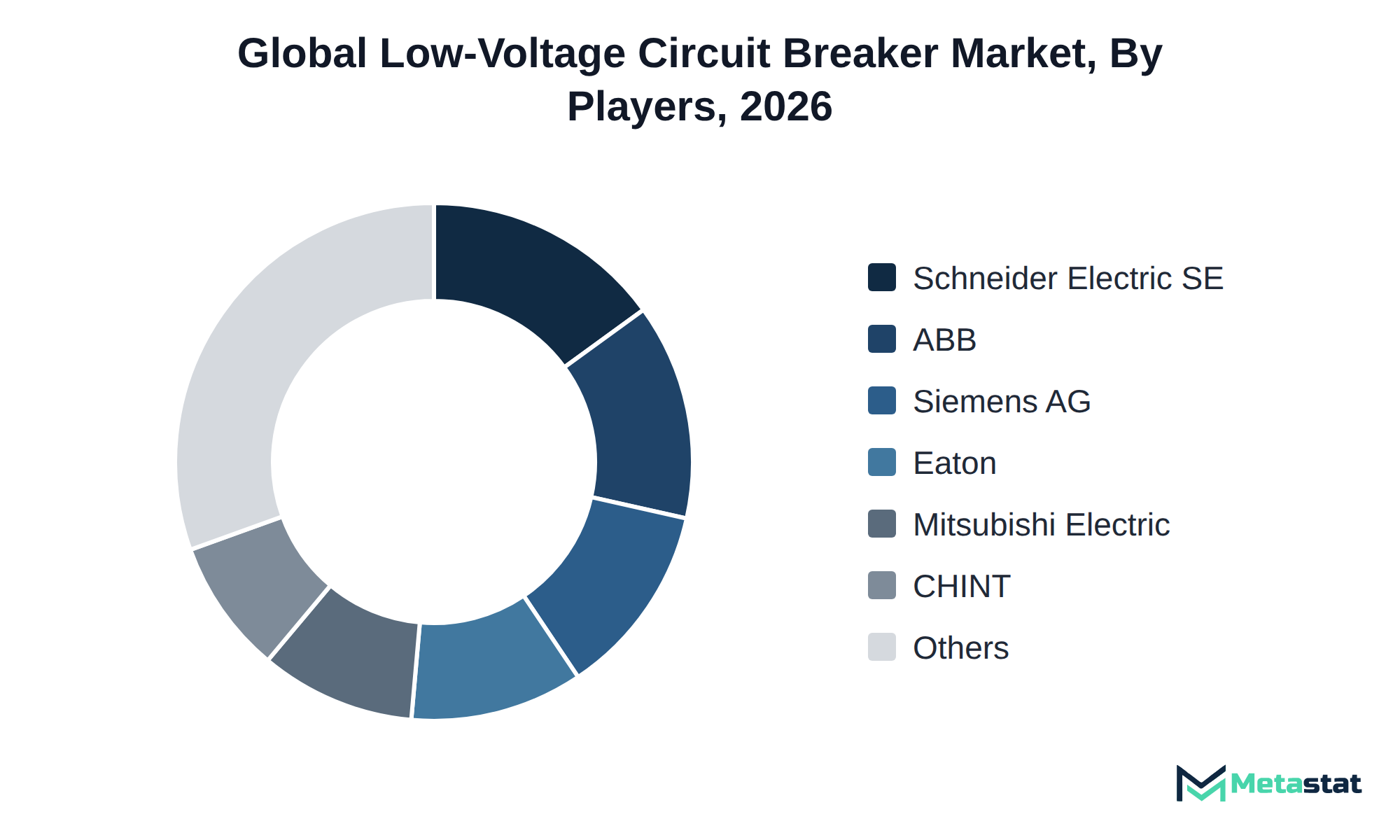
Companies within the Low-Voltage Circuit Breaker market compete through various strategies, including product differentiation, pricing, and customer service. Buyers choose based on factors including price, certification, customization options, and service quality, which influence purchasing decisions.
Schneider Electric SE emphasizes innovation and sustainability in its product offerings, catering to a diverse range of applications. ABB Ltd focuses on integrated solutions that enhance efficiency across multiple industries. Siemens AG prioritizes advanced technology to drive operational performance, while Eaton Corporation plc invests in expanding its portfolio to meet growing global energy demands.
The growth relies on several key developments within the market. First, the increase in demand for mini circuit breakers (MCB) and molded case circuit breakers (MCCB) will be crucial, particularly in the Asia Pacific region, where infrastructure expansion drives adoption. Second, advancements in technology, including the integration of smart features in low-voltage circuit breakers, will attract commercial and industrial sectors, further enhancing growth. Third, the rising emphasis on renewable energy sources will increase demand for circuit breakers in utility applications, enhancing overall market performance. Challenges including fluctuating raw material prices pose a significant risk to projected growth. For instance, the residential segment could see slower adoption rates in regions where cost sensitivity prevails. Overall, achieving the forecasted market size hinges on the sustained push for advanced electrical infrastructure and the effective management of cost pressures across various segments.
By Product Type: MCB, MCCB, ACB, RCBO, RCCB, Others (MPCB, CBE)
By End Use: Residential, Commercial, Industrial, Utilities, Others (Transport Infrastructure, Public Lighting)
The report strategically identifies and profiles the key market players and analyses their core competencies in each sub-segment of the Low-Voltage Circuit Breaker market.
Report Attributes | Details |
Study Period | 2021-2033 |
Base Year | 2025 |
Estimated Year | 2026 |
Forecast Period | 2026-2033 |
Historical Period | 2021-2025 |
Growth Rate | CAGR 6.3% from 2026 to 2033 |
Revenue Unit | USD billion |
Segmentation | By Product Type, Rated Operational Voltage, Rated Current, End Use, and Region |
By Region | North America (By Product Type, Rated Operational Voltage, Rated Current, End Use, and Country)
|
Europe (By Product Type, Rated Operational Voltage, Rated Current, End Use, and Country)
| |
Asia Pacific (By Product Type, Rated Operational Voltage, Rated Current, End Use, and Country)
| |
South America (By Product Type, Rated Operational Voltage, Rated Current, End Use, and Country)
| |
Middle East and Africa (By Product Type, Rated Operational Voltage, Rated Current, End Use, and Country)
|
Find answers to common questions about this report
The Low-Voltage Circuit Breaker market size was valued at USD 17.3 billion in 2025.
The market is projected to grow at a CAGR of 6.3% during the forecast period from 2026 to 2033.
The North America Low-Voltage Circuit Breaker market size is estimated to reach USD 6.3 billion by 2033.
The MCB segment leads the Low-Voltage Circuit Breaker market with a projected value of USD 15.5 billion by 2033, based on its growth trajectory compared to other segments.
Growing concerns over electrical safety significantly influence purchasing behavior, leading to increased demand for advanced low-voltage circuit breakers. Rapid adoption of Residual-Current Circuit Breakers (RCBOs) emerges in electrified buildings, driven by heightened awareness surrounding electrical safety and energy efficiency.
Asia Pacific holds the dominant share of the Low-Voltage Circuit Breaker market, accounting for 46.5% of the total market. This region's significant share reflects its extensive industrial base and growing demand for electrical infrastructure.
Price sensitivity among buyers restrains growth in the Low-Voltage Circuit Breaker market, particularly in the residential and commercial segments, where higher prices for advanced technologies deter potential buyers. Rising input costs create challenges for suppliers, exerting pressure on profit margins and limiting competitive pricing.
Rapid adoption of Residual-Current Circuit Breakers (RCBOs) in electrified buildings stems from increased awareness of electrical safety and energy efficiency. This trend aligns with rising standards for electrical systems, creating significant opportunities for suppliers to enhance product offerings and capture market share.
The Low-Voltage Circuit Breaker market is estimated to reach a valuation of USD 28.2 billion by 2033.
Key players operating in the Low-Voltage Circuit Breaker market include Schneider Electric SE, ABB Ltd, Siemens AG, Eaton Corporation plc, Mitsubishi Electric Corporation, and Sensata Technologies Holding plc.
The analysts below cover Energy and Power research at Metastat Insights.
LEAD ANALYST
Utkarsh Khirodkar is a Lead Market Research Analyst at MetaStat Insight, specializing in market intelligence, technology sector assessments, and competitive strategy.

PRINCIPAL CONSULTANT - ENTERPRISE AI & EMERGING TECHNOLOGIES
Banking & Finance · Electronics and Semiconductor · Energy and Power · Healthcare IT · Information & Technology · Professional Services
Vijay Gunti is a Principal Consultant at MetaStat Insight, bringing over two decades of experience across enterprise digital transformation, technology strategy, and intelligent systems.

ENERGY & INFRASTRUCTURE INDUSTRY CONSULTANT
Automotive and Transportation · Electronics and Semiconductor · Energy and Power · Machinery & Equipment
Saurabh Vasant Ganvir consults for Energy & Infrastructure Industry at MetaStat Insight, specializing in renewable energy, solar EPC, and electric vehicle (EV) infrastructure markets.
When planning edge sensor rollouts across refinery environments, generic IoT reports typically miss the harsh-environment certification bottlenecks. MetaStat Insight gave an objective evaluation of ATEX and Class 1 Division 2 hardware availability, along with realistic five-year maintenance cycle cost projections. The comparison of wireless mesh versus private cellular backhaul helped our team pressure-test network reliability models for remote processing facilities.
In the biological seed treatment space, registration timelines vary drastically between the European Union, Brazil, and North America. The MetaStat Insight research handled these cross-border regulatory barriers with genuine nuance, mapping commercialization pathways alongside historical field adoption rates. The segmentation between microbial strains and biochemical active ingredients was particularly well structured.
Our team was tracking whether regional recycling infrastructure could realistically absorb the growing volume of lithium iron phosphate batteries over the next decade. The report did a solid job separating announced hydrometallurgical plant capacity from active, permitted operational throughput. That distinction made the feedstock availability projections and regional recovery rate models far more credible than standard commercial overviews.
Explore related market intelligence reports worth reading alongside this one.