
LEAD ANALYST
Utkarsh Khirodkar is a Lead Market Research Analyst at MetaStat Insight, specializing in market intelligence, technology sector assessments, and competitive strategy.

Global Potato Flakes Market Size, Share, By Nature (Conventional and Organic), By Additive Formulation (Sulfite-Preserved Potato Flakes, Sulfite-Free Potato Flakes with Other Additives and Additive-Free Potato Flakes), By Application (Instant Mashed Potatoes, Snacks and Pellets, Bakery Products, Soups, Sauces and Gravies, Coatings and Breading and Others (Dumplings, Pasta and Meat Binding)), By End User (Food Manufacturers, Commercial Foodservice Operators, Institutional Foodservice Operators and Households), Industry Analysis, Growth, Trends, and Forecast, 2026-2033
Report ID
MSI-3051
Published
October, 2026
Pages
302 Pages
Format
Historical
Base year
Forecast
Forecast period
Report Details
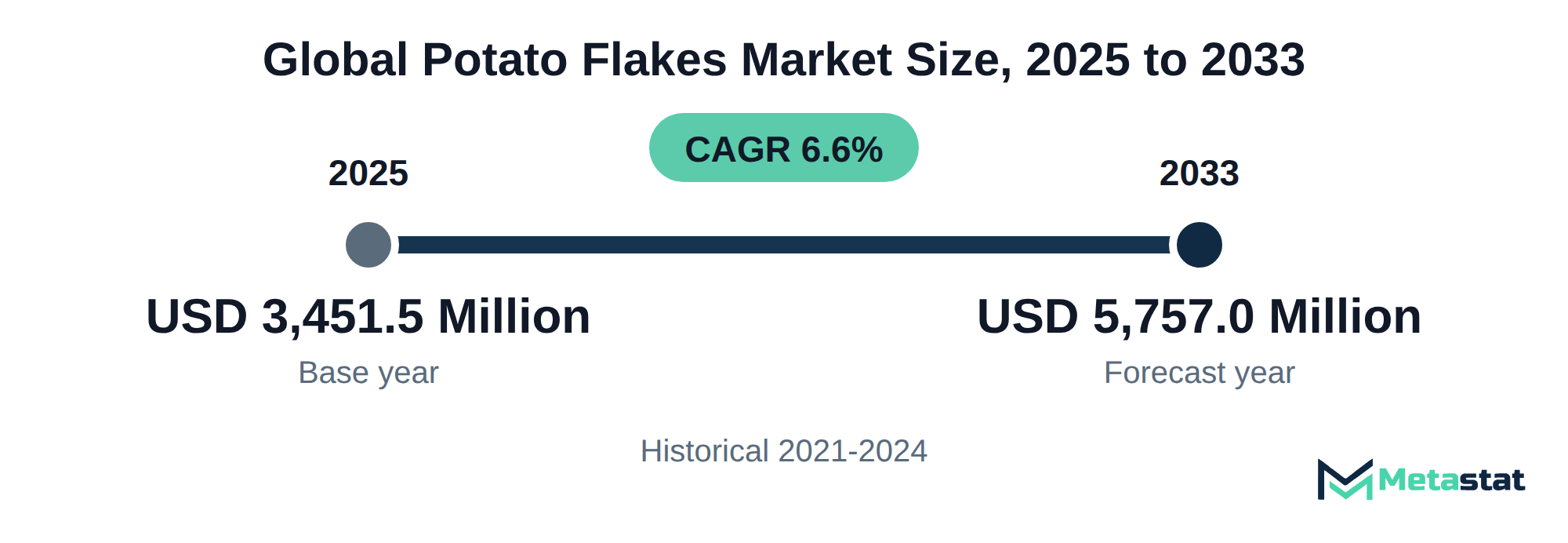
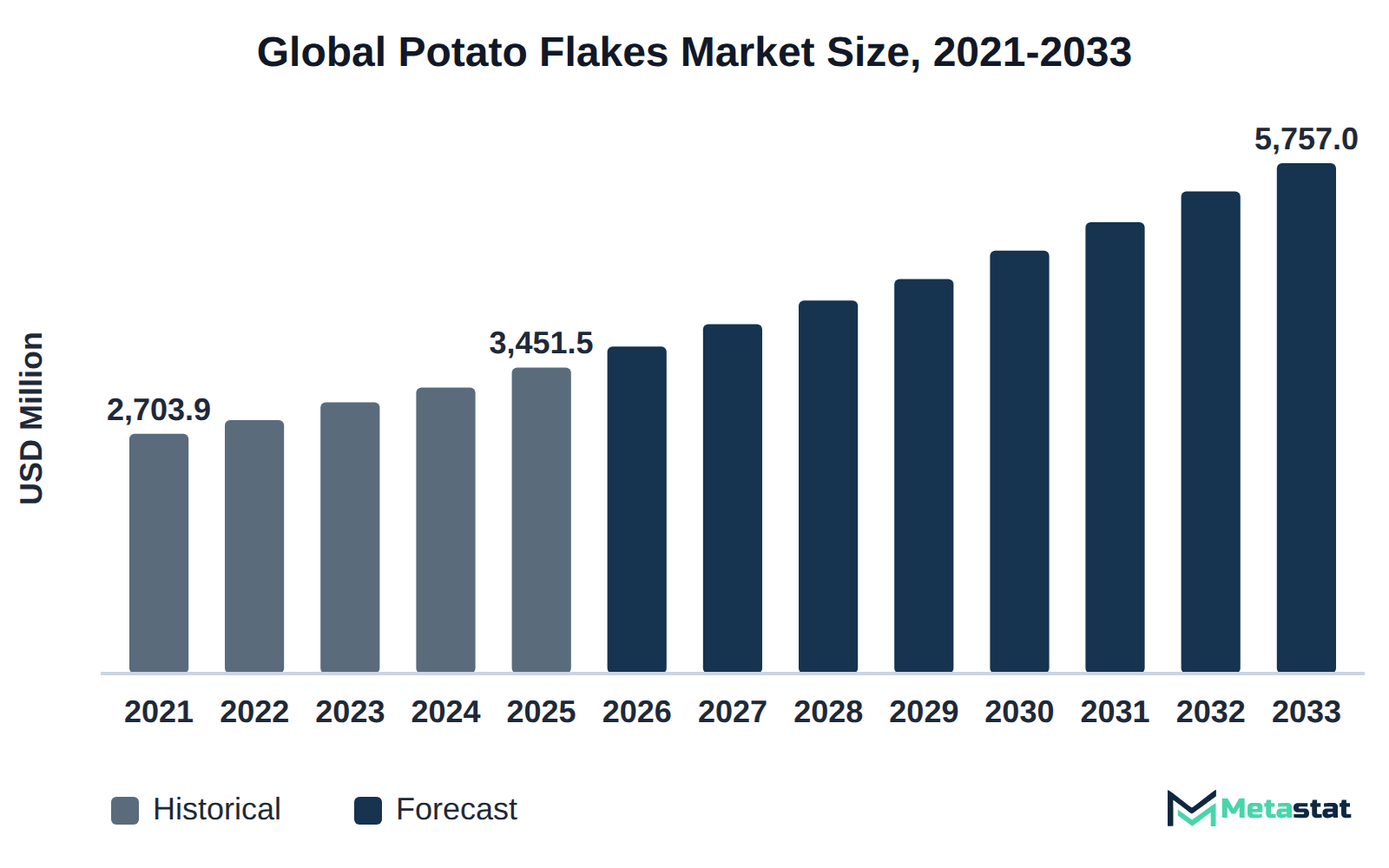
Market Valuation: Valued at $3,451.5 Million in 2025, projected to reach $5,757 Million by 2033 at a 6.6% CAGR.
Dominant Segment: The conventional segment leads the Potato Flakes market, driven by strong consumer demand for traditional potato products and competitive pricing compared to organic alternatives.
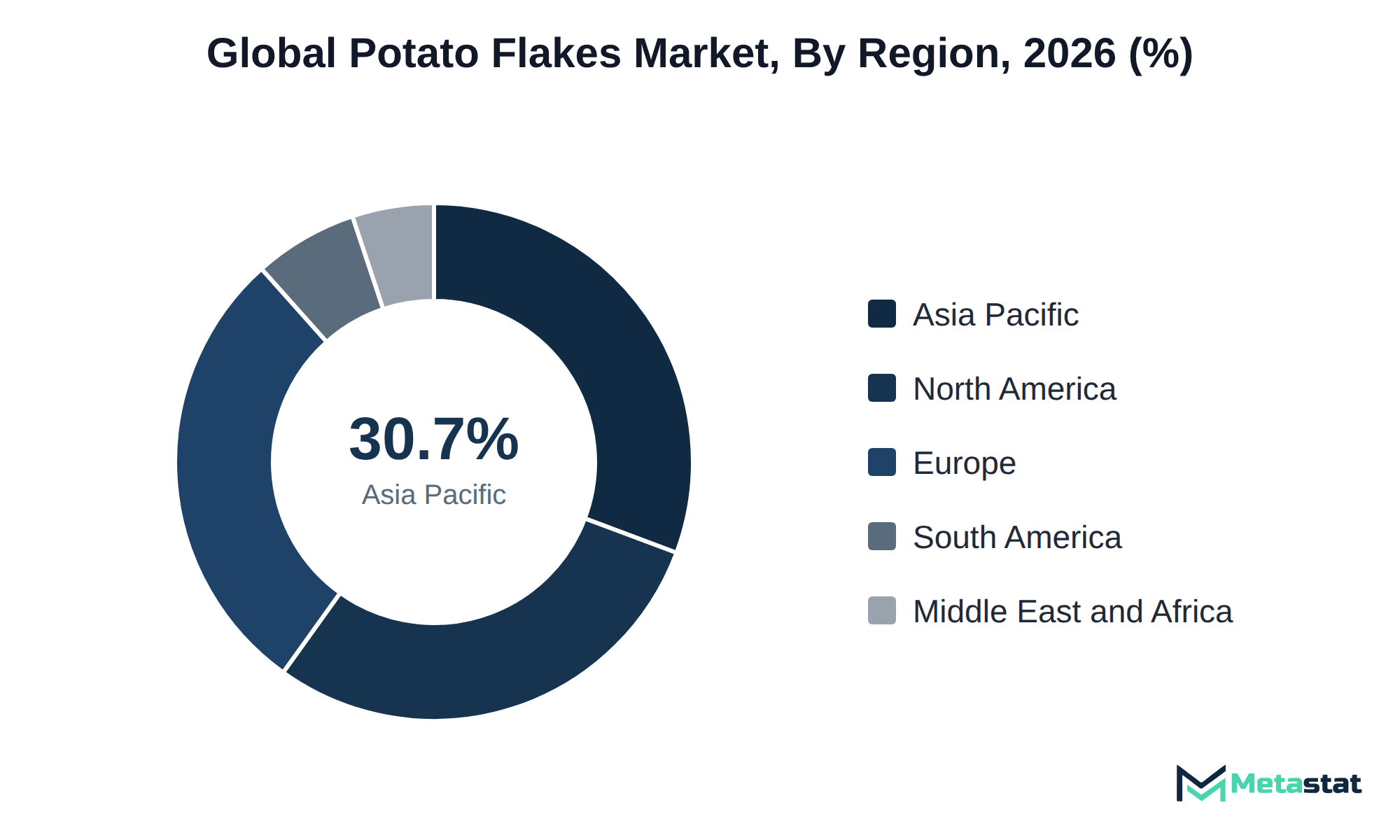
Geographic Lead: Asia Pacific is the fastest-growing region, projected to hold a 30.7% market share by 2025, fueled by an expanding food and beverage industry and changing dietary habits.
What's Inside: The report provides comprehensive competitive coverage, detailed analyses of market dynamics, and forecasts spanning from 2026 to 2033, focusing on various segments and applications.
Emerging Trends: The organic segment is experiencing significant growth, with a projected CAGR of 9.6% through 2033, reflecting increasing consumer preference for health-conscious and sustainable food options.
Innovation in Processing: Advancements in processing technology, such as vacuum frying and dehydrating methods, enhance product quality and efficiency, supporting the market's expansion across various applications.
Choose Your License
Global Potato Flakes Market
The global Potato Flakes market was valued at USD 3,451.5 million in 2025 and is projected to reach USD 5,757 million by 2033, growing at a CAGR of 6.6% over the forecast period.
The Potato Flakes market encompasses a range of products derived from processed potatoes, primarily used in various culinary applications. Buyers invest in these products for their versatility and convenience, which aligns with the growing consumer preference for quick meal solutions and ready-to-use ingredients. The increasing demand from food manufacturers and commercial foodservice operators drives significant spending in this market.
Growth in the market is largely driven by the rising popularity of instant mashed potatoes, which represent a substantial segment due to their ease of preparation and flavor profile. North America holds 29.2% of the market in 2025, with the US leading in 2026. Among the regions, Asia Pacific leads with a share of 30.7%, attributed to its expanding food and beverage industry along with changing dietary habits.
In terms of value, the conventional segment stands out as the largest within the market, reflecting strong consumer demand for traditional potato products. The organic segment is gaining traction, driven by increasing health consciousness among consumers. These dynamics highlight shifting preferences that fuel growth for the Potato Flakes market.
The market includes a variety of potato flake products tailored for numerous culinary applications, attracting investment from food manufacturers, commercial foodservice operators, and households. Buyers invest in potato flakes for their convenience, versatility, and ability to enhance the texture and flavor of many dishes, driving consistent demand across various sectors. This trend reflects a broader consumer preference for easy-to-prepare food options without sacrificing quality or taste.
Growth in the Potato Flakes market is supported by the rising popularity of instant mashed potatoes, which serve as a staple in many households and food establishments. The conventional segment holds the most significant market value, while North America holds 29.2% of the market in 2025, with the US leading in 2026. This regional dominance is attributed to a robust foodservice industry and high demand for convenient meal solutions.
Continued growth is driven by the increasing consumer focus on healthy and organic food options, leading to a surge in the organic potato flakes segment. The rising health consciousness among consumers, coupled with a shift toward clean label products, drives demand for organic variants. As the market evolves, innovation in product formulation and the introduction of new flavors and textures will further enhance competitiveness.
Low-leach potato flakes have emerged as an essential innovation for manufacturers in the Potato Flakes market, particularly for their application in snacks. These flakes provide consistent expansion and texture, significantly enhancing the quality of extruded snacks and other snack products. In 2033, the segment for snacks and pellets is projected to reach USD 1,852 million, reflecting a compound annual growth rate (CAGR) of 7.5%. This growth illustrates increasing demand for high-quality snack options among consumers.
The technology behind low-leach potato flakes focuses on reducing starch leaching during the cooking process, resulting in products that maintain their structure and texture even after frying or baking. This characteristic is critical for snack manufacturers seeking to improve mouthfeel and overall quality of their offerings. By incorporating low-leach potato flakes, producers achieve a crispier texture while minimizing the risk of sogginess, thus enhancing consumer satisfaction.
As manufacturers continue to innovate in the Potato Flakes market, low-leach flakes help them meet consumer expectations and build competitive advantage. The ability to produce snacks with improved texture and consistency supports brand loyalty and expands market reach, providing significant commercial benefits for manufacturers adapting to these technological advancements.
Increasing demand for sulfite-free formulations reflects a significant trend in the potato flakes market. Buyers prioritize health-conscious products, leading to a surge in the availability of sulfite-free potato flakes. The market for sulfite-free potato flakes is projected to reach USD 1,812.3 million by 2033, driven by the growing consumer preference for clean-label and all-natural ingredients. This transition aligns with the broader shift towards healthier food options.
In procurement, buyers typically establish long-term contracts with suppliers to ensure consistent quality and availability of sulfite-free products. These contracts often include price negotiation terms based on volume commitments and delivery schedules. Suppliers that offer flexibility in pricing and delivery secure favorable agreements. Fluctuations in raw potato prices impact the overall cost structure, necessitating adaptive pricing strategies in contracts to accommodate market volatility.
The emphasis on sulfite-free formulations enhances product appeal and boosts market competitiveness, compelling suppliers to innovate in their offerings. This focus on quality contributes to overall growth and profitability in the potato flakes market, with health-conscious consumers driving demand for these specialized products.
Efficient drying processes shape the quality and yield of bulk potato flake supply and significantly influence grower contracts. The Potato Flakes market increasingly prioritizes drying efficiency to maintain product integrity while optimizing production costs. The projected growth rate of 6.6% CAGR through 2033 highlights the importance of maximizing yields and reducing waste during processing.
One key aspect impacting drying efficiency involves the choice of equipment and technology installed in food and beverage process plants. Advanced drying methods, including vacuum and microwave drying, enable growers to reduce moisture levels effectively while preserving flavor and nutritional value. In the context of grower contracts, producers who implement these efficient practices negotiate better terms, ensuring a steady supply of high-quality potatoes for flake production.
This emphasis on efficient drying directly affects the operational costs associated with producing potato flakes. By minimizing energy consumption and maximizing output through improved drying techniques, growers enhance profitability. Consequently, drying efficiency influences the competitive landscape, as suppliers seeking a larger market share adapt to these evolving demands and technologies.
Potato flakes significantly enhance yield and reduce preparation time in commercial kitchens. For chefs and foodservice operators who face increasing demands for speed without sacrificing quality, potato flakes offer a quick and efficient option. With a projected CAGR of 6.9% for food manufacturers through 2033, the potato flakes market reflects a growing acknowledgment of these benefits among food production professionals.
Instant mashed potatoes, made from potato flakes, exemplify the efficiency of this product in commercial kitchens. This application, projected to reach USD 2,051.2 million by 2033, illustrates the strong demand for convenient food solutions that streamline meal preparation. Chefs benefit from the quick rehydration process, which transforms potato flakes into a ready-to-use product in a fraction of the time compared to traditional methods. This efficiency allows kitchens to serve customers faster, enhancing service quality and operational effectiveness.
The adoption of potato flakes in foodservice operations supports higher yield and improves overall productivity. With the market's growth trajectory, foodservice operators are increasingly integrating potato flakes into their menus, aligning with consumer preferences for quick and quality meal options. This integration improves operational speed and caters to the rising trend of convenience in dining experiences.
Food manufacturers actively increase their use of potato flakes due to several factors, including the growing preference for convenience foods among consumers. This behavioral shift toward quick and easy meal solutions drives an uptick in the volume of potato flakes purchased. The demand for instant mashed potatoes, which directly incorporates potato flakes, is expected to grow, with a projected value increase from USD 1,368.2 million in 2026 to USD 2,051.2 million by 2033. This trend indicates that the Potato Flakes market continues to expand, reflecting evolving consumer preferences for accessible and ready-to-use ingredients. Many food manufacturers recognize the potential for potato flakes to streamline production processes while meeting consumer needs, leading to increased spending in this segment.
Innovations in processing technology contribute to increased efficiency in the Potato Flakes market. Techniques including vacuum frying and advanced dehydrating methods enhance product quality while reducing energy consumption. Suppliers benefit from decreased operational costs, enabling competitive pricing strategies that appeal to buyers. Enhanced processing capabilities yield higher volumes of potato flakes, allowing manufacturers to meet rising consumer demand for convenient food options.
These advancements support the expansion of applications beyond traditional uses, including instant mashed potatoes and snacks, into diverse sectors including bakery products and soups. As the market evolves, suppliers adopting these technologies gain an advantage over competitors. Continuous improvement in processing methods aligns with the growing emphasis on sustainability, driven by energy-efficient operations that minimize environmental impacts. Overall, technological advancements are expected to drive market growth, creating opportunities for both established players and new entrants to capture additional market share.
Fluctuations in potato prices present a significant challenge for food manufacturers seeking to incorporate potato flakes into their product lines. Increased prices for raw materials contribute to heightened operational costs, impacting profit margins for these manufacturers. Limited budgets result in a reluctance to commit to larger orders, causing slower uptake of potato flake products in the market. This constraint particularly affects smaller food manufacturers and those in developing regions, where financial flexibility remains restricted. Ongoing price instability prompts many industry players to delay product launches, stalling growth opportunities within the potato flakes market. Consequently, this restraint affects the overall expansion and competitive dynamics of the market, limiting its long-term growth potential.
Input costs pose a significant challenge for suppliers in the Potato Flakes market. Increases in the price of raw materials, particularly potatoes, directly impact production expenses. Fluctuating potato prices create uncertainty, affecting profit margins for suppliers facing rising operational costs. Suppliers respond by streamlining production processes and exploring alternative sourcing strategies to mitigate these impacts. Several invest in agribusiness partnerships with growers to secure stable pricing and ensure quality. Others focus on enhancing operational efficiency through improved technology and process optimization, which helps reduce waste and lower costs. These measures aim to keep suppliers competitive in a volatile market environment.
The organic segment of the Potato Flakes market represents a significant opportunity for expansion. This segment is projected to experience a compound annual growth rate (CAGR) of 9.6% through 2033, reaching a value of USD 565.3 million. Growing consumer preference for organic food products drives this trend, with health-conscious buyers increasingly seeking alternatives to conventional offerings. Rising awareness regarding the benefits of organic consumption enhances demand from food manufacturers looking to diversify their product lines. Companies focused on organic potato flakes use this trend to capture a larger share of the market, particularly as consumers prioritize clean-label products. The visibility of this segment in the market highlights its potential to attract investment and innovation in organic processing techniques and supply chain strategies.
The Global Potato Flakes market is segmented based on Nature, Additive Formulation, Application, and End User.
Conventional potato flakes are valued at USD 3,391.7 million in 2026 and are projected to reach USD 5,191.7 million by 2033, at a CAGR of 6.3% during the forecast period. These flakes serve various culinary applications, primarily used by food manufacturers for producing instant mashed potatoes and other products. Significant demand from the consumer segment for convenience foods drives growth in this portion of the market. Competitive pricing of conventional potato flakes makes them a preferred choice compared to organic alternatives, which are priced higher and demonstrate a CAGR of 9.6%. This price difference and the established supply chains for conventional products contribute to a faster adoption rate among commercial foodservice operators and manufacturers, facilitating ongoing market expansion.
Organic potato flakes are projected to reach USD 565.3 million by 2033, at a CAGR of 9.6% during the forecast period. This segment finds application in various food products, particularly among health-conscious consumers and food manufacturers keen on offering organic alternatives. The surge in demand stems from a widespread shift toward healthier food choices and sustainable practices, influencing buyers including commercial foodservice operators seeking organic ingredients. This segment demonstrates faster growth than its conventional counterpart, primarily driven by the growing preference for organic foods. Organic certification processes play a significant role, affecting production costs and market entry. The higher price point of organic potato flakes compared to conventional options reflects the premium placed on health and sustainability, further shaping buyer preferences within the market.
Sulfite-Preserved Potato Flakes is valued at USD 2,034.5 million in 2026 and is projected to reach USD 2,894.1 million by 2033, at a CAGR of 5.2% during the forecast period. This segment is significant in various food applications, particularly for food manufacturers that require stable and preserved products for mass production. The growing consumer demand for longer shelf-life products drives this segment, ensuring quality preservation during distribution. Unlike organic potato flakes, which are projected to grow at a CAGR of 9.6%, sulfite-preserved options experience slower growth due to increasing health concerns regarding sulfite consumption. The segment appeals to price-sensitive buyers, differentiating it from sulfite-free options that tend to command higher prices. The market focuses on expanding product offerings to meet evolving consumer preferences, leading to increased competition among suppliers and ultimately benefiting end-users.
Sulfite-Free Potato Flakes with Other Additives segment is estimated to reach USD 1,812.3 million by 2033, at a CAGR of 7.6% during the forecast period. This segment finds application in various culinary products, primarily serving food manufacturers and commercial foodservice operators seeking innovative, convenient ingredients. Growing health consciousness among consumers drives demand for sulfite-free options, reflecting a notable trend impacting the market. Compared to Sulfite-Preserved Potato Flakes, this segment exhibits a faster growth trajectory due to increasing consumer preference for clean-label products. Amid rising competition, the shift towards natural ingredients enhances the segment's appeal, creating opportunities for expansion and investment within the market.
Additive-Free Potato Flakes is expected to reach USD 1,050.7 million by 2033. This segment serves various applications in food manufacturing, catering primarily to health-conscious consumers and businesses seeking to provide cleaner label products. The increasing demand for natural and minimally processed ingredients drives growth in this segment, distinguishing it from additive-preserved alternatives. With a CAGR of 5.9%, the growth of Additive-Free Potato Flakes remains steady compared to faster-growing segments like Sulfite-Free Potato Flakes with Other Additives, which has a CAGR of 7.6%. The preference for these flakes reflects a broader market trend toward natural, wholesome food products, pushing manufacturers to innovate and expand their offerings to include such options. Enhanced consumer awareness regarding food ingredients directly influences adoption rates across various end-user markets, reinforcing the importance of transparency and quality in the Potato Flakes market.
This segment primarily serves food manufacturers and households seeking convenient meal solutions. The growing demand for quick-preparation food items drives the segment forward, reflecting a shift in consumer preferences towards convenience-oriented products. Comparatively, this segment exhibits a slower growth rate than the Snacks and Pellets segment, which is projected to achieve a CAGR of 7.5%. Innovations in processing methods that enhance flavor and texture, combined with effective marketing strategies, support consumer adoption of instant mashed potatoes, distinguishing it from other applications including bakery products and soups. The increasing acceptance of instant mashed potatoes in various culinary contexts reinforces its relevance in the broader market.
This segment finds widespread application in producing various snack items, with food manufacturers being the primary users. Growing consumer demand for on-the-go snacks drives industry players to enhance product offerings, leading to increased innovation in flavor and texture. The segment stands out from others due to its faster growth rate compared to applications including Instant Mashed Potatoes, which has a CAGR of 6%. The higher demand for convenient snack products prompts manufacturers to explore diverse formulations and packaging solutions, fueling investment in this area. Consequently, the Snacks and Pellets segment influences trends in the Potato Flakes market.
Bakery Products segment is expected to reach USD 721.9 million by 2033. This segment finds applications in various bread and baked food products, serving food manufacturers who use potato flakes for texture enhancement and moisture retention. The increasing consumer preference for gluten-free and healthier options drives this segment's growth. Demand for convenient baking solutions drives expansion, leading to a projected CAGR of 6.2% throughout the forecast period. Compared to other application segments, Bakery Products experience moderate growth, influenced by specific consumer trends favoring innovative ingredients. This segment offers a unique value proposition that distinguishes it from those related to snacks or instant mashed potatoes, which exhibit faster growth rates. The market continuously evolves to accommodate changing consumer tastes, ensuring that suppliers adapt to maintain competitiveness.
Soups, Sauces and Gravies segment is projected to grow at a CAGR of 6.2% during the forecast period. This segment serves various applications within the food industry, particularly in ready-to-eat prepared meals and foodservice operations. It is primarily used by food manufacturers and commercial foodservice operators seeking to enhance flavor and texture in their offerings. Increasing demand for convenience foods among consumers drives growth in this segment. Compared to other applications, including Instant Mashed Potatoes, this segment experiences slower growth. The focus on clean label products influences the demand for potato flakes in soups and sauces, leading to a shift towards formulations devoid of artificial additives and preservatives. Consequently, the Soups, Sauces and Gravies segment significantly influences trends in the Potato Flakes market.
Coatings and Breading involve the use of potato flakes to enhance the texture and flavor of various food products. This sub-segment finds application primarily among food manufacturers who incorporate potato flakes into coatings for fried items and breading mixtures. Demand for this segment grows driven by increasing consumer preference for crispy and flavorful textures in snacks and ready-to-eat meals. The segment distinguishes itself from others in the market through its targeted use in specific applications, catering to foodservice operators and manufacturers focused on enhancing product appeal. Compared to other segments, Coatings and Breading focus on achieving specific culinary textures rather than broader applications. Continuous product innovation and changing consumer tastes further shape this segment's role in the overall potato flakes market.
This segment encompasses applications including dumplings, pasta, and processed meat binding, using potato flakes to enhance texture and moisture retention. Food manufacturers use these flakes for their convenience and production consistency, favoring them in recipes that require a binding agent. A notable demand driver is the increasing popularity of convenience foods, prompting manufacturers to seek versatile ingredients. The segment's growth differs from others by appealing to industrial food producers focused on unique applications, reflecting distinct consumer preferences. Compared to traditional uses including instant mashed potatoes, demand for this segment exhibits slower growth, primarily due to limited consumer awareness and preference for more established applications. The Potato Flakes market benefits from innovations addressing specific product formulations, enhancing their appeal for various culinary uses.
Food Manufacturers segment is valued at USD 2,146.2 million in 2026 and is projected to reach USD 3,417.9 million by 2033, at a CAGR of 6.9% during the forecast period. This segment primarily serves industries producing packaged foods, snacks, and instant meals, where potato flakes function as a versatile ingredient. The demand for convenience foods drives this segment's growth, with consumers increasingly seeking ready-to-eat solutions. In contrast to other sub-segments, this group exhibits a higher growth rate compared to commercial foodservice operators, projected to grow at a rate of 6.1%. The emphasis on cost efficiency within food manufacturing shapes the segment's landscape, focusing on balancing ingredient quality and production costs. These dynamics position food manufacturers as key influencers in the Potato Flakes market, reflecting their critical role in meeting evolving consumer preferences.
Commercial Foodservice Operators segment is estimated to reach USD 1,252.7 million by 2033, at a CAGR of 6.1% during the forecast period. This segment primarily serves restaurants, catering services, and other foodservice establishments that require ready-to-use food products, enabling quick preparation and consistent quality. The demand for convenience in meal preparation drives growth, with operators seeking to streamline operations while maintaining menu variety. Compared to other end users, including Food Manufacturers, this segment exhibits a slower growth trajectory, reflecting the unique challenges faced by commercial foodservice providers. Price sensitivity among these operators influences purchasing decisions, necessitating cost-effective solutions. With an increasing focus on efficiency and customer satisfaction, the segment is expected to experience sustained expansion, contributing to the overall dynamics of the market.
Institutional Foodservice Operators segment is expected to reach USD 314.3 million by 2033. This segment typically serves large-scale kitchens in institutions including schools, hospitals, and corporate cafeterias, which require consistent and efficient meal preparation solutions. Demand for convenient meal options drives growth in this segment, as operators seek to improve operational efficiency. Compared to other end users, including Food Manufacturers, this segment experiences a slower growth rate, with a projected CAGR of 5.9%. The focus on cost-effective solutions influences purchasing decisions in this area, leading to a preference for bulk purchasing of potato flakes. Institutional Foodservice Operators face unique challenges related to maintaining quality and meeting dietary requirements, which further differentiates them from household buyers.
Households segment is projected to grow at a CAGR of 5.9% during the forecast period. This segment caters primarily to individual consumers who prepare meals with potato flakes for convenient meal preparation and cooking. The growing trend of home cooking and the increasing demand for quick meal solutions drive the segment's expansion. Households benefit from the versatility of potato flakes, which serve various culinary applications, including instant mashed potatoes and soups. Compared to other segments, this one shows slower growth due to competition from fresh and frozen potato products, which appeal to health-conscious consumers. Market dynamics reflect a balance between convenience and freshness, impacting purchasing decisions and overall segment performance.
Based on geography, the Global Potato Flakes market is divided into North America, Europe, Asia-Pacific, South America, Middle East, and Africa.
Demand for potato flakes in North America is driven by a diverse range of food manufacturers, commercial foodservice operators, and households. Increased consumer preference for convenient food products contributes to the growth of the sector. The market in the United States, Canada, and Mexico benefits from well-established supply chains and an expanding processed food industry. North America is projected to reach USD 1,621.2 million by the end of 2033, reflecting a growing interest in both conventional and organic products. Consumer trends favoring healthy, ready-to-eat meals emphasize the importance of potato flakes in various culinary applications, positioning the market for sustained growth.
In Europe, the potato flakes market benefits from a strong presence of food manufacturers and commercial foodservice operators. Countries including Germany, France, and the UK drive significant demand, reflecting the region's diverse culinary traditions and high consumption rates. The market thrives on the growing trend toward convenience foods, enhancing the appeal of processed potato products. Innovations in production technology and increased focus on sustainability and organic options further stimulate market growth. Regulatory frameworks promoting food safety and quality standards contribute to consistent demand, ensuring that products meet consumer expectations. With a market share of 28.5% in 2025, the region significantly influences the overall landscape of the potato flakes market.
Asia-Pacific accounted for 30.7% of the global potato flakes market in 2025, making it a key regional market. Demand in this region is driven primarily by countries like China, Japan, and India, where growing populations and increasing urbanization contribute to higher consumption of processed food products. The expansion of food processing industries, particularly in China and India, increases the requirement for potato flakes in various applications including instant mashed potatoes and snacks. Rising health awareness among consumers fuels interest in organic and additive-free options, further shaping market dynamics. Enhancing distribution networks and advancing food technology in the region improve the accessibility of potato flakes, positively impacting market growth through 2033.
In South America, the Potato Flakes market exhibits unique demand characteristics driven primarily by the food manufacturing sector. Brazil and Argentina represent key players in this market, where rising consumer preferences for convenience foods enhance the adoption of potato flakes in various applications. The market share in this region stands at 6.5% in 2025, reflecting a growing interest in processed food products. Increased infrastructure investment in food production facilities supports the expansion of the sector, enabling improved distribution networks for potato flakes. Consumer trends toward healthier and organic food options further influence the market, promoting the development of organic potato flakes. This shift aligns with broader health-conscious movements, which encourage manufacturers to innovate and diversify their product offerings within the market.
The Potato Flakes market in the Middle East and Africa stands out due to growing demand from food manufacturers and commercial foodservice operators. Economic growth in countries including Saudi Arabia and the UAE drives an increase in consumer spending on processed food products. The market benefits from a rising trend in convenience foods, aligning with the busy lifestyles of urban populations. South Africa's expanding food industry further supports market expansion. By 2025, the region holds a share of 5.1% of the global market, reflecting an increasing appreciation for potato flakes. Infrastructure improvements enhance distribution capabilities, allowing suppliers to reach diverse customer bases more effectively. The market is projected to experience a steady growth trajectory in the coming years, driven by these factors.
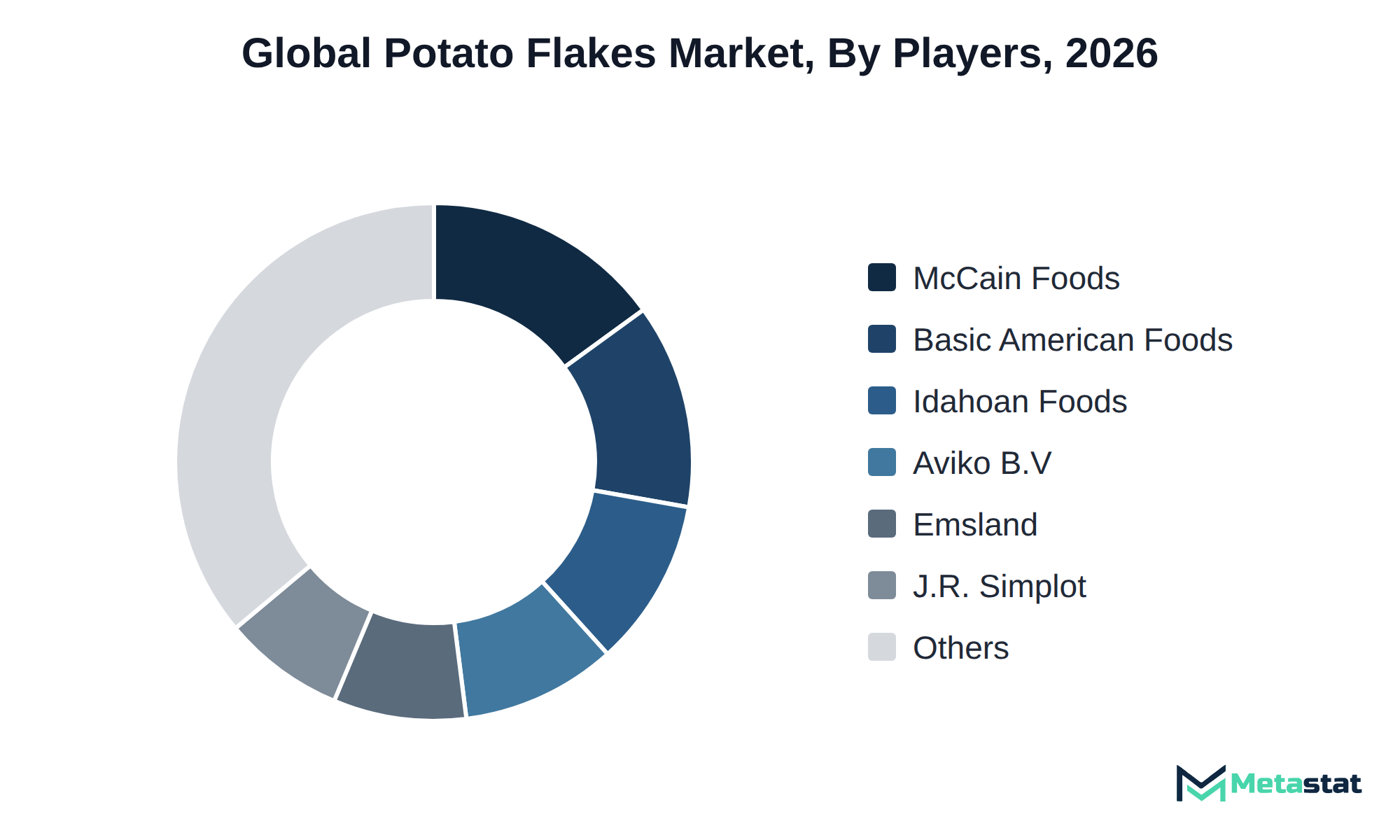
Competition in the Potato Flakes market centers on product quality, certification, and customization. Buyers prioritize these factors, along with price and service, when selecting suppliers. The market features a mix of established brands and regional players, each employing distinct strategies to capture market share.
Conventional potato flakes dominate the market, with companies like Aviko B.V. focusing on high-volume production to meet demand. In contrast, organic options are growing, driven by increased consumer preference for natural products. Companies including Emsland Group and Idahoan Foods, LLC target this segment with specialized offerings.
In the area of additive formulations, J.R. Simplot Company emphasizes sulfite-preserved potato flakes, while Basic American Foods provides sulfite-free alternatives alongside other additives. This focus allows them to cater to varying consumer preferences and regulatory requirements.
End users, including food manufacturers and commercial foodservice operators, drive demand for instant mashed potatoes and snacks. Companies like McCain Foods Limited and Oregon Potato Company prioritize innovation in these applications, enhancing product appeal and market reach. These strategies shape competitive dynamics within the market.
Growth in the Potato Flakes market relies on several key developments. First, the organic segment is projected to expand significantly, driven by increasing consumer demand for natural products. This trend particularly influences the Asia Pacific region, where health-conscious buyers seek organic options. Second, the adoption of additive-free potato flakes will contribute to market growth, appealing to food manufacturers focused on clean label products. The North American market stands out in this context, with food manufacturers prioritizing ingredient transparency. Third, the rising popularity of instant mashed potatoes, attributed to convenience trends, is expected to enhance demand across various regions. A primary risk involves fluctuating raw material prices, which could hinder profit margins. Rising ingredient costs present challenges for food manufacturers, impacting the market's growth trajectory. These dynamics will largely determine the Potato Flakes market's performance in the coming years.
By Nature: Conventional, Organic
By Application: Instant Mashed Potatoes, Snacks and Pellets, Bakery Products, Soups, Sauces and Gravies, Coatings and Breading, Others (Dumplings, Pasta and Meat Binding)
By End User: Food Manufacturers, Commercial Foodservice Operators, Institutional Foodservice Operators, Households
The report strategically identifies and profiles the key market players and analyses their core competencies in each sub-segment of the Potato Flakes market.
|
Report Attributes |
Details |
|
Study Period |
2021-2033 |
|
Base Year |
2025 |
|
Estimated Year |
2026 |
|
Forecast Period |
2026-2033 |
|
Historical Period |
2021-2025 |
|
Growth Rate |
CAGR 6.6% from 2026 to 2033 |
|
Revenue Unit |
USD million |
|
Segmentation |
By Nature, Additive Formulation, Application, End User, and Region |
|
By Region |
North America (By Nature, Additive Formulation, Application, End User, and Country)
|
|
Europe (By Nature, Additive Formulation, Application, End User, and Country)
|
|
|
Asia Pacific (By Nature, Additive Formulation, Application, End User, and Country)
|
|
|
South America (By Nature, Additive Formulation, Application, End User, and Country)
|
|
|
Middle East and Africa (By Nature, Additive Formulation, Application, End User, and Country)
|
Find answers to common questions about this report
The Potato Flakes market size was valued at USD 3,451.5 million in 2025.
The market is projected to grow at a CAGR of 6.6% during the forecast period from 2026 to 2033.
The North America Potato Flakes market size is estimated to reach USD 1,621.2 million by 2033.
The leading segment in the Potato Flakes market is Conventional, with a projected value of USD 5,191.7 million by 2033. This segment surpasses the Organic segment, which is expected to reach USD 565.3 million in the same year.
Food manufacturers increase their use of potato flakes due to the growing preference for convenience foods among consumers. The organic segment represents a significant opportunity for expansion, driven by rising consumer demand for clean-label products.
Fluctuations in potato prices present a significant challenge for food manufacturers, impacting profit margins and leading to a reluctance to commit to larger orders. Input costs pose a significant challenge for suppliers, as rising raw material prices create uncertainty and affect production expenses.
Several factors favor adoption in the Potato Flakes market, including the rising consumer preference for convenience foods and the increasing demand for instant mashed potatoes. Innovations in processing technology enhance product quality and efficiency, while the growth of the organic segment attracts health-conscious buyers seeking clean-label options.
The Potato Flakes market is estimated to reach a valuation of USD 5,757 million by 2033.
Key players operating in the Potato Flakes market include Aviko B.V., Emsland Group, Basic American Foods, Idahoan Foods, LLC, McCain Foods Limited, J.R. Simplot Company, and Rainy Day Foods.
The organic segment is projected to reach a value of USD 565.3 million by 2033, with a compound annual growth rate (CAGR) of 9.6%.
The analysts below cover Food and Beverages research at Metastat Insights.
LEAD ANALYST
Utkarsh Khirodkar is a Lead Market Research Analyst at MetaStat Insight, specializing in market intelligence, technology sector assessments, and competitive strategy.

LEAD PRINCIPAL ANALYST, PHARMA AND HEALTHCARE
Food and Beverages · Healthcare · Healthcare IT · Medical Devices
Ajay Devgire is the Lead Healthcare Analyst at MetaStat Insight, leading strategic research and market intelligence initiatives across the global healthcare domain.

SENIOR RESEARCH ANALYST
Biotechnology · Food and Beverages · Medical Devices · Packaging
Snehal Pasalkar is a Research Analyst at MetaStat Insight, operating at the intersection of life sciences research, competitive strategy, and market intelligence.
Evaluating calorific value requirements and air permit compliance across municipal waste facilities requires localized data. Metastat Insight structured their analysis around operational throughput capacity and feedstock composition variations in Latin America and Eastern Europe. Their competitive mapping of sorting equipment vendors helped clarify technology differences between optical separators and heavy media systems. The study provided an objective baseline during our capital expenditure reviews.
Decarbonizing industrial thermal processes hinges on refrigerant regulations and compressor efficiency limits. Metastat Insights delivered a thorough market analysis that evaluated natural refrigerants like CO2 and hydrocarbons against synthetic low-GWP alternatives. The breakdown of utility incentives and grid capacity constraints across key European manufacturing hubs offered valuable perspective. The follow-up conversation with their sector analysts addressed our specific questions on mechanical vapor recompression systems efficiently.
Assessing 200mm wafer transition schedules and substrate supply bottlenecks requires precise technical intelligence. MetaStat Insight supplied an actionable breakdown comparing planar and trench MOSFET architectures across automotive and industrial drive markets. The regional capacity estimates for Asia-Pacific foundries helped clarify lead-time uncertainties during our strategic planning session. When we needed additional clarification on high-purity raw material sourcing, their analyst team responded with helpful context within twenty-four hours.
Explore related market intelligence reports worth reading alongside this one.