
LEAD ANALYST
Utkarsh Khirodkar is a Lead Market Research Analyst at MetaStat Insight, specializing in market intelligence, technology sector assessments, and competitive strategy.

Global Curly Hair Care and Styling Products Market Size, Share, By Type (Hair Care and Styling Products), By Hair Care Products (Shampoo, Conditioner, Lather-Free Wash (No-Poo), Co-Wash (Cleansing Conditioner), Deep Treatment Mask, Detangler, Hair Serum, Hair Oil, Hair Sprays), By Styling Products (Cream, Clay, Wax), By Sales Channel (Supermarkets and Hypermarkets, Convenience Store, Specialty Store, E-commerce), Industry Analysis, Growth, Trends, and Forecast, 2026-2033
Report ID
MSI-2577
Published
October, 2026
Pages
277 Pages
Format
Historical
Base year
Forecast
Forecast period
Report Details
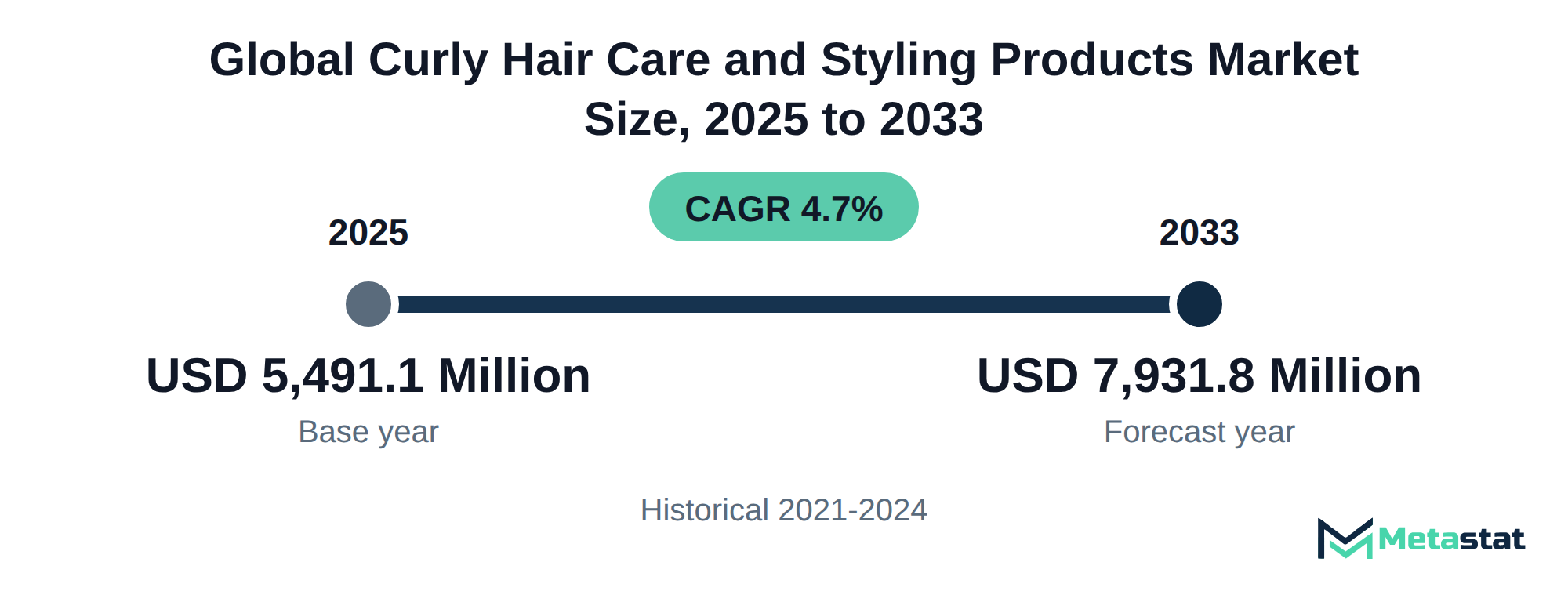
Market Valuation: Valued at $5,491.1 Million in 2025, projected to reach $7,931.8 Million by 2033 at a 4.7% CAGR.
Dominant Segment: The Hair Care segment leads the market, driven by increasing consumer awareness of specialized products for curly hair maintenance. This segment is projected to grow from USD 3,737.3 million in 2026 to USD 4,984.3 million by 2033.
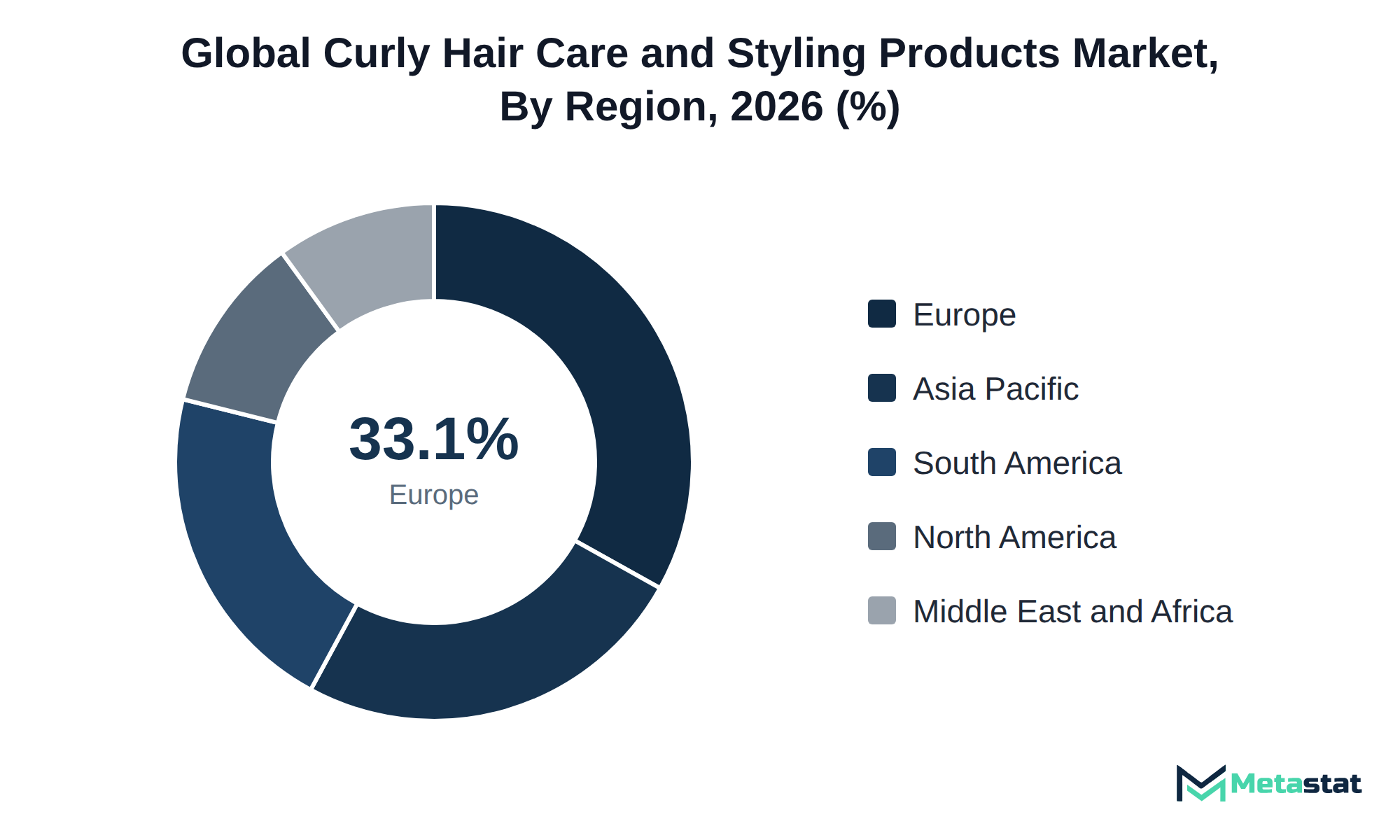
Geographic Lead: Europe dominates the market with a 33.1% share, attributed to a strong consumer base prioritizing tailored hair care solutions. North America also shows significant growth potential, particularly in the US, where the market value is expected to reach USD 2,570.7 million by 2033.
What's Inside: The report provides a comprehensive analysis of the Curly Hair Care and Styling Products market, covering competitive landscapes, detailed segment breakdowns, and growth forecasts through 2033. It includes insights into consumer preferences, pricing strategies, and emerging trends.
Emerging Demand: The Styling Products segment exhibits the highest growth rate, with a CAGR of 5.5% through 2033. This growth is driven by rising consumer interest in products that enhance curl definition and maintain style, particularly focusing on creams.
Innovative Product Formulations: Advancements in product formulations, including natural oils and botanical extracts, are significantly enhancing market growth. These innovations cater to consumer demands for high-quality, effective, and eco-friendly hair care solutions.
Choose Your License
Global Curly Hair Care and Styling Products Market
The global Curly Hair Care and Styling Products market was valued at USD 5,491.1 million in 2025 and is projected to reach USD 7,931.8 million by 2033, growing at a CAGR of 4.7% over the forecast period.
The Curly Hair Care and Styling Products market covers shampoos, conditioners, styling creams, and other products designed specifically for curly hair. Buyers invest in these products to enhance the appearance and manageability of their curls, driven by the desire for healthier and more defined hairstyles. Growing awareness of the unique needs of curly hair and demand for specialized products contribute to increased spending in this sector.
Growth in the market is propelled by rising consumer interest in personal grooming and hair care tailored to specific hair types. Among the segments, hair care products represent the largest value, reflecting a significant portion of overall market revenue. Europe is the leading region, with a 33.1% share of the market. North America holds 11.1% of the market in 2025, with the US leading in 2026.
One primary driver of growth in the market involves the increasing adoption of natural and organic ingredients in hair care formulations. Consumers seek products that promote healthy hair while avoiding harmful chemicals. This trend reflects a broader shift toward sustainable and conscious consumerism within the beauty and personal care industry.
The Curly Hair Care and Styling Products market includes products tailored for maintaining and styling curly hair, addressing the unique needs of consumers with diverse hair types. Buyers invest in these products to achieve desired hair health and manageability, driven by a growing awareness of the importance of specialized hair care. This focus on tailored solutions enhances customer loyalty and an increasing willingness to spend on high-quality products that promote curls' natural beauty.
Growth in the market is fueled by rising consumer interest in personal grooming and self-care, with the hair care segment generating the highest value. Europe leads the regional distribution, followed closely by Asia Pacific and South America. The increasing demand for innovative styling products that cater to specific curl types supports market expansion.
The market's evolution reflects a broader trend toward inclusivity in beauty and personal care, with brands developing products that address the specific needs of curly hair. This shift encourages firms in the cosmetics manufacturing industry to invest in research and development, thereby enhancing their product offerings. New formulations and sustainable practices further attract a discerning consumer base seeking effective and environmentally friendly solutions.
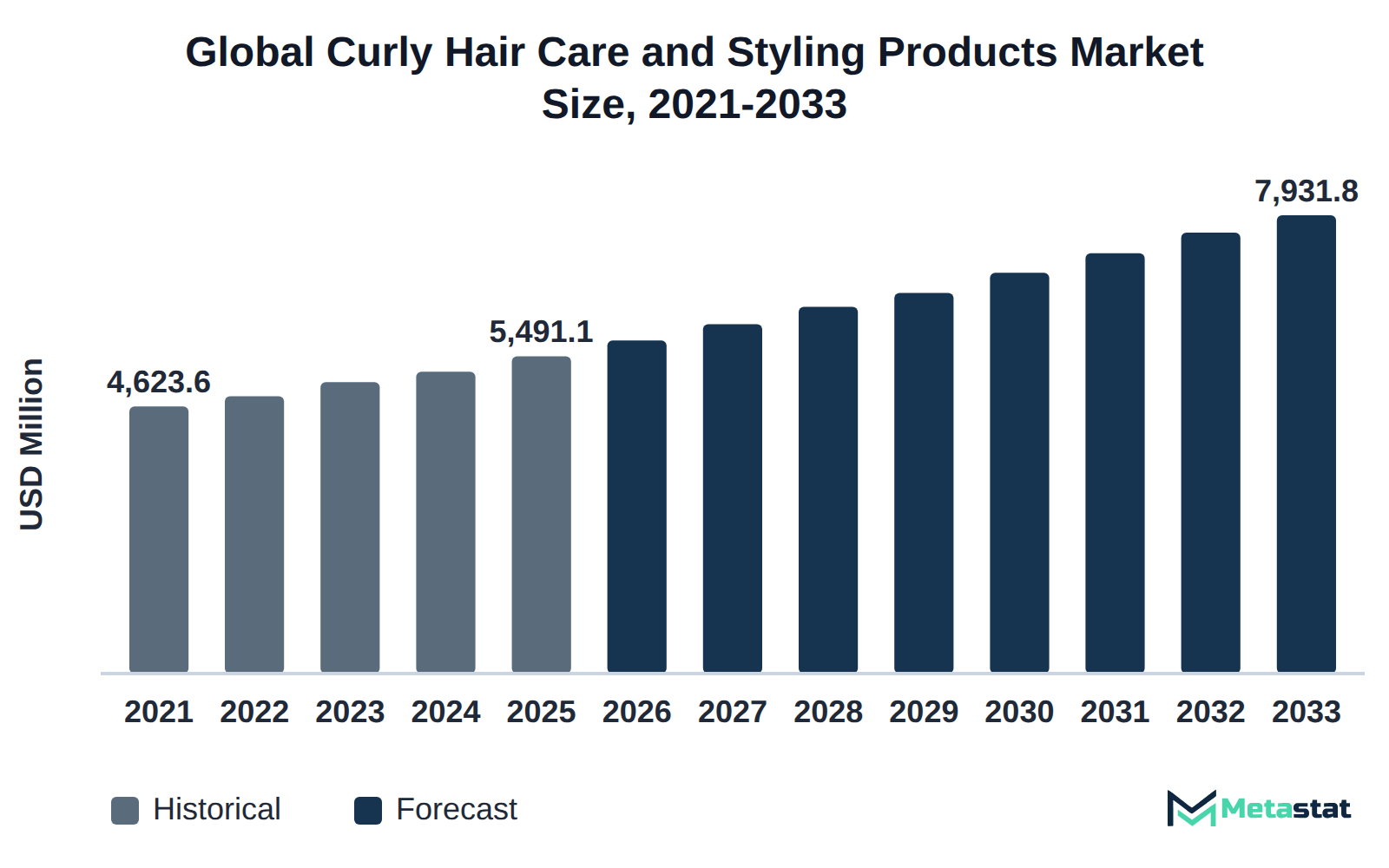
Sulfate-free shampoos and co-washes are becoming essential components of curly hair cleansing routines among consumers seeking gentle formulations. These products enhance the cleansing experience without stripping natural oils, which is vital for maintaining healthy, hydrated curls. The Hair Care segment within the Curly Hair Care and Styling Products market is projected to grow from USD 3,737.3 million in 2026 to USD 4,984.3 million by 2033, reflecting a compound annual growth rate (CAGR) of 4.2%.
Consumers increasingly prefer sulfate-free options due to their gentler nature and ability to preserve moisture in curly hair. This shift aligns with broader trends toward clean beauty and natural ingredients, influencing purchase decisions in the market. The rise of co-wash products, which cleanse and condition simultaneously, presents a unique competitive challenge to traditional shampoos. These co-washes appeal to consumers seeking multifunctional products that simplify their hair care routines.
While the market embraces these innovative formulations, brands focusing on sulfate-free shampoos and co-washes position themselves to capture a growing customer base. The shift toward gentler cleansing products will support market expansion and demand for high-quality, specialized hair care solutions.
Humidity-resistant styling formulas enhance curl definition, hold, and frizz control through specialized ingredients, impacting purchasing decisions within the Curly Hair Care and Styling Products market. Pricing strategies for these products significantly influence consumer choices, especially buyers seeking value and effectiveness in their hair care routines. The average market price for styling products is projected to reach USD 2,947.4 million by 2033, reflecting growing demand for high-quality formulations.
Buyers prioritize effective pricing models that align with their expectations for performance and durability. Premium products often employ tiered pricing structures, incentivizing bulk purchases while providing discounts for repeat customers. E-commerce platforms increasingly dominate sales channels, allowing brands to experiment with revenue management approaches, including dynamic pricing strategies, that adapt to market conditions and consumer behavior. The rise in online sales, with a compound annual growth rate of 7.4%, highlights shifts in buyer engagement and purchasing patterns.
Understanding these pricing dynamics equips suppliers to better align their offerings with consumer preferences and market trends. Brands that pair competitive prices with premium quality strengthen their market position and sustain revenue growth.
Tailored formulations for specific curl types increasingly influence premium product purchases within the Curly Hair Care and Styling Products market. Consumers exhibit preferences for products that cater directly to their unique hair textures, leading to higher spending on specialized items. For instance, the styling products segment is projected to reach USD 2,947.4 million by 2033, driven by demand for curl-specific creams and gels that enhance the natural look and maintain hair health.
Online platforms facilitate this trend by providing resources for consumers to identify products that match their curl types. Virtual consultations, detailed product descriptions, and user-generated reviews create an informed purchasing environment, increasing the likelihood of investment in higher-end products. This focus on personalization encourages brand loyalty and motivates consumers to explore and invest in a wider array of offerings within the market.
With the curly hair care consumer base expanding, businesses that prioritize curl-type personalization gain significant competitive advantages. Meeting the distinct needs of this demographic improves market penetration and revenue growth, in line with broader consumer preferences for customized beauty solutions.
Curl type and porosity significantly influence the care and styling needs for curly hair. Different curl patterns, ranging from wavy to coily, demand specific products that cater to their unique characteristics. For instance, individuals with tighter curl patterns often require more moisture and heavier creams to maintain definition, while those with looser curls benefit from lighter formulations. In the Curly Hair Care and Styling Products market, this diversity leads to a range of product offerings tailored to these specific needs.
Porosity determines how well hair absorbs moisture and product. High-porosity hair tends to absorb moisture quickly but loses it just as fast, making it essential to use products that provide long-lasting hydration. In contrast, low-porosity hair resists moisture absorption, necessitating lighter products that do not weigh the hair down. Understanding these factors enhances the effectiveness of hair care routines and informs purchasing decisions.
The growing awareness among consumers about the importance of matching products to curl type and porosity leads to increased demand for specialized curly hair care products. In 2026, the hair care segment is expected to generate USD 3,737.3 million, which shows the commercial potential of tailoring products to the specific needs of different curl types and porosity levels. Companies that successfully tailor their offerings to address these diverse requirements gain a competitive edge in the market.
Growing awareness of the importance of hair health drives increased spending among consumers seeking specialized products. This shift primarily reflects a demographic change among individuals with curly hair who prioritize tailored hair care routines. Enhanced marketing and educational campaigns about the benefits of specific ingredients influence purchasing decisions. For instance, young adults and parents of children with curly hair actively seek products designed to enhance and maintain curl structure while minimizing damage. This trend results in a notable rise in demand for products including conditioners and styling creams, contributing to the overall growth of the Curly Hair Care and Styling Products market. The market experiences a compound annual growth rate of 4.7% from 2025, with expectations of reaching USD 7,931.8 million by 2033.
Heightened consumer interest in clean, natural ingredients reinforces this trend, prompting brands to innovate and expand their product ranges. The focus on health-conscious formulations aligns with environmentally aware consumers, who increasingly opt for products devoid of harmful chemicals.
Advancements in product formulations significantly drive growth within the Curly Hair Care and Styling Products market. A shift towards innovative ingredients, including natural oils and plant extracts, addresses consumer demands for high-quality hair care solutions. These formulations improve hydration, curl definition, and overall hair health, appealing to a broad consumer base seeking specialized products for their curly hair. Brands that invest in research and development create effective products that meet the specific needs of diverse curl types and textures.
The introduction of eco-friendly personal care packaging and sustainable ingredient sourcing attracts environmentally conscious consumers. This trend has prompted suppliers to enhance their offerings while aligning with consumer preferences for sustainability. The combination of innovative formulations and eco-friendly practices strengthens brand loyalty and attracts new customers, ultimately supporting the expansion of the market. Continuous investments in product development position suppliers advantageously, enabling them to capture a larger share of the growing demand for curly hair care and styling products.
Price sensitivity poses a significant restraint on the adoption of products within the Curly Hair Care and Styling Products market. Consumers prioritize affordability when selecting hair care items, affecting purchases among budget-conscious segments. Premium pricing strategies of several brands deter potential buyers, particularly in regions with lower disposable incomes. This restraint results in slower uptake of innovative products, with consumers hesitating to invest in higher-priced items despite their potential benefits. Many buyers opt for lower-cost alternatives or generic brands, leading to smaller orders and delayed replacement of existing products. Such behavior limits overall revenue growth for suppliers, who face challenges in justifying higher price points due to competition from more affordable options.
Segments focusing on specialty products experience notable challenges, where price-sensitive consumers prioritize cost over quality. This trend influences the competitive landscape, compelling brands to find a balance between premium offerings and accessible pricing strategies to attract a wider audience.
Increasing costs of raw materials present a significant challenge for suppliers within the Curly Hair Care and Styling Products market. Fluctuations in prices for key ingredients, including natural oils and organic extracts, strain profit margins while driving up overall production costs. Suppliers face pressure to maintain competitive pricing amid escalating costs, prompting several to explore alternative sourcing strategies or ingredient substitutions to mitigate these financial impacts. For instance, several companies invest in partnerships with local farmers to secure sustainable and cost-effective raw materials, enhancing their supply chains while addressing consumer demand for eco-friendly products. This strategic shift helps suppliers manage costs and aligns with growing consumer preferences for ethically sourced ingredients. Suppliers must keep adjusting ingredient sourcing and formulation practices to sustain profitability and ensure consistent product quality amid rising economic pressures. Maintaining a balance between cost management and ingredient integrity remains vital for long-term success in the market.
The highest growth in the market occurs within the Styling Products segment, which shows a projected compound annual growth rate (CAGR) of 5.5% through 2033. This increase stems from rising consumer interest in versatile products that enhance curl definition and maintain style throughout the day. Creams represent a primary product in this segment, with growth driven by consumers seeking long-lasting hold and frizz control. The demand for styling creams, specifically formulated for curly hair, reflects a growing preference for products that cater to individual styling needs. The emphasis on high-quality ingredients ensures that products perform effectively and support overall hair health.
Regional dynamics indicate a significant opportunity in North America, where the market value is expected to reach USD 2,570.7 million by 2033. Consumer trends in this region show a strong inclination toward premium and specialty styling solutions, providing a fertile ground for brands to innovate and expand their offerings. Addressing this demand through targeted marketing services and strategies enhances brand visibility among new customer segments, creating a competitive advantage in the Curly Hair Care and Styling Products market.
The Global Curly Hair Care and Styling Products market is segmented based on Type, Hair Care Products, Styling Products, and Sales Channel.
This segment includes shampoos, conditioners, and co-washes tailored for curly hair maintenance. Consumers, particularly those with textured hair, use these products to enhance moisture retention and overall hair health. Increasing awareness regarding the importance of hair care drives demand, particularly for specialized formulations that cater to specific curl types. This segment experiences slower growth compared to the Styling Products segment, which shows a higher CAGR of 5.5%. The market's diversification into natural ingredients and sulfate-free options differentiates it further, appealing to environmentally conscious consumers and enhancing product attractiveness.
Styling Products segment is estimated to reach USD 2,947.4 million by 2033, at a CAGR of 5.5% during the forecast period. This segment includes styling creams, clays, and waxes specifically designed for curly hair. Consumers with curly hair use these products to enhance curl definition, manage frizz, and achieve desired hairstyles without compromising hair health. A significant driver of growth stems from the increasing demand for specialized formulations that cater to the unique styling needs of curly hair. This segment distinguishes itself from Hair Care Products, which has a lower projected CAGR of 4.2%, reflecting a more measured growth rate. The appeal of Styling Products lies in their ability to offer diverse styling options, addressing the personal preferences of users who seek effective solutions for maintaining their curls.
The shampoo segment is valued at USD 1,378.9 million in 2026 and is projected to reach USD 1,757.7 million by 2033, at a CAGR of 3.5% during the forecast period. This segment cleanses curly hair while maintaining moisture, appealing primarily to consumers with textured hair who seek products that support healthy curls. Growing consumer awareness regarding hair care contributes significantly to this segment's expansion. The preference for sulfate-free formulations influences demand, with many buyers looking for gentle cleansing options that do not strip natural oils. Compared to other hair care products, including conditioners and styling products, shampoo growth is relatively slower, reflecting a more mature market segment focused on established cleansing routines. In contrast, styling products exhibit higher growth due to emerging trends and innovative formulations targeting specific styling needs.
Conditioner segment is estimated to reach USD 1,782.3 million by 2033, at a CAGR of 4.3% during the forecast period. This segment provides essential moisture and nourishment, catering primarily to consumers with curly hair who seek to maintain hydration and manageability. The growing trend toward sulfate-free and natural ingredient formulations enhances the appeal of conditioners, driving demand among health-conscious buyers. With a projected growth rate of 4.3%, this segment demonstrates a steadier pace compared to the faster-growing styling products segment, which registers a CAGR of 5.5%. Price sensitivity remains a significant factor; consumers balance quality and affordability when choosing conditioners, further influencing market dynamics. The emphasis on effective hydration solutions distinguishes this segment from other segments in the hair care products category, enhancing its importance in the market.
Lather-Free Wash (No-Poo) segment is expected to reach USD 462.4 million by 2033. This product cleanses curly hair without the use of traditional shampoo, appealing primarily to consumers seeking gentler alternatives that preserve natural oils. The increasing popularity of no-poo products aligns with a broader trend towards natural hair care solutions, driven by consumers aiming for healthier hair. Unlike other segments, including traditional shampoos, the Lather-Free Wash segment experiences slower growth, reflecting a CAGR of 5.8% compared to the faster growth of other hair care products. This segment caters specifically to individuals with curly hair types who require specialized cleansing methods to maintain hair health and hydration while avoiding harsh ingredients. The market's focus on innovative formulations continues to influence consumer choices, supporting the ongoing expansion of this segment.
Co-Wash (Cleansing Conditioner) segment is projected to grow at a CAGR of 5.8% during the forecast period. This product cleanses hair without the harsh effects of traditional shampoos, making it particularly appealing to individuals with curly or textured hair. Consumers seeking gentle cleansing solutions increasingly adopt co-wash products, valuing their moisturizing properties. The rising trend of "no-poo" regimens drives demand forward, with many users preferring co-wash options over traditional shampoos that strip natural oils. Compared to other segments, including shampoo, which is expected to grow at a CAGR of 3.5%, co-wash products show more rapid growth, reflecting changing consumer preferences for hair care that prioritize health and hydration. Several brands focus on formulating co-wash products that cater to the unique needs of curly hair, with the market seeing a shift towards more specialized cleansing solutions.
Deep Treatment Mask functions as an intensive conditioning solution designed to restore moisture, strength, and elasticity to curly hair. Consumers increasingly seek these treatments to address issues including dryness, damage, and frizz, leading to higher demand among individuals with textured hair. This sub-segment experiences growth driven by rising awareness of hair health and the effectiveness of specialized treatments. Compared to other hair care products, Deep Treatment Masks often command a higher price point due to their concentrated formulations and targeted benefits. Demand for such products is evident among consumers prioritizing quality and effectiveness in their hair care routines. These factors contribute to distinct positioning within the market, attracting a dedicated customer base focused on nurturing and enhancing the health of their curls.
Detanglers serve to ease the combing process and minimize breakage in curly hair, making them essential for consumers with textured hair types. These products maintain hair health by reducing knots and tangles, which lead to damage if not properly managed. Increasing consumer awareness of the significance of hair care drives demand for specialized products like detanglers. Competition among brands focuses on offering unique formulations that cater to diverse hair types and concerns. Unlike other hair care products, detanglers often have a higher price point due to their specialized ingredients and formulations, appealing to a market segment that prioritizes hair health and maintenance. Their distinct purpose and formulation strategies differentiate them from other segments including shampoos and conditioners, which target cleansing and conditioning needs, respectively. Ongoing development of innovative formulations continues to influence product offerings in the market.
Hair serum functions as a specialized treatment designed to nourish and protect curly hair, providing benefits including moisture retention, frizz control, and enhanced shine. Consumers seeking to maintain healthy curls apply hair serums to address specific concerns including dryness and damage. Demand for hair serums experiences an upswing, driven by the increasing emphasis on hair health and the desire for products that cater to curly hair's unique needs. Unlike other segments, hair serum differentiates itself through its targeted application and often higher price point, appealing to a consumer base that prioritizes premium solutions for curly hair care. Growth in this segment reflects a broader trend towards specialized personal care products, aligning with the growing market for curly hair care and styling products.
Hair oil enhances moisture and shine while providing nourishment to curly hair. This product is particularly popular among individuals with textured hair types, who seek solutions to combat dryness and frizz. Demand for hair oil is driven by the growing emphasis on hair health and the effectiveness of oil-based treatments in maintaining the vitality of curls. Compared to other segments, hair oil features higher pricing due to premium ingredients and formulations that cater specifically to the needs of curly hair. Consumers increasingly prefer products that offer multifunctional benefits, including hydration and protection from environmental damage. The market for curly hair products recognizes the unique requirements of this demographic, reinforcing hair oil's essential role in daily hair care routines.
Hair sprays serve as an essential styling solution for individuals with curly hair, enhancing definition, managing frizz, and providing hold. Users typically include those with textured hair looking to maintain their curls throughout the day. Demand for hair sprays is driven by the increasing trend toward personalized hair care routines and the desire for versatile styling options. Compared to other sub-segments, hair sprays offer unique benefits including ease of application and on-the-go styling, differentiating them from hair oils and deep treatment masks. This sub-segment experiences growth trends distinct from other types in the hair care segment, reflecting shifts in consumer preferences toward convenience and multifunctional products. Broader awareness about the significance of appropriate hair care products supports the market for curly hair care, resulting in increased interest in effective styling solutions including hair sprays.
Others (Scalp Scrubs, Scalp Tonics, Protein Treatment Ampoules) function as specialized products aimed at enhancing scalp health and hair vitality. Consumers with curly hair often use these products to address specific concerns including dandruff, scalp irritation, and hair nourishment. The demand for these items reflects a growing trend toward comprehensive hair care routines that prioritize both hair and scalp health. This sub-segment stands apart from traditional hair care products, which focus primarily on cleansing and styling. The unique positioning of these products appeals to a niche market segment willing to invest in premium solutions that offer targeted benefits, distinguishing them from more conventional offerings.
Cream segment is valued at USD 2,454.5 million in 2026 and is projected to reach USD 3,424.9 million by 2033, at a CAGR of 4.9% during the forecast period. Creams serve to define and control curls, making them essential for individuals with curly and textured hair. Increased awareness of the importance of specialized products for curly hair fuels demand for this segment, particularly among younger consumers. Compared to other styling products, the cream segment exhibits slower growth, reflecting a more established presence in the market. While styling gels and mousses appeal to different consumer preferences, creams offer a unique texture and formulation that caters to those seeking hydration and curl definition. The cream segment's focus on moisturizing ingredients differentiates it from others, which prioritize hold or volume. This distinction drives consistent demand in the Curly Hair Care and Styling Products market.
The clay segment is estimated to reach USD 326.8 million by 2033, at a CAGR of 3.3% during the forecast period. This product is widely used for styling curly hair, providing texture and definition while combating frizz. Users typically include individuals with textured hair seeking versatile styling options. The growing preference for natural and multifunctional products drives demand within this segment. Unlike other styling products that display higher growth rates, including creams, the clay segment offers a distinct price point and user demographic focused on achieving a specific aesthetic. The emphasis on natural ingredients within the clay offerings aligns with changing consumer preferences, encouraging further adoption across diverse markets, particularly among those seeking sustainable beauty solutions. The market continues to expand, with increasing awareness surrounding the benefits of clay-based products.
Wax is expected to reach USD 454.5 million by 2033. This styling product provides hold and definition for curly hair, appealing primarily to consumers seeking to enhance their curls and manage frizz. The rising trend of embracing natural curls drives demand within this segment, with consumers increasingly avoiding heat styling and looking for products that support curl health. Hair wax differs from other styling products due to its unique texture and formulation, offering a firm hold compared to creams and gels. The compound annual growth rate (CAGR) for this segment stands at 3.3%, indicating slower growth relative to other styling products, including creams which feature a higher CAGR of 4.9%. Price sensitivity influences consumer choices, leading to varying adoption across several buyer segments in the market.
Others (Styling Gels, Mousses and Foams, Pomades, Styling Custards) segment is projected to grow at a CAGR of 4.9% during the forecast period. This sub-segment appeals to individuals seeking versatile styling options for curly hair, enhancing definition and control. The popularity of these products stems from their ability to provide hold and texture, appealing to diverse consumer preferences. Rising awareness regarding textured hair care significantly fuels this segment's growth, driven by consumers increasingly seeking products tailored to specific hair needs. Compared to other styling products, including creams and waxes, this segment highlights a broader array of formulations, catering to various styling techniques and desired outcomes. The market reflects strong interest in such products, with consumers prioritizing efficacy and results in their hair care routines.
Supermarkets and Hypermarkets segment is valued at USD 1,776.9 million in 2026 and is projected to reach USD 2,207.4 million by 2033, at a CAGR of 3.1% during the forecast period. This channel serves customers seeking convenience and variety in their curly hair care and styling products. Consumers benefit from the accessibility of products across well-known brands, which enhances purchasing decisions. Growth within this segment is driven by increasing consumer awareness regarding curly hair care routines, leading to higher demand for specialized products. Compared to other segments, including E-commerce, which grows at a CAGR of 7.4%, Supermarkets and Hypermarkets experience slower growth. The pricing strategy in this channel aligns with competitive retail pricing, making it appealing for budget-conscious consumers seeking effective solutions in the market.
Convenience Store segment is estimated to reach USD 370.4 million by 2033, at a CAGR of 2.1% during the forecast period. This channel serves consumers seeking quick access to curly hair care and styling products in localized settings. Convenience stores attract impulse buyers who prioritize immediate availability over extensive product selection. The growth of this segment is driven by increasing demand for easy-to-access personal care items among consumers with textured hair. Compared to other sales channels, including e-commerce, which experiences a higher growth rate of 7.4%, the Convenience Store segment's slower growth reflects its limited stock and variety. This segment provides essential products while catering to a consumer base that values convenience and quick shopping experiences, distinguishing it from the broader selections available through supermarkets and hypermarkets or online platforms. The market continues to evolve, responding to shifting consumer preferences and shopping behaviors.
Specialty Store segment is expected to reach USD 1,994 million by 2033. Specialty stores offer a focused selection of curly hair care and styling products tailored to consumers seeking specific solutions for textured hair. Shoppers in this segment often seek personalized recommendations and unique products not typically available in broader retail settings. This demand is fueled by the growing interest in curated and high-quality hair care options. The segment differentiates itself from others through a higher average price point and a more targeted product assortment. Specialized knowledge among staff enhances the shopping experience, influencing purchasing decisions. Anticipated growth in this segment supports the overall expansion of the Curly Hair Care and Styling Products market, driven by rising consumer awareness and preference for tailored hair solutions.
E-commerce segment is projected to grow at a CAGR of 7.4% during the forecast period. This channel caters to consumers who prefer the convenience of online cosmetics shopping, enabling access to a range of products tailored for curly hair. Growth primarily stems from the increasing preference for online purchasing among younger demographics, who seek specialized products. The segment stands out compared to traditional retail channels, including supermarkets and convenience stores, due to its focus on niche offerings and often competitive pricing. E-commerce attracts a tech-savvy audience that values product variety and accessibility, distinguishing it from segments that rely on in-person sales. The potential for personalized recommendations through online platforms enhances customer engagement, further driving growth in the market.
The Others (Hair Salons, Pharmacies and Drugstores, Direct Selling) segment focuses on retail channels that provide products directly to consumers. This segment serves a variety of curly hair care products, including those targeting specific needs for textured hair. Customers frequent hair salons and specialized pharmacies to access products that offer professional guidance and personalized recommendations. Growth in this segment is driven by increasing consumer preference for in-person consultations and a hands-on shopping experience. Compared to other sales channels, including E-commerce, which shows a stronger growth trajectory, this segment attracts buyers seeking curated options and expert advice. The Curly Hair Care and Styling Products market reflects a trend toward personalized services, enhancing customer loyalty and satisfaction.
Based on geography, the Global Curly Hair Care and Styling Products market is divided into North America, Europe, Asia-Pacific, South America, Middle East, and Africa.
In North America, the curly hair care and styling products market is projected to reach USD 2,570.7 million by the end of 2033. The region represents 11.1% of the global market in 2025. Strong demand exists among consumers seeking products tailored for specific hair types, particularly among the African American and Hispanic communities, which prioritize moisturizing and styling products specifically designed for curly textures. Increasing awareness of natural ingredients and the negative effects of sulfates drives growth in both hair care and styling segments. The rise of e-commerce platforms enhances accessibility, allowing consumers to access a broader range of products. The presence of established brands and innovative new entrants in the market supports a competitive landscape, promoting product diversity and consumer choice that will drive revenue in the coming years.
Growth in the Curly Hair Care and Styling Products market for Europe stems from diverse consumer preferences and an increasing emphasis on natural hair care solutions. Countries including Germany, France, and the UK exhibit a strong demand for products tailored to curly hair textures, driven by a cultural shift towards embracing natural beauty and individuality. The region's market share is projected at 33.1% in 2025. Rising disposable incomes in countries like Italy and Spain support greater spending on premium hair care products, enhancing market potential. Retail environments, particularly specialty stores, play a significant role in facilitating access to a wide range of curly hair care options. The market is expected to expand due to growing awareness of product benefits and the effectiveness of curly hair-specific formulations, which align with consumers' desires for tailored solutions.
Asia Pacific represents a significant portion of the Curly Hair Care and Styling Products market. Countries including China and India drive demand through a growing middle class that increasingly prioritizes personal grooming and hair care. An expanding e-commerce infrastructure facilitates convenient access to these products, allowing consumers to explore a variety of options. Cultural trends emphasizing natural hair textures enhance interest in curly hair care solutions. Innovative product launches by local and international brands shape consumer preferences within this dynamic market. The region's diverse climate conditions contribute to varied hair care needs, prompting demand for specialized products that address different hair types.
Brazil and Argentina demonstrate significant consumer engagement in the Curly Hair Care and Styling Products market, driven primarily by an increasing emphasis on hair health and personal care. The region's market share reached 21.00% in 2025, reflecting a strong cultural inclination towards maintaining curly hair textures. A growing trend towards natural ingredients and formulations influences purchasing decisions, especially among younger demographics. Retail channels including specialty stores and e-commerce platforms are gaining traction, providing consumers with diverse product options. The presence of local brands alongside international players creates competitive dynamics, enhancing product availability and innovation within the market. Increased investments in marketing and educational campaigns on hair care further enhance consumer awareness and loyalty in South America.
The Middle East and Africa present unique dynamics within the Curly Hair Care and Styling Products market. Consumer awareness regarding the specific needs of curly hair drives demand in this region, particularly among younger demographics seeking tailored products. In Saudi Arabia and the UAE, rising disposable incomes contribute to increased spending on premium hair care products, with a growing preference for natural and organic formulations. South Africa's diverse cultural landscape creates significant demand for various hair care products, allowing local brands to thrive alongside international players. The region holds a 10.0% share of the global market in 2025, highlighting its potential for growth and innovation within the industry.
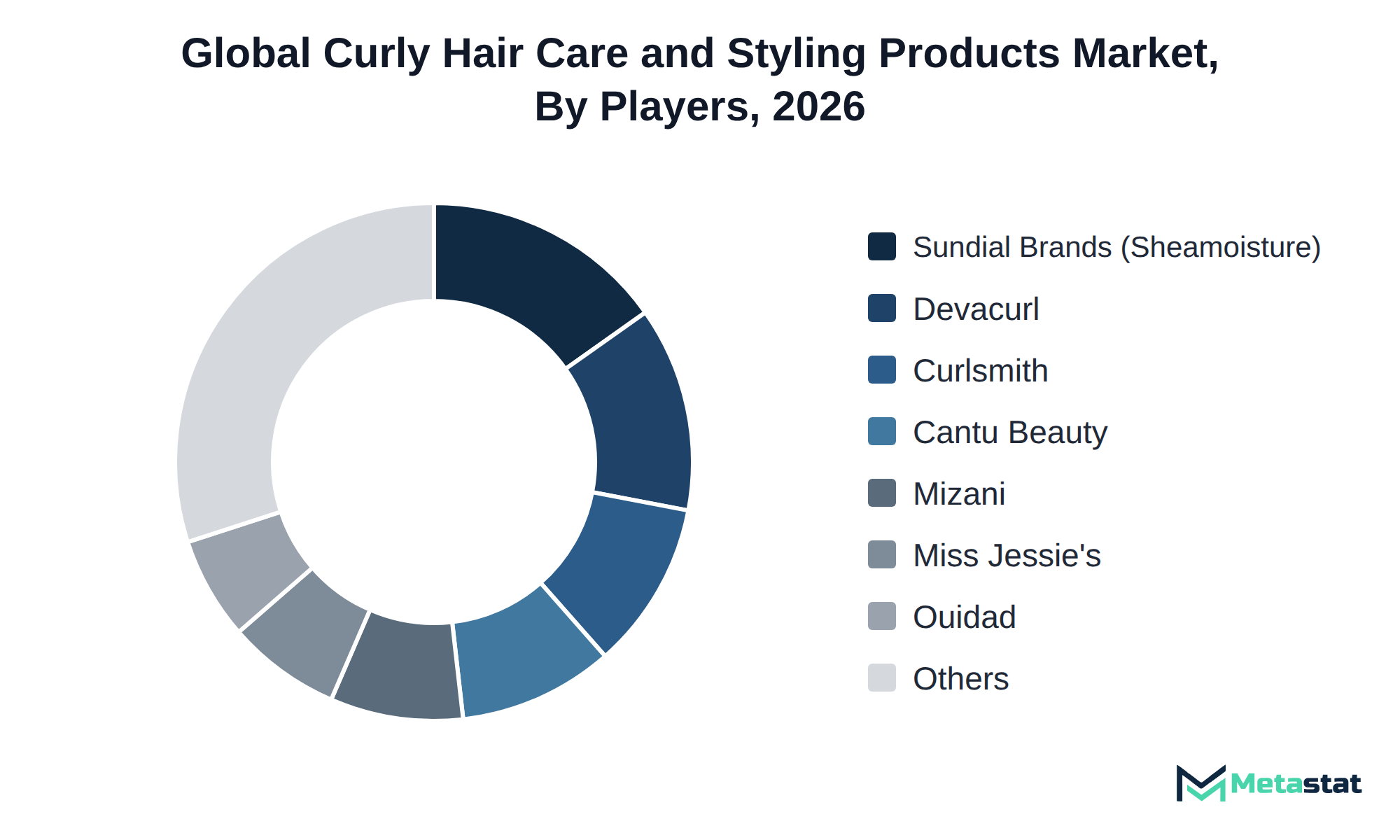
The competitive environment within the Curly Hair Care and Styling Products market encompasses diverse strategies that cater to various consumer preferences. Companies differentiate themselves through product offerings, price points, and brand positioning, allowing buyers to select based on quality, effectiveness, and brand loyalty. Brands like Devacurl and Ouidad Inc. emphasize specialized formulations for curly hair, appealing to consumers seeking tailored solutions that address specific hair types and textures.
Price and certification influence consumer decisions in the market. Brands including Sundial Brands LLC (SheaMoisture) and Curlsmith focus on natural ingredients, positioning themselves as health-conscious alternatives. This strategic approach attracts consumers prioritizing sustainability and ingredient transparency. Companies like Cantu Beauty and Mielle Organics use their strong presence in retail channels to improve accessibility and convenience for buyers seeking curly hair care solutions.
Achieving the projected growth of the Curly Hair Care and Styling Products market relies on several key developments. First, increasing demand for hair care products, particularly shampoos and conditioners, is essential. This demand stems from broader consumer awareness of curly hair maintenance and care. Second, the styling products segment, specifically creams, represents a significant growth opportunity. However, risks associated with supply chain disruptions could hinder the market's progress. Increased production costs or limited availability of raw materials pose challenges, particularly affecting regions with high demand, including North America and Europe. The curly hair care and styling products market navigates these challenges effectively to reach its full potential by 2033.
By Type: Hair Care, Styling Products
By Hair Care Products: Shampoo, Conditioner, Lather-Free Wash (No-Poo), Co-Wash (Cleansing Conditioner), Deep Treatment Mask, Detangler, Hair Serum, Hair Oil, Hair Sprays, Others (Scalp Scrubs, Scalp Tonics, Protein Treatment Ampoules)
By Styling Products: Cream, Clay, Wax, Others (Styling Gels, Mousses and Foams, Pomades, Styling Custards)
By Sales Channel: Supermarkets and Hypermarkets, Convenience Store, Specialty Store, E-commerce, Others (Hair Salons, Pharmacies and Drugstores, Direct Selling)
The report strategically identifies and profiles the key market players and analyses their core competencies in each sub-segment of the Curly Hair Care and Styling Products market.
|
Report Attributes |
Details |
|
Study Period |
2021-2033 |
|
Base Year |
2025 |
|
Estimated Year |
2026 |
|
Forecast Period |
2026-2033 |
|
Historical Period |
2021-2025 |
|
Growth Rate |
CAGR 4.7% from 2026 to 2033 |
|
Revenue Unit |
USD million |
|
Segmentation |
By Type, Hair Care Products, Styling Products, Sales Channel, and Region |
|
By Region |
North America (By Type, Hair Care Products, Styling Products, Sales Channel, and Country)
|
|
Europe (By Type, Hair Care Products, Styling Products, Sales Channel, and Country)
|
|
|
Asia Pacific (By Type, Hair Care Products, Styling Products, Sales Channel, and Country)
|
|
|
South America (By Type, Hair Care Products, Styling Products, Sales Channel, and Country)
|
|
|
Middle East and Africa (By Type, Hair Care Products, Styling Products, Sales Channel, and Country)
|
Find answers to common questions about this report
The Curly Hair Care and Styling Products market size was valued at USD 5,491.1 million in 2025.
The market is projected to grow at a CAGR of 4.7% during the forecast period from 2026 to 2033.
The North America Curly Hair Care and Styling Products market size is projected to reach USD 2,570.7 million by 2033.
Hair Care leads the Curly Hair Care and Styling Products market with a value of USD 3,737.3 million in 2026. This segment surpasses Styling Products, which has a projected value of USD 2,947.4 million by 2033.
Growing awareness of the importance of hair health drives increased spending among consumers seeking specialized products. Heightened consumer interest in clean, natural ingredients reinforces this trend, prompting brands to innovate and expand their product ranges.
Europe holds the dominant share of the Curly Hair Care and Styling Products market, accounting for 33.1 percent in 2025. This figure reflects the largest regional contribution compared to other regions.
Price sensitivity poses a significant restraint on market growth, as consumers prioritize affordability when selecting hair care items. Increasing costs of raw materials present a challenge for suppliers, straining profit margins while driving up overall production costs.
Growing awareness of hair health and the demand for specialized products drive adoption in the Curly Hair Care and Styling Products market. Enhanced marketing efforts and a focus on clean, natural ingredients encourage consumers to invest in high-quality solutions tailored for curly hair.
The Curly Hair Care and Styling Products market is estimated to reach a valuation of USD 7,931.8 million by 2033.
Key players operating in the Curly Hair Care and Styling Products market include Devacurl, Sundial Brands LLC (Sheamoisture), Ouidad Inc., Curlsmith, Carols Daughter, Mizani, and Cantu Beauty.
The analysts below cover Consumer Goods research at Metastat Insights.
LEAD ANALYST
Utkarsh Khirodkar is a Lead Market Research Analyst at MetaStat Insight, specializing in market intelligence, technology sector assessments, and competitive strategy.
Tracking ceramic matrix composite adoption in high-bypass aero engines requires strict attention to material qualification cycles and FAA airworthiness testing milestones. The MetaStat Insight team provided a detailed timeline of silicon carbide fiber manufacturing capacity and commercial foundry lead times. Having clear visibility into upstream thermal barrier coating supply helped us stress-test our long-term component procurement strategy.
Transitioning ultra-class mining haul trucks to alternative power requires concrete data on remote hydrogen refueling infrastructure economics. The report evaluated megawatt-scale electrolyzer installation expenses, onsite storage safety mandates, and heavy-duty fuel cell stack degradation under continuous duty cycles. That technical rigor helped our engineers benchmark realistic total operating cost horizons for off-highway fleet decarbonization.
Enterprise zero-trust network rollouts are often slowed down by multi-cloud transit latency and proprietary hardware retirement schedules. This study provided realistic total cost of ownership models comparing cloud-delivered security edge solutions against traditional hardware refreshes. The analysis of contract renewal lengths and software maintenance fees gave us clear visibility into enterprise replacement cycles over the next three to five years.
Explore related market intelligence reports worth reading alongside this one.