
LEAD ANALYST
Utkarsh Khirodkar is a Lead Market Research Analyst at MetaStat Insight, specializing in market intelligence, technology sector assessments, and competitive strategy.

India Lithium-Ion Battery Market Size, Share, By Battery Type (Lithium Iron Phosphate (LFP), Lithium Nickel Manganese Cobalt Oxide (NMC), Lithium Cobalt Oxide (LCO), Lithium Manganese Oxide (LMO), Lithium Nickel Cobalt Aluminium Oxide (NCA), Lithium Titanate (LTO) and Others (LMFP, LNMO)), By Cell Form Factor (Cylindrical, Prismatic and Pouch), By Capacity (Up to 3,000 mAh, Above 3,000 to 10,000 mAh, Above 10,000 to 60,000 mAh and Above 60,000 mAh), By End-Use Industry (Consumer Electronics, Automotive, Stationary Energy Storage, Industrial Equipment and Power Tools, Telecommunications and Others (Medical Devices, Aerospace, Defence and Marine)), Industry Analysis, Growth, Trends, and Forecast, 2026-2033
Report ID
MSI-5656
Published
November, 2026
Pages
294 Pages
Format
Historical
Base year
Forecast
Forecast period
Report Details
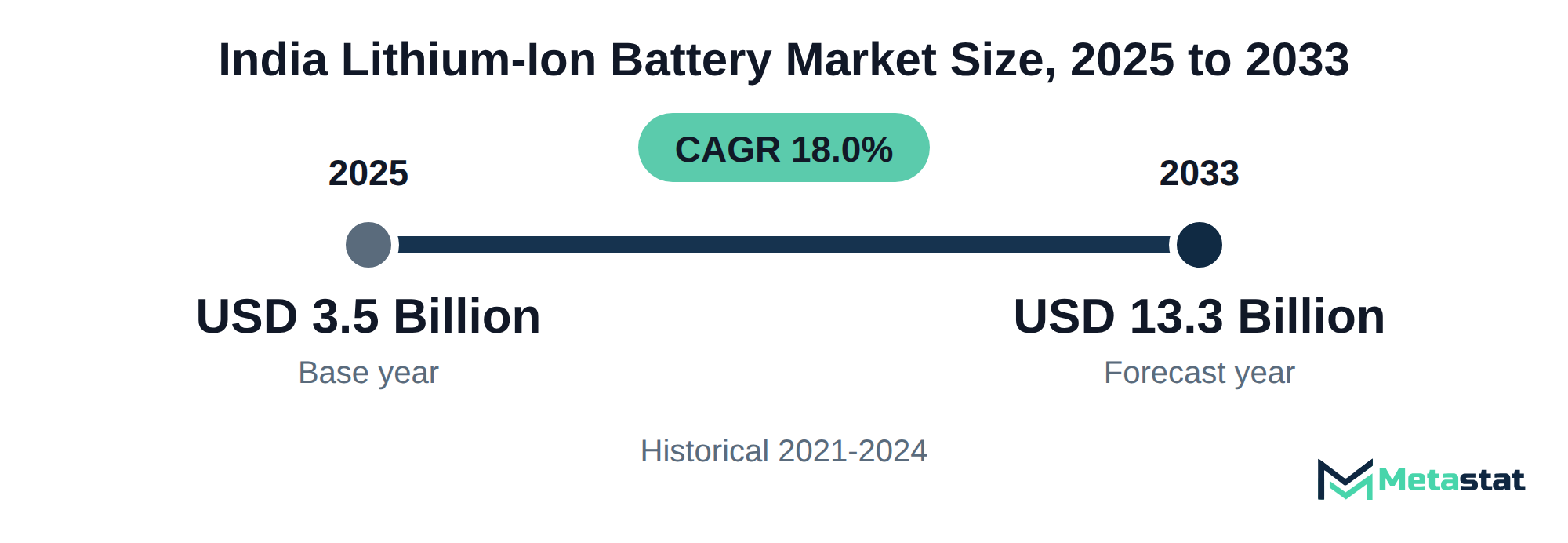
Market Valuation: Valued at $3.5 Billion in 2025, projected to reach $13.3 Billion by 2033 at a 18.0% CAGR.
Dominant Segment: Lithium Iron Phosphate (LFP) batteries currently lead the market, driven by their enhanced safety, longevity, and cost-effectiveness, particularly in electric vehicle applications.
Geographic Lead: The Asia Pacific region dominates the market, fueled by significant investments in electric vehicle infrastructure and supportive government policies promoting renewable energy.
What's Inside: The report provides an in-depth analysis of market dynamics, competitive landscape, and forecasts from 2026 to 2033, covering various battery types, cell form factors, and end-use industries.
Growth Drivers: Key growth drivers include the rising demand for electric vehicles, advancements in battery chemistry, and increasing investments in domestic manufacturing capabilities.
Capacity Growth: The segment for batteries with capacities above 60,000 mAh is projected to grow rapidly, with a CAGR of 25.7%, driven by demand from industrial equipment and power tools.
Choose Your License
India Lithium-Ion Battery Market
The India Lithium-Ion Battery market was valued at USD 3.5 billion in 2025 and is projected to reach USD 13.3 billion by 2033, growing at a CAGR of 18.0% over the forecast period.
The India Lithium-Ion Battery market encompasses various battery types, cell form factors, capacities, and end-use industries. This diverse range attracts significant investment from buyers across sectors including consumer electronics, automotive, and stationary energy storage. Companies invest heavily in this market to enhance energy efficiency, reduce operational costs, and support the transition to sustainable energy solutions. Buyers increasingly recognize the importance of high-performance batteries in powering their products and services.
Growth in the market is driven primarily by the surge in demand for electric vehicles, which necessitates advanced battery technologies and innovations. Among battery types, Lithium Iron Phosphate (LFP) batteries currently represent the highest market value and continue to expand strongly. The automotive sector stands out as the largest segment, reflecting a growing inclination towards electrification and sustainable transportation solutions.
The market experiences substantial growth across numerous regions, with Asia Pacific leading in market share. This dominance results from increasing investments in electric vehicle infrastructure and supportive government policies promoting renewable energy. Advances in battery chemistry are a key growth driver, improving energy density and charging efficiency and driving further market adoption.
The India Lithium-Ion Battery market meets growing demand for advanced energy storage across multiple sectors, driven by technological advancements and higher energy consumption. Buyers invest in lithium-ion batteries to enhance performance, efficiency, and sustainability in applications including electric vehicles and consumer electronics. The market serves a diverse array of end-use industries, each requiring tailored solutions to meet specific energy and power requirements.
Among the various segments, the automotive sector commands the largest value within the India Lithium-Ion Battery market, reflecting a significant shift towards electric mobility. Demand within this segment is propelled by government initiatives promoting electric vehicles, which encourage manufacturers to transition from traditional combustion engines to electric alternatives. This transition aligns with broader sustainability goals and the push for reduced carbon emissions.
Growth in the market is significantly influenced by advancements in battery chemistry, particularly the increasing adoption of Lithium Iron Phosphate (LFP) batteries. LFP technology offers enhanced safety, longevity, and cost-effectiveness, making it a preferred choice for manufacturers. Strong performance characteristics add to the rising popularity of LFP batteries and support the expansion of the lithium-ion battery market in India.
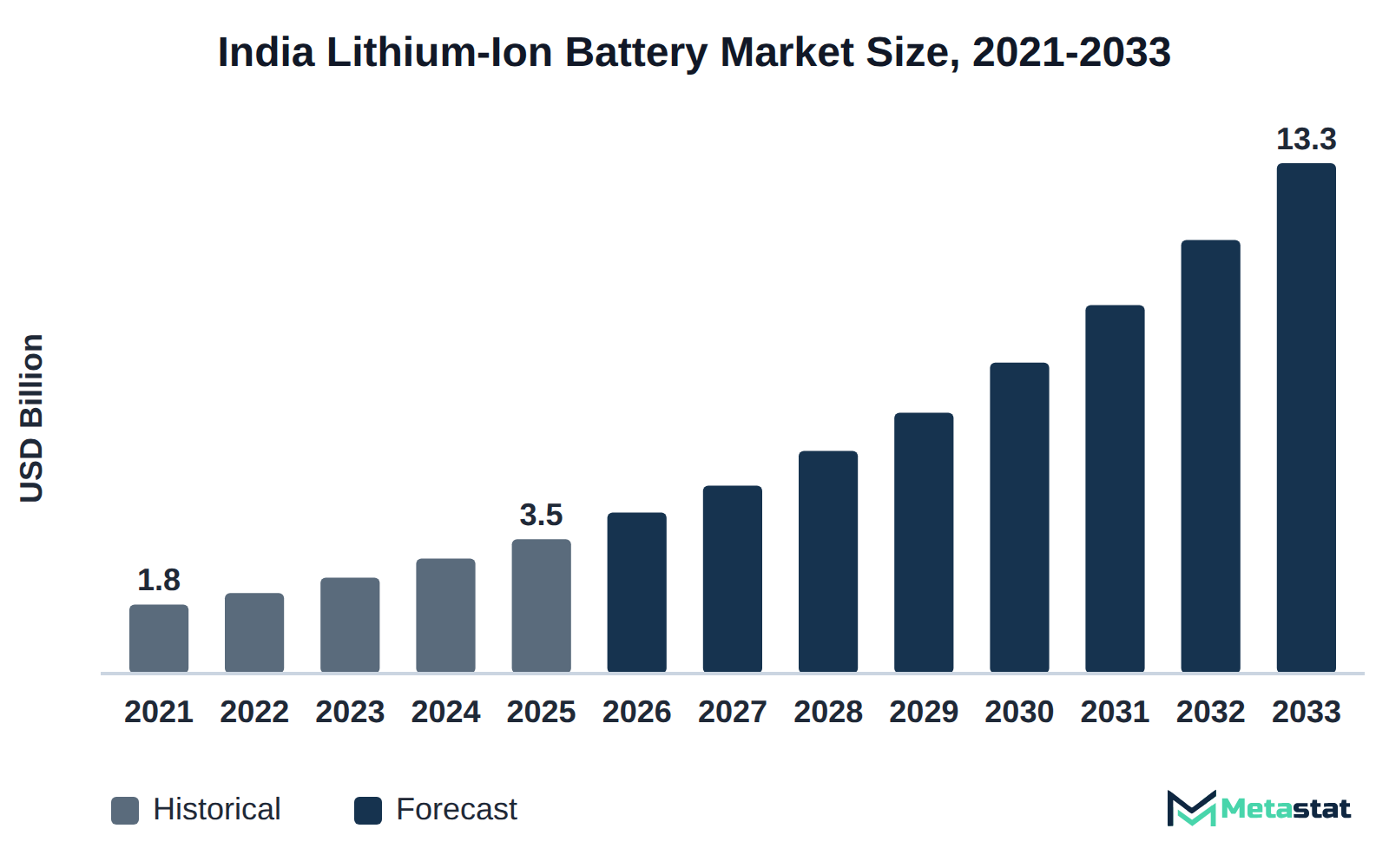
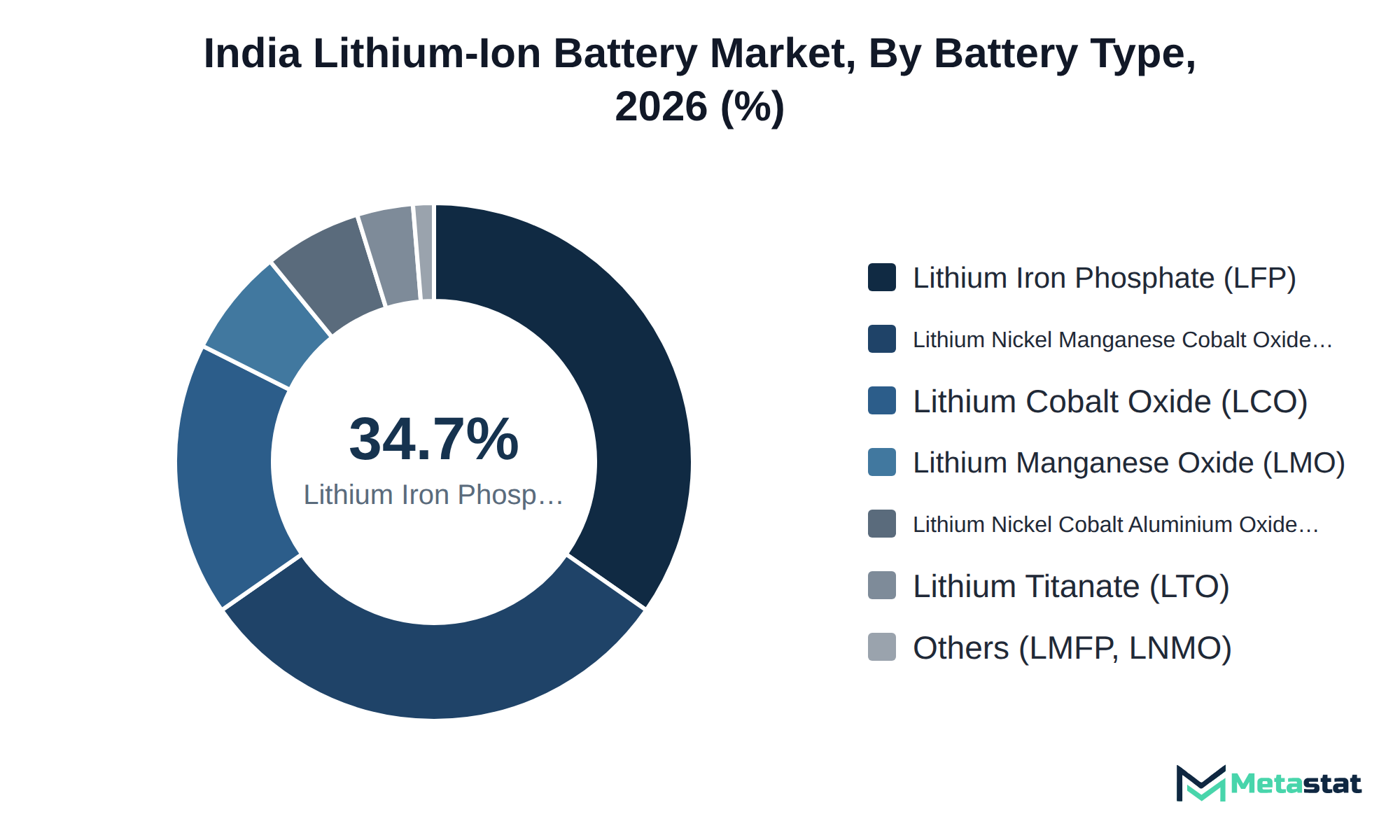
Lithium Iron Phosphate (LFP) batteries increasingly dominate the India Lithium-Ion Battery market, particularly in electric mobility and stationary storage applications. This trend reflects a growing recognition of LFP's benefits, including enhanced safety, longer cycle life, and cost-effectiveness. By 2033, the LFP segment is expected to achieve a market value of USD 6.1 billion, driven by a compound annual growth rate (CAGR) of 21.9%. This growth illustrates the significant shift toward LFP technology, especially among manufacturers of electric vehicles (EVs) and battery energy storage systems.
Electric vehicle manufacturers prioritize LFP batteries due to their thermal stability and lower costs compared to other lithium-ion chemistries, including Lithium Nickel Manganese Cobalt Oxide (NMC). The automotive sector's transformation directly influences the demand for LFP batteries, propelling investment in this technology. Stationary storage applications benefit from LFP's capacity for high cycle stability, making them suitable for renewable energy integration. In the India Lithium-Ion Battery market, this adoption reflects both technological advancement and a strategic shift toward sustainable energy solutions, reinforcing overall market growth.
Pricing strategies for domestic cell production and imported-cell pack assembly in the India Lithium-Ion Battery market reflect the growing demand for energy storage solutions. The market value reached USD 3.5 billion in 2025, highlighting the significant financial stakes for manufacturers and buyers alike. Buyers engage in long-term contracts with suppliers to secure favorable pricing and ensure a steady supply of products, which is crucial in a rapidly developing market.
Manufacturers adopt tiered pricing models based on order volume, allowing larger buyers to negotiate better rates. This approach encourages bulk purchasing and strengthens relationships between producers and their customers. Domestic production of Lithium Iron Phosphate (LFP) batteries is projected to grow from USD 1.5 billion in 2026 to USD 6.1 billion by 2033, driven by increasing demand from sectors including automotive and consumer electronics.
The assembly of imported-cell packs allows manufacturers to offer competitive pricing while maintaining quality standards. This combination of domestic production and imported components ensures a diverse product range, catering to various industry needs while optimizing costs. The strategic management of pricing and contract models supports growth in the market, creating opportunities for both new entrants and established players to thrive.
The increasing adoption of prismatic and cylindrical cells in gigafactory procurement reflects a strategic shift among manufacturers in the India Lithium-Ion Battery market. These cell types, particularly prismatic, exhibit superior energy density and thermal management capabilities, making them ideal for applications in electric vehicles and consumer electronics. By 2033, prismatic cells are projected to reach a value of USD 6 billion, reflecting a compound annual growth rate (CAGR) of 21.9%.
Manufacturers prioritize these cell formats due to their scalability and efficiency in high-demand environments. The automotive sector, which significantly influences the market, is expected to drive this trend further, with a projected contribution of USD 5.5 billion by 2033. Gigafactories that focus on these cell types enhance production capabilities, reduce manufacturing costs, and meet the growing consumer demand for electric vehicles.
Investment in prismatic and cylindrical cell production contributes to a competitive edge in the market. Firms that align their procurement strategies with these technologies position themselves advantageously for future growth, enhancing operational efficiency and improving profit margins in a dynamic sector.
The choice of cell chemistry significantly influences the selection of production equipment in the India Lithium-Ion Battery market. Different battery chemistries, including Lithium Iron Phosphate (LFP) and Lithium Nickel Manganese Cobalt Oxide (NMC), require specific manufacturing processes and equipment configurations to optimize performance and efficiency.
Manufacturers focusing on LFP technology often employ specialized coating and drying machines that cater to the unique requirements of LFP cathode materials. In contrast, NMC production emphasizes equipment that supports the higher energy density and thermal stability that this chemistry demands. This distinction influences operational costs and lead times involved in battery production, affecting profitability.
Aligning production equipment with the specific requirements of each cell chemistry improves manufacturing efficiency and ensures that companies meet evolving market demand. Logical investment in the right equipment translates into a competitive advantage in the rapidly expanding India Lithium-Ion Battery market.
The automotive industry drives significant demand for lithium-ion batteries, particularly due to the rising adoption of electric vehicles (EVs). Consumer preferences have shifted towards environmentally friendly transportation solutions, spurred by increased awareness of climate change and the desire for reduced carbon emissions. This transition has resulted in a surge in EV sales, pushing manufacturers to secure reliable battery supplies. From 2025 to 2033, the automotive segment's market share is projected to grow, reaching USD 5.5 billion by 2033 at a compound annual growth rate of 21.2%. The India Lithium-Ion Battery market stands to benefit considerably from this trend, with manufacturers ramping up production to meet the escalating needs of the automotive sector.
Surging demand for consumer electronics further complements this growth, with lithium-ion batteries powering various devices. The combined effect of increased automotive and consumer electronics demand creates a dynamic market environment, enhancing investment prospects in battery technology and production capabilities.
Advancements in domestic manufacturing capabilities for lithium-ion batteries enhance cost efficiency within the India Lithium-Ion Battery market. Localized production reduces dependency on imported components, leading to lower overall expenses. By establishing manufacturing facilities, suppliers gain better control over production processes, which translates to improved economies of scale. This shift benefits various sectors, particularly automotive and energy storage, where competitive pricing plays a critical role in market growth.
The development of a skilled workforce in India supports innovation and efficiency in battery production. Suppliers increasingly adopt advanced technologies to streamline operations and optimize resource utilization. This focus on technological enhancement drives down costs while maintaining quality standards required by end-users.
Ultimately, lower production costs facilitate wider adoption of lithium-ion batteries across industries, positively impacting market expansion in India. Enhanced affordability is expected to stimulate demand, particularly among price-sensitive consumer segments and increase competition among manufacturers, creating a dynamic market environment.
Pricing pressures significantly impact the growth of the India Lithium-Ion Battery market, particularly among automotive manufacturers and consumer electronics companies. High production costs, driven by price fluctuations in battery materials, result in slower uptake of new battery technologies. This constraint manifests through reduced order sizes, with buyers seeking to manage overall expenses while maintaining profitability. The financial implications of high prices lead to delayed replacement cycles for existing battery systems, hindering market expansion. The inability to balance competitive pricing with technological advancements creates a challenging environment for suppliers, affecting their capacity to invest in innovation. Consequently, the market experiences constrained growth while buyers prioritize cost over advanced solutions, restricting overall adoption rates across various segments.
The India Lithium-Ion Battery market faces significant challenges stemming from rising raw material costs, particularly lithium, cobalt, and nickel. These essential components are crucial for battery technology, yet their prices have fluctuated considerably, impacting production margins for suppliers. Heightened demand from various industries, including automotive and consumer electronics, exacerbates the situation, driving competition for these limited resources.
In response, suppliers are actively pursuing alternative sourcing strategies and investing in recycling technologies to secure their supply chains. By implementing innovative techniques to repurpose used batteries, manufacturers reduce their reliance on newly mined materials, addressing cost pressures while promoting sustainability. Partnerships with mining companies and investment in new extraction technologies highlight the industry's proactive approach to mitigate the impact of volatile prices on profit margins. These strategies are expected to support the longevity and competitiveness of the market.
Rapid growth in demand for lithium-ion batteries with capacities above 60,000 mAh presents a significant opportunity within the India Lithium-Ion Battery market. This segment exhibits a compound annual growth rate (CAGR) of 25.7%, indicating strong future potential. Industries focusing on industrial equipment and power tools drive this demand due to the necessity for high-capacity energy storage solutions that enhance performance and efficiency. Increased investments in advanced manufacturing processes and technology development strengthen the supply chain for high-capacity batteries, positioning manufacturers to capture this growing market segment. This opportunity aligns with broader trends toward high-capacity applications in various sectors, further enhancing revenue potential for manufacturers and suppliers. The market's expansion into this niche reflects evolving consumer and industrial requirements, encouraging innovation and competition. Adoption of these high-capacity batteries significantly impacts operational efficiency for users and establishes a competitive advantage in the evolving market.
The India Lithium-Ion Battery market is segmented based on Battery Type, Cell Form Factor, Capacity, and End-Use Industry.
LFP batteries are widely used in electric vehicles and renewable energy storage systems, appealing to manufacturers focused on sustainability and efficiency. Rising demand for cleaner energy solutions drives growth, aided by regulatory backing for green technologies and a global shift towards electric mobility. Compared to other battery types in the market, LFP stands out due to its cost-effectiveness and enhanced thermal stability. While the LFP segment experiences a faster growth trajectory than Lithium Cobalt Oxide (LCO) at a CAGR of 21.9% versus LCO's steady performance, its lower energy density often leads to trade-offs in high-performance applications.
Lithium Nickel Manganese Cobalt Oxide (NMC) segment is estimated to reach USD 3.9 billion by 2033, at a CAGR of 17.3% during the forecast period. This battery type finds significant application in electric vehicles, consumer electronics, and energy storage systems, catering to a diverse range of industries. The increasing demand for higher energy density solutions drives its growth, particularly in automotive applications where performance and efficiency are crucial. NMC batteries differentiate themselves from other segments, including Lithium Iron Phosphate (LFP), through their higher energy density and capacity for fast charging. This higher performance comes at a cost, leading to a higher price point compared to LFP batteries. Buyers prioritize NMC for applications where energy efficiency and weight reduction are critical, making it a preferred choice for premium vehicle manufacturers and high-performance electronic devices. Continuous advancements in technology and materials are expected to further enhance the attractiveness of NMC batteries in the competitive environment.
Lithium Cobalt Oxide (LCO) segment is expected to reach USD 1.2 billion by 2033. This segment primarily serves applications in consumer electronics, particularly in devices including smartphones and laptops, where high energy density and excellent thermal stability remain critical. Demand for LCO batteries is driven by the continuous growth of the consumer electronics market, which seeks efficient and lightweight power solutions. Compared to other battery types, LCO experiences slower growth, with a notable focus on premium applications that require specific performance characteristics. While the segment faces competition from alternative chemistries, its established reputation for reliability ensures continued relevance. The segment’s performance contrasts with potentially faster-growing alternatives like Lithium Iron Phosphate (LFP), which benefits from broader adoption in electric vehicles and stationary storage applications.
Lithium Manganese Oxide (LMO) segment is projected to grow at a CAGR of 11.2% during the forecast period. This battery type is extensively used in applications including power tools, medical devices, and automotive power systems, appealing to manufacturers seeking efficient energy solutions. Demand drivers for this segment include increasing adoption of energy-efficient technologies and the push for lightweight battery systems. Compared to other segments, LMO offers a balance of cost and performance, attracting buyers focused on value without sacrificing quality. The adoption rate reflects steady growth compared to Lithium Iron Phosphate (LFP) and Lithium Nickel Manganese Cobalt Oxide (NMC), which experience faster growth rates. With a diverse range of applications, the LMO segment continues to play a vital role in advancing the capabilities of the India Lithium-Ion Battery market.
Lithium Nickel Cobalt Aluminium Oxide (NCA) is a critical component in high-performance batteries, particularly in applications demanding advanced energy density and thermal stability. This type of battery is commonly used in electric vehicles and high-end consumer electronics, where performance and reliability are essential. Growth in this segment is primarily driven by the increasing emphasis on electric mobility, with manufacturers seeking batteries that deliver superior energy output and efficiency. Compared to other battery types, NCA typically commands a higher price point, reflecting its specialized applications and technological advancements. The demand for this battery type is supported by the automotive sector's push toward enhanced performance and longer range in electric vehicles, positioning it uniquely among its peers in the market.
Lithium Titanate (LTO) is a unique battery technology known for its fast charging capabilities and long cycle life. Typically used in applications requiring rapid charge and discharge, including electric vehicles and grid energy storage, this segment finds particular favor among industries focused on performance and reliability. Demand for LTO batteries is driven by the increasing need for high-performance energy solutions, particularly in sectors where quick turnaround times are essential. Compared to other battery types, LTO offers advantages in safety and thermal stability, though it comes with a higher cost. This segment distinguishes itself from alternatives like Lithium Nickel Manganese Cobalt Oxide (NMC) and Lithium Iron Phosphate (LFP) through its distinct characteristics and pricing dynamics, creating a niche for specific applications in the broader India Lithium-Ion Battery market.
Others (LMFP, LNMO) encompass a diverse range of lithium-ion battery chemistries that cater to specific applications. These batteries find usage in industries requiring unique performance characteristics, including specialized energy storage solutions and advanced electronics. Demand reflects the increasing focus on innovation and efficiency, driven by advancements in technology and the pursuit of higher energy density. This segment stands out from others due to its potential for customization, allowing manufacturers to tailor solutions for niche markets. Unlike more conventional battery types that focus on mass production, this segment aligns closely with specialized industries, often resulting in differentiated pricing and competitive dynamics. The India Lithium-Ion Battery market is expected to evolve, with ongoing research and development efforts enhancing the capabilities of these chemistries.
Cylindrical cells hold a valued position at USD 2 billion in 2026 and are projected to reach USD 5 billion by 2033, reflecting a CAGR of 14.2% during the forecast period. These cells mainly serve consumer electronics and automotive applications, where manufacturers seeking efficient energy storage value their high energy density and compact form factor. The segment stands out for its growth trajectory, driven largely by the increasing adoption of electric vehicles, which requires reliable power sources optimized for performance. Compared to other cell form factors, cylindrical cells exhibit a more gradual growth rate than prismatic cells, which are projected to reach USD 6 billion by 2033 at a CAGR of 21.9%. This difference highlights the distinct preferences of manufacturers and consumers, influencing purchasing decisions toward cylindrical options in specific applications.
Prismatic cells are widely used in consumer electronics and electric vehicles, reflecting strong demand from manufacturers focused on energy efficiency and performance. Growth in this segment is significantly driven by the increasing preference for lighter and compact battery designs that prismatic cells provide compared to cylindrical cells. Compared with other cell form factors, the prismatic segment exhibits a faster growth rate, contributing to its competitive positioning in the India Lithium-Ion Battery market. This growth aligns with trends in electric vehicle deployment, which necessitate efficient battery systems capable of delivering high energy density. Regulatory support for sustainable energy solutions further enhances the demand for prismatic cells, improving their market appeal.
Pouch cells are projected to reach USD 2.1 billion by 2033. These cells find application in various consumer electronics and electric vehicles, demonstrating outstanding flexibility and lightweight design. The segment experiences growth driven by increasing demand for compact, high energy-density batteries, particularly in mobile devices and automotive sectors. Differentiating itself from other cell form factors, the pouch segment reflects a more rapid growth trajectory, with a CAGR of 21.9% during the forecast period. This growth is supported by advancements in manufacturing technologies and materials, which enhance battery performance and reduce costs. In contrast to cylindrical and prismatic cells, pouch cells offer greater energy density, making them particularly attractive for applications requiring lightweight solutions. The market continuously evolves, aligning with the broader trends in the India Lithium-Ion Battery market, where innovations influence demand dynamics.
Others (Button, Coin) segment is projected to grow at a CAGR of 22% during the forecast period. This segment primarily caters to compact electronics, including watches and small devices, requiring lightweight and efficient power solutions. The increasing demand for portable consumer electronics drives growth in this segment, with manufacturers seeking to enhance device functionality without adding bulk. Significant competition from other cell form factors, including cylindrical and prismatic, impacts pricing dynamics and market positioning. Despite this competition, the segment's specialized applications allow it to maintain a unique position, appealing to niche markets requiring specific battery sizes and configurations. The market sees consistent demand for button and coin cells, driven by technological advancements in consumer electronics, resulting in a projected value of USD 2.1 billion by 2033.
Valued at USD 1.6 billion in 2026, this segment is projected to reach USD 3.6 billion by 2033, at a CAGR of 12.7% during the forecast period. Batteries with capacities up to 3,000 mAh serve predominantly in consumer electronics, including smartphones, tablets, and wearables. This segment experiences growth driven by increasing demand for portable electronic devices and the ongoing trend toward miniaturization in technology. Unlike higher capacity segments that cater to electric vehicles and industrial applications, this segment maintains a lower price point, appealing to a broader consumer base. The consumer electronics sector heavily influences purchasing decisions, reflecting changing consumer preferences for lightweight, compact solutions. The market demonstrates resilience against rising costs of raw materials, driven by manufacturers adapting through innovative design and efficiency improvements.
Valued at USD 3.3 billion by 2033 with a CAGR of 17.4% during the forecast period, this segment represents a growing capacity range for lithium-ion batteries. This capacity range finds extensive application in consumer electronics, particularly in mid-range devices, where a balance between performance and cost is essential. The rapid advancement of technology in electric vehicles contributes to the demand for batteries in this category, with automotive manufacturers increasingly seeking reliable power sources for their vehicles. Compared to other capacities, the Above 3,000 to 10,000 mAh segment features a faster growth rate, driven by higher energy density requirements. The increasing focus on sustainability and efficiency among consumers and manufacturers fuels demand for these batteries, enabling significant market expansion.
Valued at USD 3.1 billion by 2033, this segment covers battery capacities ranging from 10,000 to 60,000 mAh. Applications for this segment include industrial equipment, power tools, and stationary energy storage systems, primarily used by manufacturers and energy service providers. A significant driver for this segment stems from the growing demand for efficient energy storage solutions, driven by the expansion of renewable energy infrastructure and the increasing need for reliable power backup systems. Compared to other capacity segments, this segment experiences a moderate growth rate, with a diverse buyer base seeking specific performance characteristics. The market's evolving technology landscape supports innovations that enhance efficiency and reduce costs, creating opportunities for both new entrants and established players.
The Above 60,000 mAh segment is projected to grow at a CAGR of 25.7% during the forecast period. This capacity range primarily caters to high-performance applications, including electric vehicles and large-scale energy storage solutions. Industries focusing on renewable energy and automotive sectors leverage this segment due to its ability to support extended usage and power demands. Investment in advanced battery technologies and infrastructure for electric vehicle charging stations influences this segment's growth. Compared to other capacity segments, the Above 60,000 mAh segment differentiates itself with the highest growth rate, driven by increasing adoption rates in the automotive industry, targeting enhanced range and performance specifications. This growth trajectory positions the segment as a critical component in the overall evolution of the India Lithium-Ion Battery market.
Valued at USD 1.4 billion in 2026, this segment is projected to reach USD 2.8 billion by 2033, at a CAGR of 10.9% during the forecast period. Consumer electronics use lithium-ion batteries for a wide range of devices, including smartphones, tablets, and laptops. The demand for advanced features, including longer battery life and rapid charging capabilities, drives growth within this segment. The consumer electronics segment experiences slower growth compared to the automotive sector, which has a CAGR of 21.2%. Price sensitivity among consumers influences purchasing decisions, impacting market dynamics. Manufacturers continuously innovate to enhance battery performance, resulting in sustained interest from both developers and end-users in the evolving consumer electronics landscape. The India Lithium-Ion Battery market emphasizes the importance of this segment, as advancements in technology cater to growing consumer expectations.
The automotive segment is estimated to reach USD 5.5 billion by 2033, at a CAGR of 21.2% during the forecast period. This segment primarily focuses on electric vehicles and hybrid vehicles, catering to manufacturers seeking advanced energy storage solutions. Growing environmental concerns and the shift towards sustainable transportation drive significant demand for lithium-ion batteries in this sector. Compared to other end-use segments, automotive applications exhibit faster growth due to the increasing adoption of electric vehicles. The demand for high-capacity batteries is critical for enhancing vehicle range and performance, distinguishing it from the consumer electronics segment, which shows slower growth at a CAGR of 10.9%. The automotive sector's robust expansion reflects a shift towards electrification, with battery technology evolving to meet stringent performance and safety standards. This trend highlights a transition in the India lithium-ion battery market.
Stationary Energy Storage segment is expected to reach USD 3.4 billion by 2033. This segment serves critical roles in renewable energy integration, grid stabilization, and backup power solutions, catering primarily to utility companies, commercial enterprises, and residential users. The demand for stationary energy storage experiences significant growth driven by the increasing adoption of renewable energy sources and the growing emphasis on energy efficiency. Regulatory policies promoting renewable energy technologies support this segment, presenting opportunities for innovative energy storage solutions. Compared to other segments, including Consumer Electronics, which grows at a CAGR of 10.9%, the Stationary Energy Storage segment shows stronger growth potential, reflecting a significant demand shift toward sustainable energy management strategies. The market demonstrates increasing investments in advanced battery technologies, enhancing efficiency and cost-effectiveness, which contribute to its expansion.
The Industrial Equipment and Power Tools segment is projected to grow at a CAGR of 15.2% during the forecast period. This segment serves various industries, including construction, manufacturing, and maintenance, relying on lithium-ion batteries for industrial power tools such as drills, saws, and other power-operated equipment. The surge in demand for battery-powered tools, driven by the push for energy efficiency and reduced emissions, significantly influences growth. Advancements in battery technology enhance performance and lifespan, appealing to professionals and businesses seeking reliable power sources. Unlike the consumer electronics segment, which anticipates a slower growth rate of 10.9%, this segment experiences a faster pace due to the increasing adoption of cordless solutions across industries. Several established players in the India Lithium-Ion Battery market focus on developing efficient and high-capacity batteries to meet the specific requirements of industrial applications.
Telecommunications use lithium-ion batteries for powering devices including smartphones, tablets, and network infrastructure. This segment serves critical needs in communication and connectivity, driven by the increasing demand for mobile data and digital services. Rapid advancements in technology require efficient and reliable power sources, supporting the performance of devices and systems. Growth within this segment is influenced by the expansion of telecommunications networks, particularly in rural and semi-urban areas, where reliable energy sources are vital. Compared to other end-use industries, the telecommunications segment experiences slower growth, reflecting the established nature of the market. However, the ongoing transition to 5G technology provides an opportunity for increased demand for high-capacity batteries, further differentiating it from the automotive and consumer electronics segments. Battery technology continues to evolve, aligning with the diverse energy requirements of the telecommunications industry.
This segment encompasses applications in various industries, including medical devices, aerospace, defence, and marine. These sectors employ lithium-ion batteries for their lightweight, high-energy storage capabilities, which contribute to enhanced performance and efficiency in critical applications including surgical instruments, drones, and military equipment. Demand in this segment is driven primarily by increasing technological advancements and the rising need for portable energy solutions in specialized environments. Compared to other segments, this sub-segment typically experiences distinct pricing dynamics and unique regulatory challenges due to the high-performance standards required in aerospace and medical applications. The emphasis on reliability and safety differentiates this segment from high-volume consumer applications. The India Lithium-Ion Battery market reflects significant growth potential in this area, aligning with the overall expansion of battery technologies across various industries.
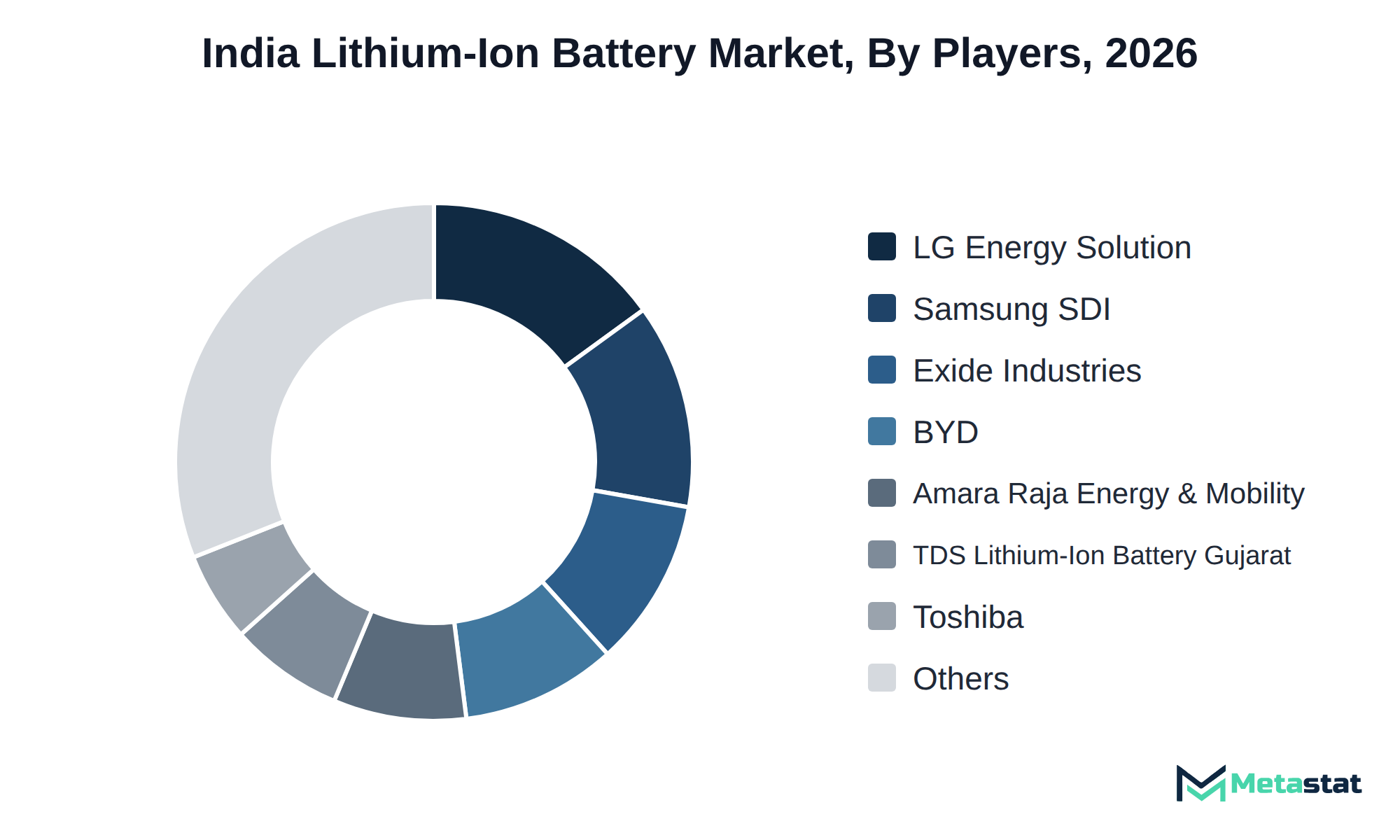
In the India Lithium-Ion Battery market, companies position themselves based on battery type, cell form factor, capacity, and end-use applications. For instance, Exide Industries Limited focuses on the automotive sector, while Amara Raja Energy & Mobility Limited emphasizes consumer electronics and stationary energy storage. TDK Corporation (ATL and Navitasys) offers products across various battery types, catering to diverse industrial needs.
Buyers select suppliers based on factors including price, certification, customization, service, and ecosystem compatibility. LG Energy Solution, Ltd. and Samsung SDI Co., Ltd. compete on advanced technology and quality assurance, appealing to large-scale users. Tata AutoComp Systems Limited and Ola Electric Mobility Limited prioritize customization and local service support, enhancing their appeal in the evolving market.
Growth in the India Lithium-Ion Battery market relies on several key developments. Increased adoption of Lithium Iron Phosphate (LFP) batteries, projected to grow at a CAGR of 21.9%, is essential in meeting rising demand across various sectors, particularly in stationary energy storage and consumer electronics. The automotive sector's transition to electric vehicles significantly influences market dynamics, with automotive applications anticipated to reach USD 5.5 billion by 2033, reflecting a CAGR of 21.2%. Challenges persist, particularly in the form of raw material availability and supply chain constraints, which could impede growth. Disruptions in sourcing high-quality lithium and cobalt slow down development in battery manufacturing processes. If these supply chain issues remain unresolved, achieving the forecasted market size of USD 13.3 billion becomes increasingly difficult. The relationship between these developments and challenges will ultimately shape the evolution of the market through the forecast period.
By Battery Type: Lithium Iron Phosphate (LFP), Lithium Nickel Manganese Cobalt Oxide (NMC), Lithium Cobalt Oxide (LCO), Lithium Manganese Oxide (LMO), Lithium Nickel Cobalt Aluminium Oxide (NCA), Lithium Titanate (LTO), Others (LMFP, LNMO)
By Cell Form Factor: Cylindrical, Prismatic, Pouch, Others (Button, Coin)
By End-Use Industry: Consumer Electronics, Automotive, Stationary Energy Storage, Industrial Equipment and Power Tools, Telecommunications, Others (Medical Devices, Aerospace, Defence, Marine)
The report strategically identifies and profiles the key market players and analyses their core competencies in each sub-segment of the Lithium-Ion Battery market.
Report Attributes | Details |
Study Period | 2021-2033 |
Base Year | 2025 |
Estimated Year | 2026 |
Forecast Period | 2026-2033 |
Historical Period | 2021-2025 |
Growth Rate | CAGR 18.0% from 2026 to 2033 |
Revenue Unit | USD billion |
Segmentation | By Battery Type, Cell Form Factor, Capacity, End-Use Industry, and Region |
Find answers to common questions about this report
The Lithium-Ion Battery market size was valued at USD 3.5 billion in 2025.
The market is projected to grow at a CAGR of 18.0% during the forecast period from 2026 to 2033.
Lithium Iron Phosphate (LFP) leads the Lithium-Ion Battery market with a projected value of USD 6.1 billion by 2033, reflecting the highest growth rate among the battery types at a CAGR of 21.9%.
Rising demand from the automotive industry, driven by the adoption of electric vehicles, significantly supports market growth. Surging demand for consumer electronics further enhances investment prospects in battery technology.
Pricing pressures significantly impact growth, particularly among automotive manufacturers and consumer electronics companies. Rising raw material costs, especially for lithium, cobalt, and nickel, hinder production margins and restrict overall adoption rates across various segments.
Several factors favor adoption in the India Lithium-Ion Battery market. Rising demand for high-capacity batteries, particularly above 60,000 mAh, drives interest from industries requiring efficient energy storage solutions. Increased investments in advanced manufacturing processes enhance supply chain capabilities, enabling manufacturers to meet growing market needs effectively.
The Lithium-Ion Battery market is estimated to reach a valuation of USD 13.3 billion by 2033.
Key players operating in the Lithium-Ion Battery market include Exide Industries Limited, Amara Raja Energy & Mobility Limited, LG Energy Solution, Ltd., Samsung SDI Co., Ltd., BYD Company Limited, Tata AutoComp Systems Limited, and Su-Kam Power Systems Limited.
The automotive segment is expected to reach USD 5.5 billion by 2033, with a compound annual growth rate of 21.2%.
The Lithium Iron Phosphate (LFP) segment is projected to expand at a compound annual growth rate of 21.9%.
The analysts below cover Energy and Power research at Metastat Insights.
LEAD ANALYST
Utkarsh Khirodkar is a Lead Market Research Analyst at MetaStat Insight, specializing in market intelligence, technology sector assessments, and competitive strategy.

PRINCIPAL CONSULTANT - ENTERPRISE AI & EMERGING TECHNOLOGIES
Banking & Finance · Electronics and Semiconductor · Energy and Power · Healthcare IT · Information & Technology · Professional Services
Vijay Gunti is a Principal Consultant at MetaStat Insight, bringing over two decades of experience across enterprise digital transformation, technology strategy, and intelligent systems.

ENERGY & INFRASTRUCTURE INDUSTRY CONSULTANT
Automotive and Transportation · Electronics and Semiconductor · Energy and Power · Machinery & Equipment
Saurabh Vasant Ganvir consults for Energy & Infrastructure Industry at MetaStat Insight, specializing in renewable energy, solar EPC, and electric vehicle (EV) infrastructure markets.
Evaluating sovereign cloud deployments for core banking platforms demands a clear view of data residency regulations and migration exit strategies. MetaStat Insight delivered an exhaustive review of regional latency tolerances, mainframe decommission milestones, and third-party vendor concentration risk. The regulatory compliance mapping across European and Asian financial jurisdictions gave our team a dependable baseline for multi-cloud infrastructure discussions.
Replacing petrochemical surfactants with bio-based alternatives requires realistic timelines on industrial precision fermentation scaling. The market research broke down commercialization timelines, feedstock sugar price sensitivities, and regional cosmetic ingredient regulatory approvals in Europe and East Asia. That supplier readiness mapping gave our formulations team reliable context when comparing renewable chemical sourcing roadmaps.
Tracking ceramic matrix composite adoption in high-bypass aero engines requires strict attention to material qualification cycles and FAA airworthiness testing milestones. The MetaStat Insight team provided a detailed timeline of silicon carbide fiber manufacturing capacity and commercial foundry lead times. Having clear visibility into upstream thermal barrier coating supply helped us stress-test our long-term component procurement strategy.
Explore related market intelligence reports worth reading alongside this one.