
LEAD ANALYST
Utkarsh Khirodkar is a Lead Market Research Analyst at MetaStat Insight, specializing in market intelligence, technology sector assessments, and competitive strategy.

Global Integrated Digital Advertising Services Market Size, Share, By Service Type (Digital Advertising Strategy and Consulting, Digital Media Planning and Buying, Digital Creative and Content Development, Digital Campaign Management and Execution, Digital Analytics and Performance Optimization), By Advertising Channel (Search Advertising, Social Media Advertising, Display and Programmatic Advertising, Video and Connected TV Advertising, Mobile Advertising, Native Advertising, Influencer Advertising, Affiliate Advertising), By Organization Size (Large Enterprises and Small and Medium-Sized Enterprises), By End-Use Industry (Retail and E-commerce, Banking, Financial Services and Insurance, Media and Entertainment, Information Technology and Telecommunications, Healthcare and Pharmaceuticals, Automotive, Consumer Goods and FMCG, Travel and Hospitality, Education, Others (Real Estate, Government and Professional Services)), Industry Analysis, Growth, Trends, and Forecast, 2026-2033
Report ID
MSI-5704
Published
November, 2026
Pages
290 Pages
Format
Historical
Base year
Forecast
Forecast period
Report Details
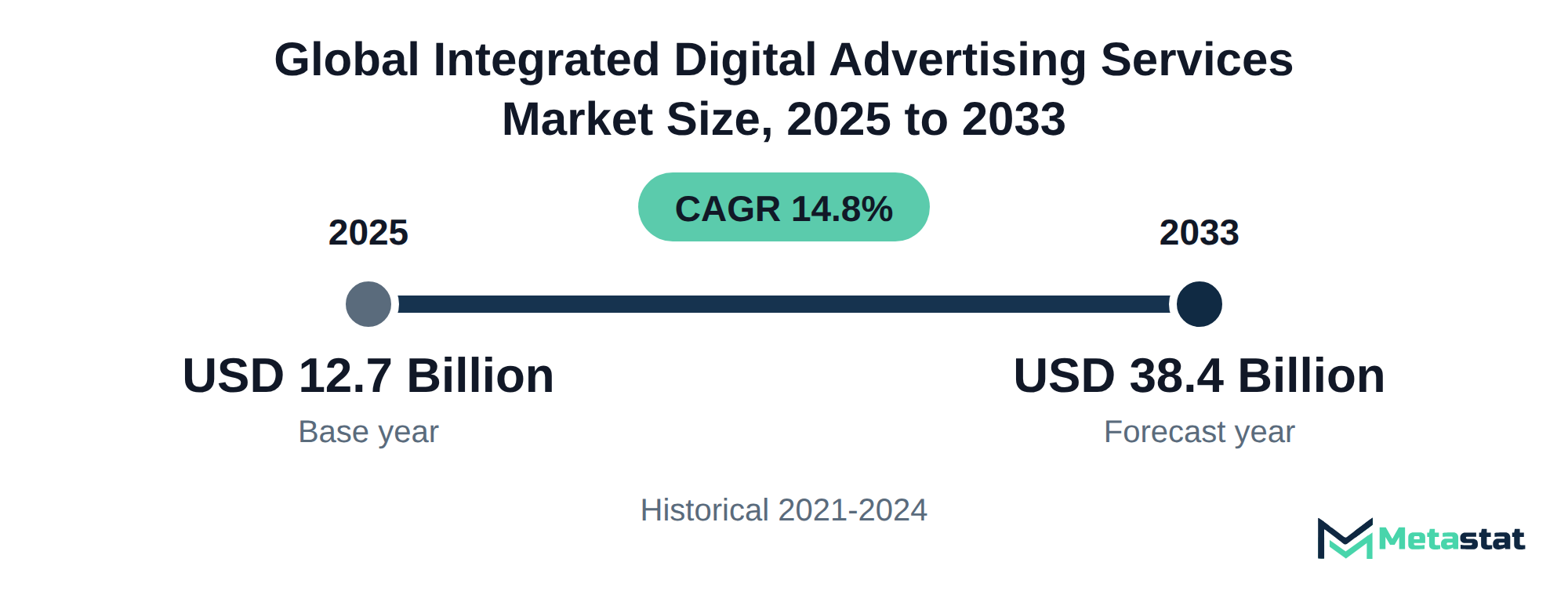
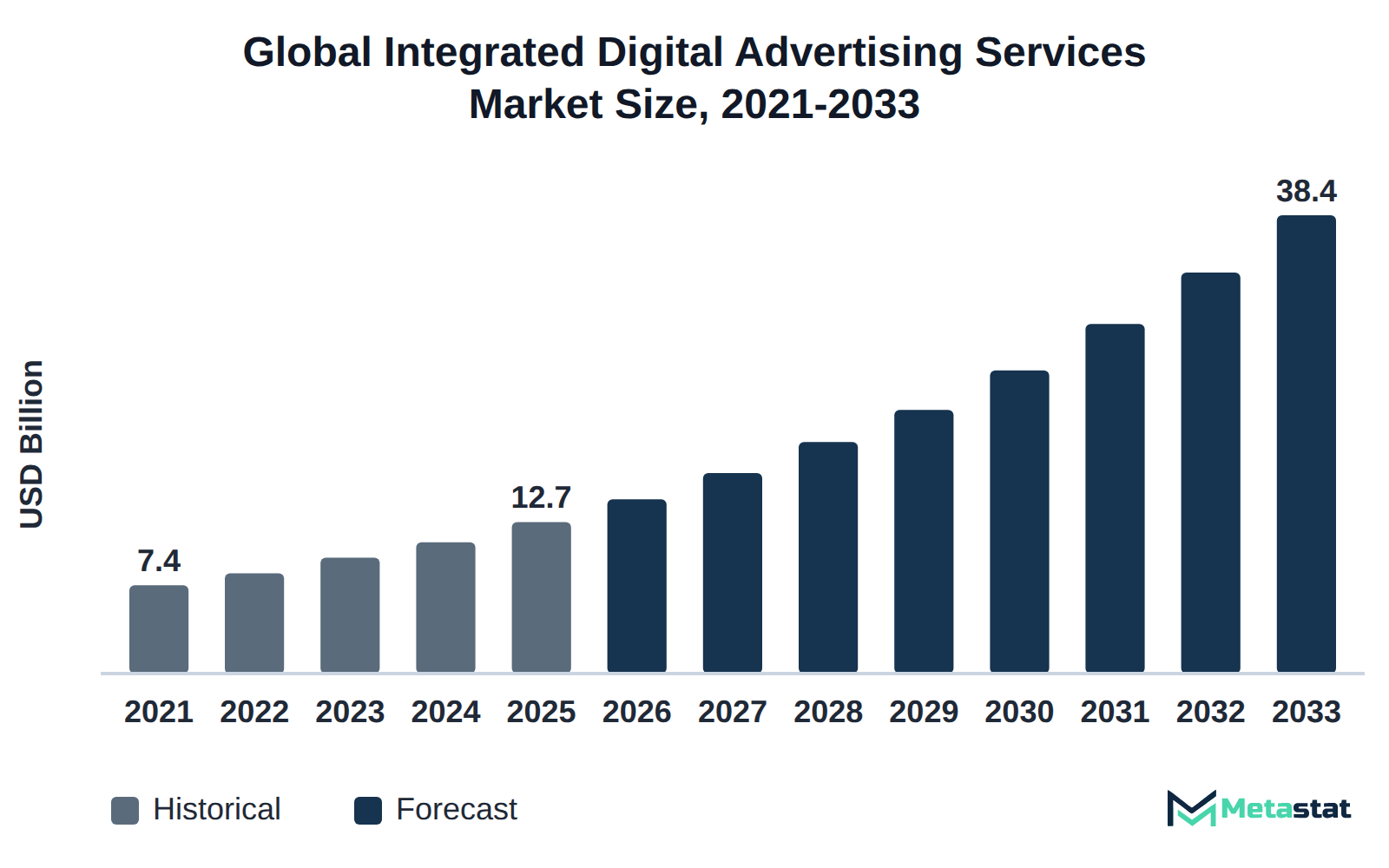
Market Valuation: Valued at $12.7 Billion in 2025, projected to reach $38.4 Billion by 2033 at a 14.8% CAGR.
Dominant Segment: Digital Media Planning and Buying leads the market, driven by the need for effective budget optimization across multiple platforms.
Geographic Lead: North America is the leading region, with the US expected to drive growth due to advanced technological infrastructure and high consumer engagement in digital channels.
What's Inside: The report includes comprehensive competitive coverage, detailed analyses of market dynamics, and a forecast window from 2026 to 2033.
Emerging Trends: AI-driven programmatic advertising is transforming the market, enhancing efficiency and targeting capabilities for advertisers.
Consumer Behavior Shift: The increasing adoption of social media platforms for advertising reflects a strategic response to changing consumer behaviors, leading to greater investments in social media advertising services.
Choose Your License
Global Integrated Digital Advertising Services Market
The global Integrated Digital Advertising Services market was valued at USD 12.7 billion in 2025 and is projected to reach USD 38.4 billion by 2033, growing at a CAGR of 14.8% over the forecast period.
The Integrated Digital Advertising Services market encompasses a range of offerings that support organizations in effectively reaching their target audiences through digital channels. Buyers invest in these services to enhance brand visibility, optimize advertising spend, and improve overall marketing effectiveness. The market serves various sectors, including retail, banking, media, and technology, which rely on innovative strategies and precise execution to drive customer engagement.
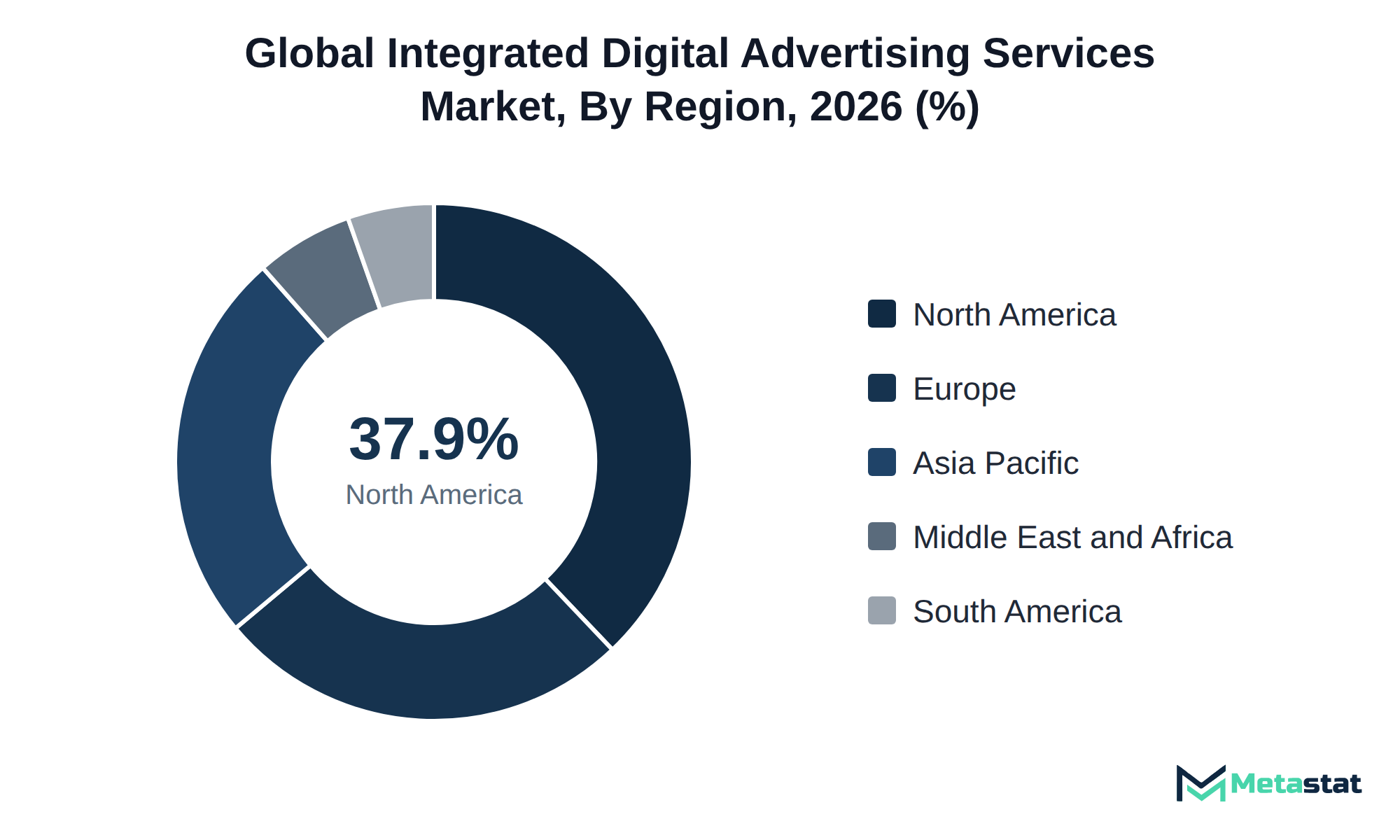
Significant growth within the market stems from the increasing digitalization of advertising and the demand for data-driven marketing solutions. Among the various segments, Digital Media Planning and Buying holds the largest value and helps optimize advertising budgets across multiple platforms. North America holds 37.9% of the market in 2025, with the US leading in 2026. This region experiences growth driven by its advanced technological infrastructure and high consumer engagement in digital channels.
The market's expansion is further propelled by the rising adoption of social media platforms for advertising. Marketers recognize the potential of social media as an effective channel for reaching diverse audiences, leading to increased investments in social media advertising services. This shift reflects changing consumer behaviors, as organizations work to connect with customers through engaging, personalized digital experiences.
The Integrated Digital Advertising Services market offers various services aimed at enhancing digital marketing efforts. Buyers invest in these services to effectively connect with consumers across multiple digital platforms. Organizations recognize the value of developing targeted digital strategies that align with consumer behavior, enhancing engagement and driving sales.
Growth in this market is driven by the increasing adoption of digital channels for advertising. Among the various segments, Digital Media Planning and Buying represents the most substantial share, reflecting the strategic importance of optimizing media investments across digital platforms. This region's strong market presence is supported by advanced digital infrastructure and high levels of consumer engagement.
Innovation in advertising technologies continues to support market growth, enabling advertisers to reach audiences more efficiently. The demand for data-driven advertising solutions has surged, with brands seeking to leverage analytics for better targeting. Organizations prioritize effective marketing strategies, positioning the Integrated Digital Advertising Services market for significant expansion.
The integration of AI-driven programmatic advertising has transformed the Integrated Digital Advertising Services market. This technology enhances advertising efficiency by automating media buying processes, enabling advertisers to target audiences more accurately and optimize spending. By 2033, revenue from digital campaign management and execution is projected to experience significant growth, driven by a compound annual growth rate of 15%.
Automated media buying reduces human error and streamlines the process, allowing organizations to allocate resources more effectively. This trend attracts various industries, particularly large enterprises, which have the capacity to invest in advanced advertising technologies. Large enterprises are projected to achieve a market value of USD 23.3 billion by 2033, highlighting the impact of AI on advertising strategies.
The shift towards AI-driven solutions supports a competitive edge for businesses, leading to enhanced customer engagement and improved return on investment. Companies adopting these technologies drive overall demand for integrated digital advertising services, reflecting the growing significance of data-driven insights in campaign planning and execution.
Omnichannel campaigns and first-party data activation shape consumer engagement within the Integrated Digital Advertising Services market. Firms increasingly prioritize data-driven strategies that allow for cohesive marketing efforts across multiple platforms. Integrated campaigns use first-party data to tailor advertising content, influencing purchasing decisions more effectively than traditional methods. Marketing technology platforms help teams coordinate these campaigns across channels.
The projected revenue for Digital Advertising Strategy and Consulting, expected to grow from USD 1.9 billion in 2026 to USD 4.9 billion by 2033, highlights the demand for integrated solutions. Companies investing in these strategies benefit from improved customer insights and a more personalized approach to advertising, resulting in higher conversion rates. This capability builds stronger relationships with consumers, positioning businesses advantageously in a competitive environment.
Pricing models for these integrated services often vary, with many firms adopting subscription-based contracts or pay-per-performance models. Such flexibility allows organizations to manage costs while optimizing their advertising spend. The financial commitment to these innovative strategies results in enhanced operational efficiency and greater returns on investment, driving further adoption across the market.
Performance-based advertising models are transforming how businesses engage with their audiences. This approach emphasizes results-driven metrics, ensuring that advertising investments deliver measurable outcomes. Digital Media Planning and Buying is a key component of the Integrated Digital Advertising Services market. It reflects this trend, with an expected market value of USD 9.4 billion by 2033 and a CAGR of 14.9%. This growth indicates a clear shift towards strategies that prioritize accountability and efficiency in ad spending.
Large enterprises increasingly adopt performance-based models to optimize their marketing budgets. These organizations seek precise measurements of campaign effectiveness, aligning their spending with actual performance. This demand for accountability leads to a heightened focus on advanced attribution technologies, enabling businesses to track consumer interactions across various channels. The integration of data analytics further supports ROI optimization, allowing companies to refine their strategies based on insights derived from consumer behavior.
The shift towards performance-based models in the market enhances competition among service providers, driving innovation in analytics and attribution methodologies. This environment creates a sustainable ecosystem where businesses strive for efficiency, ultimately benefiting advertisers and consumers alike.
The decline of third-party cookies and new privacy regulations are reshaping the Integrated Digital Advertising Services market. The increased focus on consumer privacy creates challenges for advertisers who rely on third-party data for targeting and personalization. For instance, the introduction of consumer data protection laws has led to a rise in digital marketing strategies that prioritize first-party data collection. Advertisers are shifting their focus toward building direct relationships with consumers to obtain consent for data usage and enhance trust.
The market is changing considerably, particularly in Digital Media Planning and Buying. The increased demand for privacy-conscious advertising solutions drives marketers to innovate and adapt their strategies. Companies that prioritize transparency in data usage and invest in customer-centric approaches are likely to gain a competitive advantage.
Data privacy concerns, alongside the decline of third-party cookies, are shifting advertising strategies. The Integrated Digital Advertising Services market is evolving to encompass more ethical practices while meeting regulatory requirements. Advertisers that successfully navigate these changes will enhance their reputation and increase consumer loyalty, promoting long-term growth and resilience in the face of privacy-centric challenges.
Organizations are reallocating their marketing budgets toward digital channels, driven by a shift in consumer behavior and the need for targeted outreach. Retail and e-commerce companies, in particular, have significantly increased their investment in digital advertising, seeking to leverage online platforms to engage customers effectively. This transition reflects the view that a strong online presence leads to higher conversion rates, so businesses spend more on integrated digital strategies. In 2026, the segment focused on retail and e-commerce is projected to reach USD 3.3 billion, expanding to USD 8.8 billion by 2033, indicating a compound annual growth rate (CAGR) of 15.1%. This growth highlights the increasing importance of digital advertising as a critical component of marketing strategies across various sectors.
Organizations enhance their digital marketing efforts, and the Integrated Digital Advertising Services market experiences robust demand, fueled by increasing reliance on online engagement and advertising platforms.
The integration of advanced digital analytics tools enhances the effectiveness of marketing strategies within the market. Organizations increasingly rely on comprehensive analytics to derive insights from consumer behavior, enabling data-driven decision-making. This shift supports targeted advertising campaigns and optimizes budget allocation across various digital channels. The retail and e-commerce sector particularly benefits from these tools, which help in measuring campaign performance and consumer engagement. Enhanced visibility into consumer interactions allows businesses to adapt their strategies in real-time, improving overall marketing efficiency.
Digital analytics streamlines ROI measurement and influences the shift toward personalized advertising. Businesses that leverage analytics tools gain a competitive edge, responding proactively to emerging consumer trends. This trend supports growth within the Integrated Digital Advertising Services market, attracting further investment into advanced analytics capabilities. The result is a more agile marketing landscape, where organizations continuously refine their approaches based on insights.
Escalating operational costs serve as a significant restraint in the Integrated Digital Advertising Services market. This increase in costs primarily affects small and medium-sized enterprises, which often struggle with budget limitations for marketing initiatives. Higher expenses lead to slower uptake of advanced digital advertising solutions among these buyers, resulting in smaller orders and delayed implementation of new campaigns. The pressure on budgets restricts the ability of these organizations to invest in comprehensive services including digital media planning and buying, further hampering market growth. Major players in the market, focusing on delivering cost-effective solutions, face challenges in meeting the diverse needs of these smaller enterprises. Adapting to the financial constraints experienced by this buyer group poses ongoing challenges, potentially leading to missed opportunities for broader engagement in the digital advertising landscape.
Suppliers face significant challenges related to rising talent costs in delivering Integrated Digital Advertising Services. High demand for skilled professionals in digital marketing and related fields drives up compensation, leading to increased operational expenses. Organizations aim to attract and retain top talent, resulting in pressure on profit margins. Consequently, suppliers implement strategies to enhance efficiency and optimize staffing. This includes investing in automation technologies and streamlining processes to reduce reliance on manual labor. Several firms focus on developing in-house talent through training programs to alleviate the burden of external hiring costs. These measures help suppliers maintain competitiveness while navigating the challenges presented by escalating talent expenses in the market.
Digital media planning and buying represents a significant growth opportunity within the Integrated Digital Advertising Services market. The increasing reliance on digital channels by businesses drives the need for effective media strategies, which compels advertisers to allocate more budget toward this area.
Large enterprises, in particular, leverage digital media planning and buying to optimize their reach and engagement. The shift in consumer behavior toward online platforms creates an environment where traditional media strategies fall short. Consequently, brands invest heavily in this segment to enhance visibility and conversion rates. Such trends increase revenue potential and create competitive advantages for firms skilled in the digital landscape.
The Global Integrated Digital Advertising Services market is segmented based on Service Type, Advertising Channel, Organization Size, and End-Use Industry.
This segment provides strategic guidance to organizations seeking to optimize their digital marketing initiatives, primarily serving large enterprises and small to medium-sized businesses. Many firms also turn to digital marketing and social media agency services for this kind of guidance. A significant driver of growth stems from the increasing importance of data-driven decision making in digital marketing, with companies demanding tailored strategies that enhance customer engagement. This segment demonstrates faster growth than others, including Digital Media Planning and Buying, which is expected to grow at a CAGR of 14.9%. Unlike other segments, Digital Advertising Strategy and Consulting focuses more on strategic planning and consulting services, reflecting a shift in how organizations approach their marketing efforts in response to evolving consumer behaviors and technological advancements.
This segment focuses on the strategic allocation and procurement of digital advertising space, facilitating effective audience targeting for advertisers. It primarily serves large enterprises and small to medium-sized businesses aiming to optimize their digital marketing efforts. Demand drives growth in this segment due to the increasing emphasis on data-driven decision-making and performance metrics. The expected rise in digital advertising expenditure further fuels this growth. Compared to other segments within the service type category, Digital Media Planning and Buying shows a faster growth rate, supported by a CAGR of 14.9%, contrasting with the slower growth anticipated in Digital Advertising Strategy and Consulting at 14.4%. Such dynamics highlight the segment’s critical role in adapting to evolving market demands for precise and effective advertising strategies.
Digital Creative and Content Development segment is expected to reach USD 7.6 billion by 2033. This segment encompasses the creation of engaging and effective content for various digital platforms, serving brands and businesses aiming to enhance their online presence. Brands often pair this work with content marketing programs. Organizations across retail, media, and technology sectors increasingly invest in creative content to capture audience attention and drive engagement. The rapid growth of social media and video platforms fuels demand for innovative and visually appealing content. With a CAGR of 15%, this segment experiences faster growth compared to other service types, driven by evolving consumer preferences for dynamic content experiences. In contrast, segments including Digital Advertising Strategy and Consulting show lower growth, indicating a shift in focus toward more engaging, content-driven marketing approaches.
Digital Campaign Management and Execution segment is projected to grow at a CAGR of 15% during the forecast period. This segment focuses on planning, executing, and optimizing digital marketing campaigns across various platforms. Businesses engage this service to reach their target audience effectively and track campaign performance in real-time. The increasing emphasis on data-driven marketing strategies and the rising demand for personalized advertising drive the growth of this segment. Compared to other segments, Digital Campaign Management and Execution stands out with a higher growth rate, highlighting its important role in the evolving marketing environment. Investment in advanced digital tools and analytics enhances the capabilities of suppliers, allowing them to deliver more efficient campaigns that meet clients' unique demands. Overall, the segment plays an important role in shaping marketing strategies across various industries.
Digital Analytics and Performance Optimization focuses on enhancing the effectiveness of digital marketing campaigns through data analysis and performance evaluation. Businesses leverage this segment to track campaign performance, optimize spend, and improve decision-making based on analytics. This segment primarily serves large enterprises and small and medium-sized enterprises seeking to refine their digital marketing strategies. A key driver of this segment arises from the increasing demand for data-driven insights that enhance marketing effectiveness. Compared to other segments, this area experiences significant growth due to the growing emphasis on measurable results and return on investment (ROI). Organizations prioritize investments in analytics to gain insights that guide marketing strategies, making this segment distinct from others with slower growth rates.
Search Advertising segment is valued at USD 3.2 billion in 2026 and is projected to reach USD 8 billion by 2033, at a CAGR of 13.9% during the forecast period. This segment involves promoting products and services through paid search engine results to enhance visibility and engagement with potential customers. Businesses, particularly in the e-commerce and retail sectors, engage in search advertising to target specific audiences effectively. Increasing internet penetration and the prevalence of mobile devices drive the growth of this segment, with more consumers conducting searches online. Compared to other advertising channels, including social media advertising, search advertising experiences slower growth due to market saturation; however, its higher conversion rates make it a valued option for many organizations. Enhanced targeting capabilities contribute further to its appeal, allowing advertisers to optimize campaigns based on performance metrics.
Social Media Advertising segment is estimated to reach USD 7.7 billion by 2033, at a CAGR of 15.2% during the forecast period. This segment focuses on using social platforms to promote brands, engage audiences, and drive conversions. Businesses across various industries, particularly retail and e-commerce, leverage social media advertising to reach targeted demographics and enhance brand visibility. A significant growth driver includes increasing user engagement on social media platforms, leading advertisers to allocate larger portions of their marketing budgets to this channel. Compared to other segments, including Search Advertising, which has a CAGR of 13.9%, Social Media Advertising demonstrates a faster growth trajectory, reflecting the shift in consumer behavior toward interactive and community-driven content. This dynamic sets it apart from traditional advertising methods and highlights its role in the Integrated Digital Advertising Services market.
Display and Programmatic Advertising segment is expected to reach USD 6.1 billion by 2033. This segment is used for targeted advertising across digital platforms, enabling advertisers to reach specific audiences through automated ad placements. Businesses in the retail and e-commerce sectors predominantly leverage this segment for its effectiveness in engaging consumers. The growing demand for personalized advertising drives the segment, particularly among brands seeking to enhance their digital presence. Unlike other advertising channels, Display and Programmatic Advertising is projected to experience a CAGR of 16.2%, reflecting rapid growth compared to other segments. The adoption of advanced programmatic technology facilitates real-time bidding and data-driven decision-making, further differentiating this segment from traditional advertising methods. This technological shift supports the evolution of digital marketing strategies, reinforcing its importance in the Integrated Digital Advertising Services market.
Video and Connected TV Advertising segment is projected to grow at a CAGR of 16.2% during the forecast period. This segment focuses on delivering video content through connected television devices and online platforms, appealing primarily to advertisers targeting consumers in an engaging format. Increasing viewership of streaming services and changing consumer preferences towards video content drive the growth of this segment. Brands in retail, entertainment, and technology leverage video advertising to enhance brand visibility and engagement. This segment outpaces other advertising channels in growth rate due to its ability to deliver targeted ads and real-time analytics. In contrast to traditional advertising methods, video and connected TV advertising employs advanced targeting mechanisms, leading to higher engagement rates and better ROI for advertisers. Investment in this segment reflects a strategic shift towards integrated digital advertising strategies, supporting the sector's expansion within the broader Integrated Digital Advertising Services market.
Mobile Advertising employs mobile devices to deliver targeted advertising messages to consumers. This method attracts advertisers from various industries, including retail and consumer goods, who seek to engage users through personalized and location-based campaigns. Driven by increasing smartphone penetration and rising consumption of mobile data, demand for mobile advertising continues to expand. The segment distinguishes itself from others within the advertising channel by focusing on real-time interaction and user engagement, resulting in higher conversion rates compared to traditional advertising forms. Growth potential remains strong, reflecting the ongoing shift in consumer behavior toward mobile-first experiences. Advertisers increasingly adopt mobile strategies to enhance visibility and reach, aligning with trends in digital transformation across the market.
Native advertising integrates promotional content with user-generated content to create an effective experience for audiences. This form of advertising targets consumers within their natural browsing habits, appealing primarily to businesses in retail, media, and e-commerce seeking enhanced engagement. An increasing preference for non-intrusive advertising formats drives this segment, reflecting a broader trend towards personalized marketing strategies. The distinct nature of native advertising compared to other channels, including display or video advertising, lies in its ability to blend with content, resulting in better user retention and interaction. This unique positioning captures attention without disrupting the user experience, resulting in higher engagement rates. Marketers leverage this method to reach specific demographics effectively, addressing the growing demand for authentic and relatable advertising techniques. The market sees substantial interest from organizations aiming to differentiate their messaging in a crowded digital environment.
Influencer Advertising is a key channel within digital marketing strategies, focusing on partnering with individuals who have substantial social media followings to promote products or services. Influencer advertising sits within the broader influencer marketing market. Brands leverage this approach to enhance their visibility and connect authentically with target audiences, particularly in the retail and e-commerce sectors. The increasing reliance on social influencers, driven by changing consumer preferences for authentic and relatable content, significantly drives growth in this segment. Compared to other advertising channels, Influencer Advertising often experiences faster growth due to its ability to engage audiences effectively through personalized marketing. This segment attracts a diverse range of buyers, including large enterprises and small and medium-sized enterprises, all seeking to capitalize on the unique benefits of influencer partnerships that traditional advertising methods do not provide.
Affiliate advertising focuses on performance-driven marketing strategies, where businesses reward affiliates for generating traffic or sales through their promotional efforts. This approach appeals to various industries, including retail, technology, and financial services, allowing them to leverage the reach of affiliate marketers to drive customer acquisition and revenue growth. Key forces influencing this segment include the growing trend of e-commerce, which enhances the demand for affiliate partnerships, and advancements in tracking technologies that facilitate performance measurement. Compared to other advertising channels, affiliate advertising operates on a cost-per-action basis, providing advertisers with a lower risk profile and differentiating it from traditional advertising models that involve upfront payments without guaranteed returns. This model encourages a diverse range of businesses to engage with affiliates, broadening the reach and effectiveness of their marketing efforts in the market.
The Large Enterprises segment is valued at USD 9.3 billion in 2026 and is projected to reach USD 23.3 billion by 2033, at a CAGR of 14% during the forecast period. This segment primarily serves large-scale businesses seeking comprehensive digital advertising solutions to enhance their market presence and drive customer engagement. Significant growth in this segment arises from increasing investments in digital marketing strategies and the shift toward data-driven decision making among these enterprises. Unlike smaller organizations, large enterprises allocate substantial budgets for digital advertising, enabling them to leverage advanced technologies and platforms. This unique positioning facilitates higher growth rates compared to the Small and Medium-Sized Enterprises segment, which experiences a CAGR of 16%. The ability to integrate multiple advertising channels effectively supports the increasing demand for digital media solutions, driving overall growth in the Integrated Digital Advertising Services market.
Small and Medium-Sized Enterprises segment is estimated to reach USD 15 billion by 2033, at a CAGR of 16% during the forecast period. This segment serves small and medium-sized businesses that engage in digital advertising to enhance brand visibility and drive sales. Several factors influence growth in this segment, including increasing adoption of digital marketing strategies by smaller companies looking to compete with larger enterprises. This segment exhibits faster growth compared to larger organizations, reflecting the need for cost-effective advertising solutions tailored to specific local markets. With a focus on affordability and targeted outreach, small and medium-sized enterprises increasingly demand services that provide measurable results and enhance online engagement. The market anticipates a strong shift in resource allocation toward digital channels, supporting the economic viability of these businesses in a competitive landscape.
This segment serves retail brands and online marketplaces that rely on effective digital marketing strategies to increase visibility and drive sales. Growing consumer preference for online shopping and the need for targeted advertising campaigns significantly drive demand within this segment. Compared to other segments, Retail and E-commerce experiences a higher growth rate, reflecting the increasing shift towards digital commerce. The evolving landscape of consumer behavior, along with advancements in digital advertising technologies, enhances the effectiveness of campaigns tailored for this sector. In addition, data analytics and performance optimization techniques play an essential role in maximizing return on investment for retail advertisers. Such factors indicate robust opportunities within the Integrated Digital Advertising Services market.
Banking, Financial Services and Insurance segment is estimated to reach USD 5.4 billion by 2033, at a CAGR of 14.7% during the forecast period. This segment serves financial institutions and insurance companies focusing on effective customer engagement and targeted marketing strategies. Growing competition among financial services providers drives the adoption of integrated digital advertising methods to enhance visibility and customer acquisition. Evolving consumer behavior necessitates personalized marketing, leading to increased investment in digital channels. Compared to other segments, this segment experiences steady growth, reflecting the crucial need for effective communication in a rapidly changing financial landscape. The projected growth highlights ongoing shifts in marketing strategies within the Integrated Digital Advertising Services market, where companies aim to improve outreach and brand loyalty.
Media and Entertainment segment is expected to reach USD 5.2 billion by 2033. This segment serves content creators, production houses, and streaming services, focusing on promoting their offerings through targeted advertising strategies. The growing demand for engaging content and digital platforms that deliver it drives investments in this sector. Audiences increasingly consume media online, leading advertisers to prioritize digital channels for their campaigns. With a CAGR of 15.1%, this segment experiences significant growth compared to others in the market, driven by the shift in consumer behavior towards online platforms. The transition from traditional advertising to digital formats significantly shapes strategies for businesses in this industry.
Information Technology and Telecommunications segment is projected to grow at a CAGR of 15.1% during the forecast period. This segment focuses on delivering digital advertising strategies tailored for technology companies and telecommunications providers. Firms in this sector leverage digital platforms to enhance brand visibility, engage with customers, and drive sales. Key drivers for growth include rapid technological advancements and increasing reliance on digital solutions for communication and information sharing. Compared to other segments, this niche experiences faster growth due to heightened competition among technology firms seeking to establish a strong online presence. The market emphasizes the significance of data-driven advertising and personalized content, which differentiates it from the Banking, Financial Services and Insurance segment, which grows at a slightly lower rate of 14.7% during the same period.
The Healthcare and Pharmaceuticals segment focuses on delivering targeted advertising strategies to promote medical products, services, and health-related information. It serves hospitals, pharmaceutical companies, and health service providers aiming to enhance their market presence effectively. Patient engagement solutions can support this outreach to patients and healthcare professionals. Increasing competition within the healthcare sector drives the demand for innovative digital advertising solutions, facilitating outreach to patients and healthcare professionals. Regulatory requirements, particularly concerning privacy and ethical guidelines in advertising, present challenges that impact campaign execution. This segment stands out by emphasizing compliance in a highly regulated environment. Growth patterns in this sub-segment reflect a unique trajectory influenced by evolving digital health trends and consumer engagement strategies, contributing to the overall dynamics of the Integrated Digital Advertising Services market.
The Automotive segment involves companies engaged in manufacturing and marketing vehicles, using integrated digital advertising services to enhance brand visibility and customer engagement. Automotive manufacturers and dealerships leverage these services to target potential buyers effectively through various digital channels. The segment experiences growth driven by increased demand for online vehicle purchasing and the shift towards electric vehicles, prompting manufacturers to adapt their marketing strategies. Compared to other segments, the Automotive segment features higher advertising expenditures, reflecting the competitive nature of the industry. Evolving technologies and consumer preferences significantly influence advertising approaches, necessitating a focus on innovative digital campaigns. The Integrated Digital Advertising Services market enables automotive companies to connect with consumers in meaningful ways.
Consumer Goods and FMCG includes companies that manufacture and market consumer products and fast-moving consumer goods, relying heavily on integrated digital advertising strategies to reach target audiences. Brands in this segment use digital advertising to enhance customer engagement and drive sales through various online channels. Growth in this sector is driven by changing consumer behavior, with an increasing emphasis on digital interactions over traditional media. Competition within the market intensifies as companies innovate their advertising approaches, leading to differentiated strategies for reaching consumers. Compared to other sub-segments, this area experiences significant growth, underpinned by rising demand for effective digital advertising solutions tailored to consumer-centric marketing. Advertisers increasingly focus on data-driven campaigns that leverage consumer insights, aligning their offerings with market trends and demands. The Integrated Digital Advertising Services market includes several service types that help brands with digital consumer engagement.
The Travel and Hospitality segment engages in promoting travel destinations, services, and experiences through digital channels. Key players, including hotels, airlines, and travel agencies, leverage integrated digital advertising services to attract and retain customers by targeting specific demographics and preferences. Growth in this segment is driven by increasing demand for personalized travel experiences and rising use of online booking platforms. Unlike sectors including Retail and E-commerce, the Travel and Hospitality segment relies on wider seasonal trends, affecting the timing and intensity of advertising strategies. High competition within this segment necessitates continuous innovation in campaigns and offers to stand out in a crowded marketplace. Digital Campaign Management and Execution optimizes these promotional efforts, ensuring that companies reach potential travelers effectively and efficiently.
Education involves institutions providing academic learning and training, incorporating integrated digital advertising to enhance visibility and engage students. This segment is leveraged by schools, universities, and vocational training centers to promote programs and attract prospective students. A notable force influencing this segment is the increasing competition among educational institutions to secure enrollments. Institutions invest in sophisticated digital strategies to differentiate their offerings, resulting in enhanced outreach and improved brand positioning. Compared to other segments including Retail and E-commerce, the education sector experiences slower adoption of digital advertising strategies, primarily due to regulatory concerns and budget constraints in public education systems. The market for integrated digital advertising services is evolving, providing significant opportunities for educational entities to reach targeted audiences effectively.
The Others (Real Estate, Government and Professional Services) segment encompasses a range of industries that employ integrated digital advertising strategies to enhance visibility and engagement. This segment serves various entities, including real estate firms promoting properties and government agencies communicating public initiatives. Demand for digital advertising in this segment is driven by the increasing importance of online presence and the ability to reach diverse audiences effectively. Compared to other segments, including Retail and E-commerce, this segment experiences slower growth due to budget constraints and regulatory considerations affecting government entities. Companies in this sector require targeted campaigns that align with specific messaging and compliance standards, distinguishing them from industries with more direct consumer engagement.
Based on geography, the Global Integrated Digital Advertising Services market is divided into North America, Europe, Asia-Pacific, South America, Middle East, and Africa.
Significant growth in the Integrated Digital Advertising Services market is driven by increasing demand from key industries, including retail and e-commerce, alongside banking, financial services, and insurance. This region benefits from a robust digital infrastructure that supports the rapid adoption of advanced advertising strategies. North America holds a substantial market share of 37.9% in 2025, reflecting strong investment in digital channels. By the end of 2033, North America is projected to reach USD 13.5 billion. The region's focus on innovative advertising techniques, particularly social media and digital video, enhances engagement and conversion rates.
Demand in Europe for the Integrated Digital Advertising Services market draws significant contributions from the retail and e-commerce, and the banking and financial services sectors. Germany, France, and the UK remain key players, leveraging digital strategies to enhance consumer engagement and optimize advertising campaigns. A pronounced shift towards social media advertising aligns with changing consumer preferences, driving growth in this segment. The market's share in Europe stands at 26.0% in 2025, reflecting robust investment in digital marketing infrastructure. Emerging technologies, including artificial intelligence and data analytics, facilitate targeted advertising strategies, delivering measurable results for businesses. A commitment to sustainability in advertising practices represents an additional growth driver, appealing to increasingly environmentally conscious consumers.
Rapid advancements in technology drive growth in the Integrated Digital Advertising Services market across Asia-Pacific. Significant investments in digital infrastructure enhance connectivity, enabling businesses to adopt online platforms for advertising. In this region, major buyer groups include retail and e-commerce, where companies implement digital strategies to reach a broader audience. Countries including China and India represent sizable markets, with increasing internet penetration and smartphone usage fueling demand. The market share for Asia-Pacific in 2025 stands at 24.6%. Local firms actively embrace innovative advertising solutions, contributing to a competitive landscape characterized by rapid change. The emergence of social media advertising channels significantly influences engagement with younger demographics. Overall, the market expansion reflects a shift toward integrating digital strategies across various industries within the region.
The market in South America experiences growing demand driven by key industries including retail and e-commerce, alongside banking, financial services, and insurance. Brazil and Argentina represent significant markets within this region, with companies investing in integrated digital advertising strategies to reach consumers in an evolving digital landscape. Factors including an expanding middle class and increasing internet penetration contribute to a favorable environment for integrated digital advertising services. The market growth aligns with the global trend, where businesses leverage digital channels for improved customer engagement and enhanced brand visibility.
Demand for the Integrated Digital Advertising Services market in the Middle East and Africa relies on a growing digital landscape, especially within Saudi Arabia, UAE, and South Africa. The rise of e-commerce in these regions drives advertising expenditures, with industries including retail and telecommunications leading the way. Local firms increasingly recognize the importance of digital strategies to engage consumers effectively. Improvements in the region's infrastructure, particularly in internet access and mobile connectivity, support rapid growth in online advertising. The region is projected to see heightened activity in the coming years. This momentum reflects the broader shift towards digital solutions, emphasizing the need for businesses to adapt to evolving consumer behavior within the Integrated Digital Advertising Services market.
Companies in the Integrated Digital Advertising Services market pursue diverse strategies to meet evolving client demands. Major players focus on various service types, including digital media planning, creative content development, and campaign management. This segmentation allows firms to target specific buyer preferences, ensuring tailored solutions that align with different market segments.
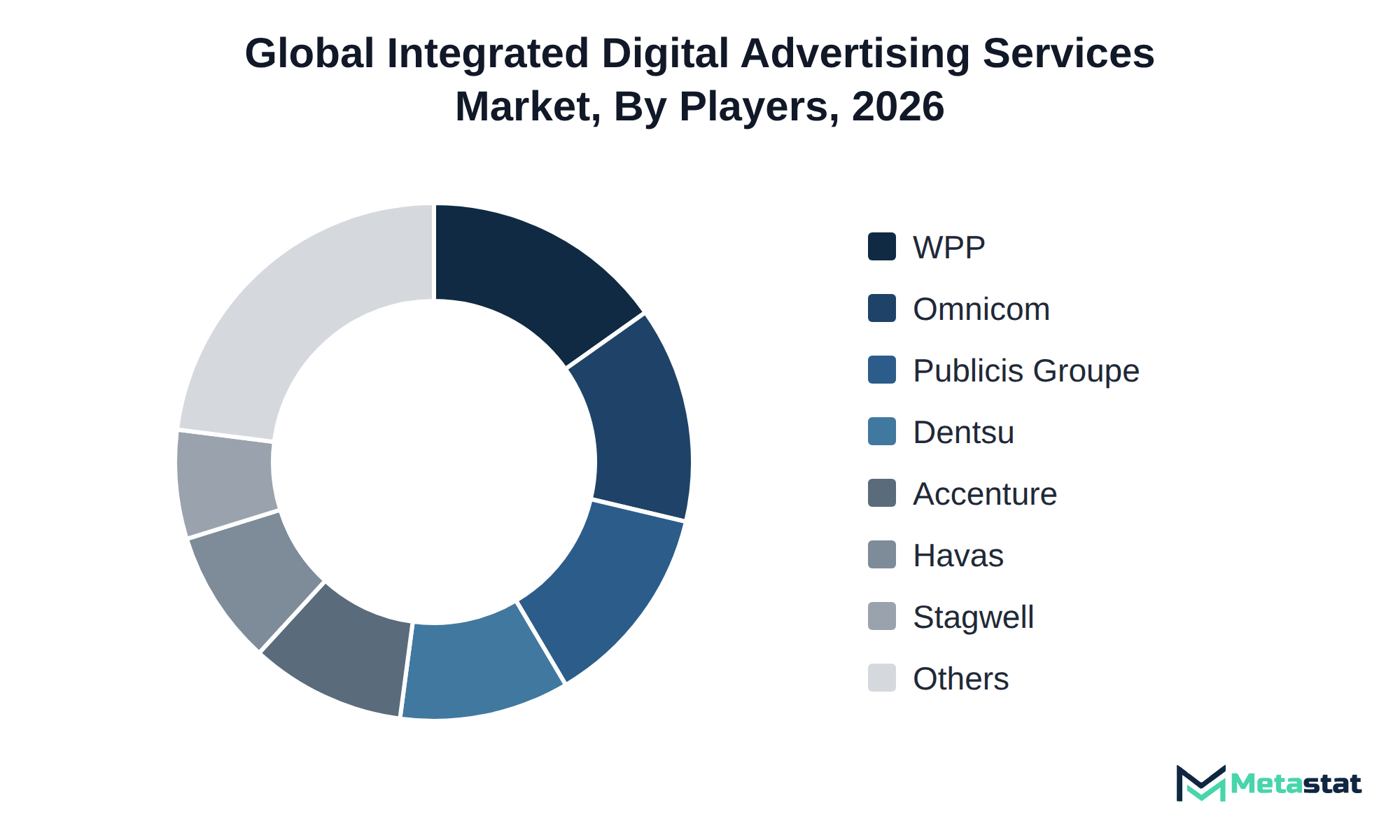
Buyers prioritize factors including price, customization, and service quality when selecting a provider. For instance, WPP plc emphasizes comprehensive digital strategies while Omnicom Group Inc. focuses on data-driven media buying. Publicis Groupe S.A. offers creative solutions that appeal to clients seeking innovative content. Such strategic emphasis enables these firms to capture distinct market segments effectively.
Achieving this growth relies on several key developments in the Integrated Digital Advertising Services market. First, significant expansion in digital media planning and buying will contribute to revenue growth, with projections indicating a value increase to USD 9.4 billion by 2033. This segment attracts investment as businesses increasingly prioritize targeted advertising. Second, the rise of social media advertising, projected to reach USD 7.7 billion, reflects shifts in consumer engagement and marketing strategies, particularly among large enterprises. Third, the continuous evolution of digital campaign management and execution will drive operational efficiency, enhancing overall market performance. However, potential risks, including economic downturns affecting advertising budgets, pose challenges to market growth. Regions like North America, which holds a 37.9% market share, experience fluctuating investments. If market conditions do not support aggressive advertising spend, reaching the forecasted USD 38.4 billion could face delays. Stakeholders will need to address these factors to benefit from the opportunities in this market.
By Service Type: Digital Advertising Strategy and Consulting, Digital Media Planning and Buying, Digital Creative and Content Development, Digital Campaign Management and Execution, Digital Analytics and Performance Optimization
By Advertising Channel: Search Advertising, Social Media Advertising, Display and Programmatic Advertising, Video and Connected TV Advertising, Mobile Advertising, Native Advertising, Influencer Advertising, Affiliate Advertising
By Organization Size: Large Enterprises, Small and Medium-Sized Enterprises
By End-Use Industry: Retail and E-commerce, Banking, Financial Services and Insurance, Media and Entertainment, Information Technology and Telecommunications, Healthcare and Pharmaceuticals, Automotive, Consumer Goods and FMCG, Travel and Hospitality, Education, Others (Real Estate, Government and Professional Services)
The report strategically identifies and profiles the key market players and analyses their core competencies in each sub-segment of the Integrated Digital Advertising Services market.
Report Attributes | Details |
Study Period | 2021-2033 |
Base Year | 2025 |
Estimated Year | 2026 |
Forecast Period | 2026-2033 |
Historical Period | 2021-2025 |
Growth Rate | CAGR 14.8% from 2026 to 2033 |
Revenue Unit | USD billion |
Segmentation | By Service Type, Advertising Channel, Organization Size, End-Use Industry, and Region |
By Region | North America (By Service Type, Advertising Channel, Organization Size, End-Use Industry, and Country)
|
Europe (By Service Type, Advertising Channel, Organization Size, End-Use Industry, and Country)
| |
Asia Pacific (By Service Type, Advertising Channel, Organization Size, End-Use Industry, and Country)
| |
South America (By Service Type, Advertising Channel, Organization Size, End-Use Industry, and Country)
| |
Middle East and Africa (By Service Type, Advertising Channel, Organization Size, End-Use Industry, and Country)
|
Find answers to common questions about this report
The Integrated Digital Advertising Services market size was valued at USD 12.7 billion in 2025.
The market is projected to grow at a CAGR of 14.8% during the forecast period from 2026 to 2033.
The North America Integrated Digital Advertising Services market size is estimated to reach USD 13.5 billion by 2033.
Digital Media Planning and Buying leads the Integrated Digital Advertising Services market with a projected value of USD 9.4 billion by 2033. This segment surpasses others in terms of revenue generation within the market.
Organizations are reallocating marketing budgets toward digital channels due to a shift in consumer behavior and the need for targeted outreach. The integration of advanced digital analytics tools enhances marketing strategies, enabling data-driven decision-making and supporting targeted advertising campaigns.
North America holds the dominant share of the Integrated Digital Advertising Services market, with a projected value of USD 13.5 billion in 2033, representing 37.9 percent of the total market.
Escalating operational costs significantly restrain market growth, particularly affecting small and medium-sized enterprises that struggle with budget limitations for marketing initiatives. Rising talent costs in delivering services challenge suppliers, leading to increased operational expenses and pressure on profit margins.
Factors favoring adoption in the Integrated Digital Advertising Services industry include the increasing reliance on digital channels, which drives businesses to allocate larger budgets toward effective media strategies. Enhanced visibility and higher conversion rates further contribute to this trend, making digital advertising a critical component of marketing efforts.
The Integrated Digital Advertising Services market is estimated to reach a valuation of USD 38.4 billion by 2033.
Key players operating in the Integrated Digital Advertising Services market include WPP plc, Omnicom Group Inc., Publicis Groupe S.A., Dentsu Group Inc., Havas Group, Accenture plc, and Stagwell Inc.
The analysts below cover Information & Technology research at Metastat Insights.
LEAD ANALYST
Utkarsh Khirodkar is a Lead Market Research Analyst at MetaStat Insight, specializing in market intelligence, technology sector assessments, and competitive strategy.

PRINCIPAL CONSULTANT - ENTERPRISE AI & EMERGING TECHNOLOGIES
Banking & Finance · Electronics and Semiconductor · Energy and Power · Healthcare IT · Information & Technology · Professional Services
Vijay Gunti is a Principal Consultant at MetaStat Insight, bringing over two decades of experience across enterprise digital transformation, technology strategy, and intelligent systems.

LEAD CONSULTANT - COMMUNICATION, TELECOM, AND IT
Electronics and Semiconductor · Information & Technology · Machinery & Equipment · Professional Services
Ravindra Sathe Consultants for Communication, Telecom, and IT at MetaStat Insight. He leads the firm's industry research initiatives across telecommunications infrastructure, digital connectivity, enterprise networking, and emerging information technology domains.
Assessing commercial microgrid software adoption requires looking past top-level installation numbers and examining utility interconnection queues. The research provided verifiable data on average permitting timelines, tariff structures, and battery storage integration costs across regional utility territories. That grounded perspective was valuable for our team when building five-year demand projections for industrial microgrid controllers.
Ambulatory surgical centers have very different purchasing cycles for robotic-assisted surgery platforms than major hospital networks. The MetaStat Insight study focused squarely on capital expenditure depreciation, procedural reimbursement pathways, and surgeon training overhead. That operational clarity made it much simpler to validate multi-year procedure growth forecasts against actual ambulatory center adoption patterns.
When planning edge sensor rollouts across refinery environments, generic IoT reports typically miss the harsh-environment certification bottlenecks. MetaStat Insight gave an objective evaluation of ATEX and Class 1 Division 2 hardware availability, along with realistic five-year maintenance cycle cost projections. The comparison of wireless mesh versus private cellular backhaul helped our team pressure-test network reliability models for remote processing facilities.
Explore related market intelligence reports worth reading alongside this one.
Starting from
$2950