
LEAD ANALYST
Utkarsh Khirodkar is a Lead Market Research Analyst at MetaStat Insight, specializing in market intelligence, technology sector assessments, and competitive strategy.

US Managed Information Services Market Size, Share, By Service Type (Managed Infrastructure & Data Center Services, Managed Security Services, Managed Network Services, Managed Application & DevOps Services, Managed Workplace & Endpoint Services, Managed Communications & Collaboration Services, Managed Backup & Disaster Recovery Services, Managed Data & Database Services), By Deployment Model (Cloud-Based and On-Premises), By Enterprise Size (Small & Medium Enterprises and Large Enterprises), By End-Use Industry (Banking, Financial Services & Insurance, IT & Telecommunications, Healthcare & Life Sciences, Manufacturing, Government & Public Sector, Retail & E-commerce, Professional & Business Services, Media & Entertainment, Energy & Utilities), Industry Analysis, Growth, Trends, and Forecast, 2026-2033
Report ID
MSI-5627
Published
October, 2026
Pages
302 Pages
Format
Historical
Base year
Forecast
Forecast period
Report Details
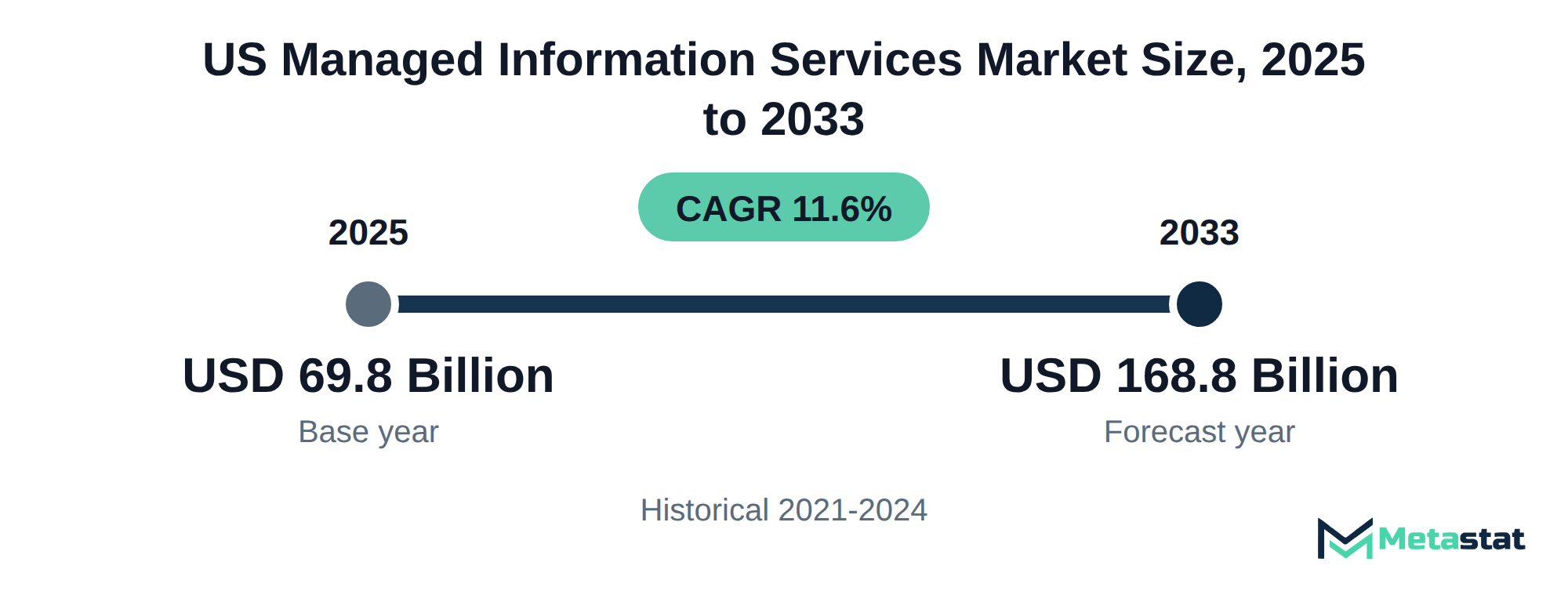
Market Valuation: Valued at $69.8 Billion in 2025, projected to reach $168.8 Billion by 2033 at a 11.6% CAGR.
Dominant Segment: Managed Security Services leads the US Managed Information Services market, driven by increasing concerns over cyber threats and the need for robust data protection.
Geographic Lead: North America is the leading region in market share, supported by high levels of technology adoption and significant investments in cloud-based solutions.
What's Inside: The report provides a comprehensive analysis of service types, deployment models, and enterprise sizes, along with competitive coverage and future market forecasts.
Growing Demand for Cloud Solutions: The cloud-based segment is projected to expand significantly, reflecting a shift towards scalable and flexible IT infrastructure among organizations.
Impact of AIOps: AIOps automation is enhancing operational efficiency, particularly for small and medium enterprises, by streamlining processes and reducing response times.
Choose Your License
US Managed Information Services Market
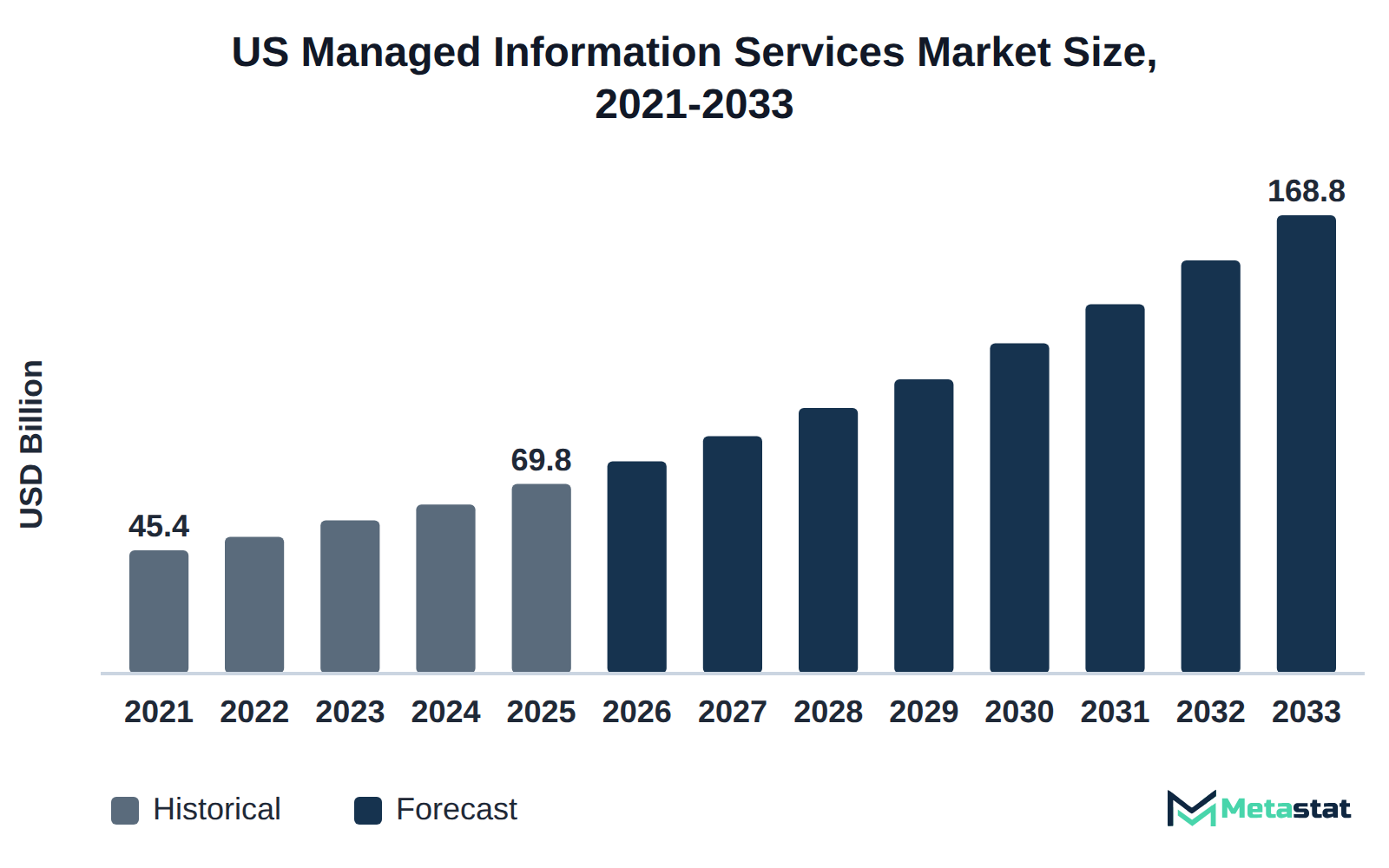
The US Managed Information Services market was valued at USD 69.8 billion in 2025 and is projected to reach USD 168.8 billion by 2033, growing at a CAGR of 11.6% over the forecast period.
The US Managed Information Services market encompasses a wide range of services aimed at managing information technology infrastructures, including data centers, security, and application management. Buyers invest in these services to enhance operational efficiency, optimize resources, and mitigate risks associated with data management and security. This investment reflects a growing reliance on technology to meet business objectives and stay competitive across sectors.
Growth in the market is primarily driven by increasing demand for managed security services, which address rising concerns related to cyber threats and data breaches. Among the different segments, Managed Security Services holds the largest share, catering to a diverse clientele that prioritizes safeguarding sensitive information. The competitive landscape encourages providers to innovate continuously, ensuring they meet the evolving needs of businesses operating in an increasingly digital environment.
North America currently leads in market share, reflecting strong infrastructure and high levels of technology adoption. This region's enterprises accelerate investments in cloud-based solutions, enhancing scalability and flexibility. The market experiences significant growth, supported by a strong focus on digital transformation initiatives across various industries.
The US Managed Information Services market includes various solutions designed to enhance operational efficiency and security for organizations. Buyers invest in these services to ensure reliable management of their IT infrastructures, safeguard sensitive data, and optimize resource allocation. The increasing complexity of IT environments drives the demand for managed services, enabling companies to focus on core business activities while leveraging expert support and technology.
Growth in the market accelerates due to the rising adoption of cloud-based solutions, particularly in the managed security services segment, which holds the largest value. This segment benefits from heightened awareness of cybersecurity threats and the need for strong protection measures across industries. North America leads in market share, supported by a strong presence of key players and high investment in advanced IT solutions.
The US Managed Information Services market is projected to expand significantly, driven by the need for organizations to enhance operational agility and security. Enterprises increasingly seek to improve their digital capabilities, which raises investment in managed services that drive innovation and operational excellence across sectors.
Hybrid cloud operations and the adoption of Financial Operations (FinOps) principles are changing how contracts work in the US Managed Information Services market. The growing adoption of cloud-based solutions, expected to reach USD 116 billion by 2033, demonstrates a significant transition in service delivery models. This evolution reflects an increased demand for integrated services that combine traditional infrastructure management with cloud capabilities.
Enterprises adopting hybrid cloud strategies benefit from enhanced flexibility and cost-effectiveness, allowing them to optimize resource allocation and streamline operations. A cloud management platform can help coordinate resources across these hybrid environments. FinOps, which focuses on financial accountability in cloud spending, enables organizations to manage and forecast their cloud expenses effectively. This financial acumen directly influences contract negotiations, where service providers demonstrate clear value propositions and cost savings to retain clients.
The market sees a notable increase in competitive dynamics, with providers needing to adapt their offerings to meet evolving client expectations. This shift impacts pricing models and enhances service delivery, ensuring alignment with enterprise financial goals. Bringing hybrid cloud operations and FinOps into contract frameworks is set to change service agreements and push managed service partnerships toward greater transparency and accountability.
Managed Detection and Response (MDR) services play a significant role in the US Managed Information Services market, particularly in the context of increasing recurring security spending. SOC as a service offers a related delivery model in which an external provider runs security monitoring. The shift towards subscription-based pricing models has gained momentum, with organizations prioritizing cybersecurity investments. This trend reflects a broader acknowledgment of the evolving threat landscape and the associated costs of data breaches and security incidents.
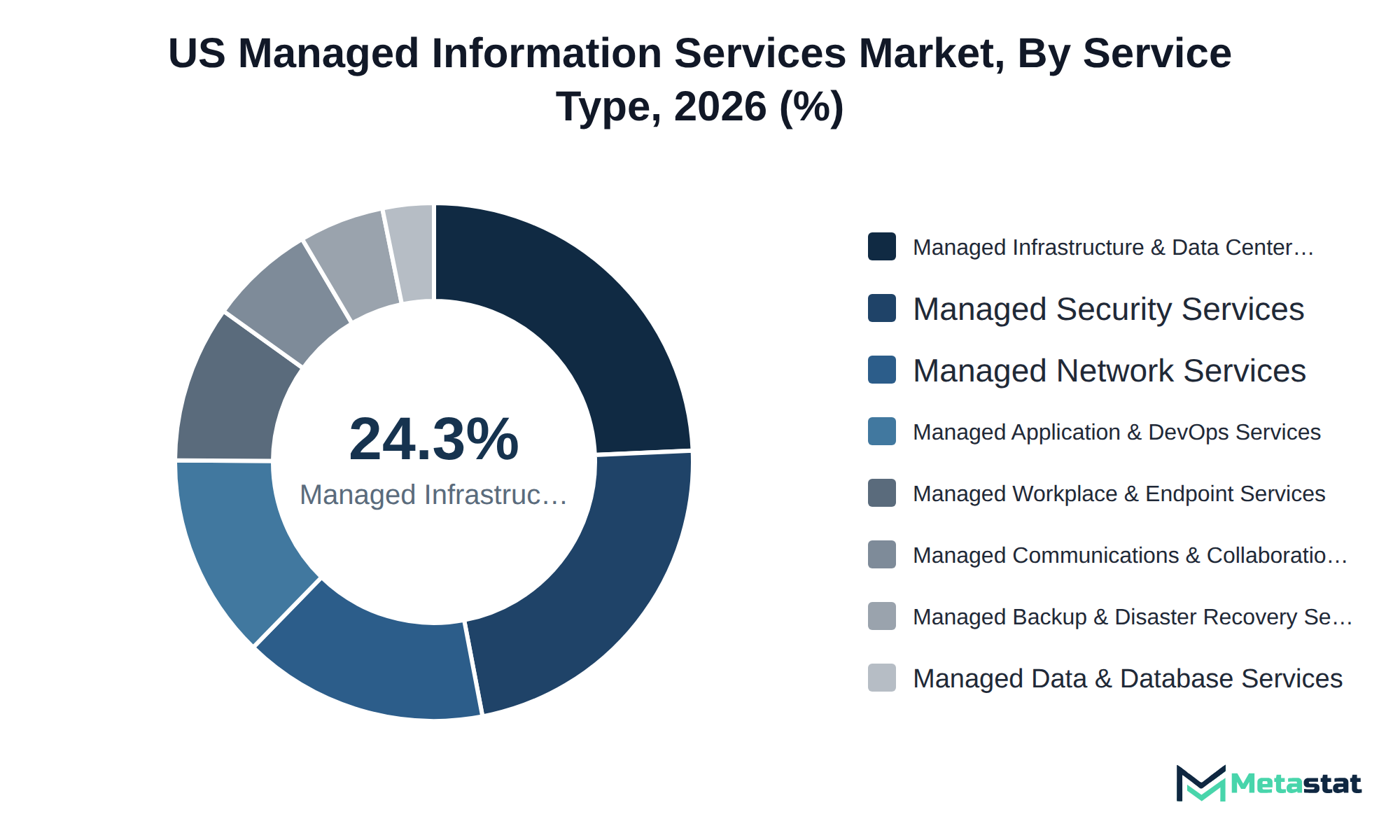
The managed security services segment is projected to reach USD 42.9 billion by 2033, demonstrating a compound annual growth rate (CAGR) of 13.2%. This growth stems from rising emphasis on proactive threat detection and response capabilities, prompting organizations to seek complete security solutions. Buyers typically sign annual or multi-year contracts, which give them predictable spending patterns and build long-term relationships with service providers.
The shift towards managed security services highlights the strategic importance of ongoing cybersecurity investments. Budget allocations for MDR services allow organizations to remain agile against emerging threats while maintaining compliance with regulatory standards. This focus on managed services reinforces the demand for specialized expertise in cybersecurity, ultimately driving competitive advantages in the market.
AIOps automation transforms service-level pricing and delivery economics within the US Managed Information Services market, particularly for small and medium enterprises (SMEs). This buyer group faces distinct challenges, including limited resources and the necessity for cost-effective solutions. Implementing AIOps allows SMEs to streamline operations by automating routine tasks, enhancing service delivery, and reducing response times.
In 2026, the revenue generated from small and medium enterprises in this market is projected to reach USD 45.6 billion, growing to USD 101 billion by 2033, reflecting a compound annual growth rate of 12%. This substantial growth highlights the increasing reliance of SMEs on technology to enhance operational efficiency. AIOps facilitates this by enabling predictive analytics, which anticipates and addresses potential service disruptions before they impact business operations.
SMEs that use AIOps can allocate resources and manage service levels effectively, which gives them a significant commercial advantage. The shift towards automation in service delivery enhances customer satisfaction and positions SMEs competitively in the market. The integration of AIOps technology within the US Managed Information Services market drives innovation and operational excellence for SMEs, creating a more responsive and resilient business environment.
U.S. enterprises should carefully evaluate the different types of Managed Information Services contracts to optimize their investments. Managed Security Services represent a significant component of this market, projected to reach USD 42.9 billion by 2033. This growth highlights the increasing focus on cybersecurity among businesses, with threats continuing to evolve. Enterprises engaging in these contracts benefit from enhanced security measures and reduced exposure to data breaches, which can cause substantial financial losses.
In addition, enterprises consider their specific operational needs when comparing contracts. For instance, Managed Infrastructure & Data Center Services are expected to grow from USD 18.8 billion in 2026 to USD 35.7 billion by 2033, reflecting a demand for robust IT infrastructure. Organizations investing in these services often achieve improved efficiency and scalability in their operations. The U.S. Managed Information Services market presents opportunities for enterprises to negotiate contracts that align with their strategic goals while securing essential services that drive competitive advantage.
Organizations are shifting towards cloud-based solutions to enhance their operational efficiency and flexibility. This transition reflects an increasing demand from small and medium enterprises (SMEs) that seek scalable resources to support their growth and digital transformation initiatives. The move to the cloud allows these businesses to access advanced technologies without the burden of significant upfront investments in infrastructure. This trend leads to a higher volume of managed services consumption, resulting in an anticipated increase in market revenue. The cloud-based segment is expected to expand significantly, growing from USD 50.5 billion in 2026 to USD 116 billion by 2033, reflecting a compound annual growth rate of 12.6%. These developments illustrate a broader trend within the US Managed Information Services market, where businesses prioritize agility and innovation in their IT strategies.
The growing emphasis on cybersecurity solutions is driving increased investments in managed security services. Organizations, particularly within the banking, financial services, and insurance sectors, prioritize protecting sensitive data and maintaining compliance with regulations. This heightened focus stems from the rising frequency of cyber threats and data breaches, prompting companies to seek comprehensive security solutions. Managed security services give businesses access to specialized expertise and advanced technologies to safeguard their operations effectively. This focus on enhanced cybersecurity measures reflects a crucial development within the US Managed Information Services market.
Automation technologies significantly enhance operational efficiency within the US Managed Information Services market. The integration of automated solutions in service delivery reduces manual intervention, improving response times and minimizing errors. This efficiency attracts businesses seeking to streamline their processes, particularly in sectors including healthcare and financial services, where precision is critical. Increased adoption of robotic process automation (RPA) and intelligent automation tools enables providers to offer faster and more reliable services, effectively meeting customer demands.
The shift toward automated solutions aligns with the growing emphasis on digital transformation across industries. Companies prioritize investments in technologies that optimize costs while improving overall service quality. The resulting operational benefits create competitive advantages for suppliers in the market. Enhanced service delivery capabilities position providers to capture a larger share of the expanding market, with service automation driving sustained growth and innovation across the sector.
Price sensitivity represents a significant constraint within the US Managed Information Services market, particularly affecting small and medium enterprises (SMEs). The high costs associated with managed services deter these organizations from fully embracing these solutions, leading to slower uptake and smaller order sizes. Many SMEs operate within tight budget constraints, prompting a cautious approach to investing in comprehensive managed services. Consequently, these organizations often delay replacing legacy systems or upgrading to advanced services, resulting in missed opportunities for operational efficiency and security improvements.
The challenge of high costs creates a competitive environment in which service providers adjust pricing strategies to attract price-sensitive SMEs. This dynamic limits overall market growth, as the hesitance to invest in managed services restricts the potential for expansion in this segment. Sustained customer engagement hinges on addressing these affordability concerns, encouraging greater adoption of managed information solutions and driving the market forward.
Rising talent costs pose significant challenges for suppliers in the US Managed Information Services market. The ongoing demand for skilled professionals in information technology drives increased labor expenses, affecting overall profit margins. Companies face pressures to attract and retain top talent while delivering competitive services. In response, multiple suppliers invest in employee training programs and technology adoption to enhance service efficiency. Automation technologies are incorporated to reduce reliance on manual processes, enabling firms to optimize operational capacity while facing escalating labor costs. These strategic shifts focus on improving service delivery while maintaining profitability in a competitive environment. Streamlining operations and enhancing workforce productivity are essential for sustaining growth opportunities in the market.
The managed security services segment presents a substantial growth opportunity within the US Managed Information Services market. The increasing frequency of cyber threats drives organizations to prioritize their security infrastructure, leading to higher investments in managed security services. Industries including banking, financial services, and healthcare exhibit a strong focus on enhancing their cybersecurity measures, contributing to this expansion. Growth in managed security services aligns with the need for businesses to comply with evolving regulatory requirements and protect sensitive information. Businesses favor managed security services due to their ability to provide expertise and advanced technologies, which streamline security operations and reduce overall risks.
The US Managed Information Services market is segmented based on Service Type, Deployment Model, Enterprise Size, and End-Use Industry.
This segment encompasses services that facilitate the management and optimization of IT infrastructure, including data center operations and related resources. Enterprises in various sectors, particularly those handling large volumes of data, rely on these services to enhance operational efficiency and ensure continuity. A notable demand driver stems from the rising importance of data security and compliance, propelling organizations to invest in managed services for robust infrastructure management. Compared to other segments, including Managed Security Services, which experiences a higher CAGR of 13.2%, Managed Infrastructure & Data Center Services features a more moderate growth profile, appealing to businesses focused on maintaining reliable and scalable IT environments.
These services focus on protecting organizations' information systems and data from cyber threats and breaches, targeting various sectors that require heightened security measures. Financial institutions, healthcare providers, and enterprises with sensitive data prioritize these services to mitigate risks and ensure compliance with regulations. The driving force behind this segment stems from the increasing frequency and sophistication of cyber-attacks, prompting organizations to invest in robust security solutions. Compared to other service segments, Managed Security Services exhibit faster growth, reflecting critical demand for enhanced cybersecurity measures. Other segments, including Managed Infrastructure & Data Center Services, grow at a CAGR of 9.6%, indicating a notable difference in market dynamics. This heightened focus on security reshapes the operational landscape for organizations across multiple industries.
Managed Network Services segment is expected to reach USD 23.8 billion by 2033. This segment ensures reliable communication and connectivity for organizations across various industries, including IT and telecommunications, healthcare, and financial services. Organizations increasingly rely on managed network services to enhance operational efficiency and security while reducing the burden of managing complex network infrastructures in-house. Growth in this segment is driven by escalating demand for cloud-based solutions, which support flexibility and scalability for enterprises. With a compound annual growth rate (CAGR) of 13.2%, Managed Network Services outpaces several other segments. By comparison, Managed Infrastructure and Data Center Services show a lower CAGR of 9.6%, highlighting the rapid evolution and competitive positioning of managed network solutions in the market.
Managed Application & DevOps Services segment is projected to grow at a CAGR of 13.1% during the forecast period. This segment is essential for developing, managing, and maintaining applications, focusing on enhancing software delivery efficiency and operational effectiveness. Businesses across various industries, especially those in IT and Telecommunications, use these services to streamline their development processes and ensure prompt software deployment. The increasing demand for rapid application development and continuous integration further drives growth in this segment. In comparison to other segments, Managed Application & DevOps Services exhibits a faster growth trajectory, influenced by rising enterprise reliance on cloud-based solutions, with the market prioritizing agility and flexibility. The emphasis on modern development practices differentiates this segment from others including Managed Infrastructure & Data Center Services, which experiences slower growth due to its more static nature.
Managed Workplace & Endpoint Services covers the management and support of end-user devices, including desktops, laptops, and mobile devices. This service is primarily adopted by organizations seeking to enhance employee productivity through streamlined IT support and device management. Demand for this segment is driven by the increasing need for remote work solutions and the rise in mobile device usage, which require efficient management. Compared to other segments, Managed Workplace & Endpoint Services experiences distinct competitive dynamics, with organizations prioritizing user experience and operational efficiency over cost. The segment stands out within the service type category due to its essential role in supporting an increasingly mobile workforce, reflecting a shift in how technology supports business operations.
Managed Communications & Collaboration Services encompass solutions that facilitate communication and teamwork among organizations. These services support businesses in enhancing their internal collaborations, driving more effective communication channels, and improving overall productivity. Enterprises in various sectors, including IT and telecommunications, rely on these services to streamline workflows and manage remote collaboration effectively. One significant factor influencing this segment involves the increasing demand for remote work solutions, intensifying the focus on efficient communication tools. This segment distinguishes itself from others due to its emphasis on enabling real-time collaboration rather than simply managing infrastructure or security. The US Managed Information Services market's focus on Managed Communications & Collaboration Services is expected to see growth driven by ongoing digital transformation and the growing expectation for effective communication experiences.
Managed Backup & Disaster Recovery Services provide essential solutions for organizations aiming to safeguard their data and maintain operational continuity during disruptions. These services are primarily employed by businesses across various sectors, including healthcare, finance, and manufacturing, which require robust recovery strategies to mitigate risks from data loss. Growing awareness regarding data security and compliance drives demand for these services. Companies increasingly recognize the critical importance of protecting sensitive information and ensuring swift recovery in the event of data breaches or disasters. Compared to other service types, including Managed Security Services, this segment experiences steady growth due to its fundamental role in risk management. The need for reliable backup and recovery processes differentiates it from segments focused on proactive security measures, influencing the strategies and investments of businesses in the US Managed Information Services market.
Managed Data & Database Services focus on the management and optimization of data storage, processing, and overall database performance. This service is used by organizations across various industries to ensure data integrity, accessibility, and security. The increasing volume of data generated by businesses drives demand for efficient data management solutions. Adoption of cloud-based technologies significantly influences this segment, allowing organizations to scale their database operations effectively. Compared to other service types in the market, Managed Data & Database Services experience a slower growth rate, driven by existing legacy systems and the costs associated with transitioning to cloud solutions. Organizations recognizing the advantages of data-driven decision-making are expected to drive investments in this service, reinforcing its relevance in the broader landscape of managed information services.
This segment caters primarily to organizations seeking flexible and scalable IT infrastructure solutions, frequently adopted by small and medium enterprises (SMEs) and large enterprises alike. Drivers of growth include increasing demand for digital transformation and the imperative for enhanced operational efficiency. Compared to other deployment models, the Cloud-Based segment exhibits faster growth due to its capacity to reduce operational costs and facilitate rapid scalability. Organizations transitioning to cloud environments experience improved agility and innovation, positioning the segment as a key component of the evolving US Managed Information Services market.
The On-Premises segment is estimated to reach USD 52.8 billion by 2033, at a CAGR of 9.7% during the forecast period. This segment serves businesses that require dedicated infrastructure and management solutions, particularly in sensitive industries including healthcare, finance, and government. Demand stems from organizations prioritizing data security and regulatory compliance, driving interest in on-premises solutions. Compared to cloud-based counterparts, the on-premises segment tends to appeal more to larger enterprises that prefer control over their IT environments. The distinct growth rate, supported by a focus on customized solutions, sets this segment apart from others, with the cloud-based segment expanding at a higher CAGR of 12.6%. Overall, the market shows a strong preference for on-premises solutions among certain industries, ensuring steady demand through the forecast period.
These enterprises employ managed information services primarily to enhance operational efficiency and reduce IT overhead. The increasing complexity of IT environments drives demand for these services, as businesses seek external expertise and resources. Unlike larger enterprises, which have more extensive in-house capabilities, small and medium enterprises often operate with limited budgets and resources, making cost-effective solutions critical. This segment expands at a faster rate than large enterprises, reflecting a growing recognition of the benefits and scalability of managed services. Adoption of cloud-based solutions is particularly pronounced among small and medium enterprises, which prioritize flexibility and innovation to remain competitive in the market.
Large Enterprises segment is estimated to reach USD 67.8 billion by 2033, at a CAGR of 11.1% during the forecast period. This segment caters to larger organizations that require comprehensive and scalable managed services to enhance operational efficiency and security. The demand for robust IT infrastructure and security solutions drives growth in this segment, particularly from industries including banking, financial services, and healthcare, which rely heavily on data management and protection. Compared to small and medium enterprises, large enterprises typically have larger budgets and more complex IT requirements, positioning them to invest more significantly in managed information services. This segment's projected growth outpaces that of other enterprise size segments, reflecting a strong commitment to technological advancement and resource optimization among large organizations.
The Banking, Financial Services & Insurance segment is valued at USD 19.3 billion in 2026 and is projected to reach USD 40.7 billion by 2033, at a CAGR of 11.3% during the forecast period. This segment primarily serves financial institutions, including banks and insurance companies, by providing essential managed information services that enhance operational efficiency and security. Growing regulatory requirements to protect sensitive customer data significantly influence this segment, driving investment in advanced security measures. This segment's relatively high demand for robust security services reflects the critical nature of data protection in financial transactions. The expected growth rate of 11.3% positions this segment as a strong performer compared to others within the market, benefiting from increasing digitalization and the requirement for integrated solutions.
IT & Telecommunications segment is estimated to reach USD 27.6 billion by 2033, at a CAGR of 10.9% during the forecast period. This segment serves various enterprises by providing critical solutions that support connectivity, data management, and operational efficiency. Heightened demand for digital transformation initiatives drives significant investment in managed information services within this sector. The ongoing transition towards cloud-based infrastructures and virtualization enhances operational capabilities while reducing costs. Compared to other segments, this category exhibits moderate growth, falling behind the Managed Security Services segment, which is projected to grow at a CAGR of 13.2%. Enhanced security protocols and regulatory compliance requirements shape service offerings, ensuring organizations maintain robust defenses against cyber threats. The market’s evolution reflects a dynamic relationship of technology advancements and shifting user expectations, necessitating ongoing adaptation from service providers.
Healthcare & Life Sciences segment is projected to reach USD 27.5 billion by 2033. This segment encompasses a range of services tailored for healthcare providers, pharmaceutical companies, and biotechnology firms, focusing on data management, patient care, and regulatory compliance. The increasing demand for digital health solutions drives growth within this segment, with organizations seeking improved patient outcomes and operational efficiencies. The segment experiences a CAGR of 11.3%, positioning it for significant expansion compared to other segments in the market. Regulatory requirements and the need for secure data handling influence adoption trends, particularly as health sectors strive to enhance their IT infrastructure while maintaining compliance with healthcare regulations. Investments in technology and data analytics remain critical, differentiating Healthcare & Life Sciences from segments with slower growth trajectories.
The manufacturing segment is projected to grow at a CAGR of 12.2% during the forecast period. This segment serves various manufacturers that rely on managed information services to enhance operational efficiency, streamline processes, and ensure data security. Increasing demand for automation and digital transformation initiatives drives this segment, with manufacturers investing in advanced technologies to improve production and reduce costs. The manufacturing sector differentiates itself from others by its higher reliance on managed application and DevOps services, reflecting a significant need for specialized services to support complex production environments. Compared to other segments, the manufacturing sector experiences stronger growth dynamics, with several enterprises committed to adopting cloud-based solutions to optimize operations and enhance competitiveness in the US Managed Information Services market.
The Government & Public Sector segment is essential in the adoption of managed information services, facilitating the effective management and delivery of essential services to citizens. This segment serves various governmental entities, including federal, state, and local agencies, which rely on robust information solutions to enhance operational efficiency and ensure data security. Increased focus on cybersecurity and regulatory compliance drives demand for managed security services, particularly in this sector. Unlike other segments experiencing faster growth rates, the Government & Public Sector segment faces unique challenges related to budget constraints and stringent regulations, resulting in slower adoption of innovative technology solutions. Ongoing investments in digital transformation initiatives are expected to influence growth in this segment, contributing to the overall expansion of the US Managed Information Services market.
Retail & E-commerce encompasses a vital segment focusing on the management of information services tailored for online and physical retail environments. This segment optimizes supply chain processes, enhances customer experience, and streamlines operations for businesses in the retail sector. Prominent drivers of growth include the ongoing digital transformation of retail businesses and the increasing demand for personalized shopping experiences facilitated by technology. Retail companies leverage managed information services to efficiently handle data analytics, inventory management, and customer relationship management. This segment experiences growth dynamics distinct from other segments, particularly due to its reliance on rapid technological advancements and adaptation to shifting consumer preferences. The US Managed Information Services market reflects this evolution, with ongoing investments aimed at integrating innovative solutions that enhance retail capabilities and operational efficiency.
Professional & Business Services provide essential support functions that enhance organizational efficiency and drive growth. This segment includes consulting, human resources, legal, and marketing services provided by a diverse range of companies seeking to optimize operations and focus on core competencies. The demand for these services grows due to the increasing complexity of business environments and the need for specialized expertise. Organizations seek to access external knowledge to navigate regulatory changes and address market challenges. Compared to other segments, Professional & Business Services experience significant growth, driven by improved operational efficiency and reduced overhead costs. This segment relies heavily on technological advancements to streamline processes and deliver innovative solutions, setting it apart from traditional service providers.
Media & Entertainment encompasses various services that enhance content creation, distribution, and overall viewer experience. This segment is used by production companies, broadcasters, and streaming platforms to improve operational efficiency and deliver high-quality content. Growing demand for digital streaming and interactive media drives adoption in this segment. Companies strive to implement advanced managed information services to meet consumer preferences for on-demand content and high-quality user experiences. Unlike other segments, this area experiences significant investment in technology to keep pace with rapid changes in consumer behavior and media consumption habits. Companies in this segment often face higher operational costs due to the need for specialized technology and skilled talent, influencing overall pricing strategies. The US Managed Information Services market reflects this unique dynamic; firms within Media & Entertainment focus on maximizing engagement while staying ahead of competitive pressures.
Energy & Utilities represents a crucial segment focusing on the management and optimization of energy resources and utility operations. This segment is used primarily by energy providers, utility companies, and organizations seeking to enhance operational efficiency and reduce costs. Driving factors for this segment include the increasing emphasis on sustainability and the transition toward renewable energy sources. Regulatory pressures and the demand for efficient energy management systems further influence the growth of this segment. Compared to other segments, Energy & Utilities experience slower growth due to the high capital investment associated with integrating advanced information services. The US Managed Information Services market adapts to the evolving requirements of the energy sector, ensuring that companies remain competitive and compliant with industry standards.
Education, Transportation & Logistics, Hospitality integrates various services that address the operational needs of these sectors. Educational institutions, transportation companies, and hospitality businesses increasingly deploy managed information services to optimize processes, enhance customer engagement, and streamline operations. A significant driver in this segment involves the growing demand for digital transformation, leading organizations to adopt innovative solutions to remain competitive. Unlike other segments, which focus on sectors like financial services or healthcare, the hospitality and education sectors experience varied adoption rates due to budget constraints and regulatory requirements. Emerging technologies and customized solutions tailored to educational and hospitality needs position this segment uniquely within the broader US Managed Information Services market.
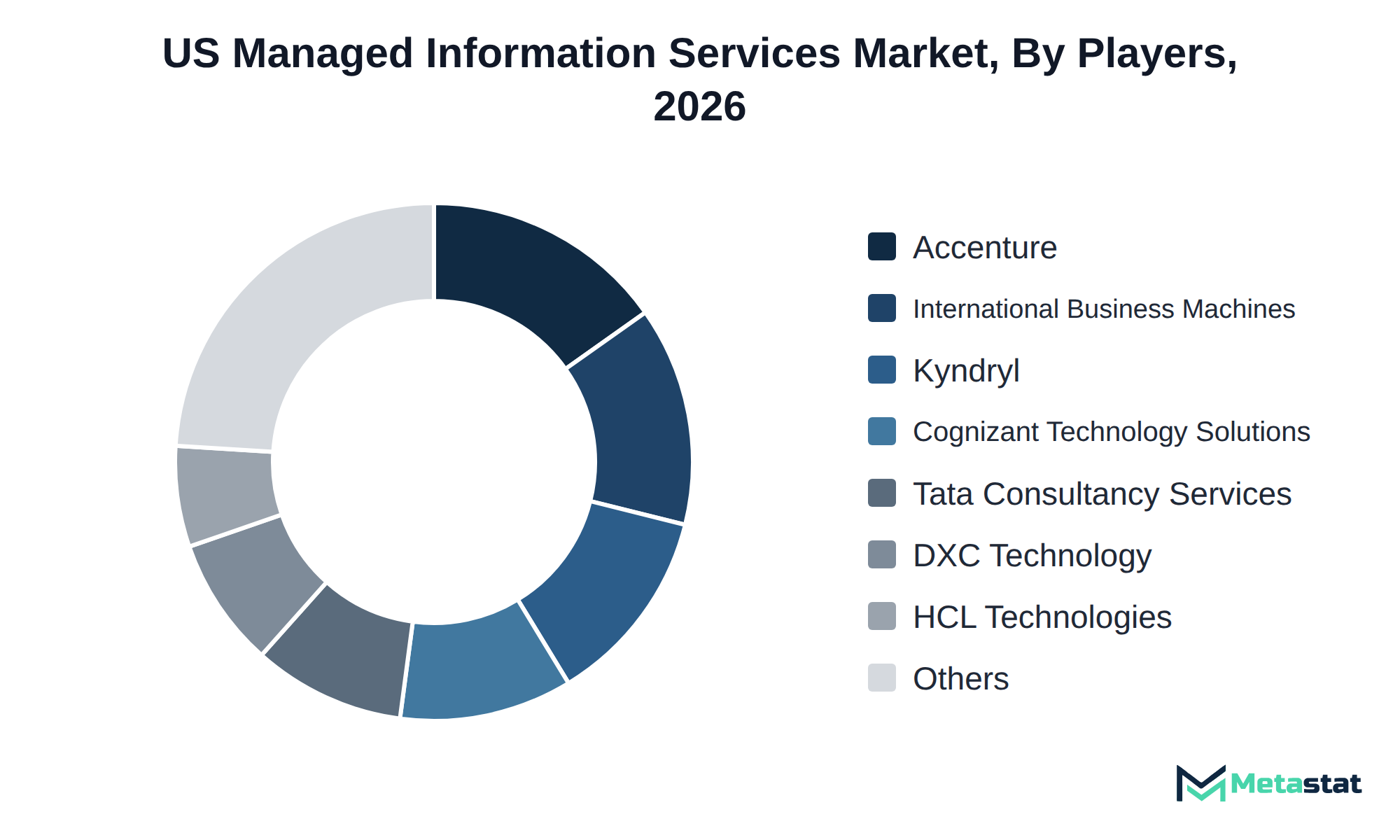
The US Managed Information Services market features a diverse array of players competing across various service types, including managed infrastructure and data center services, managed security services, and managed application and DevOps services. Each company positions itself based on unique strengths, targeting specific buyer needs including pricing, customization, and service reliability.
Companies like Kyndryl Holdings, Inc. and Accenture plc emphasize managed security services, responding to rising concerns about cybersecurity threats. International Business Machines Corporation focuses on cloud-based deployment models, addressing demand for scalable solutions. DXC Technology Company prioritizes managed application and DevOps services, catering to enterprises seeking enhanced software development and operational efficiency.
Buyers evaluate service providers based on factors like certification and ecosystem capabilities. HCL Technologies Limited and Tata Consultancy Services Limited leverage their extensive experience to assure clients of compliance with industry standards. Firms including Rackspace Technology, Inc. and Wipro Limited provide tailored solutions that adapt to specific industry requirements, ensuring alignment with client objectives.
The competitive positioning of companies within the US Managed Information Services market reflects a commitment to innovation and customer-centric strategies. Players continuously refine their offerings to maintain relevance and address evolving needs.
Achieving this growth depends on several key developments within the US Managed Information Services market. Firstly, the increasing adoption of cloud-based deployment models is expected to drive significant revenue, with projections indicating growth from USD 50.5 billion in 2026 to USD 116 billion by 2033 at a 12.6% CAGR. Secondly, the expansion of managed security services, projected to reach USD 42.9 billion by 2033 with a CAGR of 13.2%, highlights a growing awareness of cybersecurity threats across industries. However, economic fluctuations and potential regulatory challenges present risks that could hinder market growth. Addressing these factors will be vital for the market to achieve its full potential by 2033.
By Service Type: Managed Infrastructure & Data Center Services, Managed Security Services, Managed Network Services, Managed Application & DevOps Services, Managed Workplace & Endpoint Services, Managed Communications & Collaboration Services, Managed Backup & Disaster Recovery Services, Managed Data & Database Services
By Deployment Model: Cloud-Based, On-Premises
By Enterprise Size: Small & Medium Enterprises, Large Enterprises
By End-Use Industry: Banking, Financial Services & Insurance, IT & Telecommunications, Healthcare & Life Sciences, Manufacturing, Government & Public Sector, Retail & E-commerce, Professional & Business Services, Media & Entertainment, Energy & Utilities, Others (Education, Transportation & Logistics, Hospitality)
The report strategically identifies and profiles the key market players and analyses their core competencies in each sub-segment of the Managed Information Services market.
Report Attributes | Details |
Study Period | 2021-2033 |
Base Year | 2025 |
Estimated Year | 2026 |
Forecast Period | 2026-2033 |
Historical Period | 2021-2025 |
Growth Rate | CAGR 11.6% from 2026 to 2033 |
Revenue Unit | USD billion |
Segmentation | By Service Type, Deployment Model, Enterprise Size, End-Use Industry, and Region |
Find answers to common questions about this report
The Managed Information Services market size was valued at USD 69.8 billion in 2025.
The market is projected to grow at a CAGR of 11.6% during the forecast period from 2026 to 2033.
Managed Security Services leads the Managed Information Services market with a projected value of USD 42.9 billion by 2033. This segment demonstrates the highest growth potential compared to others in the market.
Organizations are shifting towards cloud-based solutions to enhance operational efficiency and flexibility, driven by the increasing demand from small and medium enterprises. The growing emphasis on cybersecurity solutions leads to higher investments in managed security services, particularly in sectors like banking and healthcare.
Price sensitivity represents a significant constraint, particularly affecting small and medium enterprises (SMEs) that face high costs associated with managed services. Rising talent costs pose challenges for suppliers, impacting overall profit margins and forcing companies to invest in employee training and technology adoption.
The Managed Information Services market is estimated to reach a valuation of USD 168.8 billion by 2033.
Key players operating in the Managed Information Services market include Kyndryl Holdings, Inc., Accenture plc, International Business Machines Corporation, DXC Technology Company, NTT DATA Group Corporation, HCL Technologies Limited, Tata Consultancy Services Limited, and Cognizant Technology Solutions Corporation.
The cloud-based managed information services segment is expected to grow from USD 50.5 billion in 2026 to USD 116 billion by 2033, reflecting a compound annual growth rate of 12.6%.
Industries including banking, financial services, and healthcare drive demand for managed security services, focusing on protecting sensitive data and ensuring compliance with regulations.
Small and medium enterprises face high costs associated with managed services, deterring full adoption and leading to slower uptake and smaller order sizes.
The analysts below cover Information & Technology research at Metastat Insights.
LEAD ANALYST
Utkarsh Khirodkar is a Lead Market Research Analyst at MetaStat Insight, specializing in market intelligence, technology sector assessments, and competitive strategy.

PRINCIPAL CONSULTANT - ENTERPRISE AI & EMERGING TECHNOLOGIES
Banking & Finance · Electronics and Semiconductor · Energy and Power · Healthcare IT · Information & Technology · Professional Services
Vijay Gunti is a Principal Consultant at MetaStat Insight, bringing over two decades of experience across enterprise digital transformation, technology strategy, and intelligent systems.

LEAD CONSULTANT - COMMUNICATION, TELECOM, AND IT
Electronics and Semiconductor · Information & Technology · Machinery & Equipment · Professional Services
Ravindra Sathe Consultants for Communication, Telecom, and IT at MetaStat Insight. He leads the firm's industry research initiatives across telecommunications infrastructure, digital connectivity, enterprise networking, and emerging information technology domains.
Standard industry briefs frequently blur the operational distinctions between isobaric pressure exchangers and centrifugal turbines. In this study, MetaStat Insight categorized mega-scale desalination tenders across the GCC and Mediterranean basins by membrane replacement frequencies and salinity tolerances. Their primary research helped us evaluate local content requirements in Saudi Arabia and the UAE without relying on marketing literature. We found the segment-level equipment replacement estimates grounded and well-reasoned throughout.
The technical breakdown of ISO 20022 migration readiness across correspondent banking corridors was remarkably thorough. Rather than treating cross-border corporate payments as a single block, the report drew a useful distinction between multilateral netting platforms and domestic instant payment rails across ASEAN economies. MetaStat Insight highlighted regulatory constraints on foreign exchange liquidity management that many publications gloss over. The research material offered practical clarity for our platform development roadmap.
Our group needed clearer visibility into out-of-autoclave processing timelines for high-temperature thermoplastic composites. MetaStat Insight delivered an objective assessment that contrasted automated fiber placement scrap rates with traditional thermoset prepreg layup cycles. The supplier landscape mapped out primary resin suppliers and tape slitting capacity across France, Germany, and Japan with solid technical accuracy. Their analyst handled our questions on precursor supply risks during an unscheduled inquiry call, providing clear, unembellished context.
Explore related market intelligence reports worth reading alongside this one.