
LEAD ANALYST
Utkarsh Khirodkar is a Lead Market Research Analyst at MetaStat Insight, specializing in market intelligence, technology sector assessments, and competitive strategy.

India Cybersecurity Services Market Size, Share, By Service Type (Cybersecurity Consulting and Advisory, Cybersecurity Audit and Assessment, Vulnerability Assessment and Penetration Testing (VAPT), Managed Security Services, Incident Response and Digital Forensics, Governance, Risk and Compliance (GRC), Cybersecurity Training and Awareness, Others (Threat Intelligence, Security Architecture Implementation)), By Service Delivery Mode (Remote Delivery, On-Site Delivery, Hybrid Delivery), By Organization Size (Small and Medium Enterprises (SMEs), Large Enterprises), By End-Use Industry (Banking, Financial Services, and Insurance, IT and IT-Enabled Services, Government and Defence, Telecommunications, Manufacturing, Healthcare and Life Sciences, Retail and E-Commerce, Energy and Utilities, Others (Education, Transportation, Hospitality)), Industry Analysis, Growth, Trends, and Forecast, 2026-2033
Report ID
MSI-5518
Published
October, 2026
Pages
290 Pages
Format
Historical
Base year
Forecast
Forecast period
Report Details
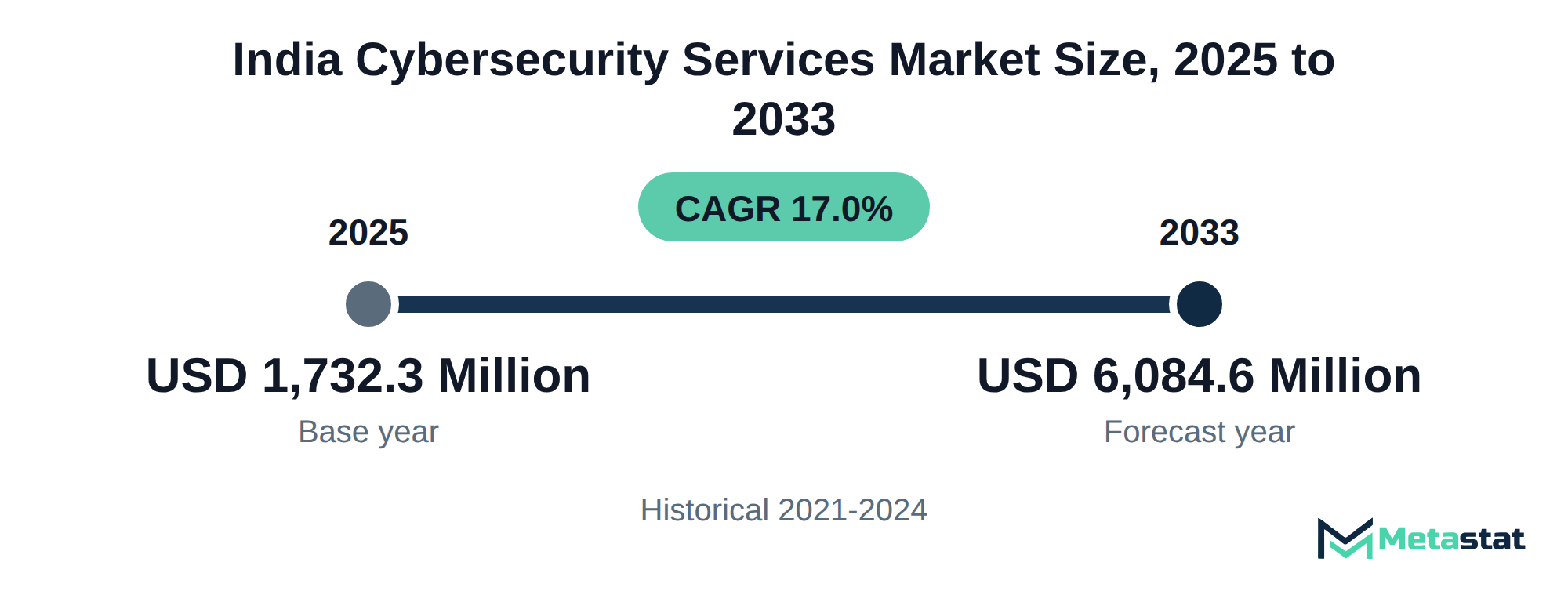
Market Valuation: Valued at $1,732.3 Million in 2025, projected to reach $6,084.6 Million by 2033 at a 17.0% CAGR.
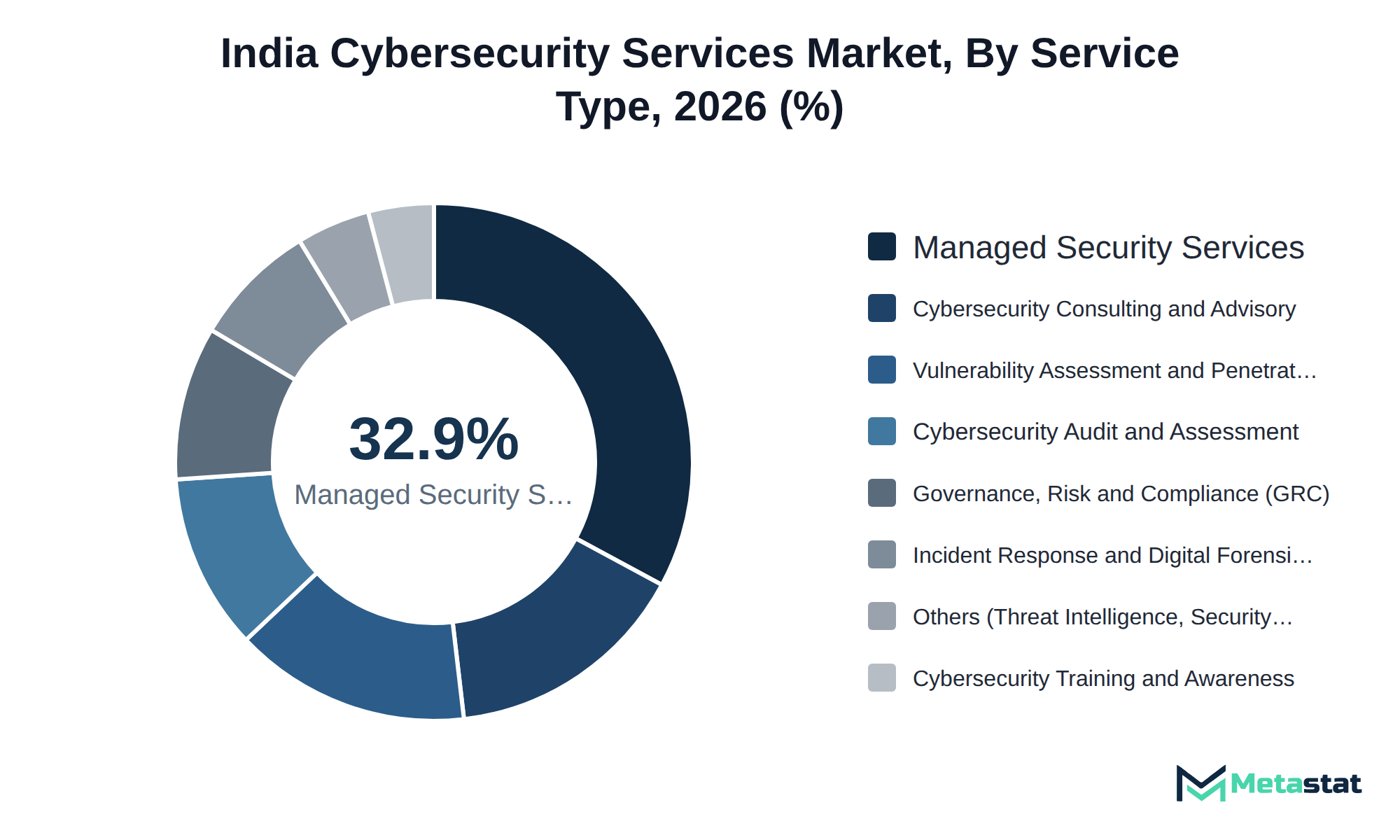
Dominant Segment: Managed Security Services leads the India Cybersecurity Services market, driven by the increasing complexity of cyber threats and the trend towards outsourcing security operations.
Geographic Lead: India is experiencing rapid growth in cybersecurity services, particularly among small and medium enterprises, as they recognize the urgent need for enhanced security measures.
What's Inside: The report provides a comprehensive analysis of market dynamics, competitive landscape, and detailed forecasts for various service types and delivery modes from 2026 to 2033.
Emerging Demand: Small and medium enterprises are projected to significantly increase their investment in cybersecurity services, with a CAGR of 19.1%, as they seek tailored solutions to safeguard their operations.
Choose Your License
India Cybersecurity Services Market
The India Cybersecurity Services market was valued at USD 1,732.3 million in 2025 and is projected to reach USD 6,084.6 million by 2033, growing at a CAGR of 17.0% over the forecast period.
The India Cybersecurity Services market encompasses a variety of offerings designed to protect organizations from cyber threats. Buyers invest in these services to safeguard sensitive data, ensure compliance with regulations, and maintain operational continuity. The market covers consulting, vulnerability assessment, and managed security services segments, each catering to specific security needs across industries.
Growth within the market is underpinned by increasing digital transformation initiatives across sectors, which create a heightened demand for robust cybersecurity measures. The segment of Managed Security Services holds the largest value, reflecting the trend towards outsourcing security functions to specialized providers. The banking, financial services, and insurance sector accounts for a substantial share of market spending, driven by the critical need for secure transactions and data protection.
Investments in cybersecurity are propelled by the rising frequency and sophistication of cyberattacks, prompting organizations to prioritize security solutions. Enterprises, particularly small and medium-sized businesses, increasingly recognize the importance of investing in cybersecurity to mitigate risks and ensure business resilience. This trend contributes to the sustained growth of the market over the coming years.
The market encompasses various services aimed at fortifying organizational cybersecurity against an evolving threat landscape. Buyers invest in these services to enhance their security posture, comply with regulatory requirements, and protect sensitive data. The increasing frequency of cyber incidents drives organizations to allocate resources toward cybersecurity, ensuring resilience against potential breaches and attacks.
Growth in the India Cybersecurity Services market is fueled primarily by the rising adoption of Managed Security Services. This segment stands out due to its ability to provide continuous monitoring and advanced threat detection, essential for organizations facing sophisticated cyber threats. Demand for Cybersecurity Consulting and Advisory services exhibits significant potential, reflecting growing awareness among organizations about the importance of strategic cybersecurity measures.
Among the various segments, Cybersecurity Consulting and Advisory generates the highest revenue, projected to reach USD 840.9 million by 2033. The market benefits from strong demand across industries, particularly in Banking, Financial Services, and Insurance, where regulatory compliance remains a critical concern. The market's growth trajectory highlights an increasing emphasis on comprehensive security solutions that address complex and evolving cyber threats.
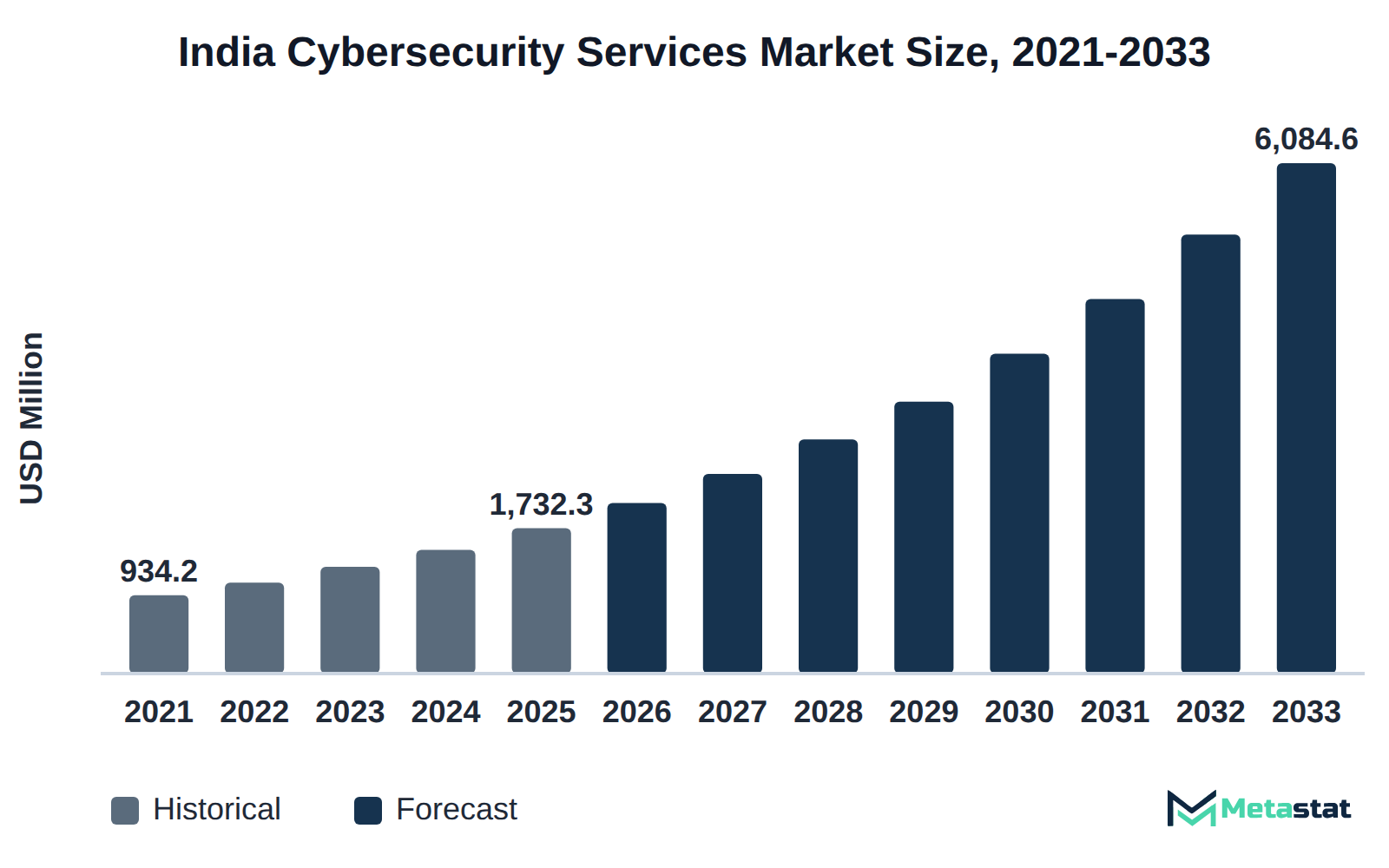
The adoption of Managed Security Operations Centers (SOC) and Managed Detection and Response (MDR) services is accelerating within the India Cybersecurity Services market. By 2033, revenue from Managed Security Services is projected to increase at a compound annual growth rate (CAGR) of 18.6%. This growth reflects the increasing complexity of cyber threats that Indian enterprises face, necessitating advanced security measures and rapid response capabilities.
Indian enterprises are recognizing the effectiveness of outsourced security solutions, particularly in the context of resource constraints and the shortage of skilled cybersecurity professionals. Managed SOC and MDR services provide organizations with continuous monitoring, threat detection, and incident response capabilities. Budget allocations for cybersecurity are rising, leading many companies to invest in these services to enhance their overall security posture.
The surge in Managed SOC and MDR adoption is expected to drive significant changes in operational efficiency and risk management across industries including Banking, Financial Services, and Insurance, where the demand for stringent security measures is critical. Organizations are prioritizing cybersecurity, and the market for Managed Security Services is expected to keep expanding, which positions providers to capture a larger share of growing demand for cybersecurity solutions.
In the India Cybersecurity Services market, procurement of cybersecurity audits and vulnerability assessment and penetration testing (VAPT) in the Banking, Financial Services, and Insurance (BFSI) sector mixes fixed-price contracts with time and materials agreements. Fixed-price contracts provide clarity on costs upfront, appealing to buyers looking to manage budgets effectively. In 2026, the BFSI sector's expenditure on cybersecurity-related services is anticipated to begin at USD 591.2 million, reaching USD 1,694 million by 2033, reflecting a compound annual growth rate of 16.2%.
Financial institutions increasingly treat cybersecurity as a critical component of operational integrity. A significant trend in procurement involves engaging vendors that offer comprehensive solutions covering both audits and VAPT, which allows organizations to streamline processes and reduce the complexity of managing multiple contracts. Buyers prioritize vendors with a proven track record in the BFSI sector, seeking competitive pricing and extensive expertise in addressing sector-specific threats.
The increasing focus on regulatory compliance and risk management drives demand for these services, prompting organizations to allocate resources toward long-term contracts with established cybersecurity firms. In this context, the India Cybersecurity Services market reflects a stronger emphasis on ensuring robust cybersecurity frameworks, ultimately enhancing institutional resilience and customer trust in the BFSI sector.
Investment in cloud security and incident response among Indian small and medium enterprises (SMEs) is increasing significantly. The cybersecurity services market in India is expected to experience substantial growth driven by SMEs seeking enhanced security measures. By 2033, spending on cybersecurity consulting and advisory services for SMEs is projected to reach USD 840.9 million, reflecting a compound annual growth rate (CAGR) of 15.5%. This growth highlights the urgency for SMEs to adopt advanced security solutions to protect sensitive data and maintain compliance with regulatory standards.
The digital transformation across various sectors has escalated the need for effective cloud security measures among SMEs. Many of these enterprises are transitioning to cloud services, which inherently increases their exposure to cyber threats. Consequently, a robust incident response strategy becomes essential for promptly addressing potential breaches and minimizing damage. SMEs investing in cloud security and incident response services safeguard their operations while enhancing trust with their customers, positioning themselves more competitively in the India Cybersecurity Services market.
The cost of cybersecurity services in India varies significantly based on service type and delivery mode. This increase indicates rising demand for professional guidance in addressing complex cybersecurity challenges faced by organizations.
Organizations adopting these services benefit from enhanced security postures, reducing potential losses from cyber incidents. The anticipated growth in this segment highlights the importance of consulting and advisory services for businesses prioritizing cybersecurity measures. Such demand signals a robust commercial opportunity within the India Cybersecurity Services market, particularly for firms investing in risk management and compliance measures.
Another notable segment is Vulnerability Assessment and Penetration Testing (VAPT), which is expected to reach USD 861.6 million by 2033. This focus on proactive security assessments highlights a trend of organizations seeking to identify and mitigate vulnerabilities before they are exploited by malicious actors. The willingness to invest in these critical services shows that organizations increasingly value strong cybersecurity frameworks.
Investment in cybersecurity resilience has intensified across various sectors. Organizations, particularly in banking, financial services, and insurance, prioritize spending on cybersecurity services to safeguard sensitive data against rising threats. The growing incidence of cyberattacks prompts many enterprises to reassess their cybersecurity strategies and allocate more resources toward advanced security measures. This trend reflects a shift in buyer priorities, with decision-makers recognizing the critical importance of robust cybersecurity frameworks. The India Cybersecurity Services market benefits from this increasing focus, with a projected growth rate of 17% CAGR from 2025 to 2033. Enterprises investing in cybersecurity technologies position themselves to better protect their assets, resulting in higher service demand and driving overall market expansion.
Diverse industries, including government and telecommunications, mirror this commitment to enhance cybersecurity measures. The escalating need for effective risk management across sectors fuels sustained growth within the market.
Investment in managed security services continues to grow, driven by the increasing sophistication of cyber threats and the need for organizations to enhance their security posture. Companies recognize the benefits of outsourcing cybersecurity efforts to specialized service providers, allowing them to focus on core business operations while experts manage their security infrastructure. This trend is particularly prevalent among small and medium enterprises (SMEs) that lack the resources to maintain an in-house security team.
The India Cybersecurity Services market is experiencing a shift toward managed security service models, with a projected compound annual growth rate (CAGR) of 18.6%. This growth reflects heightened awareness of security vulnerabilities across sectors, which pushes organizations to invest in cybersecurity solutions. The demand for these services spans numerous industries, including banking, financial services, and insurance, where regulatory compliance reinforces the urgency of implementing robust security measures.
Organizations leveraging managed security services benefit from enhanced threat detection capabilities, real-time monitoring, and access to advanced technologies. The strategic focus on these services positions the market for significant expansion through 2033.
High pricing for cybersecurity services limits adoption among small and medium enterprises (SMEs). Many SMEs face budget constraints, resulting in slower uptake of vital cybersecurity solutions. Price sensitivity leads to smaller orders or delayed investments in essential services. Larger enterprises allocate substantial budgets, while SMEs prioritize other operational expenses over cybersecurity. This trend slows growth in the India Cybersecurity Services market, as organizations underinvest in protection against increasing cyber threats. A lack of awareness regarding the long-term financial benefits of investing in cybersecurity further exacerbates the situation. Lower awareness levels result in underutilization of available services, heightening vulnerability to cyberattacks. The disparity in investment capabilities between large firms and SMEs creates an uneven market landscape, influencing demand dynamics across the sector.
Suppliers in the India Cybersecurity Services market face significant talent acquisition challenges, impacting service delivery and profitability. High demand for skilled cybersecurity professionals drives competition among service providers, resulting in high salaries and operational costs. This situation complicates recruitment efforts, particularly for small and medium enterprises (SMEs), which struggle to compete with larger organizations offering more attractive compensation packages. In response, companies are investing in training programs to upskill existing employees and partnering with educational institutions to create a pipeline of future talent. These strategies aim to mitigate talent shortages while enhancing service capabilities. Several suppliers have adopted remote work models to widen their talent pool, allowing them to hire from regions beyond their immediate geographical constraints. This approach helps alleviate staffing issues and supports cost management through lower labor costs in different areas. Ongoing talent challenges are expected to influence operational efficiency and market dynamics.
Investment in cybersecurity services among small and medium enterprises (SMEs) is projected to experience significant growth, driven by increasing awareness of cybersecurity risks and the need for enhanced digital protection. With a compound annual growth rate (CAGR) of 19.1%, the segment is expected to expand from USD 579.7 million in 2026 to USD 1,975.7 million by 2033. This growth reflects ongoing digital transformation across various industries, where SMEs increasingly require tailored cybersecurity solutions to safeguard their operations and data. The rise in cyber threats necessitates proactive measures, and SMEs are turning to providers for effective managed security services and cybersecurity training. The India Cybersecurity Services market stands to benefit significantly from this trend, with suppliers focusing on delivering specialized services to meet the unique needs of SMEs. Addressing this under-penetrated segment presents a substantial opportunity for growth within the broader market.
The India Cybersecurity Services market is segmented based on Service Type, Service Delivery Mode, Organization Size, and End-Use Industry.
This segment involves providing expert guidance on developing and implementing cybersecurity strategies, risk assessments, and compliance frameworks. Businesses across various industries, particularly in finance and healthcare, rely on these services to safeguard sensitive information and maintain regulatory compliance. Growing awareness of cybersecurity risks and increasing regulatory requirements drive demand for consulting and advisory services. Compared to other segments, this area experiences moderate growth but commands higher prices due to the specialized expertise required. The market's growth is supported by a rising focus on integrating comprehensive cybersecurity measures into organizational processes, differentiating it from segments like Managed Security Services, which exhibit faster growth at an overall CAGR of 18.6%.
Cybersecurity Audit and Assessment is estimated to reach USD 576.2 million by 2033, at a CAGR of 14.7% during the forecast period. This segment is used by various organizations to evaluate their cybersecurity posture and identify vulnerabilities. It serves industries including banking, financial services, and insurance, where security compliance and risk management are critical. The growing threat landscape and increased regulatory pressures significantly influence this segment, driving organizations to adopt more comprehensive cybersecurity measures. Compared to other service types, Cybersecurity Audit and Assessment experiences moderate growth, positioning itself distinctly within the larger context of the India Cybersecurity Services market. Enhanced focus on compliance and risk management among organizations ensures continued demand for these services, creating opportunities for suppliers in this segment to expand their offerings.
This segment focuses on identifying and mitigating security vulnerabilities within an organization's digital infrastructure. Companies across various industries, including banking, financial services, and IT sectors, engage VAPT services to ensure their systems are secure against potential cyber threats. The growing incidence of sophisticated cyber-attacks drives demand for these services, highlighting a critical need for proactive security measures. With a projected compound annual growth rate (CAGR) of 15.5%, this segment exhibits faster growth than several other cybersecurity services, reflecting its increasing importance in the overall market. The emphasis on regulatory compliance and risk management further supports the expansion of VAPT, differentiating it from other segments that do not experience the same level of urgency or investment.
Managed Security Services segment is projected to grow at a CAGR of 18.6% during the forecast period. This segment focuses on outsourcing security operations and monitoring to specialized service providers, allowing organizations to manage their cybersecurity posture effectively. Various buyers, including large enterprises and small and medium enterprises (SMEs), rely on these services to protect their systems from advanced threats. The increase in regulatory compliance requirements and the growing complexity of cyber threats drive demand for this segment, distinguishing it with higher growth potential compared to other segments. Pricing strategies reflect the need for continuous monitoring and support, contributing to higher service costs. Managed Security Services stands out for its scalability and ability to adapt to diverse organizational needs, making it an essential resource in the India Cybersecurity Services market.
Incident response and digital forensics involve the process of identifying, investigating, and mitigating cybersecurity incidents. Organizations use these services to respond to breaches and ensure recovery, preserving evidence for legal purposes. This segment attracts interest from various sectors, including those handling sensitive data, including financial services, government, and healthcare. The increasing sophistication of cyber threats drives demand, emphasizing the need for timely and effective responses. Compared to other segments, incident response and digital forensics stand out due to their critical role in minimizing damage and facilitating recovery. The focus on compliance with regulations enhances the importance of this service type, while organizations strive to meet legal obligations and protect their reputations.
Governance, Risk and Compliance (GRC) involves strategies, policies, and procedures that organizations implement to manage their governance, risk, and compliance needs effectively. This segment finds application across various sectors, particularly in banking, financial services, and government entities, where regulatory requirements dictate stringent compliance measures. Regulatory pressures, combined with the increasing complexity of risk management, drive demand within this segment. Organizations focus on aligning their operations with regulatory frameworks, thereby enhancing their overall risk posture. Compared to other service types, GRC services experience steady growth, reflecting the critical need for organizations to maintain compliance and mitigate risks effectively. This segment appeals primarily to large enterprises, which face more extensive regulatory obligations than several small and medium enterprises (SMEs). The market continues to adopt advanced technologies that streamline compliance processes and support adherence to changing regulations.
Cybersecurity Training and Awareness involves strategic programs aimed at educating employees about cybersecurity risks and best practices to mitigate them. Organizations across various sectors engage this segment to enhance their workforce's awareness and skills, facilitating a more secure operational environment. The increasing prevalence of cyber threats drives the demand for training programs, as organizations recognize the importance of providing employees with knowledge to prevent breaches. This segment typically experiences slower growth compared to others like Managed Security Services, which has a CAGR of 18.6%. The focus on specialized training often requires significant investment, making it more expensive than other service types, contributing to a distinct positioning within the India Cybersecurity Services market. Suppliers in this segment frequently tailor offerings to meet the specific needs of diverse industries, including banking, finance, and healthcare, further influencing their adoption and implementation strategies.
This segment encompasses Threat Intelligence and Security Architecture Implementation services. These offerings are crucial for organizations seeking to identify and mitigate cyber threats proactively while designing secure architectures to defend against potential attacks. The segment serves various industries, including banking, healthcare, and telecommunications, which rely on these services to safeguard sensitive data. Increased cyber threats drive demand for such specialized services, compelling organizations to invest in more comprehensive cybersecurity measures. Compared to other service types, this segment reflects a unique growth trajectory by focusing on proactive measures rather than reactive ones, aligning with organizations' shifting priorities toward long-term security strategies.
Remote Delivery segment is valued at USD 977.8 million in 2026 and is projected to reach USD 3,174.9 million by 2033, at a CAGR of 18.3% during the forecast period. This segment finds extensive application among organizations seeking to enhance their cybersecurity posture through flexible, efficient service delivery methods. Increasing adoption of remote work policies fuels demand, with organizations prioritizing cost-effective solutions. Unlike On-Site Delivery, which focuses on direct interaction, Remote Delivery leverages digital tools to provide cybersecurity services, making it appealing to several small and medium enterprises (SMEs) and large enterprises. The growing necessity for businesses to protect their digital assets against sophisticated cyber threats drives this segment's rapid expansion compared to other segments. Overall, the emphasis on scalable solutions contributes to the sustained growth trajectory of the Remote Delivery segment within the India Cybersecurity Services market.
On-Site Delivery segment is estimated to reach USD 953.5 million by 2033, at a CAGR of 12.7% during the forecast period. This segment involves delivering cybersecurity services directly at the client's location, providing tailored solutions to address specific security challenges. Organizations across various sectors, including banking, healthcare, and manufacturing, engage on-site delivery to ensure comprehensive security measures. Rising concerns over data breaches and regulatory compliance drive demand for this segment. Compared to other service delivery modes, on-site delivery typically involves higher costs due to travel and personnel expenses. Organizations select this mode for its direct engagement and immediate responsiveness to security issues, differentiating it from remote delivery options that rely on virtual interactions. The market continues to evolve, reflecting the increasing emphasis on personalized security solutions that meet unique client requirements.
Hybrid Delivery segment is expected to reach USD 1,956.2 million by 2033. This approach combines both remote and on-site capabilities, allowing organizations to tailor their cybersecurity strategies according to specific needs. Businesses across various sectors adopt hybrid delivery for its flexibility and efficiency, particularly in managing dynamic cyber threats. Demand for hybrid delivery accelerates due to increasing complexity in cybersecurity environments and the desire for comprehensive solutions. The segment exhibits a higher growth rate compared to on-site delivery, which is projected to achieve a value of USD 953.5 million by 2033, with a CAGR of 12.7%. This difference reflects shifting preferences toward solutions that provide both remote expertise and localized support, aligning with evolving security requirements in the India Cybersecurity Services market.
The Small and Medium Enterprises (SMEs) segment is valued at USD 579.7 million in 2026 and is projected to reach USD 1,975.7 million by 2033, at a CAGR of 19.1% during the forecast period. This segment primarily serves growing businesses that require tailored cybersecurity solutions to protect their operations and data. Increasing awareness of cybersecurity threats drives demand, particularly since SMEs face unique challenges in adopting comprehensive security measures. The rapid expansion within this segment outpaces that of larger enterprises, reflecting SMEs' heightened focus on safeguarding sensitive information. Enhanced regulatory requirements and the need for cost-effective security solutions further drive growth. Compared to larger organizations, SMEs prioritize flexible delivery modes and budget-friendly options, influencing the dynamics of the India Cybersecurity Services market significantly.
Large Enterprises segment is estimated to reach USD 4,108.9 million by 2033, at a CAGR of 16% during the forecast period. Enterprises of this size employ cybersecurity services to safeguard sensitive data, protect against cyber threats, and ensure compliance with regulations. The increasing frequency of cyber-attacks drives demand for advanced security solutions tailored for larger organizations. Unlike Small and Medium Enterprises (SMEs), which experience a higher growth rate of 19.1%, Large Enterprises benefit from greater budgets, allowing for more comprehensive security measures. This segment's growth aligns with the rising complexity of cyber threats and the need for robust security infrastructures, leading to a steady increase in investment in cybersecurity services. In contrast to other segments, the focus for Large Enterprises lies in Managed Security Services, which help maintain continuous protection and rapid response capabilities against emerging security challenges.
Segment valued at USD 591.2 million in 2026 is projected to reach USD 1,694 million by 2033, at a CAGR of 16.2% during the forecast period. The Banking, Financial Services, and Insurance sector relies heavily on cybersecurity services to safeguard sensitive data, protect against cyber threats, and ensure compliance with regulations. Key drivers for this segment include increasing cyberattacks targeting financial institutions and the growing need for robust data protection measures. Compared to other segments, this sector typically experiences a higher demand for cybersecurity solutions due to the critical nature of its operations. The projected growth rate outpaces certain other segments, reflecting heightened investment in security measures to address evolving threats. The market shows a strong trend toward adopting advanced technologies including artificial intelligence and machine learning to enhance security capabilities.
IT and IT-Enabled Services segment is estimated to reach USD 1,163.4 million by 2033, at a CAGR of 16.1% during the forecast period. Organizations in this segment employ cybersecurity services to safeguard digital assets, protect sensitive customer information, and ensure compliance with regulatory requirements. The increasing adoption of digital technologies drives demand from firms seeking to mitigate risks associated with cyber threats. This segment experiences growth fueled by rising awareness of cybersecurity vulnerabilities, particularly in an environment where data breaches pose significant financial and reputational risks. Compared to other segments, this segment maintains a competitive growth trajectory, supported by higher demand from large-scale enterprises and IT-focused firms that necessitate advanced cybersecurity solutions to address evolving threats. In the market, the IT and IT-Enabled Services segment significantly influences overall growth and advances cybersecurity capabilities across various industries.
The Government and Defence segment is expected to reach USD 837.2 million by 2033. This segment supports national security and regulatory compliance for agencies and organizations involved in public safety and defense. Heightened geopolitical tensions drive investments in cybersecurity solutions to safeguard sensitive information and critical infrastructure. Increased focus on digital transformation within government sectors accelerates adoption of advanced cybersecurity measures to mitigate risks. Unlike sectors including Banking, Financial Services, and Insurance, which exhibit a CAGR of 16.2%, the Government and Defence segment experiences a different growth trajectory, influenced by stringent regulations and unique budgeting processes. The need for specialized cybersecurity services reflects a distinct market dynamic, ensuring protection against evolving threats and providing secure communication channels for government operations. Demand for robust solutions emphasizes the importance of strategic partnerships between public entities and private cybersecurity firms.
Telecommunications is projected to grow at a CAGR of 15.3% during the forecast period. This sector relies heavily on advanced cybersecurity services to protect sensitive customer data and ensure the integrity of communication networks. Mobile service providers and internet companies prioritize cybersecurity to safeguard against data breaches and cyber threats. The increasing frequency of cyberattacks in the telecommunications sector drives demand for comprehensive security solutions. Compared to other segments, the telecommunications sector requires unique technology capabilities due to its reliance on real-time data transmission and high-volume traffic. The focus on enhancing customer trust and regulatory compliance further differentiates this segment from others, highlighting its critical role in the India Cybersecurity Services market.
Manufacturing involves the production of goods, employing various processes and technologies. This sector relies on cybersecurity services to protect sensitive data, intellectual property, and operational processes from cyber threats. Organizations in manufacturing face increasing pressure to ensure robust cybersecurity measures driven by the growing sophistication of cyberattacks targeting industrial systems. The demand for advanced security solutions is driven by the need for compliance with regulations and the protection of critical infrastructure. Compared to other segments, manufacturing requires specialized cybersecurity services due to its reliance on automation and the Internet of Things (IoT), resulting in unique vulnerabilities. Specialized operational technology and industrial cybersecurity measures address these vulnerabilities across automated and connected production environments. The India Cybersecurity Services market reflects a growing understanding of these needs, positioning cybersecurity as a crucial component in the overall operational strategy of manufacturers.
This segment focuses on the Healthcare and Life Sciences industry, which emphasizes the protection of sensitive patient data and the integrity of healthcare systems against cyber threats. Hospitals, pharmaceutical companies, and biotech firms prioritize cybersecurity services to maintain compliance with stringent regulations and safeguard against data breaches. The increasing digitalization of healthcare records and the adoption of connected medical devices drive demand in this sector. Regulatory frameworks including HIPAA and GDPR impose strict requirements on data privacy and protection, influencing healthcare organizations to enhance their cybersecurity measures. Compared to other end-use industries, this segment faces unique challenges due to the high stakes involved in protecting personal health information, resulting in a heightened emphasis on advanced cybersecurity solutions. The India Cybersecurity Services market reflects this urgency and a commitment to addressing the specific needs of healthcare providers.
This segment secures online transactions and protects sensitive customer data. Retail and E-Commerce involve businesses that operate online platforms, ranging from small retailers to large multinational corporations. The demand for cybersecurity services in this segment is driven by increasing cyber threats and the necessity for regulatory compliance. Retail companies require robust cybersecurity measures to safeguard payment information and customer privacy. A significant factor influencing this segment is the rapid adoption of digital payment systems and e-commerce platforms. Compared to other end-use industries, the Retail and E-Commerce segment experiences distinct challenges, particularly in managing customer trust and ensuring data integrity, which differs from sectors like Government and Defence that prioritize national security and critical infrastructure. In the India Cybersecurity Services market, this segment reflects a growing recognition of cybersecurity's importance in enhancing customer confidence and business resilience.
The Energy and Utilities segment focuses on energy cybersecurity, which secures critical infrastructure and services that support energy production and distribution. Companies in this segment include utility providers and energy firms that require robust cybersecurity measures to protect against cyber threats and ensure operational continuity. Increasing regulatory requirements and the need to safeguard sensitive customer data drive demand for advanced cybersecurity solutions. Compared to other segments, this area experiences notable challenges in adapting to evolving threats, resulting in heightened demand for specialized services. The market prioritizes comprehensive strategies to manage vulnerabilities associated with outdated legacy systems, which differ from the technological advancements seen in faster-growing segments including IT and IT-Enabled Services. The India Cybersecurity Services market reflects these dynamics by emphasizing the importance of tailored cybersecurity solutions for the unique challenges faced by the Energy and Utilities sector.
This segment encompasses the Education, Transportation, and Hospitality industries, focusing on cybersecurity solutions tailored to address specific threats and vulnerabilities unique to these sectors. Educational institutions, transport services, and hospitality providers increasingly require robust cybersecurity measures to protect sensitive data and ensure operational continuity. Significant forces driving demand in this segment include the growing reliance on digital platforms and the rise in cyber threats targeting these industries. Educational institutions seek to safeguard student information, while transportation and hospitality providers prioritize securing customer data against breaches. This segment experiences varied growth dynamics compared to others, reflecting different customer priorities and risk environments. The India Cybersecurity Services market is expected to evolve, responding to the unique challenges presented by these industries.
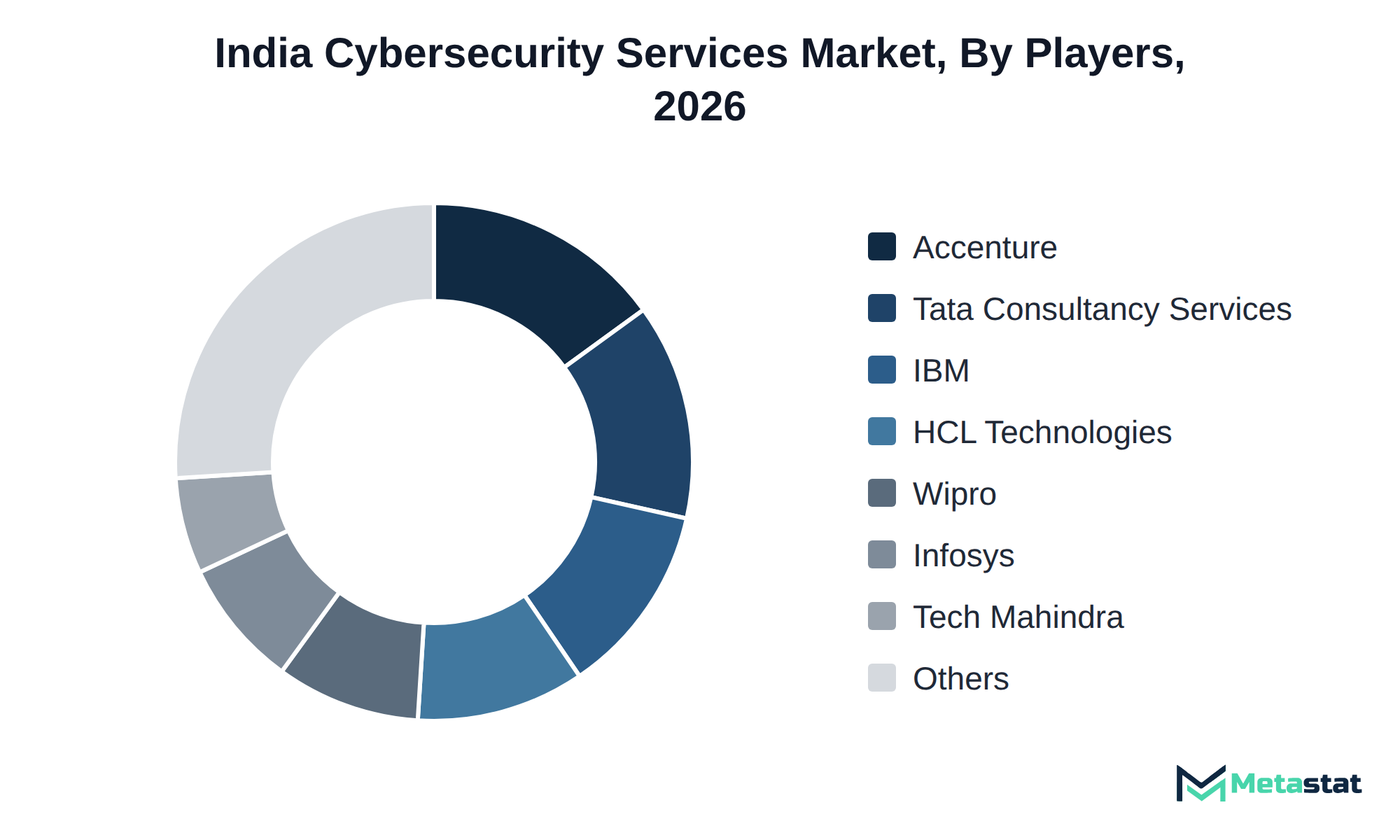
In the India Cybersecurity Services market, competition primarily revolves around the distinct service types and delivery modes offered by various companies. Players differentiate themselves through pricing, customization, certification, and service quality. Buyers increasingly prioritize these factors when selecting cybersecurity services, leading to a diverse competitive environment.
Tata Consultancy Services Limited emphasizes cybersecurity consulting and advisory services, targeting enterprises seeking to enhance their security posture. Wipro Limited focuses on managed security services, appealing to clients requiring continuous monitoring and response capabilities. HCL Technologies Limited provides vulnerability assessment and penetration testing services, catering to organizations aiming for proactive risk management.
IBM Corporation and Accenture plc adopt hybrid delivery models to address the varying needs of both small and medium enterprises (SMEs) and large enterprises. Tech Mahindra Limited and NTT DATA Group Corporation leverage remote delivery methods to expand their reach and offer scalable solutions. Such strategic behaviors reflect the competitive dynamics within the market, driving firms to adapt in response to buyer preferences.
Achieving this growth relies on several developments in the India Cybersecurity Services market. The increasing demand for Cybersecurity Consulting and Advisory services, anticipated to grow from USD 307.5 million in 2026 to USD 840.9 million by 2033, contributes to this trajectory. The expansion of Managed Security Services, with a projected CAGR of 18.6%, further supports market growth. The rising focus on Remote Delivery models, expected to grow from USD 977.8 million in 2026 to USD 3,174.9 million by 2033, strengthens the overall demand landscape. However, potential risks exist, including regulatory challenges that could impede adoption within organizations, particularly impacting sectors including Banking, Financial Services, and Insurance. This sector's growth relies heavily on effective governance and compliance frameworks, which, if not met, hinder the progress of cybersecurity initiatives. The market can expand considerably if these developments materialize and the risks are mitigated.
By Service Type: Cybersecurity Consulting and Advisory, Cybersecurity Audit and Assessment, Vulnerability Assessment and Penetration Testing (VAPT), Managed Security Services, Incident Response and Digital Forensics, Governance, Risk and Compliance (GRC), Cybersecurity Training and Awareness, Others (Threat Intelligence, Security Architecture Implementation)
By Service Delivery Mode: Remote Delivery, On-Site Delivery, Hybrid Delivery
By Organization Size: Small and Medium Enterprises (SMEs), Large Enterprises
By End-Use Industry: Banking, Financial Services, and Insurance, IT and IT-Enabled Services, Government and Defence, Telecommunications, Manufacturing, Healthcare and Life Sciences, Retail and E-Commerce, Energy and Utilities, Others (Education, Transportation, Hospitality)
The report strategically identifies and profiles the key market players and analyses their core competencies in each sub-segment of the Cybersecurity Services market.
Report Attributes | Details |
Study Period | 2021-2033 |
Base Year | 2025 |
Estimated Year | 2026 |
Forecast Period | 2026-2033 |
Historical Period | 2021-2025 |
Growth Rate | CAGR 17.0% from 2026 to 2033 |
Revenue Unit | USD million |
Segmentation | By Service Type, Service Delivery Mode, Organization Size, End-Use Industry, and Region |
Find answers to common questions about this report
The Cybersecurity Services market size was valued at USD 1,732.3 million in 2025.
The market is projected to grow at a CAGR of 17.0% during the forecast period from 2026 to 2033.
The leading segment in the Cybersecurity Services market is Managed Security Services, projected to grow at a compound annual growth rate of 18.6 percent. This segment's growth reflects increasing demand for comprehensive security solutions across various industries.
Investment in cybersecurity services is driven by the increasing incidence of cyberattacks, prompting organizations to reassess their strategies and allocate more resources toward advanced security measures. the growing awareness among small and medium enterprises (SMEs) regarding cybersecurity risks fuels demand for tailored solutions and managed security services.
High pricing for cybersecurity services limits adoption among small and medium enterprises (SMEs), resulting in slower uptake of essential solutions. significant talent acquisition challenges impact service delivery and profitability, complicating recruitment efforts for SMEs competing against larger organizations.
The Cybersecurity Services market is estimated to reach a valuation of USD 6,084.6 million by 2033.
Key players operating in the Cybersecurity Services market include Tata Consultancy Services Limited, Wipro Limited, Infosys Limited, HCL Technologies Limited, Accenture plc, IBM Corporation, Tech Mahindra Limited, and NTT DATA Group Corporation.
Investment in cybersecurity services among small and medium enterprises (SMEs) is projected to grow at a compound annual growth rate (CAGR) of 19.1%, expanding from USD 579.7 million in 2026 to USD 1,975.7 million by 2033.
The banking, financial services, and insurance sectors drive significant demand for cybersecurity services, reflecting their priority to safeguard sensitive data against increasing cyber threats.
The Cybersecurity Consulting and Advisory segment is expected to reach USD 840.9 million by 2033, growing from USD 307.5 million in 2026, reflecting a CAGR of 15.5%.
The analysts below cover Information & Technology research at Metastat Insights.
LEAD ANALYST
Utkarsh Khirodkar is a Lead Market Research Analyst at MetaStat Insight, specializing in market intelligence, technology sector assessments, and competitive strategy.

PRINCIPAL CONSULTANT - ENTERPRISE AI & EMERGING TECHNOLOGIES
Banking & Finance · Electronics and Semiconductor · Energy and Power · Healthcare IT · Information & Technology · Professional Services
Vijay Gunti is a Principal Consultant at MetaStat Insight, bringing over two decades of experience across enterprise digital transformation, technology strategy, and intelligent systems.

LEAD CONSULTANT - COMMUNICATION, TELECOM, AND IT
Electronics and Semiconductor · Information & Technology · Machinery & Equipment · Professional Services
Ravindra Sathe Consultants for Communication, Telecom, and IT at MetaStat Insight. He leads the firm's industry research initiatives across telecommunications infrastructure, digital connectivity, enterprise networking, and emerging information technology domains.
Floating offshore wind feasibility relies heavily on specialized installation vessel availability and port crane limits, which most broad renewable energy forecasts ignore. The report delivered a thorough analysis of dry dock capacity, mooring chain supply constraints, and raw material pricing trends for deepwater anchor installations. It served as a solid independent sanity check for our offshore project capital expenditure assumptions.
Assessing commercial microgrid software adoption requires looking past top-level installation numbers and examining utility interconnection queues. The research provided verifiable data on average permitting timelines, tariff structures, and battery storage integration costs across regional utility territories. That grounded perspective was valuable for our team when building five-year demand projections for industrial microgrid controllers.
Ambulatory surgical centers have very different purchasing cycles for robotic-assisted surgery platforms than major hospital networks. The MetaStat Insight study focused squarely on capital expenditure depreciation, procedural reimbursement pathways, and surgeon training overhead. That operational clarity made it much simpler to validate multi-year procedure growth forecasts against actual ambulatory center adoption patterns.
Explore related market intelligence reports worth reading alongside this one.